Can I Travel with My Cat? What to Consider
You can do this the easy way, or you can do this the hard way. (Here’s how to avoid the latter.)
You can do this the easy way, or you can do this the hard way. (Here’s how to avoid the latter.)
by Dahlia Ghabour, | December 23, 2025
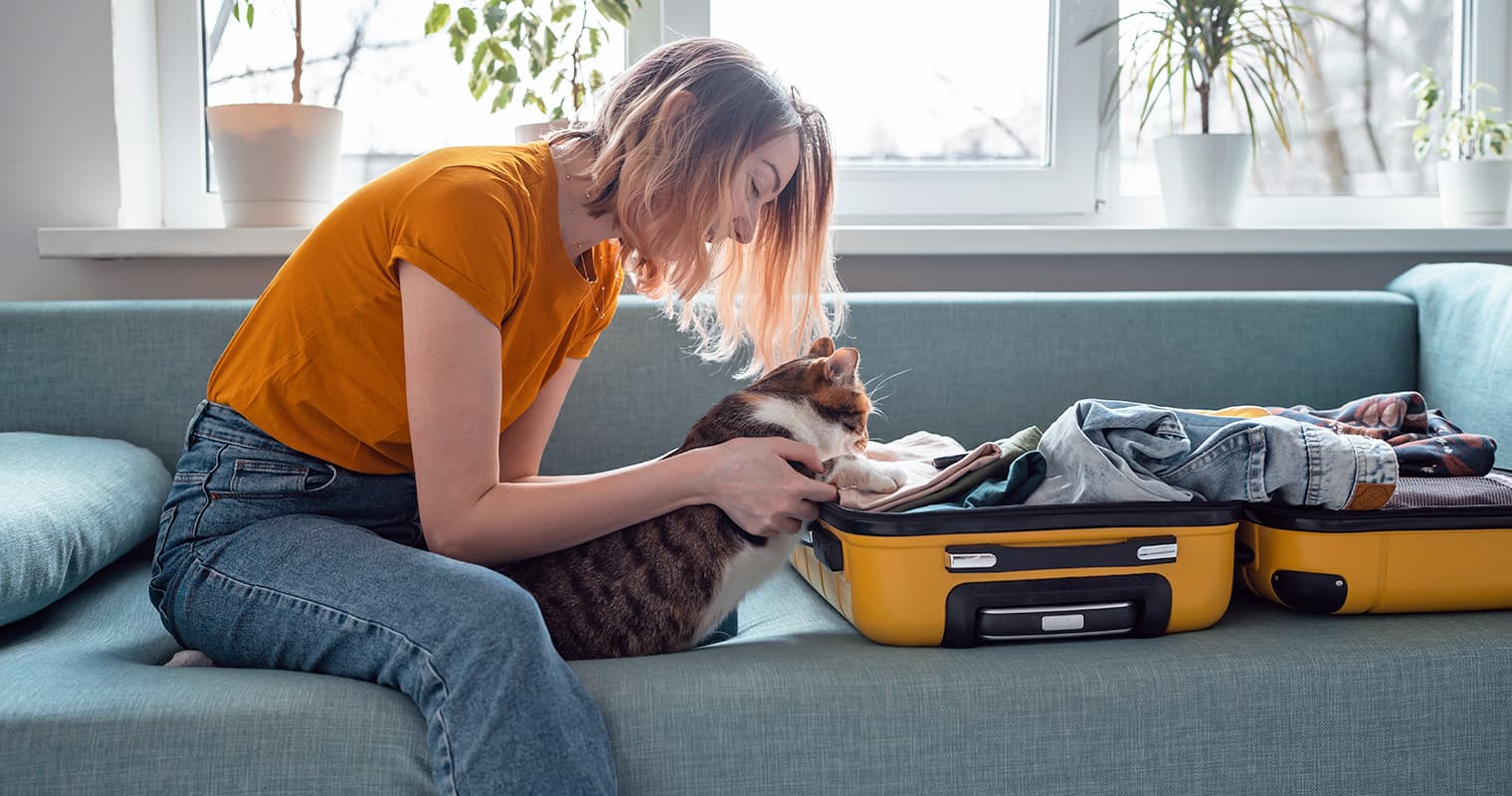
Maria / Adobe Stock
You can travel with your cat, but think twice about it if you can — because most cats hate traveling. Cats are quite territorial and creatures of habit, and travel can be extremely stressful for them. You should reconsider if taking your cat with you on a trip is necessary, especially for short trips under a week.
If you do decide to travel with your cat, make lots of preparations, beginning with acclimating your cat to their carrier weeks in advance, ensuring vaccines and microchips are up-to-date, and packing familiar items such as beds, toys, food, and a portable litter box.
Traveling is stressful for almost all cats, and you should be aware of stress symptoms to watch out for if you need to take your cat on a trip. Keep an eye out for the following behaviors:
Excessive vocalization or howling
Panting like a dog
Aggressive actions such as hissing, scratching, or biting
Excessive drooling
Refusing to eat
Litter box issues

Cats are tricky, especially during any change in their homelife. Here are some tips on making a long trip easier on your cat.
Some cats should not travel, or only travel rarely. Consider your own cat’s temperament, health, age, and other factors before putting them in a stressful travel situation.
Health problems: If your cat has significant health issues or requires lots of medication, you may not want to travel with them and disrupt their comfort.
Age: Elderly cats will be less flexible with traveling than younger cats.
Litter box problems: If your cat tends to be picky with litter or has litter box problems, traveling and changing their litter setup could be a disaster, because travel stress will only add to these existing issues.
Vaccination status: Vaccines are vital for protecting your cat against diseases, especially if you’re planning to take them outdoors. Also, some hotels and transportation venues may require vaccines for animals to travel. So, look this up ahead of time, and keep your pet’s vaccines up-to-date.
Personality: You know your cat best. If they tend to be extremely vocal, very shy, or aggressive, you may not want to add stress to the equation. Traveling with them can put your cat in danger or make them miserable.
Travel restrictions: Different destinations may have different rules with animals, including health protocols or quarantines. Be sure to look this up before taking your cat on a trip.
If you need to travel with your cat, there are things you can do to make it less stressful for you and for them. A little patience, and lots of pets and treats help, too.
Quite often, the only time a cat goes in their carrier is during their annual vet visit, so it already has a stressful association for your cat. You can change your cat’s association with their crate by making it a normal part of their environment and routine. Place your crate or carrier in their favorite space, and put a blanket or toy inside. Make sure the door is propped open, so it can’t accidentally close on them. You can also put some cat treats in the crate to entice your cat to go inside on their own. It may take a few days or weeks for your cat to get used to a crate, but the familiarity will help in the future, if you need to crate your cat.

Does your cat refuse to get into a carrier? Try these strategies.
A carrier is fine for your cat for shorter trips, but trips longer than six hours may require different equipment. Your cat will need access to water and litter, which you can include if you use a large dog crate in your car instead. You could also consider a harness for your cat’s car trip, to keep them from getting under your pedals or into other dangerous spaces. Try not to let your cat wander freely in the car if you can avoid it.
Here are some ideal supplies to take with you:
A harness
A collar with an ID tag
A kit with food, water, and favorite treats
A disposable litter box
An accident kit in case of problems, including gloves, paper towels, baby wipes, and so on
A blanket or something with a comforting, familiar scent
Your cat may need a sedative to handle the stress of travel or moving. Don’t worry: This is quite normal, but you’ll still want to talk to your vet for best practices beforehand. Sedatives can impact your cat’s blood pressure and heart rate, so be sure to consult a vet before giving them anything. Before getting a medical sedative, you could try some over-the-counter calming items, such as Feliway spray.

From size to security, here’s everything you need to know about selecting the perfect carrier for your kitty.
Avoid this if at all possible. But if you must travel with your cat on a plane, you should take some extra precautions. You will typically be required to fill out a health certificate for domestic travel for your cat, certifying the cat’s age and vaccination status. There may be weight limitations and carrier limitations depending on your airline, so check those as well.
Other things you can do to set yourself up for success include:
Booking direct flights to minimize travel time and stress
Keeping your cat in a carrier at your feet or in the seat next to you (by booking another ticket)
Speaking to your vet about a travel sedative for your cat
Not feeding them the morning before traveling, in case they get nauseous
Giving your cat water when you arrive at your destination, and let them settle down before giving them food
Pack a toy and comfort items in the carrier
Each airline will have different restrictions for their pet carrier requirements. At the time of writing, here are some of the various size restrictions.
Alaska Airlines: Hard-side carrier dimensions are 17” x 11” x 7.5”, while soft-side carrier dimensions are 17” x 11 ”x 9.5”.
American Airlines: Soft-sided carrier dimensions are 18” x 11” x 11” inches, while hard-sided carrier dimensions are 19” x 13” x 9”.
Delta Airlines: The soft-side kennel must have ventilation on at least three sides and have a maximum size of 18” x 11 ”x 11”.
JetBlue: Your carrier size must not exceed 17” x 12.5” x 8.5”.
United: Hard-side carrier dimensions are 17.5” x 12” x 7.5”, while soft-side carrier dimensions are 18” x 11” x 11”.
Southwest: Your carrier cannot exceed 18.5” x 13.5” x 9.5”.
Flying with a pet isn’t free, and your cat carrier will count as your carry-on. So you’ll have to check all other bags, too. Here’s a rundown of your kitty’s plane ticket prices (though these numbers may change):
Alaska Airlines: $100 each way
American Airlines: $150 each way
Delta Airlines: $95 each way
JetBlue: $150 each way
United: $150 each way
Southwest: $125 each way
Yes, cats’ ears can be uncomfortable while flying due to air pressure changes. Keep your cat as relaxed as you can by using calming aids and familiar scents.
Most vets agree that six hours is the limit for taking a cat on a car ride, but your mileage may vary. If you can, give your cat a roomier carrier and make sure they have access to food, water, and litter on a long drive.
It can take up to 30 days for a cat to adjust to a new home, so be patient and introduce them to the new space slowly. Here’s a full guide for some more tips.

Dahlia Ghabour is a Louisville, Kentucky-based freelance writer with award-winning work featured in newspapers such as the Louisville Courier-Journal and the Jacksonville Business Journal, both online and in print. Dahlia has two gray cats, a love of wildlife and zoo conservation, and a deep desire to one day pet a cheetah.

Behavior & Training

Behavior & Training

Adoption Advice

Adoption Advice
Here are some important factors to consider when deciding how big to grow your feline family.

Behavior & Training
Hissing, biting, or swiping — there are good reasons your cat is acting this way. And yes, there are ways to help stop these behaviors.

Adoption Advice
Thinking about adding another cat to your home? Here’s how to expand your family, minus the drama.

Adoption Advice
Although they have a reputation for being independent, cats do still some care and attention.

Adoption Advice
Are you wondering which type of cat will match your brand of human personality? Read on for some helpful advice.

Pet Wellness
Your cat cannot live forever. But there are several factors that can contribute to them living a long, healthy life.