Rising Costs of Pet Care—And What You Can Do About It
Pet care costs are climbing, but that doesn’t mean pet parenthood is out of reach. Learn what you can do to help manage your pet’s care — and your budget.
Pet care costs are climbing, but that doesn’t mean pet parenthood is out of reach. Learn what you can do to help manage your pet’s care — and your budget.
by Kate Sheofsky, | January 13, 2026

Tatyana Gladskih / Adobe Stock
Pets make life better in hundreds of small ways, but sharing your life with one also comes with the real responsibility of keeping them happy and healthy. As a pet parent, that means veterinary care is part of the deal when you share your life with a pet.
While trips to the vet are expected, the cost of pet and veterinary care is on the rise. That makes it harder to plan for them in your budget. In fact, the financial stress associated with pet care can even lead some to consider surrendering their pet.
By understanding why the price of pet care is increasing, how to navigate the landscape to maximize affordability, and what to do to limit unplanned costs, you can feel more in control of your pet’s care and your wallet — and that can help you and your pet stay together.
If you consider your pet family, you’re not alone. A 2023 Pew Research Center study found that 97 percent of pet parents say their pets are part of the family. There is also a growing body of evidence demonstrating the positive impact pets have on people’s physical and mental health. As the relationship between people and pets has shifted over the past several decades, expectations around the care that pets receive have evolved, too.
Pet parents are more invested than ever in keeping their pets healthy and comfortable throughout their lives. They look for a level of care that more closely mirrors human healthcare, including preventive medicine, advanced diagnostics, pain management, and treatment for chronic conditions, along with quality food and other supplies.

Can having a pet help reduce stress, anxiety, and depression? Absolutely—and the research proves it.
As the cost of having a pet rises, so does the pressure it places on pet parents. Inflation is a big driver of that strain — 85 percent of pet parents say it’s made pet parenthood more expensive, and 39 percent say there have been things their pet needed that they simply couldn’t afford. Those rising costs don’t exist in a vacuum either; they’re stacked on top of higher grocery bills, rent, transportation, and pretty much everything else, all while paychecks struggle to keep up.
For some people, that financial squeeze leads to painful decisions. 23 percent of pet parents say they’ve considered going petless because of cost, and 12 percent of Americans — including 25 percent of Gen Z — report having surrendered a pet they could no longer afford to care for. In short, the ability to manage expenses related to pet care has become a major factor in a person’s ability to be a pet parent.
While financial concerns stop many people from adopting again, most pet parents say they would still choose their current pet, even knowing the challenges. Rehoming is rarely about lack of love — it’s often about people doing the best they can in an increasingly expensive world.
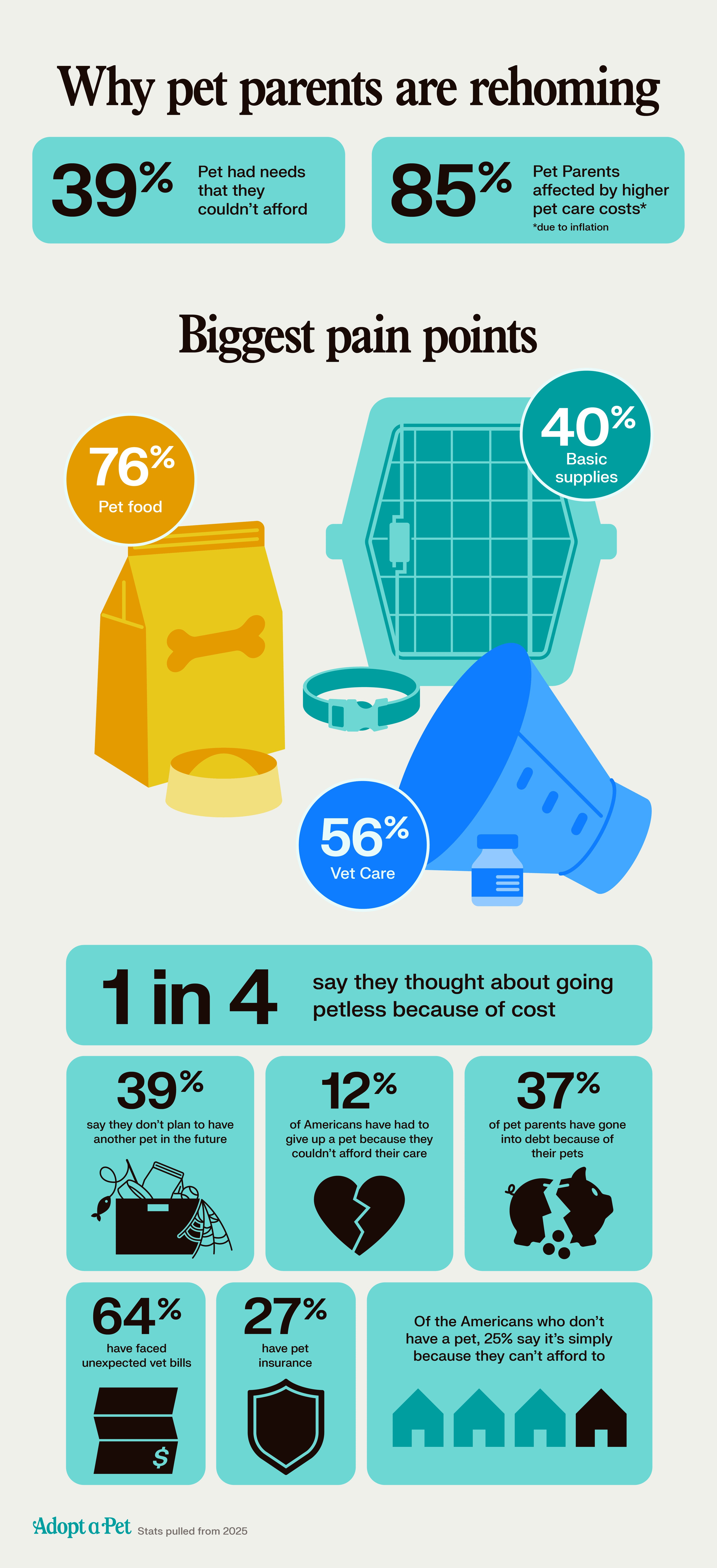
In veterinary care, costs have been increasing steadily due to several factors, including:
The veterinary profession is experiencing widespread workforce shortages, particularly among veterinarians and credentialed veterinary technicians. To recruit and retain qualified staff, clinics must offer competitive wages and benefits, which affects overall pricing.
Pets are living longer than ever before. Longer lifespans mean more ongoing management for conditions such as arthritis, dental disease, and heart disease.
Demand for veterinary services has increased. More households have pets, and many are seeking care for senior animals. When demand grows faster than available capacity, both access and costs can be affected.
Veterinary clinics face higher expenses for medical equipment, diagnostic tools, medications, laboratory testing, rent, utilities, insurance, and technology. Advances in veterinary medicine allow for earlier diagnosis and better outcomes, but they also require ongoing investment.
These trends have real consequences. The 2024 Pet Debt Report found that some pet parents delay or skip care due to cost. The reality for many pet parents is that financial strain can influence decisions about how they care for their pets.

Home-stock / Adobe Stock
While broader changes are needed to ensure pet care is affordable and accessible, you can take steps now to make your pet’s care more manageable. By being proactive and understanding available resources, you can reduce some of the financial stress — and help your pet stay healthy in the process.
Veterinary care plans, often called wellness plans, help spread the cost of routine care over time. These plans typically cover annual exams, vaccinations, parasite prevention, and basic lab work for a predictable monthly fee. Often, these plans include package discounts in the monthly cost. Wellness plans can make budgeting easier and help manage expenses for the proactive care you want to provide your pet each year.
Skipping your pet’s annual vet visit can feel tempting, but preventive care is almost always less expensive than treating illness later. Plus, these services help prevent illnesses, which can reduce the likelihood of unplanned, more costly advanced veterinary care in the future.
Preventive care doesn’t only occur inside the walls of the veterinary clinic. By helping your pet maintain a healthy weight, brushing their teeth regularly, using parasite prevention, and monitoring behavior changes to catch issues early, you can reduce the risk of more serious health problems later.
Low-cost veterinary care is available in many communities through nonprofit organizations, shelters, and municipal programs. These clinics may offer discounted exams, spay and neuter services, vaccinations, and basic treatments.
Community vaccine clinics and mobile units can also provide low-cost pet vaccines and wellness services. Availability varies by location, so checking with local shelters or animal welfare organizations is a good place to start.

Your dog’s and cat’s needs will evolve over time. So consider October’s National Pet Wellness Month a wonderful excuse to reassess those needs.
Pet insurance can help offset the cost of unexpected illnesses or injuries, which are often the most financially challenging veterinary situations. Coverage varies by policy, so it’s important to review deductibles, reimbursement rates, and exclusions carefully. And with a Costco membership, you can get a discount on pet insurance.
Insurance is generally most affordable when pets are enrolled while young and healthy. Depending on your policy, it can significantly lower out-of-pocket expenses during emergencies, and you make decisions based on medical need rather than cost alone. To learn more about the ins and outs of pet insurance, check out this resource.
Many veterinary clinics are open to working with their clients when financial concerns are raised early. Asking for a written estimate, clarifying treatment priorities, or discussing phased care plans can help you make informed decisions that work with your budget. Some clinics partner with third-party financing services or offer payment arrangements for established clients. Open communication can help balance your pet’s needs with your budget.
Medications can be a significant part of veterinary costs, especially for pets with chronic conditions. Ask your veterinarian whether a generic medication is available, whether longer prescriptions could reduce refill costs, or whether certain medications can be safely filled through other low-cost pharmacies.
Virtual vet services and tele-health consultations have become more widely available in recent years, and they can be a useful first step when you’re unsure whether your pet needs to be seen in person. While virtual care can’t replace hands-on exams or diagnostics, it can help you ask questions, describe symptoms, and get guidance about the urgency of a situation.
In some cases, a veterinarian may recommend monitoring your pet at home, suggest at-home care steps, or help you decide whether an in-clinic visit is needed. These virtual appointments may also reduce costs by helping you avoid an unnecessary visit, especially for non-urgent issues. They can be particularly helpful after hours or if you have limited access to transportation or nearby clinics.

It’s possible to stay in budget — here’s how.
Unexpected veterinary expenses can put a wrinkle in anyone’s budget. Setting aside a small, dedicated emergency fund for your pet can help soften the impact of urgent care or sudden diagnoses. Some pet parents keep a separate savings account just for veterinary expenses, while others include pet care as part of their broader emergency savings. An emergency fund can work alongside insurance or wellness plans by covering deductibles, copays, or services not included in a policy.
Another way pet parents can manage veterinary costs is by tapping into nonprofit and community-based resources designed to help cover care when budgets are tight. Programs such as VCA CareClub, the VCA Charities HOPE Fund, RedRover Relief, the Brown Dog Foundation, and Friends & Vets Helping Pets offer financial assistance for veterinary expenses.
And many local food banks and pet food banks can also provide support beyond pet food, helping cover supplies or basic care needs so pet parents can stay ahead. For training and behavior support, several free online dog training resources are available to pet parents.
Not necessarily. Many low-cost or discount veterinary care providers offer high-quality preventive and essential services while operating with reduced overhead. Services may be more limited, but standards of care can still be strong.
Yes. Veterinarians understand that cost is a factor and can often discuss alternatives, prioritize treatments, or suggest community resources.
They serve different purposes. Wellness plans help manage routine care costs, while insurance helps cover unexpected illnesses or injuries. Some pet parents choose to use both.
Local shelters, rescues, and nonprofit organizations may offer hardship funds, referrals, or temporary assistance designed to help pets remain with their families whenever possible.
Yes, delaying care can make things more expensive later. Preventive care and early treatment often cost less than managing advanced disease, which is why being proactive is so important.
“More Than a Pet: The Harris Poll Report.” Humane World for Animals, https://www.humaneworld.org/sites/default/files/docs/HSUS_More-Than-a-Pet-Harris-Poll-2024.pdf
‘2024 Pet Debt Report.” Lending Tree, https://www.lendingtree.com/debt-consolidation/pet-debt-report/
“Loving Your Pet, Managing the Costs.” AVMA, https://www.avma.org/resources-tools/pet-owners/petcare/financial-assistance-veterinary-care-costs
“Why Does My Veterinarian Charge So Much?” VCA, https://vcahospitals.com/know-your-pet/why-does-my-veterinarian-charge-so-much

Kate Sheofsky hails from San Francisco, where she developed a love of writing, Giants baseball, and houses she can’t afford. She currently lives in Portland, OR, and works as a freelance writer and content strategist. When not typing away on her laptop, she enjoys tooling around the city with her two rescue pups searching for tasty food and sunny patios.

Pet Wellness

Adoption Advice

Adoption Advice

Pet Wellness
If your pet ever gets lost, a microchip is your best bet at a happy reunion.

Adoption Advice
The reality is, it costs a lot of money to care for shelter animals and to keep a shelter clean and safe. Find out what you can expect to pay when bringing a new pet home.

Adoption Advice
Wondering about tax savings for pet expenses? Learn about pet tax deductions to understand how to claim your pet on taxes.

Adoption Advice
It’s a big decision, so check these boxes before you sign on the dotted line.

Adoption Advice
Dealing with high vet bills? See assistance options for affordable pet care. Get the support your pet needs without breaking the bank.

Adoption Advice
Want to adopt a dog but rent your home? Here’s how to navigate the rules while keeping your neighbors and landlord happy.