How to Pick the Right Crate for Your Dog
Finding the right crate size is important. But so is considering your dog’s age, circumstances, and training goals. Our guide is here to help.
Finding the right crate size is important. But so is considering your dog’s age, circumstances, and training goals. Our guide is here to help.
by Danielle S. Tepper, | July 20, 2026
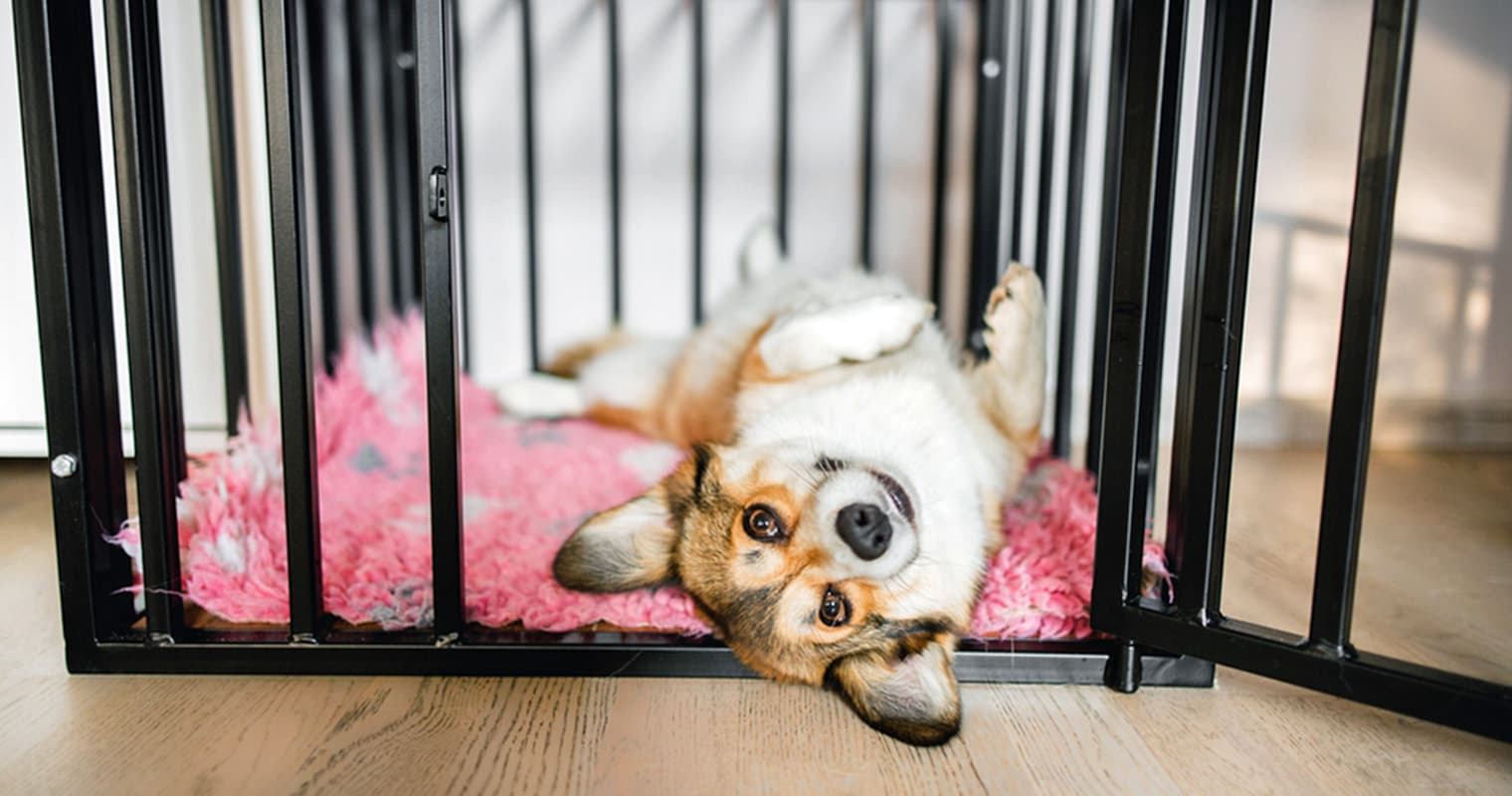
Jus_Ol / Shutterstock
If you’re adopting a dog (especially a puppy), a new crate will probably be at the top of your to-do list. Finding the right size crate for your dog, no matter their age, is crucial for their comfort, safety, and overall well-being. Ask any pet parent who has done it, and they will tell you that potty training has nothing on crate-training. Potty training is a matter of time. Crate-training is a matter of willpower — mostly yours. Seriously, don’t let your pup’s, or your own, initial anxiety scare you away from this valuable training tool.
Once properly crate-trained, your pup will find peace and security in having a den to call their own. Luckily, both the right training and the right crate can help ease some of this anxiety for pets and their parents. There are tons of options out there — the good, the bad, and yes, the ugly — but we’ll help you break down which one is right for your dog. To help, we chatted with expert Leigh Siegfried, owner and trainer at Opportunity Barks, and veterinarian Dr. Elizabeth Shines, DVM, to learn more.
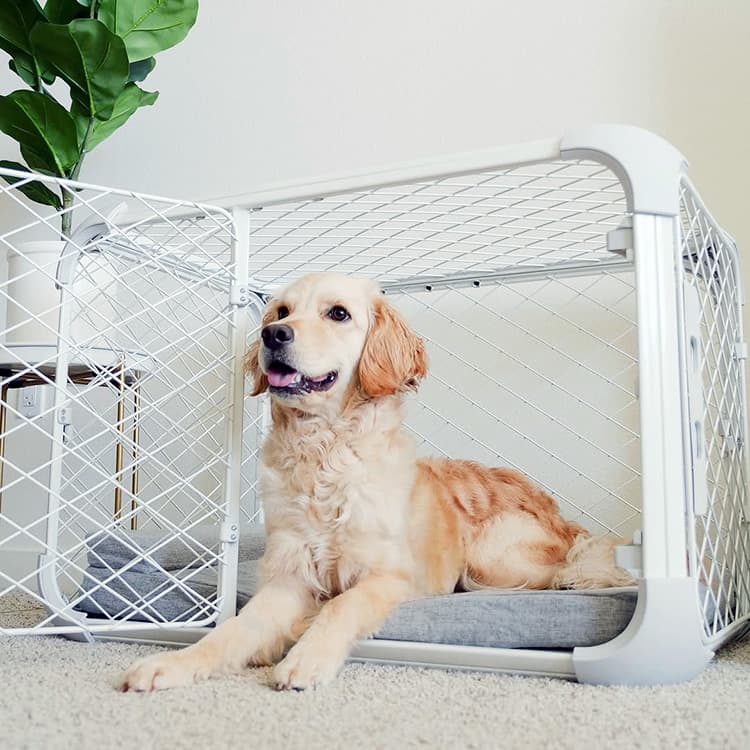
Photo Courtesy of @diggspet
There are loads of benefits, both short-term and long-term, to crate-training your pup. The first thing to know is that the Association of Professional Dog Trainers (APDT) recommends using a crate as a short-term training tool for puppies and dogs, then as a safety precaution later in life. The earlier you familiarize your pup with a crate, the more comfortable they’ll be with it. “Crate-training your dog allows them to feel prepared with a familiar relaxation spot and routine,” Siegfried tells Adopt a Pet. “It’s also a way to help your dog traverse change in the long-term and deal with life events such as moving or additions of people or dogs to a home.”
At home, they’re great tools for housebreaking and deterring destructive behaviors like, oh, you know, eating the couch cushions. If all goes as planned, crates can eventually feel like a safe space for your dog when they’re feeling overwhelmed, if you’re unable to supervise them, or when they have to stay overnight away from home. On the latter note, they are also a safe way to travel with your dog.
All that said, crates are not recommended for containing dogs for extended periods of time or for punishment — this will only teach your dog to avoid the crate and stress them out when they’re in it. Anxious dogs, especially those with separation anxiety, should also not be crated because they could harm themselves trying to escape.
The bottom line is that a properly crate-trained pup has the tools to take on new challenges and changes, allowing you to do the same.
All the things you’ll want on hand as a new pet parent, from the must-haves to the nice-to-haves.
The crate needs to be big enough for your dog to stand up and turn around comfortably. “The crate needs to be big enough so that your dog can lie on their side, stretch their legs out, and also stand up comfortably,” says Dr. Elizabeth Shines, DVM. To achieve this, measure their length and height, and add four inches to both in order to find a crate large enough for them to be comfortable.
But bigger isn’t always better — if you’re using the crate to house train your dog, the crate shouldn’t be too spacious. “You want to encourage your pup to hold their bladder, and if they have a big crate, they may just poop in one corner and sit in the other. If you have a particularly hard-to-housebreak dog, you might need to experiment with crate size,” Dr. Shine says.
Dog parents might be tempted to buy a crate that will likely accommodate their puppy’s projected adult size. However, Siegfried also cautions that too large a crate can hinder the training process. “To feel comfortable and acclimated in a crate, a dog is going to need to feel secure and safe,” Siegfried advises. When your dog has reached their full size and you’re ready to look for their permanent crate, you can remeasure your pup to ensure the right fit.
Basically, a cavernous crate might not give your pup those cozy, den vibes that are essential to successful crate- training. And too much space gives your puppy enough room to pee or poop without having to lie down in it, which may incentivize them to do their business in their crate. That said, it’s best to pick a crate that has enough room for your pup to get comfortable, just not too comfortable.

If you like expert tips, you’ve come to the right place.
Today, crates are being more thoughtfully designed than ever before, with features intended to work with your space, not against it. So, when choosing a crate based on its features, pet parents should think carefully about what crate will work best for the flow of their home.
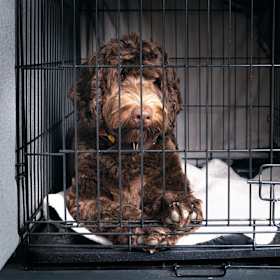
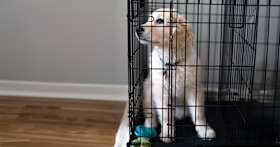
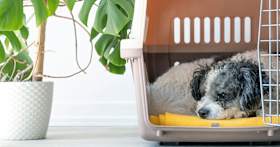
Crates can be plastic (sometimes called “flight kennels”) or fabric with a collapsible frame. Some are even designed like a piece of furniture, blending in with your home décor. When selecting a crate for a puppy, consider their potty training and teething needs. Opt for a durable, easy-to-clean material that discourages chewing, which is ideal for younger dogs. Crates made from coated steel wire can be helpful because these crates offer good ventilation and are durable and easy to clean. Your dog can watch what’s going on, but if they prefer more privacy, you can always toss a cover over it and remove it as needed.
It may seem obvious, but you want to make sure your dog’s crate is located in an area with good air circulation. In general, it should let light in, but some dogs prefer their crates to feel more cave-like, in which case you can drape a blanket over it. It really comes down to making the crate a safe space for your dog so that they’ll want to spend time in it. You can do this by lining it with soft bedding (once your dog is house-trained, unless you want to continuously do laundry) and tossing a chew toy in there to sweeten the deal — so long as you’re supervising and it’s not something they can potentially choke on.
Foxhound Photo / Adobe Stock
The size of the crate your dog will need depends on their size. Use the above length and width measurements to determine your dog crate choice. It’s possible to go up a size to give your pup some extra room, but keep in mind that smaller breeds can slip through the grates if you size up too much.
Rather than cycle through several crates as your dog grows, it may help to predict your dog’s final size based on their breed and use a crate divider panel, which can temporarily shrink the interior space and be adjusted as they mature.
Below are general examples of how typical crate sizing works.
Tiny dogs will require a crate size around 18 inches.
Dog length: under 18 inches long
Dog weight: 10 pounds or less
Breeds: Chihuahua, Maltese, Pomeranian, and Shih Tzu
A 24-inch crate is ideal for the below dogs.
Dog length: 18 to 22 inches long
Dog weight: 10 to 25 pounds
Breeds: Bichon Frise, Jack Russell Terrier, Lhasa Apso, and Pug
A 30-inch crate is suitable for dogs less than 28 inches long.
Dog length: 22 to 28 inches long
Dog weight: 25 to 40 pounds
Breeds: Beagle, French Bulldog, Tibetan Terrier, and Corgi
A 36-inch crate is ideal for large breed dogs such as the ones below.
Dog length: 28 to 34 inches long
Dog weight: 40 to 70 pounds
Breeds: American Pit Bull Terrier, Border Collie, Goldendoodle, and Husky
An XL crate can fit larger dogs up to 42 or 46 inches long, depending on the manufacturer.
Dog length: 36 to 46 inches long
Dog weight: 70 to 90 pounds
Breed examples: Boxer, Labrador Retriever, Golden Retriever, and Irish Setter
A heavy-duty 2XL 48- to 56-inch crate fits the largest dogs who weigh 90 pounds or more.
Dog length: 42 to 54 inches
Dog weight: 90+ pounds
Breed examples: Bernese Mountain Dog, Great Dane, Mastiff, and Rottweiler
Crates are sometimes confused with kennels, but the terms are not interchangeable. Kennels are larger, more permanent structures with extra space for a dog to play around. This is why boarding facilities are often referred to as kennels. Crates are individual enclosures that stay in your home or are portable for travel.
No, do not put several dogs in the same crate. The only exception to this rule may be for puppies from the same litter, but only when they are very young. As they age, they will need their own space. Crating dogs together can lead to stress and aggression. If you have two small dogs, you can also consider using a solid divider in a large cage, provided the space for each dog is enough to accommodate their needs to sit, stand, and turn around comfortably.
Dr. Shines and the APDT both recommend collapsible wire crates because they’re strong and durable, but still pretty lightweight. They’re also easy to store and pack up for travel. Read the fine print on those: Some crates come in one piece and simply fold up, while others have pins that need to be removed to collapse the sides — which can feel like disassembling an IKEA bookcase. Canvas crates are also portable, but if your dog is an escape artist, that type of crate is probably too flimsy.
“Fur definitely accumulates around the edges of a wire crate,” admits Dr. Shines. “It’s not a contained system.” That shouldn’t be a dealbreaker, though; it just means you’ll need to be diligent about vacuuming — something you might want to accept now that you’re welcoming a hairy creature into your home. On the upside, wire crates come with removable trays underneath, which you can easily take out and hose down if your dog makes a mess.
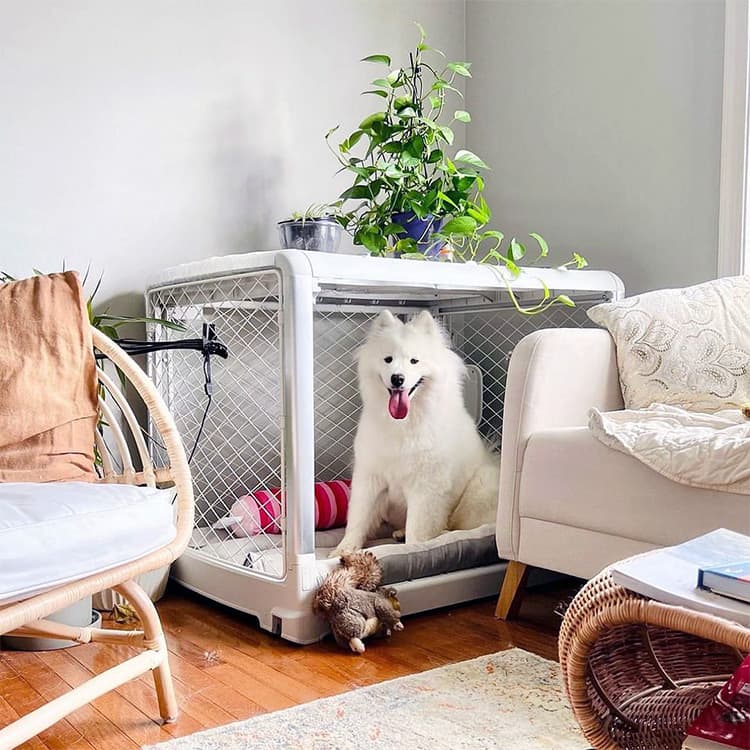
Diggs crate
With so many options out there, dog crate furniture is an example of form and function. “If you don’t like the look of crates, there are ones designed to look like end tables and bureaus, so they are both decorative and functional,” says Dr. Shines. “As long as your dog won’t chew their way through wood, it’ll work great.”
“How long can a puppy stay in a crate is generally one hour for every month they are old, plus one,” Siegfried says.
“I think it’s the dealer’s choice here,” Siegfried says. “However, most dogs are sleeping in crates until they are house trained.”
You can crate-train your dog in a series of stages. Attempting to move through the steps too quickly may not be as effective. Help your dog associate the crate with good things such as meal times, treats, and play. (Note that a crate should not be used in an attempt to remedy separation anxiety.)
“Barking in the crate is just a function of either frustration or distress,” Siegfried says. “So, it’s not about stopping the barking, as much as it’s about trying to understand the underlying motivation for the communication because all barking is just communication.”
To reduce or stop barking, you must address the problem at the root of the communication, whether that be separation anxiety, physical discomfort, or something else. For more tips, check out our guide here.
Housetraining a puppy takes patience and positive reinforcement. First, make sure your puppy is at least 12 to 16 weeks old. Pick a spot, and make relieving themselves there a routine. Teach them a cue for that spot (such as “go potty”), and reward their good behavior with treats. Over time, they will stop having accidents indoors.
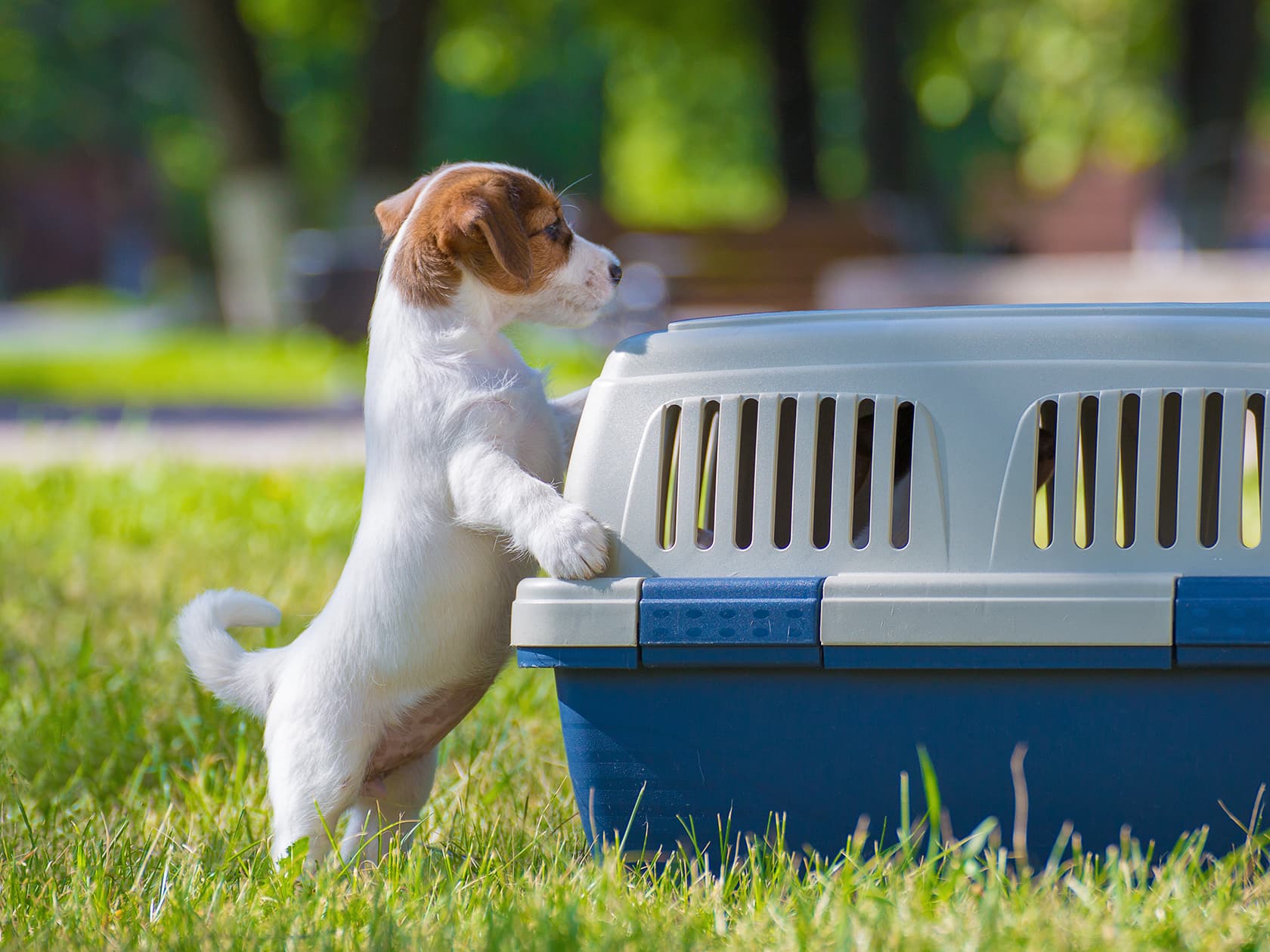
In addition to the size guidelines for choosing your everyday crate, some special considerations should be made for airplane travel. It’s best to start by checking with the airline for specific crate-size limitations and any additional requirements regarding weight or breed restrictions.
For instance, American Airlines cautions, “Failure to meet all kennel requirements will result in your animal not being able to travel on the designated flight.” Additionally, they provide a list of criteria that make crates acceptable for flying on their planes. Each airline will vary, so check your preferred carrier’s website.
Check that the travel crate has a secure locking mechanism to prevent escape should your dog become anxious, overstimulated, or afraid. Also, make sure that the crate has adequate ventilation on multiple sides.

Danielle Tepper is a writer and editor who works full-time for a global animal welfare nonprofit. She is especially passionate about protecting marine mammals and ending the exploitation of wild animals for human entertainment. Currently based out of her car, she’s trekking across the U.S. on an open-ended road trip, exploring our national parks and photographing wildlife from a safe distance.
Behavior & Training
Adoption Advice

Behavior & Training
Behavior & Training
Discover when nighttime crating makes sense, when it doesn’t, and how to make it a positive experience.
Behavior & Training
Wondering how many hours you can leave your dog in their crate? Here’s what you need to know.
Behavior & Training
Behavior & Training

Behavior & Training
Is your new pup biting everything? Learn effective ways to curb this behavior by teaching bite inhibition.