How to Potty Train a Puppy in an Apartment
By sticking to a schedule, you’ll find it’s very doable.
By sticking to a schedule, you’ll find it’s very doable.
by Kerensa Cadenas, | January 13, 2025
StefaNikolic / Adobe Stock
Living in an apartment comes with many spacial challenges. So putting a puppy into the equation can be tricky, especially when it comes to potty training.
There are many ways to potty train a puppy in an apartment. But they come with their fair share of challenges due to the lack of indoor and outdoor space, and if you live in a high rise, the addition of elevators and stairs. It’s doable, and the most important thing to keep in mind is to make sure you establish a routine when it comes to potty training your pup.
Here’s how to start potty-training your apartment-dwelling puppy.
Potty training a puppy in an apartment is challenging but not impossible.
There are many options, such as crate training and pee pads, to help apartment-train your puppy.
Keeping a routine is one of the most important ways to make potty training work.
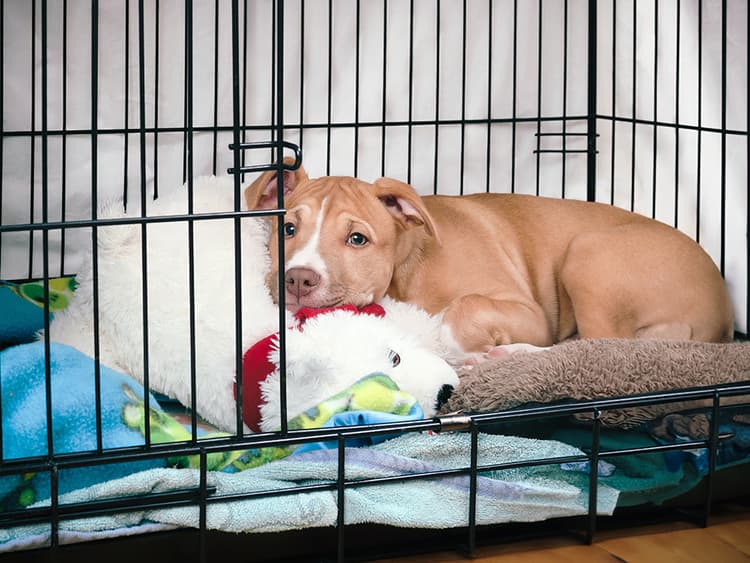
Let’s start with some of the training basics. A puppy can hold their bladder for one hour for every month of their age. So that can give you a good sense of timing when it comes to taking your puppy outside to relieve themselves. It’s important to watch your puppy to avoid accidents, consider a dog gate to keep them contained, and crate-train them for any time you are out of the apartment.
If anything requires patience, it’s this.
Dog trainer Shir Limazati, owner of Another Chance Training, knows that it is challenging to potty train a puppy in an apartment, but not impossible. “The quickest way to potty train your puppy is to stick to a consistent schedule. Even if you have limited space in your apartment,” she says, “crate training your puppy can help limit accidents when you can’t pay attention to your puppy.”
Start by creating a puppy-safe potty spot. Find a spot in your apartment where you can place pee or potty pads, then praise your puppy when they successfully use the pad. If you see that your puppy needs to go to the bathroom, moving them to the pad is another way to establish this as a designated spot for them to go.
Keeping a routine is very important for both feeding and potty training, since the two are linked. “The best way to potty train is to take your puppy out every two hours — plus within 30 minutes after meals and after heavy play,” Limazati says. “I also recommend staying outside for another five to 10 minutes after your puppy goes, so they don’t [think], ‘The fun is over once I pee or poo.’ This can cause them to hold it, and then have accidents inside.”
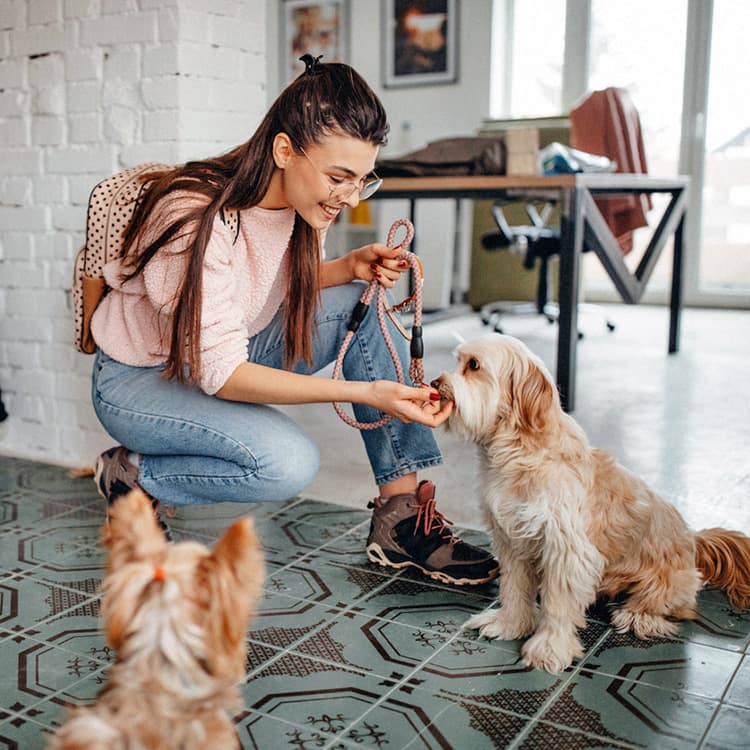
Reinforcing where your puppy goes to the bathroom is important for them to understand what “good” behavior is. Give them praise and treats when they successfully go in the correct location. But don’t give them treats until after they go, so they fully empty themself. Limazati adds, “It’s best to reward them right away, rather than when they come back inside, to make sure they understand they are being rewarded for going potty outside — so make sure you take treats with you on your walks.”
Limazati shares some signs to look for. “When you see signs your puppy has to go — sniffing the floor, circling, squatting — immediately scoop your puppy up and take them outside. Remember to reward them with a treat once they go outside,” she says. If it’s too late to take them outside, bring them to a pee pad or patio, if you have one.
In an apartment, especially if you live in a high rise, getting your puppy outside might take more time than expected. So there’s a chance they may have an accident, either on the way outside or in the apartment. Avoid scolding them, because that will instill fear and mistrust.
“Accidents during potty training are bound to happen in the beginning. If you come across an accident that has already happened, there’s nothing for you to do besides thoroughly clean and sanitize the sight of the accident,” Limazati says. “Punishing your dog for having that accident does not teach them not to go there. In fact, if the accident already happened, you missed the window of opportunity for any correction to be understood by your puppy.” Be sure to use an enzyme cleaner for indoor accidents, so your pup won’t continue to go in the same spot.
If your indoor potty spot isn’t ready yet, or you are trying to focus on outdoor-only training, carry your puppy all the way outside until they are more equipped to hold their bladder.
You shouldn’t make them cross their legs for long!
Pee pads can be helpful for potty training, especially in an apartment. You want to put the pee pad in one place, so your pup will know where to go. If it seems like an accident might be happening, move your puppy to the pee pad so they recognize where they should be going.
Limazati mentions that, if you have the option, training outdoors is always best. “It’s best to train your puppy to go outside…unless there is a reason you can’t take your puppy out on a schedule — severe weather, your dog (or you) has a medical condition, etc.”
There are options other than pee pads, such as puppy litter boxes or grass patches that mimic the outdoors. Using either of these is a personal choice, depending on your space, needs, and what your puppy might prefer. However, Limazati says to be sure to know the limitations of these options. “Potty pads and litter boxes can make it tough to travel with your dog. If your dog knows to go outside for their potty needs, you can take them anywhere.”
Placing a pee pad near the door might be the best place (depending on your space) to train a puppy to use the bathroom. Your pup will associate going to the bathroom with the front door and going outside, even as they grow older.
The fastest way to potty train a puppy is through the following process. Establish a strict routine. Take them outside often (especially after eating or playing). And after they go to the bathroom in a preferred spot, positively reinforce the behavior with praise and treats.
Kerensa Cadenas is a writer based in New York City. She’s previously worked at The Cut, Thrillist, Cosmopolitan, and Complex. Her work has been featured in Vulture, GQ, Vanity Fair, and others.
Behavior & Training
Lifestyle
Pet Wellness
Behavior & Training
If you like expert tips, you’ve come to the right place.