Pet Stroller Training 101
Older dogs can still enjoy the benefits of a long walk — even without using their legs.
Older dogs can still enjoy the benefits of a long walk — even without using their legs.
by Daniela Lopez, | June 3, 2022
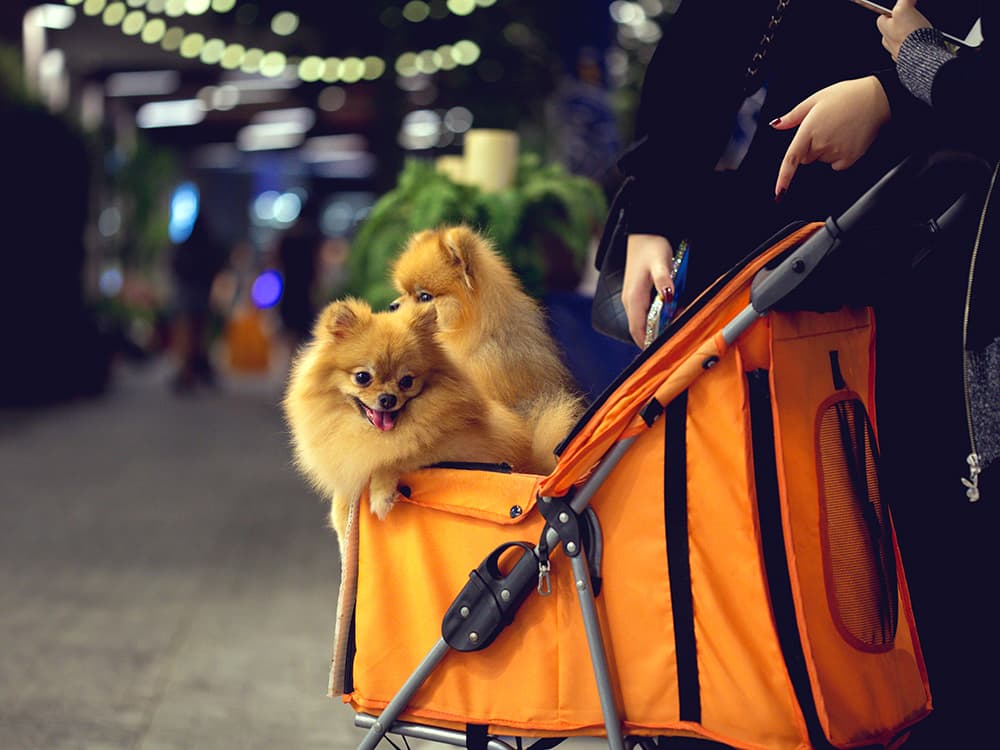
Casezy idea / Shutterstock
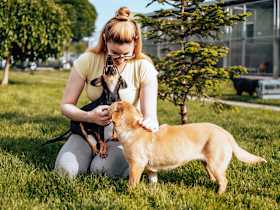
Over the years, you’ll begin to notice a few changes to your dog beyond a greying muzzle. In their senior years, many dogs have issues that impact their physical abilities, whether due to arthritis, illness, or just because they are small and have trouble keeping up. Even when challenging to do so, it’s great to get out walking with your dog every day. The sights, smells, sounds, and tastes of the world activate the brain, so walks — even in a stroller — are a great way to keep your dog mentally fit.
Your dog might not initially like their stroller; that’s why you’ll need to work on training and slow introductions to their new wheels. With a bit of practice (and some patience), most dogs will eventually enjoy taking a ride in a pet stroller because it means they get to go out. There’s no better reward than a long walk to take in the smells.
Pet parents of senior dogs often find themselves asking, “How do you train your dog to use a pet stroller?” As with all dog training, the most important things to remember are taking it slow, making it positive, and working with your dog’s abilities. Of course, like many necessary challenges — it might be easier with a friend or partner.
For many dogs, strollers can be scary because they are large and new. But this is a critical step, and I recommend doing it slowly. Bring the stroller somewhere your dog can easily investigate it, and be sure to lock the wheels so it doesn’t suddenly move. If your dog seems uncomfortable around the stroller, you can put treats near or around the stroller to get your dog to move closer and closer to it.
If your dog remains relaxed and calm near the stroller, you can also reward them with a few treats to ensure they maintain a positive experience. If your dog seems skittish or unsure, move farther away from the stroller until they are relaxed, then reward with treats (or a toy). Your goal here is to work towards the stroller slowly. Again, don’t rush this.
Once your dog seems comfortable, unlock the wheels and have your partner move it around a bit. If your dog remains calm, reward them with a few treats. Just as suggested before, if your dog is timid, you’ll need to move farther away until your dog is comfortable and try again. The goal here will be to ensure your dog has a positive experience with the moving stroller.
Now that your dog is happy in the presence of a stroller, you can pick them up and put them in. For larger dogs too heavy to be picked up, you can lure them into the stroller. Once your dog is in the stroller, offer treats. If your dog finds the experience scary or unpleasant, stop and try again later, working your way up to this point. You may want to do this several times over multiple days before ever even moving them in the stroller. You can even let them eat a yummy chew while hanging out in the stationary stroller.
If your dog remains happy with all the previous steps, push the stroller around a bit with them inside while providing treats and praise often. If they remain calm and relaxed, feel free to continue but keep an eye on their stress levels. For timid dogs, take this step slowly.
Once your dog has a positive experience at home, take this show on the road. Start by choosing locations with few distractions that may cause unneeded stress. Now it’s time to get moving with your dog. While out on your next stroller walk, be sure to bring your dog’s collar and leash. Periodically stop to let your pup out to walk, stretch their legs and get a closer sniff. When they’ve tired themselves out, allow them back in the stroller for a cozy ride home.
Remember, when it comes to pet training, choose the methods that help your dog succeed. Always focus on positive reinforcement to encourage training and resist attempts to force them to move quicker than they are ready. Above all, enjoy it — stroller rides should be fun for both dogs and their humans.
Because there are so many strollers available on the market, it might be a bit difficult finding the right stroller for you and your dog. You’ll need to consider what you’re planning on using the stroller for, your dog’s size, physical ability, and behavior. Here are a few things to think about when deciding on a pet stroller.
Size: Many dog strollers are geared towards small breed dogs (those less than 25 lbs.), so if your pup is a medium or large dog, your options will be more limited. Carriage-style strollers are more common for smaller dogs, whereas for larger dogs, you’re more likely to find a wagon.
Safety: If your dog is uh... not the mellow type, or maybe freaks out when they see squirrels, then you’ll want to make sure your stroller of choice has a sturdy leash clip for your pup’s harness — you’ll also need plenty of stroller training. Having a durable zipper enclosure might help too.
Wheels: Taking a stroll around the block on the pavement will be okay for a hard plastic wheel, but larger air-filled wheels will work better for smoothing out a rough ride on the trail or during a jog.
Cost: You might be looking for a cheap stroller, but if you plan to use your stroller often and for more than a couple of months, look into getting a quality, sturdy, durable pet stroller to ensure your pet’s safety and comfort.
Extras: If your dog is recovering from surgery, has arthritis, or has other mobility issues having a stroller with a low profile or an ease-of-access step could be a helpful addition — especially for large dogs. Keep an eye out for other convenience items like storage compartments, pockets, or one-handed closures.
If a stroller feels like more than you need, a pet backpack is a solid alternative — especially for smaller pets or crowded spots a stroller can’t handle easily. Look for one with good ventilation, a sturdy base so your pet can sit or lie down comfortably, and both shoulder straps and a handle for when you want to carry them differently. Some styles even have a bubble window up front, so your BFF can look out while they ride.
Backpacks tend to work best for shorter outings or pets who like being up close to their person, while strollers are the better call for longer walks or pets who need more room to stretch out. Either way, the goal’s the same — getting your pet out into the world safely and comfortably.
Dog backpack carriers are designed to allow pups to sit upright while worn on your back or, in some cases, on the front. Just as not all dogs are the same size, nor are all dog backpack carriers. Quality carriers will clearly depict measurements and sizing, allowing you to purchase a pack suitable for your pup.
The safest dog backpack carriers include locking zippers (or no zippers at all, if your dog likes to chomp zippers), thick, sturdy buckles, and, if it’s a pack designed to enclose small dogs, ventilation. Another key feature to keep an eye out for is padded neck holes for your pup’s safety and comfort.
Internal dog leashes are also helpful, as they will tether them to the pack. If you have a large dog, these leashes won’t do much in the grand scheme of things, but having something attached to their collar can make them feel more contained, which may prevent them from trying to jump out.
Dog backpack carriers come in many functions and forms, but they all funnel into two types: front or back carriers. Generally, back carriers are more comfortable for the wearer and more suitable for dogs of all sizes. If you have a small dog (under 20 pounds), however, a front carrier may work well, particularly if your dog doesn’t like to be behind you.
Dog backpack carriers are sold at pretty much every price point. You just have to determine how much you want to spend. That said, there’s no denying that more technical, well-designed packs come with a price tag that matches. Like so many things, you get what you pay for.
The dog backpack carrier you choose should be large enough for them to comfortably sit upright in it, and sturdy enough to support their weight. High-quality dog backpack carriers will clearly indicate measurements and weight capacities for easy shopping.
The safest dog backpack carrier is one that is sturdy and secure. Look for quality locking zippers, thick buckles, and internal leashes for optimal security.
There are many different dog backpacks on the market, all of which fall into front and back packs. Beyond the way they’re worn, dog backpack carriers are also sold in standard, everyday designs, and more adventure-ready silhouettes. If going hiking, biking, or paddle boarding is your goal, opt for an outdoor-ready pack by brands like Ruffwear, K9 Sport Sack, or Little Chonk.
Some dog backpack carriers cost less than $30, while others ring up close to $300. Generally, the more you pay, the higher the overall quality of the pack.

Daniela Lopez is the content manager at Adopt a Pet. She has previously contributed to The Bark, Kinship, and more. She has volunteered for several animal shelters and rescues and is currently an animal foster for her local SPCA. In her free time, she has two mixed-breed rescue dogs keeping her on her toes.
Pet Wellness
Pet Wellness
Lifestyle

Nutrition
From DIY ice-fruit bowls to dog-friendly ice cream, they will be chillin’.
Behavior & Training
And what to do to make stormy walks a little easier.
Lifestyle
Reducing your paw print can seem daunting. Consider these simple tips.
Pet Wellness
Tips for pet parents who want their pups to have safe fun.
Nutrition
The founders’ own dog’s cancer diagnosis inspired their immunity-boosting, pathogen-resistant mushroom supplements.
Shelters & Rescue
If you’re in search of a pup with a big personality in an adorably small package, you’ve come to the right place.