8 Signs You Have a Smart Dog
Some pups are straight-A students.
Some pups are straight-A students.
by Daley Quinn, | July 24, 2026
Arterra Picture Library / Alamy
I like to think that if my two-year-old Havanese were in school right now, she would probably be an A- or B+ student. She is brilliant with her recall and tricks, but she loses her ball in the park more than I care to admit. I think, though, there are times she’s not letting on about just how intelligent she really is.
One of the first clues that she might be smarter than she lets on involved her “potty” speech button. We taught her to press a button when she needs to go outside and, on her good days, she uses it perfectly. Other days, “go potty” actually means “play with me, Mommy.” If her spinning cat toy rolls under the couch, she will press the button just to get one of us to help her retrieve it. Manipulative? Maybe. Smart? That, too. Moments like these make me pretty confident she has a clever little brain under all that fluff.
Every dog shows intelligence differently, but some pups seem to understand the world around them with uncanny accuracy. Maybe your dog opens doors, studies your every move, or knows the exact moment you pull into the driveway. According to Dr. Huyn Han, a veterinarian with TelaVets.com, canine intelligence is not just about tricks. It is about problem-solving, memory, adaptability, and how well a dog reads the humans in their life.
Smart dogs often reveal their intelligence in small, everyday moments. Once you know what to look for, the signs become surprisingly clear. Below, we share the biggest clues that your dog might be a lot smarter than you think.
The smartest dog is able to solve problems without being taught. “Smart dogs figure things out on their own, like opening a door latch or learning a new routine quickly,” Dr. Han explains. These dogs often test solutions, explore objects, and understand patterns more quickly than the average dog.
PeopleImages / iStock
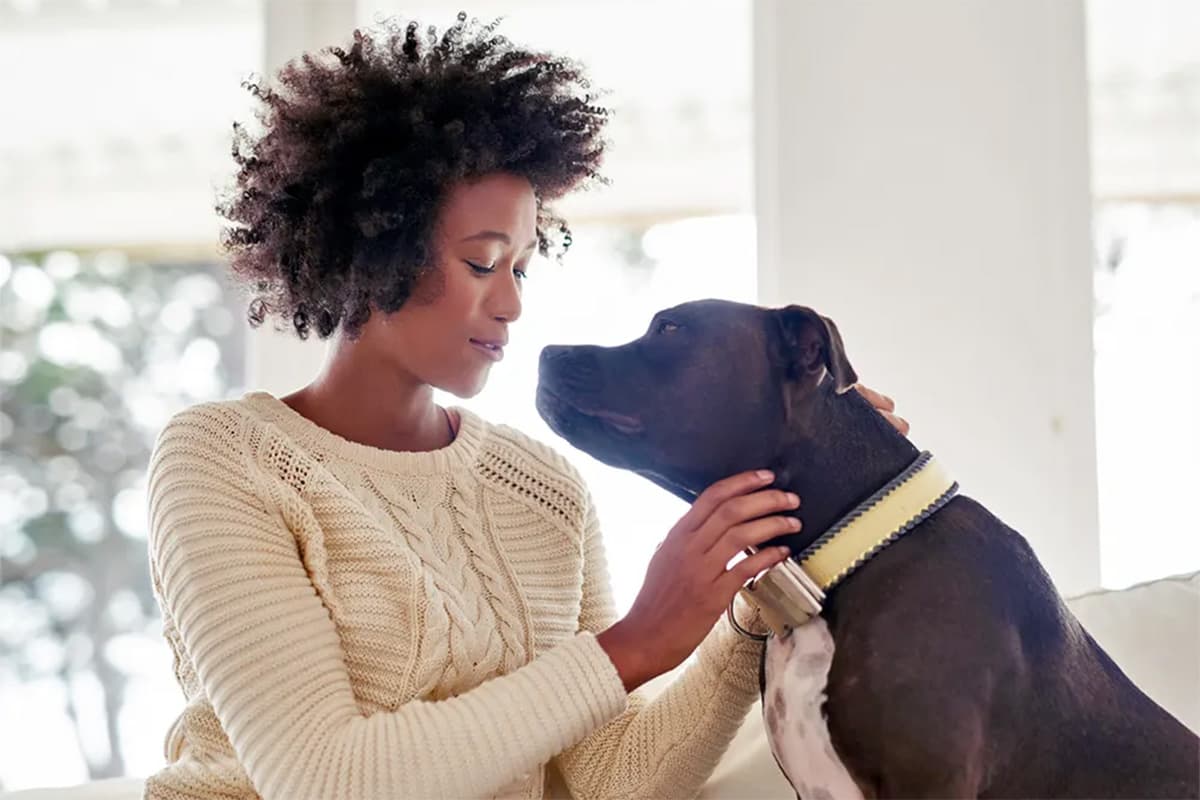
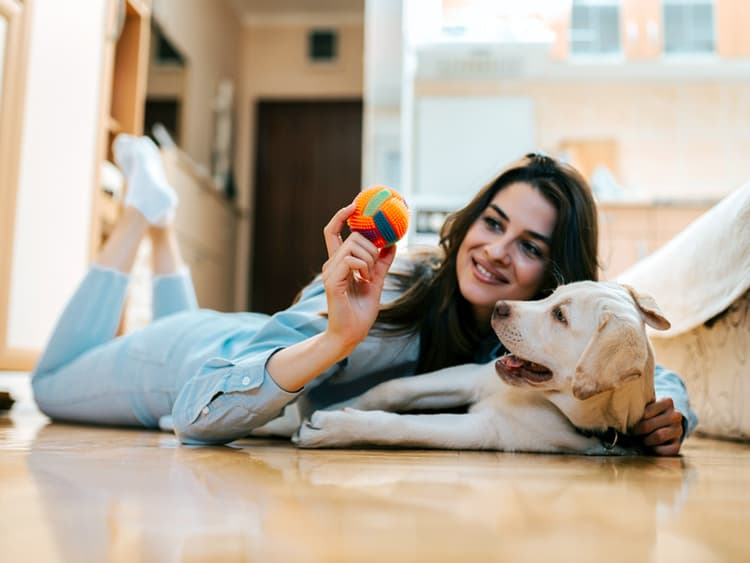
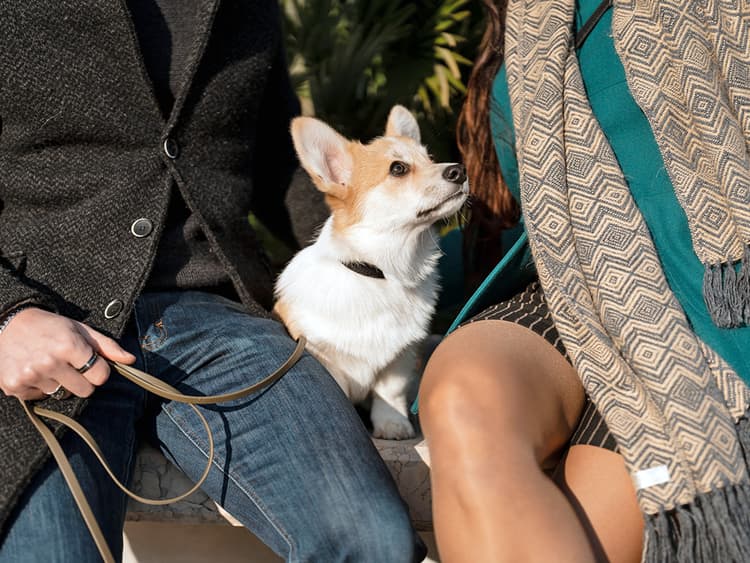
Highly intelligent dogs are able to learn your habits, body language, tone, and micro-signals, too. “They watch you closely, almost as if studying your actions,” Dr. Han explains. “They notice when you grab your shoes or keys before a walk.” Interestingly, smart dogs often anticipate your next move — like when they grab their own leash, walk to the door, or wait by the window when you’re due to be home soon.
Smart dogs often seem like mind readers. They track time, habits, and environmental cues. “Some dogs can predict routines down to the minute,” Dr. Han says. “Like when someone’s dog sits by the window five minutes before they get home each day. Other dogs will use objects or sounds to communicate, like ringing a bell to go outside.”
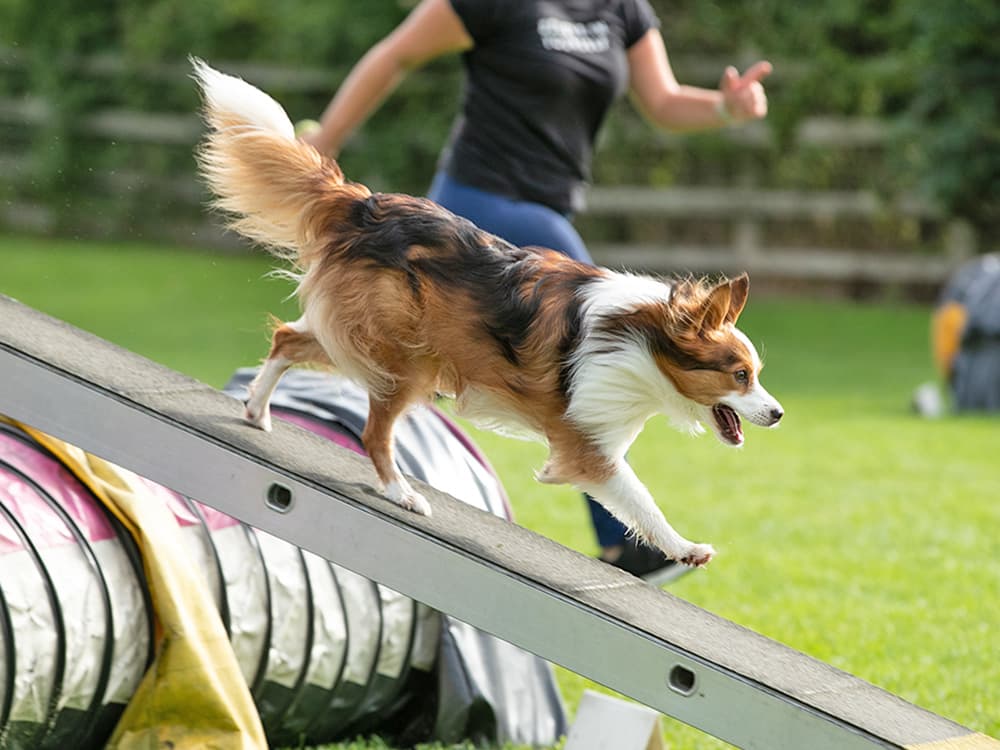
When a dog invents their own forms of entertainment, it’s a sign of higher cognitive ability and curiosity. When boredom and their intelligent brain meet, it produces creative ways to stay busy.
Megan / Adobe Stock
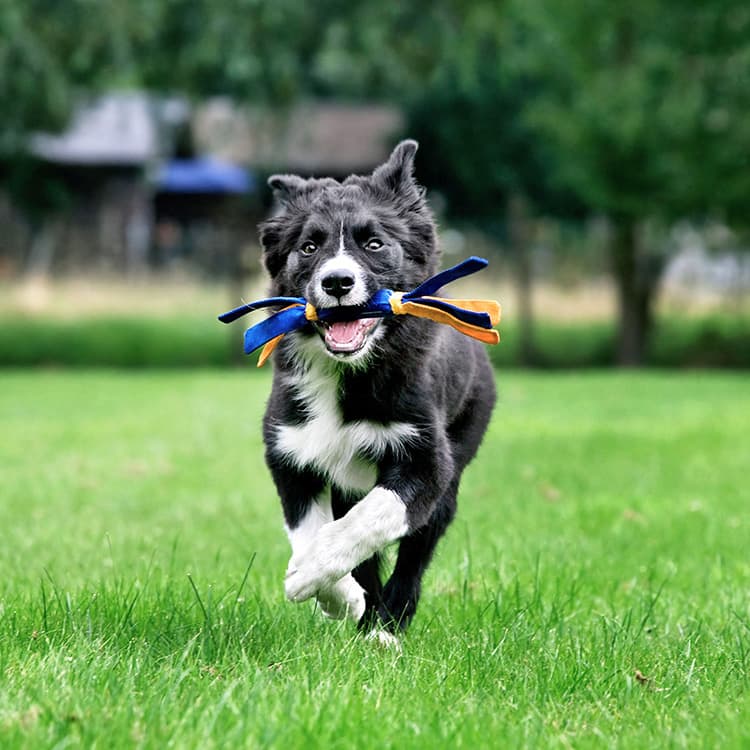
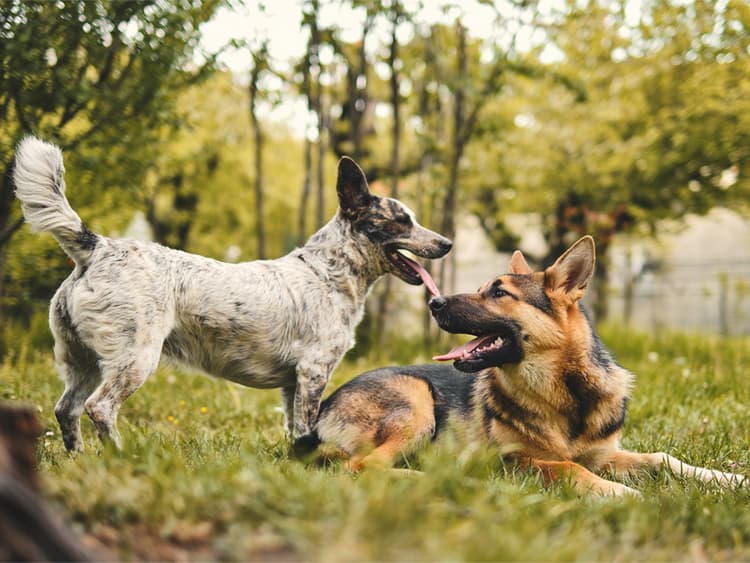
According to Dr. Han, some breeds were developed for jobs that require quick thinking, like Border Collies, Poodles, and Shepherds. Those dogs typically learn things quickly. However, every dog is different. “I’ve seen mixed breeds and rescues that are just as sharp as any purebred,” Dr. Han. “It often depends on the dog’s personality and how much the [pet parent] engages with them.” All that’s to say, training, engagement, and personality influence intelligence more than breed alone.
Many smart dogs aren’t uncooperative — they’re unimpressed. “A lot of ‘stubborn’ dogs are actually just very smart,” Dr. Han explains. “They know what you want; they just lack the motivation. It’s not that they don’t understand; they just have their own opinions.” In order to stay engaged, intelligent dogs often need variety, incentive, or the ability to make their own choices.
Lenti Hill / Adobe Stock
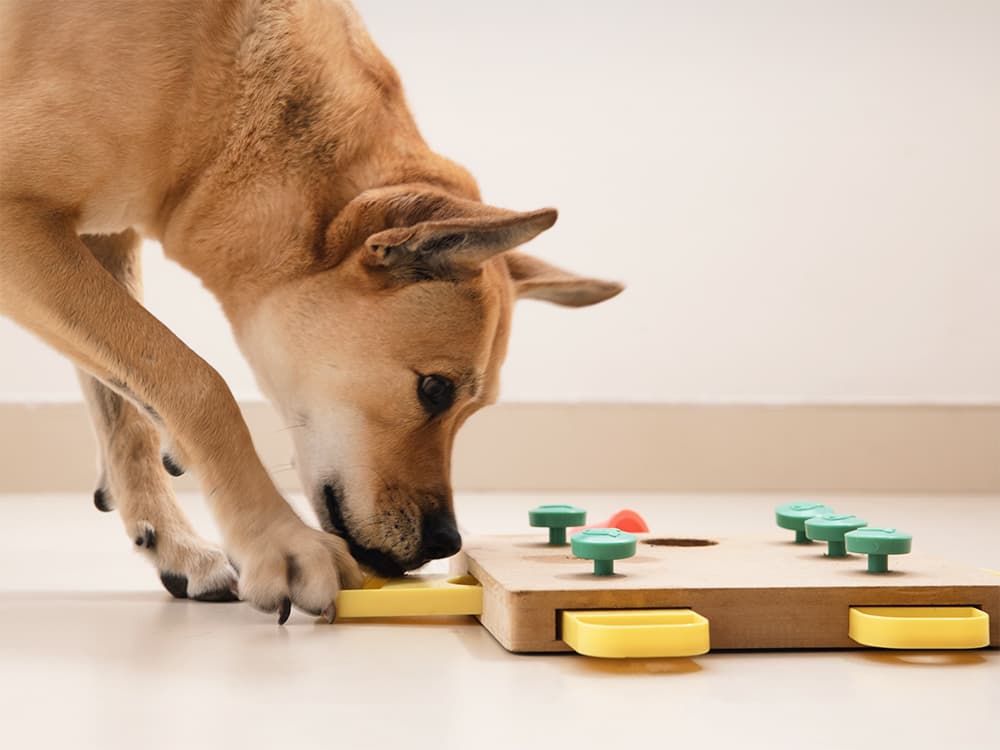
Per Dr. Han, dogs need mental stimulation just like people do. “If a dog is bored all day, they might seem lazy, but it’s really a lack of challenge,” he says. It’s important to incorporate enrichment into your dog’s daily life. Think puzzle feeders, scent work, varied walks, and short training sessions, too.
Smart dogs often remain cognitively engaged well into their senior years. “Learning new tricks, playing scent games, and taking short walks in new places all help,” Dr. Han says. “This mental stimulation can slow cognitive decline.” Regular vet check-ins can help catch early signs of aging or behavior changes before they worsen.
Dr. Han calls these the “too smart for their own good” dogs. “Really smart dogs get bored easily; they’re the ones who figure out how to open doors, get into the trash, or escape the yard,” he explains.

Julia Zavalishina / Shutterstock
So after reading those signs, you might think your pet is the smartest pup at the dog park — but are they a “label learner?” Only a few dogs in the world fall into this specific brainy category. Label-learner dogs are able to recognize a vast number of objects by name alone, and when it comes to canines, they’re considered to be the smartest of the smart. Scientists have long tried to pinpoint what makes these dogs so intelligent. And now, a study published in Scientific Reports identified three key traits that set genius dogs apart: curiosity, focus, and self-control.
“Being able to pick out such a wide variety of objects is not something any dog can do,” study lead Dr. Juliane Kaminski told the University of Portsmouth blog. “It is extremely rare and appears to be an inherent natural ability which is specific to the dog and not a quality that many dogs have.”
In the study, researchers at the University of Portsmouth examined 11 label-learning dogs across the United Kingdom, the United States, Switzerland, the Netherlands, and Germany. The dogs varied in breed, from Border Collies, mixed breeds, Spanish Water Dogs, and Pugs. Each dog had to pass an initial screening test, which involved fetching objects by name while their caretaker was out of sight.
“Label-learner dogs are so rare that it was not possible to find more than 11 for this particular study,” Dr. Juliane Bräuer, a professor from Germany’s Friedrich Schiller University Jena, who collaborated on the study, said. “However, to find such clear differences between label learners and the average dogs, was really surprising.”
Compared to the average dogs, the label-learner dogs spent significantly longer interacting with new objects and looked at them with more frequency; this indicated to researchers that label-learners are more curious about new objects. The label-learner dogs also exhibited targeted interest in specific objects, while the control group dogs interacted more randomly, leading researchers to conclude that label-learner pups are especially focused.
Finally, the label-learner dogs exhibited better impulse control than regular dogs. “Inhibitory control might be the essential cognitive building block underlying the label-learners ‘genius’ ability, as subjects must inhibit their preference for certain features of the objects they fetch,” Dr. Kaminski wrote.
“I am not so surprised that inhibition plays a role here,” added Dr Bräuer. “My own dog who is not a label-learner always struggled to inhibit her preferences when solving problems. She likes a ball so much, that she would not fetch a ring when a ball is present.”
Smart dogs show their intelligence in many small ways, from reading your routines to inventing games to pushing limits when they are bored. As Dr. Han explains, intelligence is shaped by personality, environment, and enrichment just as much as breed. The more you give your dog to think about, the more their abilities will shine.
Whether your pup is a genius problem solver or a mischievous escape artist, intelligence is something to celebrate in your home. With the right outlets and plenty of mental engagement, you can help them stay sharp, confident, and deeply connected to you at any and every age.

Daley is a longtime journalist and copywriter based in New York City. Her work has appeared in publications including New York Magazine, Real Simple, TODAY, Well + Good, and many more. Daley is the proud mom to her incredibly sweet n' small two-year-old Havanese puppy, Briar Rose.
Behavior & Training
Behavior & Training
Behavior & Training

Breed Info
Looking for an intelligent pup? You’ve come to the right place.


Breed Info
From Border Collies to Golden Retrievers — we’ll point you toward the breeds who excel in obedience.

Behavior & Training
Dogs have the ability to understand much more complex things than you give them credit for.