These Are the Noises Cats Hate
The internet says kitties despise “s” sounds, but it’s a little more complex than that. Here’s how to keep your cat happy.
The internet says kitties despise “s” sounds, but it’s a little more complex than that. Here’s how to keep your cat happy.
by Mollie Jackman, | June 26, 2026
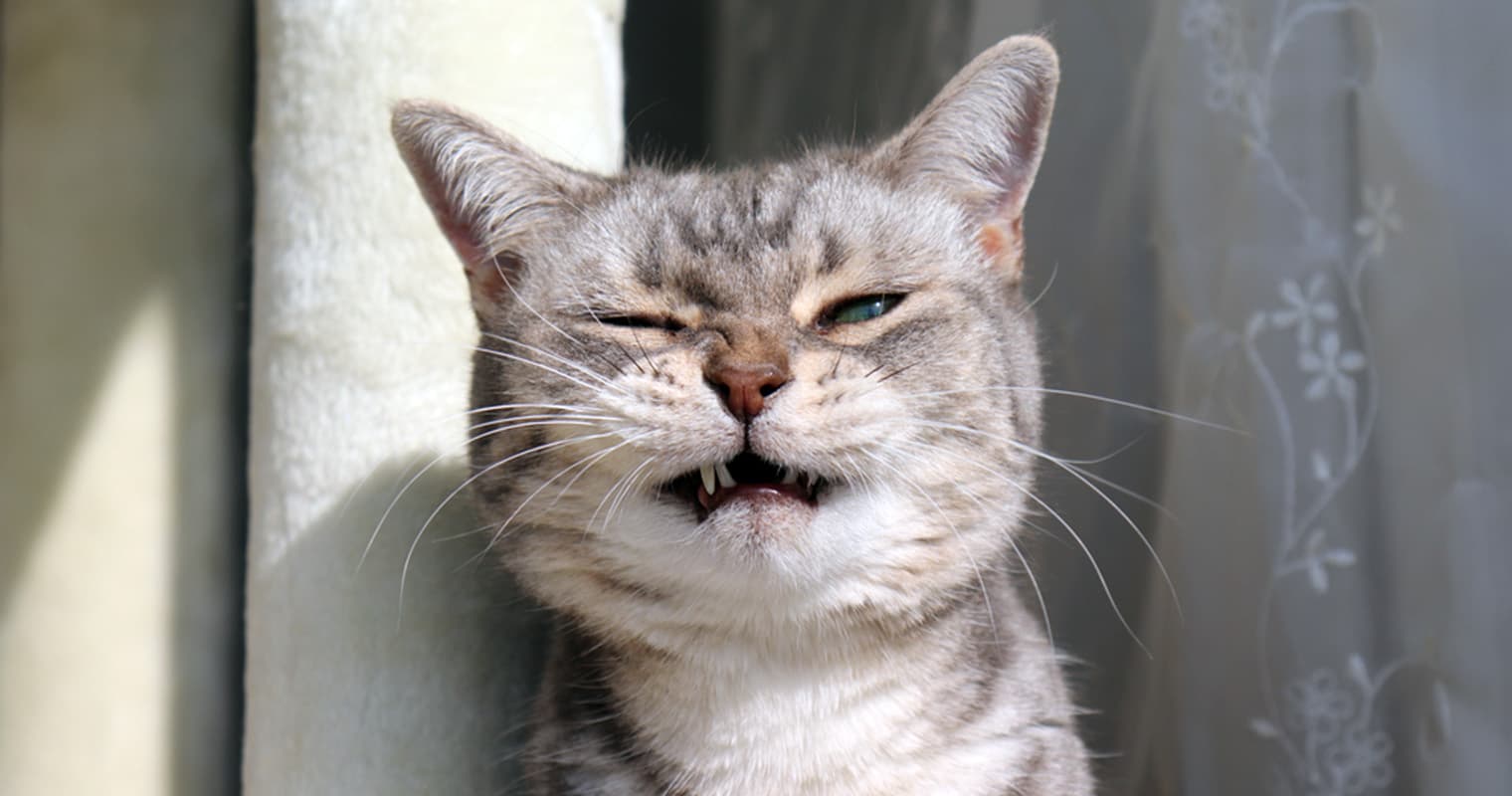
chie hidaka / Shutterstock
If you’ve ever watched a cat’s ears swivel and rotate independently, like two little radar dishes, you’ve witnessed one of the more impressive biological party tricks. It’s true — cats have exceptional hearing. Better than humans. Better even than dogs. While humans hear in a range of about 64 to 23,000 Hz and dogs 67 to 45,000 Hz, cats can hear sounds as low as 45 Hz and as high as 64,000 Hz (LSU). To put that in perspective, the G7 note that Mariah Carey could hit at the top of her range in the ’90s is about 3,136 Hz.
It turns out they have some of the best hearing among all mammals — particularly when it comes to high pitches and pinpointing exact locations. These abilities are likely part of cats’ evolutionary journey, developed for hunting small, fast-moving prey like mice and birds.
A cat’s keen hearing also makes it difficult for other larger animals to sneak up and attack them. Because cats in the wild are both predator and prey, they have evolved to be ever vigilant and are ready to flee at a moment’s notice or the slightest unexpected noise. After all, in the wild, when something is unexpected, it is usually dangerous. And any animal that manages to get close to you without you knowing is almost definitely a threat.
Cats aren’t bad, they’re just wild. Here’s how to satisfy their natural instincts without sacrificing your home — or sanity.
So, while there are all sorts of stories out there about how much cats hate certain sounds, the truth is a little more complicated. “It’s really about unpredictability and magnitude,” says Dr. Marci Koski, a certified feline behavior and training consultant at Feline Behavior Solutions.
In other words, a sound has to be surprising and loud for it to actually have an impact. Meaning the sound itself doesn’t really matter. Loudness alone is also not enough to upset most cats. “In our house, we have a big TV with surround sound,” Dr. Koski adds. “And we will be sitting there watching Dune or Star Wars at full volume, and the cats are just snoozing away all around us.”
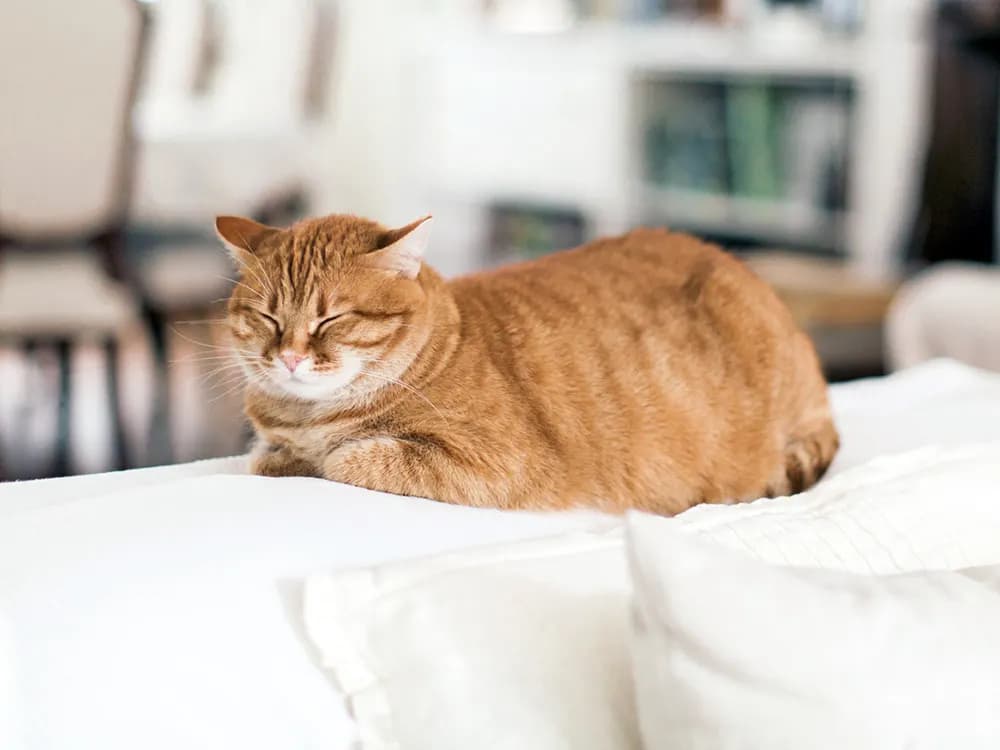
Laura Stolfi / Stocksy
Let’s break down some common noises cats tend to dislike and why they don’t like them. This can help you and your feline friend stay in a calm, relaxed state and avoid triggers.
Vacuums, ice-makers, hair dryers, and other loud household appliances cause unpredictable noises — often paired with sudden or unexpected movements — that can trigger your cat’s startle or defense response.
Cats hear much higher frequencies than humans, so that outlet you can barely hear humming may be intense or irritating to them. Smoke detector chirps and alarms can be especially irritating.
Slamming doors, putting away pots and pans, thunder, and other unexpected noises may also trigger your cat’s startle response.
From overstimulation to hidden pain, here’s what might be behind your cat’s unexpected swats or bites.
Although another cat hissing may seem like an obvious reason for a cat to be startled, they also react to harsh-sounding human voices. They tend to read harsh or loud voices as aggression, triggering their defenses.
While some cats may learn to recognize the sound of a crinkle ball or a food wrapper, the sharp, irregular noises caused by metallic or crinkly surfaces may cause fear or anxiety.
This one’s pretty self-explanatory: Fireworks are loud, unpredictable, and combine a lot of sensory information into one quick burst. There’s loud noise, vibration, and light that can all startle your cat on their own let alone combined.
To your cat, dogs barking, babies crying, or wildlife sounds from your yard can signal territorial threats or predators. This can trigger defensive or scared behavior, and even lead to things like spraying or marking in certain situations.
Wanwajee Weeraphukdee / Shutterstock
Cats would probably prefer a quiet house. It‘s less stimulating, and it is harder for something to sneak up on you when it’s quiet, but that doesn’t mean cats are distressed by the presence of noise. Yes, their response when they are startled by a loud noise is more extreme than yours — you jump, while they run for cover — but that sort of behavior is to be expected in a prey animal, and the safer your cat feels in your home, the less likely they are to go running when startled. You can’t predict loud noises in your home or prevent them from happening; it’s just part of the daily life you and your cat has to deal with.
What about vacuum cleaners, though? We’ve all met cats who seem absolutely terrified of the vacuum cleaner, but, according to Dr. Koski, the noises they make, loud and high-pitched as they are, are only part of what makes them so threatening.
“Vacuums are these big things that move forward and back and that sort of movement can be very threatening to a small cat,” she says. But, again, play vacuum cleaner noises quietly on your computer like I did for my friend’s cat, and your cat probably won’t care at all.
It's also unlikely that they care much about the low-level humming of the refrigerator or air conditioner in your home. True, such noises don’t exist in the wild, and cats generally prefer less noise to more, but if you’re worried your cat doesn’t spend time in the kitchen because the hum of the refrigerator is driving them away, don’t.
“Cats generally avoid kitchens because there aren’t a lot of scent absorbers [permeable surfaces] they can leave their scent on or soft places for them to lay down and relax,” Dr. Koski says. “Also, we don’t normally play with them in the kitchen, so there’s really not a lot of reasons for them to be in there.”
So, are there any specific noises that have been proven to upset cats at any volume, even when not surprising? The two vets I reached out to for this article didn’t know of any, but veterinary nurse Gemma Renwick recently told British tabloid The Sun, that cats hate when you make “s” sounds because it’s like you are hissing at them.
“[It’s] almost like swearing at them every time you want their attention,” she said. Dr. Koski disagrees, though. “If what she’s saying was true, then my cat Samantha would pull away every time I said her name, and she doesn’t.”
In the interest of science, I tried making “s” sounds at five different cats in three different friends’ homes, and none of them seemed to care in the slightest. Probably because cats are smart enough to know the difference between a hiss and human “s” sound.
Not to mention, the fact that the cats I tried this on know me well enough to know that I’m not a threat. Certainly not compared to a veterinary nurse, whom they would only see under unusual and stressful circumstances, outside their home, surrounded by the smells and sounds of other distressed animals. This is not to say Renwick is lying about what she observed, only that it seems like there are some conflated variables influencing her conclusions.
Context matters. Cats are sensitive creatures with fantastic hearing, but it’s inaccurate to state they don’t like certain noises and leave it at that. Cats, like other animals, including most humans, don’t like being surprised, especially in a threatening way. That’s what scares them — not the noise itself, the surprise. It’s like when people were posting videos of cats reacting to cucumbers being placed behind them.
The cats would jump and hiss and people said it meant that cats were afraid of cucumbers because cucumbers look like snakes. Sure, a cucumber sort of looks like a very short, chubby snake if viewed out of the corner of your eye, but it would be hard to prove that this is what cats are thinking when viewing a cucumber and, according to Dr. Koski, it is much more likely that they were simply reacting to being surprised.
“When cats are eating, they are putting themselves in a position of vulnerability,” Dr. Koski says. “Their face is to the wall, with their backs exposed to the open room, so they are already on high alert. And if they turn around and there is something unexpected there, it’s probably going to freak them out, whether it is a cucumber or not.” Again, it is the surprise that affects them, not the object itself. Just like it is the surprise of some loud noise that gets them all riled up, not the noise itself.
Most pet and veterinary organizations do not recommend using noise as a behavioral deterrent for cats. Loud noises tend to startle cats, triggering a reflex rather than creating a training moment. Repeating these noises can also cause chronic stress and anxiety, and most studies show that cats don’t really associate “punishment” like loud noises with a behavior. In fact, they’re more likely to associate that loud, unpleasant sound with you, which can damage your relationship with your pet.
Some experts note that brief, nonthreatening noises to interrupt a behavior (like a soft clap or saying “no”) may help stop a behavior quickly if necessary, but should not be your main training strategy.
In instances where you may try to deter stray, feral, or neighborhood cats from your yard, ultrasonic pest control devices may be helpful. But the verdict is out on if they’re truly safe for cats’ sensitive hearing.
If you’re unsure how to tell if your cat is stressed, here are some things to look out for:
Hiding more than usual
Avoiding people or other pets
Freezing, crouching, or staying on high-alert
Sleeping more or less
Lower interest in play or interactions
In their body language, it can show up as:
“Airplane” ears — flattened or sideways
Dilated pupils in normal lighting
Tail flicking
Crouched posture
Startling more than usual
Vomiting
Decreased appetite
They can even have health-related responses to prolonged or repeated stress:
Recurrent urinary tract issues or crystals
Digestive problems
Weakened immune system (this can cause flare-ups of feline herpes, colds, and more)
If you’re trying to discourage a specific behavior, it helps if you can remember that cats aren’t being “bad” — they’re usually just following their instincts and reacting to their environments. Instead of using noise, which can be stressful and confusing for your cat, try these gentler approaches.
If your cat is trespassing in areas you don’t want them — like on counters or tables — try using double-sided tape, deterrent mats, or aluminum foil to create an unpleasant texture. This can create a habit for your cat, realizing that when they enter these areas, it’s a surface that isn’t comfortable to walk or lie on.
Cats do best when they have an alternative space that meets their needs. They may be searching for a high place — try placing a cat tree or cat track at the same level as the surface they were aiming for. Use scratching posts near the furniture they go after, and try food puzzles to redirect counter-surfing or boredom.
Many unwanted behaviors come from boredom or excess energy. Try channeling your cat’s energy with play sessions. Chaseable toys like feather wands or laser pointers are great ways to help them expend energy. You can rotate the toys every few days to keep them interested. (For renters with cats, getting that excess energy out will be extra-important for getting your deposit back.)
At the end of the day, cats respond best to guidance that feels safe, clear, and not overwhelming. Although noise deterrents can stop a behavior in the moment, they may have unwanted and lasting effects that change your relationship with your cat. Using gentle alternatives like redirection and play can help foster a closer relationship and a calmer cat in the long run.
Most cats dislike loud, sudden noises — things like vacuums, fireworks, alarms, and so on. These sounds trigger their natural startle response and can feel threatening.
If you’re having issues with a neighbor’s pet, try talking to the neighbor first. They may be able to solve the issue without any action required on your part. But to protect gardens or plants, you can use physical barriers or even scent-based deterrents. Ultrasonic pest deterrents are available, but how safe they are for cats is unclear.
The most recommended cat deterrents include uncomfortable (but not harmful) textures such as tin foil, motion-activated air deterrents, or simply blocking access to their desired object or place. Keep in mind that the goal is to discourage the behavior and not to scare the cat.
Short answer: sometimes. Many cats dislike the sound and texture of foil and will avoid it, at least temporarily. This can help to break a habit like jumping on counters, but it’s best not to rely on foil for long-term solutions. Instead, try creating a comfortable, similar space your cat can access and encourage them to visit that space instead.
“Cat Advice.” Icatcare.org, 2025, icatcare.org/advice/how-cats-communicate-with-humans.
“Common Cat Behavior Issues.” ASPCA, 2015, www.aspca.org/pet-care/cat-care/common-cat-behavior-issues.
“Cornell Feline Health Center.” Cornell University College of Veterinary Medicine, 2 Oct. 2017, www.vet.cornell.edu/departments-centers-and-institutes/cornell-feline-health-center.
Heffner, Rickye S., and Henry E. Heffner. “Hearing Range of the Domestic Cat.” Hearing Research, vol. 19, no. 1, Jan. 1985, pp. 85–88, https://doi.org/10.1016/0378-5955(85)90100-5.
International Cat Care. “Stress in Cats | International Cat Care.” Icatcare.org, 5 Oct. 2018, icatcare.org/advice/stress-in-cats.
Johnson, Dr Kris. “What Is “Pandora Syndrome” in Our Feline Patients? - Fairhaven Veterinary Hospital | Complete Care for Your Pets.” Fairhaven Veterinary Hospital | Complete Care for Your Pets, 31 May 2016, fairhavenvet.com/what-is-pandora-syndrome-in-our-feline-patients.
Manual. “Behavior of Cats - Merck Veterinary Manual.” Merck Veterinary Manual, 2025, www.merckvetmanual.com/cat-owners/behavior-of-cats.

Mollie Jackman is a writer, editor, and graduate of Lindenwood University’s MFA in writing. She’s also a pet parent to a goofy big-eared dog and two brown tabby cats, plus a rotating cast of foster animals. When she’s not reading, writing, or picking up strays, she can be found binge-watching arguably terrible reality TV shows and cooking competitions or rolling around the local skating rink in Columbia, Missouri. Mollie’s writing on this site is not in any way affiliated with the University of Missouri, or her work as a copywriter for MU Health Care.
Behavior & Training
Pet Wellness

Adoption Advice
Adoption Advice
Meeting a cat for the first time? Here’s how to make it a stress-free experience for both of you. Learn how to approach, interact, and befriend a cat you’re considering adopting.
Behavior & Training
From overstimulation to hidden pain, here’s what might be behind your cat’s unexpected swats or bites.

Behavior & Training
The good news: They probably won’t go far. The bad: There are many dangers outdoors. Read on for tips to prevent your indoor cat from slipping outside.

Behavior & Training
What your cat can handle, what they can’t, and how to keep them happy while you’re gone.
Behavior & Training
From kibble to cable wires, here’s a peek into your cat’s chewing habits — and how to decode their behavior when they’re nibbling on all the things.
Behavior & Training
Is your new cat scratching everything in sight? It’s natural, but not necessary. Here are proven ways to discourage that behavior.