What Experts Wish People Knew About Cats
Here are six signs that cat experts and shelter staff wish people knew more about.
Here are six signs that cat experts and shelter staff wish people knew more about.
by Karen B. London, PhD, CAAB, CPDT-KA, | November 2, 2026

BONNINSTUDIO / Stocksy
Cats have a reputation for being mysterious, but that’s just because people don’t fully understand them. The more you understand them, the better you can build relationships with them and have even more fun living with them.
Whether you’ve just adopted a cat, are thinking about adopting one, or want to get to know your feline buddy a little better, here are some of the things shelter staff and cat experts most wish people knew about cat behavior.

Carolyn Lagattuta / Stocksy
Your new cat may hide under the bed, keep their distance, or act uninterested in anyone in their new home. They may seem completely unimpressed by your attempts to befriend them. You may begin to wonder if they are a good match for you.
Cats need time to warm up, and that’s even true for confident, outgoing cats. Change can stress cats, and that stress can make many cats cautious or withdrawn. They need time to observe and time to adjust to their new home. Once they’ve settled in, their true personality will reveal itself. Once they feel used to all the changes in their life, which takes time, they will warm up.
Gillian Vann / Stocksy
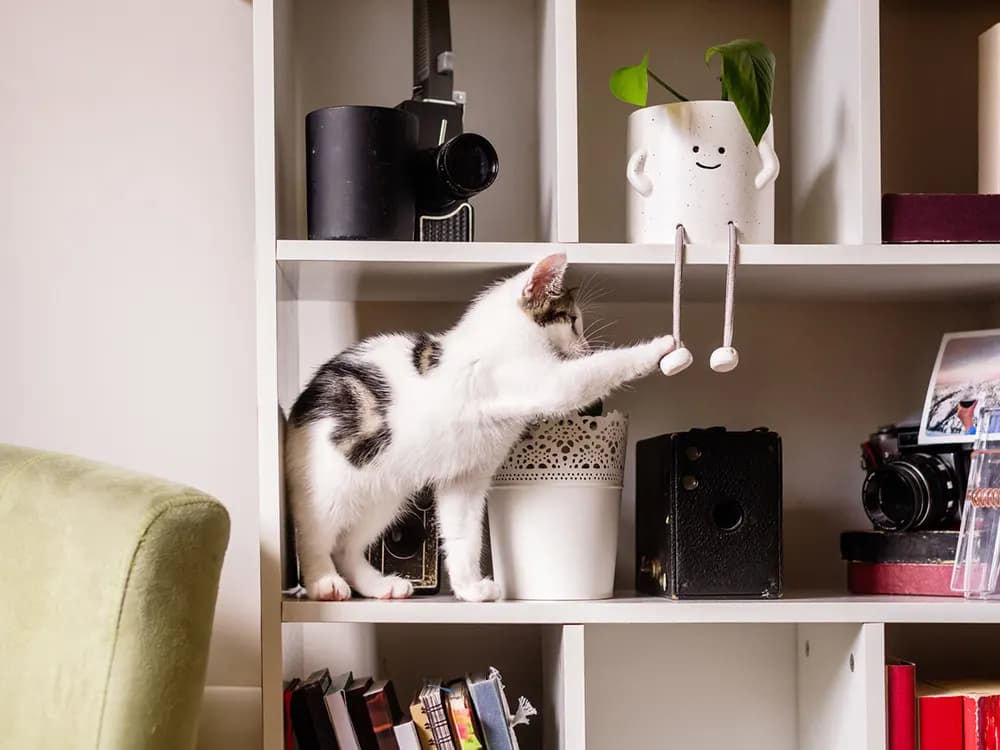
Seeking high spots in a room is common cat behavior, and for good reason. Cats feel secure when they are up high, and part of making them feel comfortable in their new home is offering high perches for this purpose. Ideally, every room in the house has a high spot for a cat to escape to. A cat tree, a bookshelf, the fridge, a wall shelf, or any other high spot can work.
These elevated spots allow cats to create some distance or even escape from people and dogs and also allow them a vantage point to observe. Being able to escape vertically helps many cats feel less overwhelmed in their new home. Many cats are perfectly happy watching from a perch. Being able to observe without interacting until they are ready makes them more likely to feel comfortable enough to come down and socialize.
Amor Burakova / Stocksy
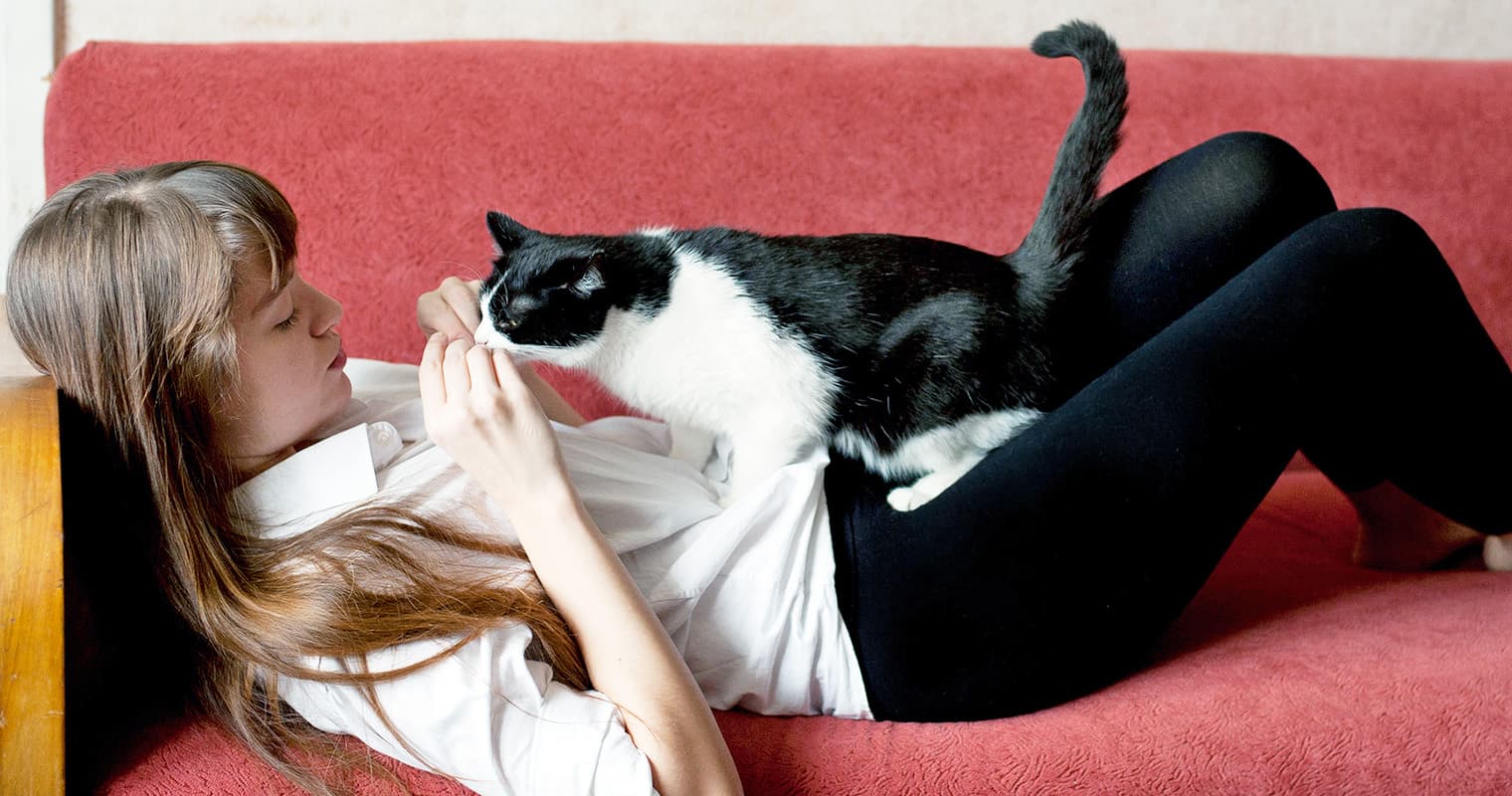
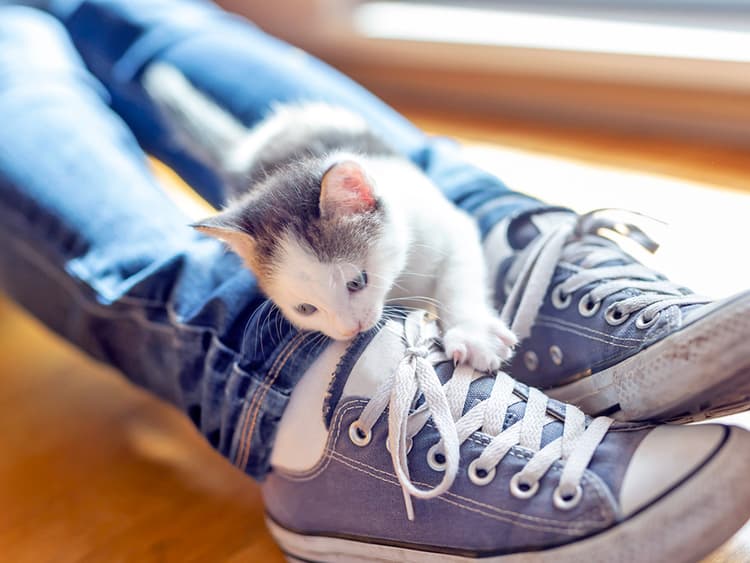
We’ve all seen it happen. Everyone is hanging out, and the one person who isn’t fond of cats, or may even be allergic to them, suddenly has a cat in their lap. Or rubbing against their leg, or climbing onto their shoulders. Meanwhile, true cat lovers sit nearby thinking, “Why didn’t they choose me?”
The pattern is too common to dismiss. It’s a real phenomenon, but why does it happen so often? There is a reason. Unlike the cat lovers, the people who aren’t particularly interested in cats usually put no pressure on them. They’re less likely to stare, try to coax them over, reach for them, pet them, or attempt to pick them up. From a cat’s point of view, that low-key person is the least intimidating person in the room, and therefore the most appealing.
Especially for cats with any degree of caution or hesitation, people who insist they are not cat people may, quite by accident, be the cat’s safe haven. They are doing exactly what cat experts recommend: allowing the cat to decide when and how to interact.

Laura Stolfi / Stocksy
When introducing your new cat to the humans and other animals in your household, the goal isn’t instant friendship. It’s to make the experience positive and prevent the cat from becoming overwhelmed. That gives new relationships the chance to develop naturally. Being great friends immediately is not the plan, though if it happens (and it sometimes does!) remember to feel lucky because that’s not typical.
Introducing your new cat to each human in the household with care pays dividends. That first experience sets the tone for the relationship, so don’t rush it. Let your new cat explore gradually. Resist the temptation to force any interaction and you will likely see faster progress with the new friendships. People should let the cat come to them rather than try too hard just because they are ready for a new feline friend.
You can’t count on cats making friends with each other overnight. In fact, a good introduction between cats is about doing it slowly, step by step, and never rushing either cat beyond their comfort level.

Are you bringing home a new kitten? Find out the best way to introduce your new kitten to your crew.
Start by letting each cat get familiar with the other’s scent. Exchange blankets or bedding they’ve slept on. Keep the cats in separate parts of the house and feed them on opposite sides of a closed door. After a few days or weeks when both cats are eating and remaining calm, switch their locations. Let each cat explore the other’s area and use the other cat’s bed, perches, bowls, and (scooped!) litter box.
Once the cats are comfortable with that, let them see each other through a gate at the boundary between their areas. Continue feeding them near the doorway. Only when both cats are relaxed in this situation are they ready to meet face-to-face.
Introducing your new cat to a dog also needs a slow, careful approach. If an initial dog-and-cat introduction goes poorly, it can be difficult to turn that relationship around. When introducing cats to dogs, do it right because you can’t do it over. The goal isn’t to rush toward a friendship between your dog and your new cat. It’s to make sure they have a positive experience so they can become good friends eventually.

Navigate the process of introducing pets with ease using our expert guide on creating a harmonious bond between your pets.
Even a friendly, cat-loving dog may overwhelm a new cat and make the cat hesitant about being around the dog again. Keep them separate and only allow them to interact through gates until they are calm and accustomed to each other. This can take weeks. Then, move to carefully controlled situations with the dog on leash and the cat having easy access to an escape up high or an escape hatch too small for the dog to follow.
Valeria Boltneva / Pexels
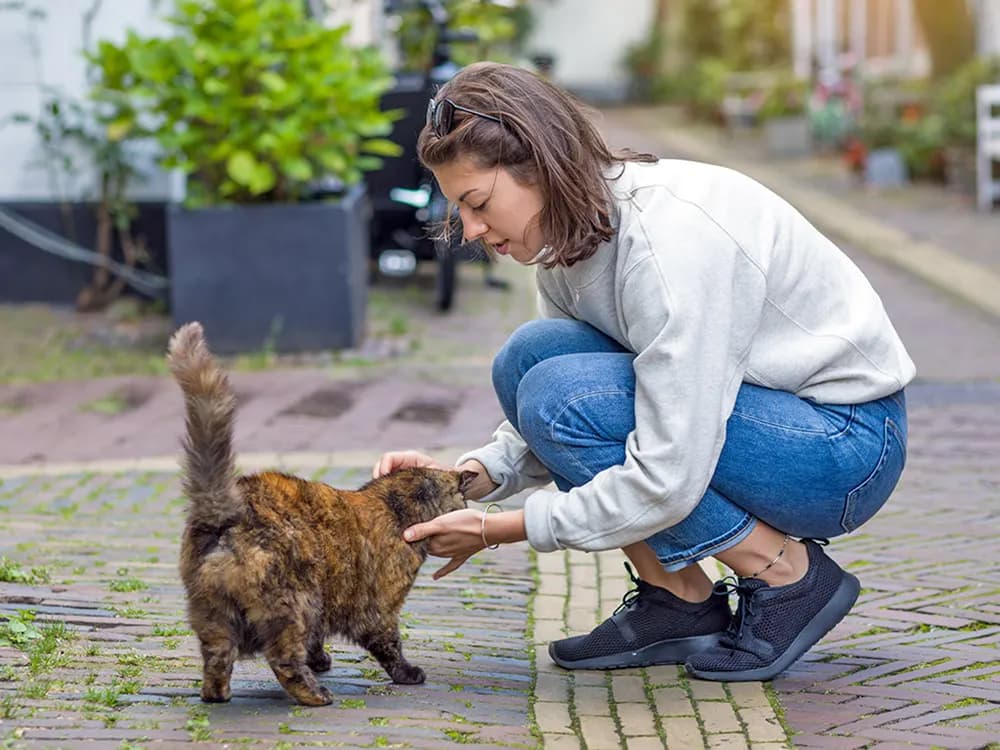
If you want to build a loving relationship with your new cat, here are three words to remember: patience, patience, patience.
Patience with your newly adopted cat can help with all kinds of challenges because it gives your cat the opportunity to learn that you are trustworthy. Maybe your cat is hesitant to come out from under the bed or down off the cat tree. Maybe they don’t want to be held. Maybe they bolt whenever you walk through the room.
No matter what the issue, there is nothing to be gained from pushing them to interact and everything to be gained from waiting until they are ready. They are letting you know they need time and space. Let your cat decide when to approach you and when to move the relationship forward. Trying to convince or force them to love you will only slow down your growing friendship.
papa / Adobe Stock
Understanding your cat means observing their body language. Paying attention to their subtle behavior signals gives all kinds of clues about how they are feeling and what they want.
Sometimes the message is wonderfully clear. If your cat swats at you, hisses, growls, or walks away, they’re clearly saying they would like some space. Likewise, if they come over to you, rub against you while purring, weave in and out of your legs, or climb into your lap or onto your shoulder, it’s pretty safe to say they are looking for some quality time with you.
It’s the subtler signs that cat experts and shelter staff wish people knew more about. These quieter clues can help you tell the difference between a cat who is genuinely comfortable and happy in a situation and one who is stressed and just tolerating whatever is happening. Here are some subtle behavioral signals to watch for in your new cat, and what they may reveal about their emotional state.

Is your new cat giving you the cold shoulder? Here’s how to get them to warm up.
Slowly opening and closing their eyes. This suggests your cat is friendly, relaxed, and non-threatening. Think of it as a feline “all good here.”
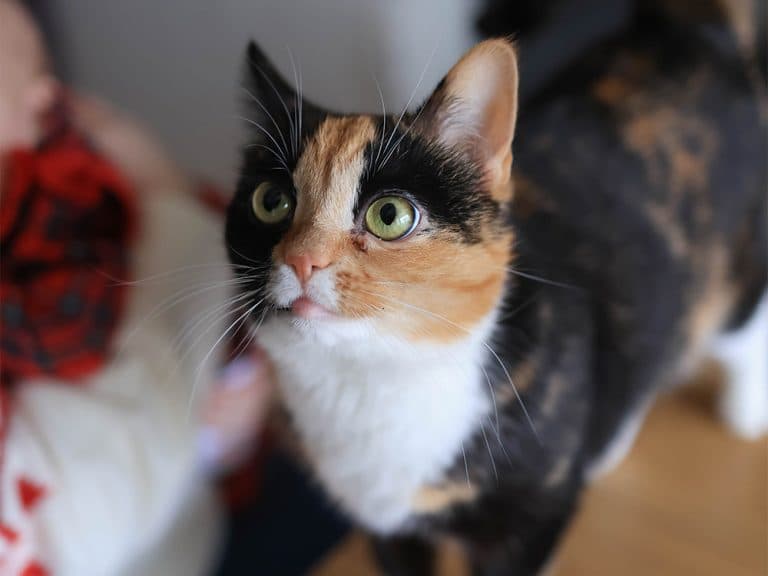
Dilated pupils. These indicate high arousal, which doesn’t automatically mean something is wrong. Your cat could be frightened, playful, or excited, so look at the rest of their body language for clues.
Ears rotated sideways or pinned back. These positions can signal a negative emotional state such as fearfulness or irritability. An overwhelmed cat may also hold their ears in these ways.
Whiskers pushed forward. This often means curiosity, interest, or intense focus. Whiskers pulled tight against the face, however, can suggest fear or stress.
Holding one paw up. Your cat may be hesitating or feeling tension.
Bumping their head against you. Known as bunting, this usually means a cat wants attention. This behavior likely has roots in territorial marking, using scent glands on the head.
A twitching tail tip. If just the tip of the tail is twitching, your cat is probably annoyed or agitated. If that same tail tip quivers at the end of an upright tail, your cat is more likely to be excited and happy. Same part of the tail, different message!
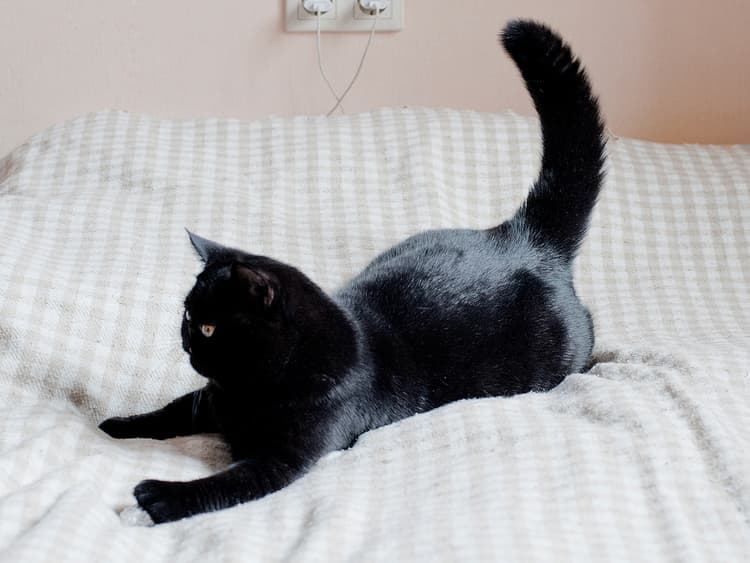
A tail held straight up or in the shape of a question mark. This generally indicates that your cat is content, friendly, and confident.
Turning their head away. Your cat may be trying to avoid interaction and asking for a little more space.

Karen B. London, Ph.D., is a Certified Applied Animal Behaviorist and Certified Professional Dog Trainer who specializes in working with dogs with serious behavioral issues, including aggression, and has also trained other animals including cats, birds, snakes, and insects. She writes the animal column for the Arizona Daily Sun and is an Adjunct Professor in the Department of Biological Sciences at Northern Arizona University. She is the author of six books about training and behavior, including her most recent, Treat Everyone Like a Dog: How a Dog Trainer’s World View Can Improve Your Life.
Behavior & Training

Behavior & Training
Pet Wellness
Behavior & Training
Not into cuddling? Too bad—they’re spending the night.

Lifestyle
Here’s how to help your rescue kitty feel at home.
Behavior & Training
They aren’t exactly going to weep over a rom-com marathon with you, but here are the reasons your kitty could shed a tear.
Lifestyle
How you can train your cat to explore the great outdoors.
Behavior & Training
Fast, furious, and officially normal — according to a cat behaviorist.

Behavior & Training
Your cat’s hissy fit could mean Don’t test me or Let’s do this. We wouldn’t call their bluff.