Why Does Your Dog Bring Food to the Carpet to Eat?
This might be instinctual but could mean something more.
This might be instinctual but could mean something more.
by Valerie Mellema, | March 19, 2025
New Africa / Shutterstock
Have you ever watched your dog grab a mouthful of kibble, trot over to the carpet, drop it, and eat it one piece at a time? It’s common, sometimes frustrating (and messy) behavior that leaves pet parents confused. Why do dogs insist on dining in a different spot when they have a perfect food bowl? As odd as it may seem, this habit is rooted in a pup’s instincts, environment, and personal preferences.
When your dog brings food to the carpet to eat, they aren’t doing it to be a nuisance. They’re following behaviors passed down from wild ancestors or reacting to their surroundings. Whether they are trying to protect their meal, avoid an uncomfortable (or unclean) bowl, or prefer the texture of the carpet under their paws, there’s a logical reason behind the habit.
They seem to be bottomless pits, but something has to to tell them when to stop... right?
Absolutely. Many dogs exhibit this behavior; in most cases, it’s normal, and there’s nothing to worry about. While some pups are content to gobble their meals straight from their bowl, others must relocate their food to eat it. This instinctual habit can be traced to their wolf ancestors, who often moved their food to safer locations to avoid annoyances or competition.
It may be worth investigating if your dog suddenly starts moving their food when they never did before or if they seem stressed while eating. Changes in behavior can indicate underlying issues that need attention.
Dogs may move their food to another room for various reasons, including instinct, comfort, and environmental factors, like noise or other animals. Some dogs feel safer eating in a quieter, more secluded place, while others have ingrained survival instincts to protect their meals from potential threats (other dogs or animals), even where there’s no one around. In some cases, the location of their food bowl may be uncomfortable, whether due to height, noise, foot traffic, or the texture of the floor beneath it.
Even if your dog is the only pet in the house, their instincts may tell them to protect their food. Dogs and wolves had to guard meals from others in the pack in the wild. Moving their food to another room (or a few feet away from their bowl) may be their way of ensuring no invisible competitor sneaks in for a bite.
According to Dr. Gary Richter, a veterinary health expert in Oakland, California, “Even though a domestic dog may not be in danger when eating, instincts can override everything else.”
Some dogs stash food for later, a habit leftover from their survival instincts. If they move their food to the carpet, they might treat the rug like a safe place to “store” their meal for later. If you notice your dog burying food under blankets or furniture or trying to nudge it under the rug, they could be in full-on hoarding mode.
The problem may not be the food but the bowl itself. Some dogs dislike metal bowls because they’re reflective and make clanking sounds when their tags hit them. Others may find deep bowls uncomfortable for their snouts. If your dog prefers the carpet over their bowl, try using a different type of dish to see if that makes a difference.
Not all dogs are social eaters. Some prefer quiet while they enjoy their meal. If their food bowl is placed in a high-traffic area, like the kitchen or near other pets, they may feel more comfortable carrying their food elsewhere, such as a cozy, carpeted spot where they won’t be disturbed.
Dogs in the wild often drag food away from the main feeding area to avoid conflict. This behavior can carry over to domestic life, even if they don’t have competition for their meal. Your dog may be following an instinctual urge to move their food to a safer location (and it might be your favorite rug).
There are a few things you can do to train your dog not to eat food on the carpet, including:
Move your dog’s bowl to a quieter area. If your dog prefers eating in a different room, try relocating their food bowl to a less busy spot.
Use a feeding mat. A non-slip, washable mat can create a designated eating area while keeping messes contained.
Try a different bowl. Some dogs dislike metal bowls due to reflections or noise, so consider switching to ceramic or silicone.
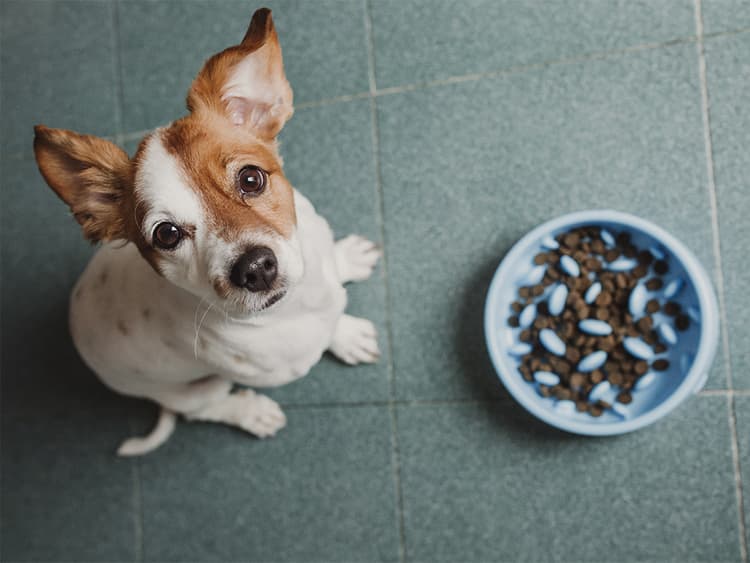
Make mealtime more engaging. Puzzle feeders or slow-feeder bowls can keep their focus on eating in one place.
Supervise your dog’s meals. Gently guide them back to their bowl if they try to carry food to the carpet. Reward them when they stay in their designated eating area.
Adjust their portions. Some dogs take food elsewhere because they’re overwhelmed by large servings. Reduce portions to ensure they feel comfortable.
In most cases, a dog taking food to another room is harmless, but sometimes, it signals an issue that needs attention. If your dog suddenly starts relocating their food, seems anxious while eating, or refuses to eat unless they move their food, then consult a veterinarian. Dental pain, digestive discomfort, or stress-related behaviors could be the underlying problem.
Additionally, if your dog exhibits extreme guarding behavior, like growling, snapping, or acting defensive around their food, you should seek help from a professional trainer or behaviorist.

A vet’s-eye-view of an all-too-common problem.
Your dog’s mealtime habits are (usually) driven by instinct, personal comfort, or environmental factors. They may be trying to find a quiet place to eat, avoiding an uncomfortable bowl, or following a natural urge to protect their food.
The bottom line is that this behavior shouldn't be concerning if your dog is healthy and happy. However, if it’s creating a mess or signaling anxiety, minor adjustments, like a feeding mat or moving their bowl, can help. If the behavior suddenly changes, it's wise to check with a vet or trainer.
Many dogs instinctively move food to a quieter, safer spot. They may dislike their bowl, find the floor too slippery, or prefer eating alone.
Your dog may feel more comfortable eating near you. They could also prefer carpeted surfaces or instinctively move food away to protect it.
Some dogs dislike eating from bowls, prefer foraging, or find it more comfortable to eat from the floor due to sensitive whiskers or bowl noises.
It’s usually harmless but can be messy. If it’s a sudden change, check for discomfort, anxiety, or bowl issues. Adjust feeding routines if necessary.
Richter, Gary. “Why Do Dogs Bring Their Food Somewhere Else to Eat It?” Reader’s Digest, https://www.rd.com/article/why-dogs-bring-their-food-somewhere-else-to-eat-it/
Petful. “Why Dog Carries Food Away: 6 Common Reasons.” Petful, https://www.petful.com/behaviors/why-dog-carries-food-away/
Wag! “Why Do Dogs Put Food on Carpet?” WagWalking, https://wagwalking.com/behavior/why-do-dogs-put-food-on-carpet
Vetstreet. “Why Does My Dog… Eat His Food Away from His Bowl?” Vetstreet, https://www.vetstreet.com/our-pet-experts/why-does-my-dog-eat-his-food-away-from-his-bowl
Valerie Mellema has a Bachelor of Science in Agribusiness and Equine Industry from West Texas A&M University. She has been a professional writer for the past 20 years, covering a wide variety of pet health and care topics before founding a nonprofit focused on mental health in children and thoroughbred aftercare. She has four Border Collies and eight retired racehorses.
Behavior & Training
Nutrition
Behavior & Training
Pet Wellness
And according to a new study, it’s putting their health at risk.