What’s the Difference Between an American Staffordshire Terrier and a Pit Bull?
The AmStaff and Pit Bull mix-up, explained.
The AmStaff and Pit Bull mix-up, explained.
by Emily Johnson, | December 29, 2025
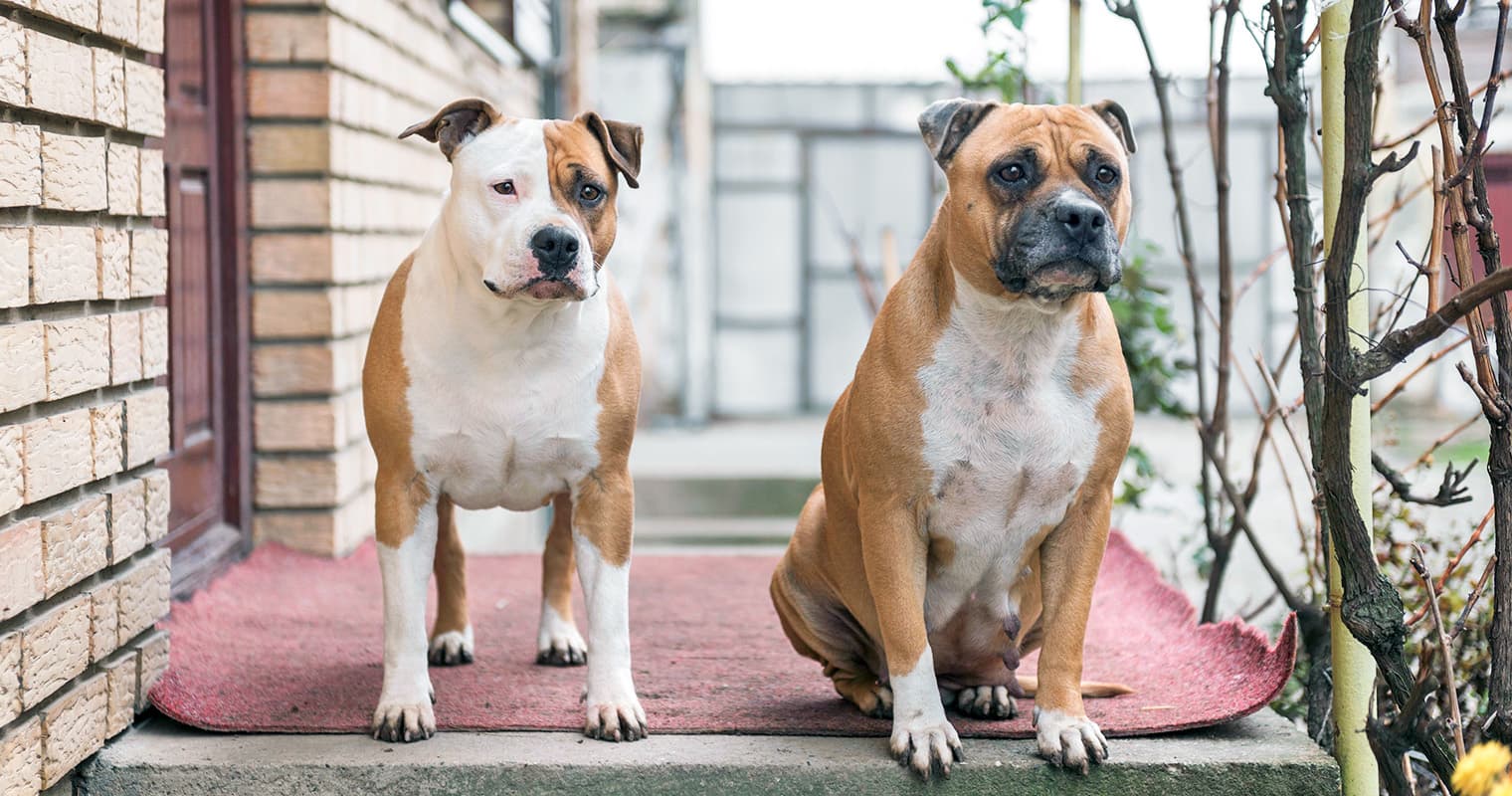
Djordje / Adobe Stock
American Staffordshire Terriers and Pit Bulls are often confused — and this is very common in shelters, where breed labels are more guesswork than guarantee. The mix-up makes sense: These dogs do share a similar look, a shared history, and many of the same personality traits. But they are not the same breed.
Bully mixes are among the most common dog mixes, so understanding the differences between an American Staffordshire Terrier (often called an AmStaff) and an American Pit Bull Terrier (APBT) can help potential pet parents learn about their new pet.
TL;DR: American Staffordshire Terriers and American Pit Bull Terriers share common ancestry and many similarities. AmStaffs usually have a stockier build, while Pit Bulls have more athletic ability, which often makes them leaner and more agile. Both breeds are loyal, affectionate, high-energy dogs who need training, socialization, and daily exercise to thrive.
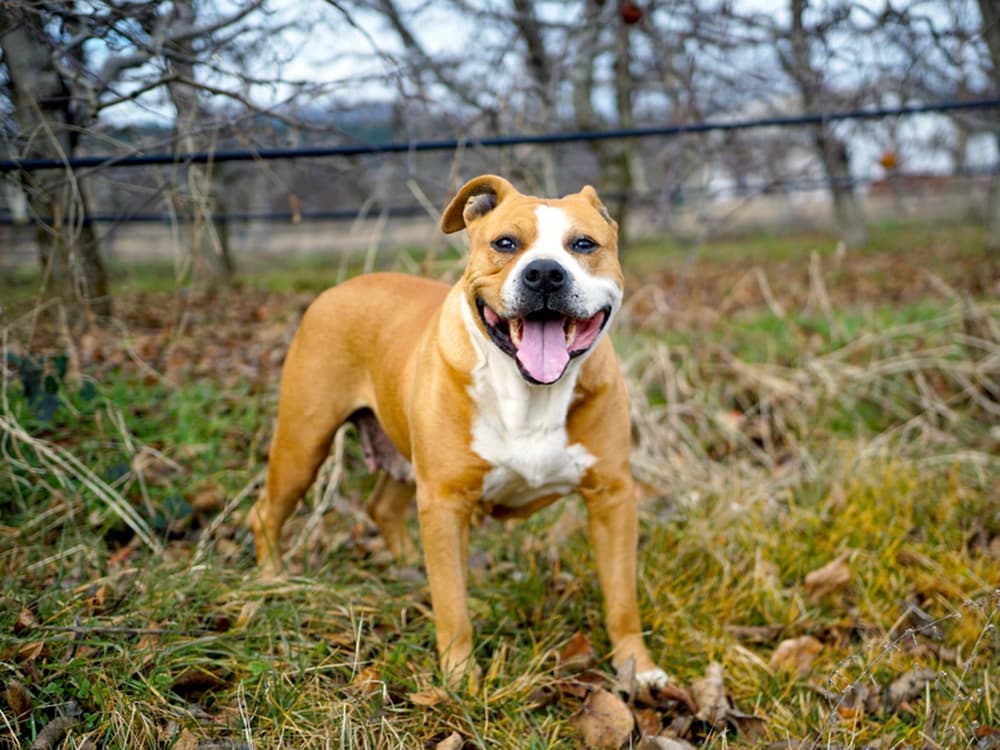
agrofruti / Shutterstock/ Amstaff
Both breeds trace their roots back to bulldog-and-terrier mixes developed in England during the 1800s. These dogs were bred for strength, stamina, and determination — traits that still show in both breeds today.
When these dogs were brought to the United States, breeders began focusing on different goals. Some worked toward creating a more uniform dog for the show ring. This line became the American Staffordshire Terrier, which was officially recognized by the American Kennel Club in 1936.
Other breeders focused on maintaining working ability and athletic performance. Those dogs became known as the American Pit Bull Terrier, which is recognized by the United Kennel Club.
Because of this shared background, many dogs — especially mixed breeds — can be hard to identify by looks alone. Research has shown that shelter dogs are often mislabeled as “Pit Bulls” when they are actually another breed or a mix. In one study, dogs with Pit Bull heritage were correctly identified by shelter staff and veterinarians only 33 to 75 percent of the time, and nearly half of the dogs without bully DNA were still labeled “Pit Bull-type.” This is why breed labels don’t always tell the full story.

Guessing a dog’s breed mix often leads to inaccurate labels. Here’s how to more precisely determine your dog’s genetic makeup.
At first glance, these two bully breeds can look nearly identical, but there are subtle physical differences between American Staffordshire Terriers and Pit Bulls.
American Pit Bull Terriers are usually lean and athletic. They tend to have longer legs, a narrower chest, and a lighter overall build. Most weigh between 30 and 60 pounds, though size can vary.
American Staffordshire Terriers, on the other hand, are often stockier and more muscular. They usually have a broader chest and thicker bone structure. Most AmStaffs weigh between 40 and 70 pounds.
Both breeds have broad heads and strong jaws, giving them that unmistakably powerful look. American Staffordshire Terriers often have a blockier head with more pronounced cheek muscles, while Pit Bulls tend to have a slightly leaner head profile.

What makes a dog’s coat so unique? We explain the genetics behind everything from coat color to coat patterns, in a way that’s easy to understand.
Both breeds may have naturally floppy, semi-pricked, or rose-shaped ears. Both may appear with cropped ears (cut with scissors and shaped upright), but this is not required for either breed. As you might expect, cropping is generally frowned upon, and most veterinary medical organizations (including the AVMA) oppose cosmetic ear cropping.
Pit Bulls tend to be slightly taller and more leggy, with longer limbs and a more streamlined outline. American Staffordshire Terriers are usually shorter and more compact, with a stockier build and a lower center of gravity.
Both breeds come in many colors and patterns, including brindle, black, blue, fawn, white, and mixed patterns. No coat color is exclusive to one breed, and their color doesn’t affect their personality or behavior. Both breeds have short, low-maintenance fur that’s easy to keep healthy with regular grooming.
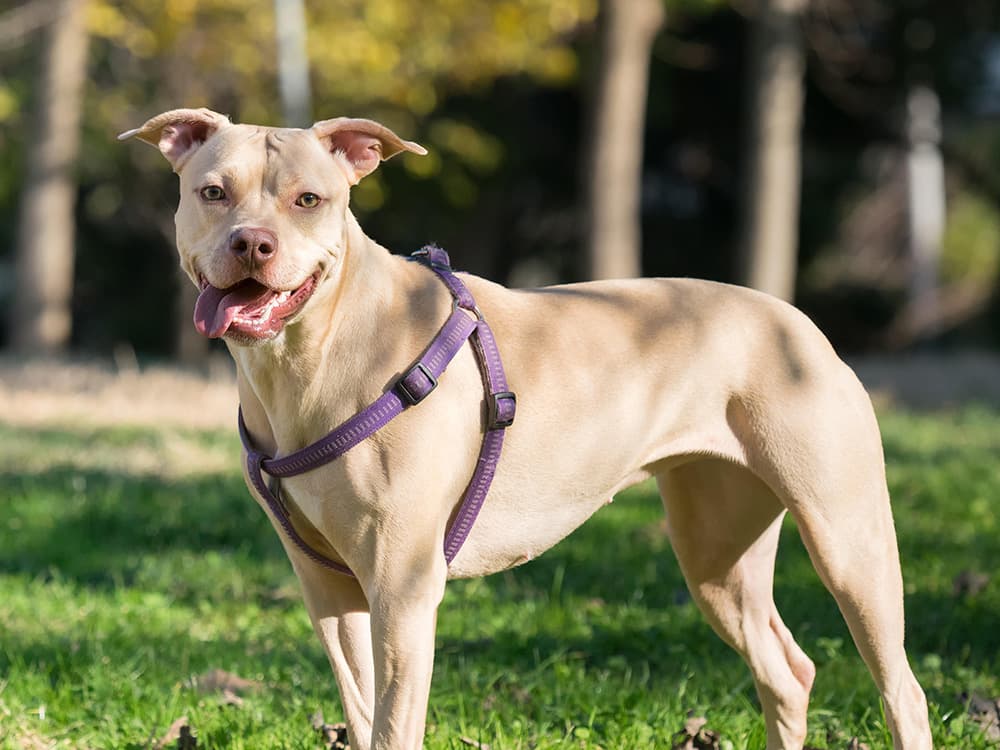
Bill Anastasiou / Alamy Stock/ American Pit Bull Terrier
When it comes to temperament and personality, the differences between Pit Bulls and American Staffordshire Terriers are often overstated. In many ways, these two breeds are actually more alike than different.
Both American Staffordshire Terriers and Pit Bulls are known for being:
Very people-focused
Loyal and affectionate
Playful and energetic
Eager to please
They often form strong bonds with their families and enjoy being involved in their daily lives. These dogs usually do best in homes where they receive plenty of attention, training, and exercise.
American Staffordshire Terriers: May be slightly calmer and more predictable, especially those bred for the show ring
Pit Bulls: Often have higher energy levels and may be more intense or driven, especially if they come from working or sport-focused lines
That said, each dog is an individual. Training, socialization, and environment play a much bigger role in behavior than breed alone. Early experiences, consistent guidance, and positive reinforcement shape how a dog handles people, other pets, and new situations.

Your dog’s and cat’s needs will evolve over time. So consider October’s National Pet Wellness Month a wonderful excuse to reassess those needs.
Both bully breeds are generally healthy, sturdy dogs, and their mixes tend to be healthy, too. That said, like all dogs, they can be prone to certain health issues, and knowing what to watch for can help pet parents keep them happy and thriving.
Skin allergies: These dogs often have sensitive skin, which can lead to itching or ear infections.
Hip and elbow dysplasia: A joint condition, dysplasia can cause pain or mobility issues over time.
Eye problems: These include cataracts or other age-related eye conditions.
Neuronal ceroid lipofuscinosis (NCL): A rare, inherited neurological disease found in some lines.
Heart conditions: Some AmStaffs may be more prone to certain heart problems, which makes regular vet visits important.
Hyperuricosuria (HUU): A genetic condition that can increase the risk of bladder stones.
Injury risk: Because Pit Bulls are very active, they may be more likely to experience muscle or soft-tissue injuries without proper exercise management.
Regular vet check-ups, a balanced diet, dental care, maintaining a healthy weight, and supporting an active lifestyle with daily exercise will go a long way toward keeping these dogs in top shape. With consistent care, both breeds — and their mixes — can live long, happy, healthy lives.
Not officially: The American Staffordshire Terrier is a separate breed recognized by the American Kennel Club. However, both American Staffordshire Terriers and Pit Bulls are often grouped under the informal term “Pit Bull–type dogs” because of their shared history and appearance.
No, neither breed is naturally aggressive. Dog behavior depends on training, socialization, environment, and the individual dog — not the breed label.
They can be good family dogs. When properly trained and socialized, both breeds are known for being affectionate and people-friendly. As with any dog, supervision and positive training are key.
Pit Bulls and AmStaffs do not require experienced parents. Still, these pups are a better fit for committed pet parents who are prepared to provide them with the dedicated training and exercise they need to thrive. Because these dogs are strong and often face housing restrictions, pet parents should be prepared to advocate for them and help make sure they’re good representatives for dogs who get a bad rap.
“Hyperuricosuria and Hyperuricemia or Urolithiasis (HUU).” Cornell University College of Veterinary Medicine, 2014, www.vet.cornell.edu/departments-centers-and-institutes/riney-canine-health-center/canine-health-information/hyperuricosuria-and-hyperuricemia-or-urolithiasis-huu.
Literature Review on the Welfare Implications of Ear Cropping in Dogs. https://www.avma.org/sites/default/files/2024-10/avma-lit-review-ear-cropping-0824.pdf, 2024.
“Neuronal Ceroid Lipofuscinosis | OFA.” OFA, 29 Apr. 2025, ofa.org/neuronal-ceroid-lipofuscinosis.

Emily Johnson is a long-time pet writer and animal lover, working with brands like PetMD, Rover, Kinship, and more. She’s cared for dogs, cats, and horses her entire life and strives to help fellow pet parents through her content.

Breed Info

Breed Info

Breed Info

Breed Info
Are you thinking of adopting a French Bulldog? Find out what makes Frenchies so irresistable.
Breed Info
Read up on large dog breeds and what it takes to keep them happy.

Breed Info
Tiger stripes aren’t just for felines — they’re for dogs, too. Learn all about the canine breeds who can sometimes come with gorgeous brindle coats.

Breed Info
Looking for a devoted dog? These breeds and mixes won’t let you out of their sight.

Behavior & Training
Your guide to identifying why your pup is barking so much at other dogs, and how to curb that behavior.
Adoption Advice
From bonding to socializing, raising puppies two puppies at once is a lot of work. Here is what to expect if you decide to get a dynamic duo.