Common Behaviors in Hunting-Breed Dogs: What Pet Parents Should Expect
If your pup gets intensely fixated on small critters, this one’s for you.
If your pup gets intensely fixated on small critters, this one’s for you.
by Jackie Brown, | December 23, 2025
Karoline Thalhofer / Adobe Stock
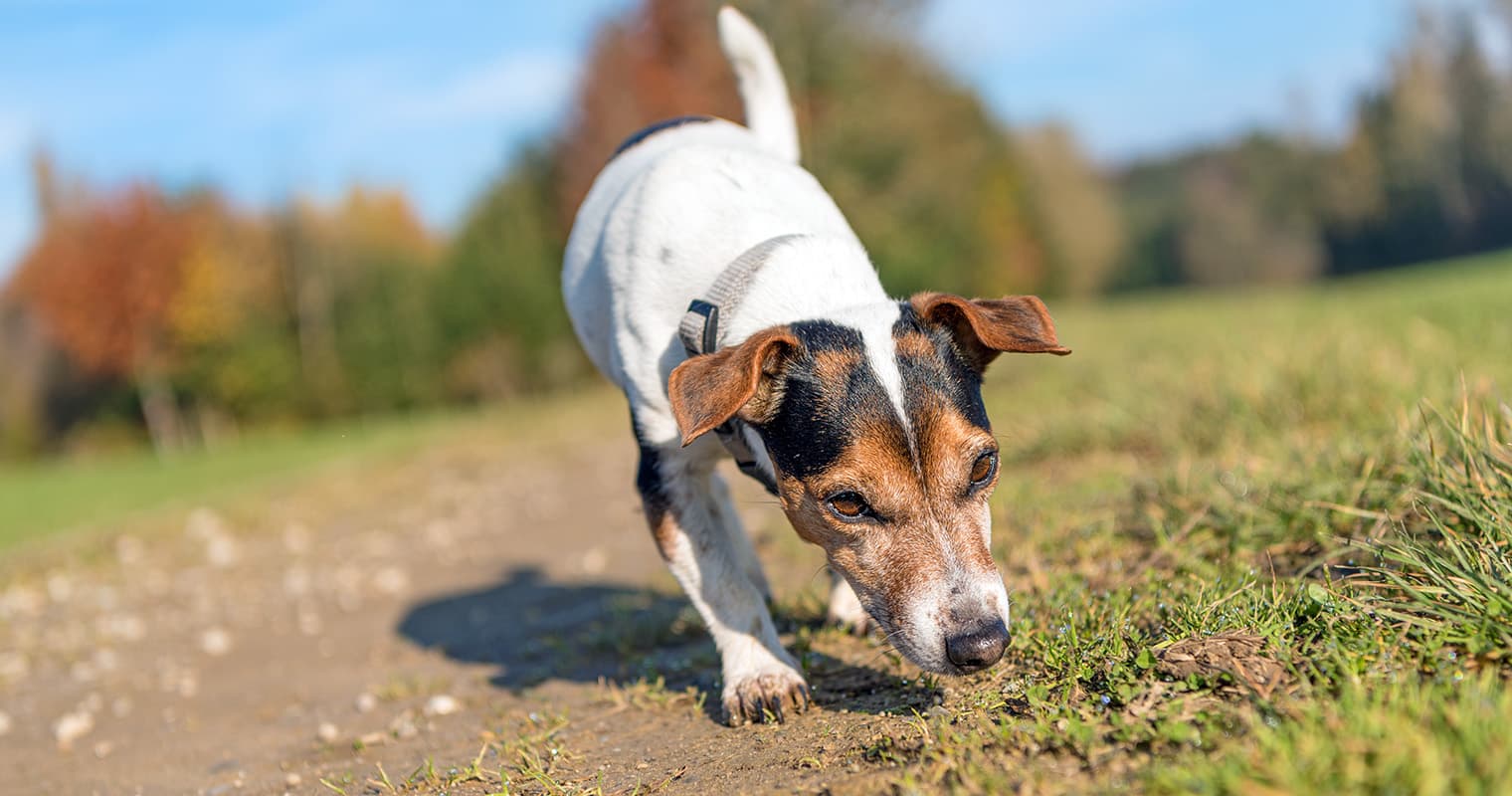
Hunting dog breeds have hardwired traits that make them great at their jobs — such as obsessively following smells around the house, freezing mid-walk to stare intensely at a leaf, or proudly parading a sock through the living room. However, those same traits sometimes lead pet parents to wonder, “Why do they do that?”
Some behaviors seen in hunting dog breeds can become problematic in pet dogs if you don’t know what to expect. Understanding why dogs bred for hunting do certain things can help you harness their special talents and channel them for good.
TL;DR: Hunting breeds exhibit strong prey drives, with intense focus on squirrels, birds, and other small animals. They often display behaviors such as pointing, stalking, and chasing — and exhibit selective deafness when fixated on movement or scent.

Got an athletic, nature-loving pup? Check out this endless list of naming possibilities.
Hunting dog breeds were selectively bred for traits and skills that enable them to assist humans in finding and harvesting animals for food. People have hunted with dogs for centuries, but many of today’s modern hunting breeds were refined in the mid-19th century. At this time, hunting was not only a means for survival but also a leisure pastime, especially for the wealthy. Gun dogs (retrievers, pointers, and spaniels) and hounds were extremely popular in Victorian-era England, where it was common for estates to operate large-dog breeding kennels to support their hunting pursuits.
Today, some hunting dog breeds still perform their original job — whether in real hunting, in a simulated field, or in hunting trials. Of course, many hunting dogs are, first and foremost, beloved family pets. But they still retain many of their strong hunting instincts, including the drive to retrieve, as well as track down, chase, and even dispatch birds and other small animals.
Hunting dog breeds specialize in different types of hunting. Most people are familiar with duck-hunting dog breeds, bird-hunting dog breeds, and fox-hunting dogs, but some dogs hunt deer, raccoons, squirrels, and other animals. There are even several bear-hunting dog breeds and even lion-hunting dogs.
Dog breeds for hunting fall into different categories based on their hunting styles and skills. Breeds who excel at multiple hunting skills are often called versatile hunting breeds. Here are the basic hunting dog types.
De Souza / Pexels
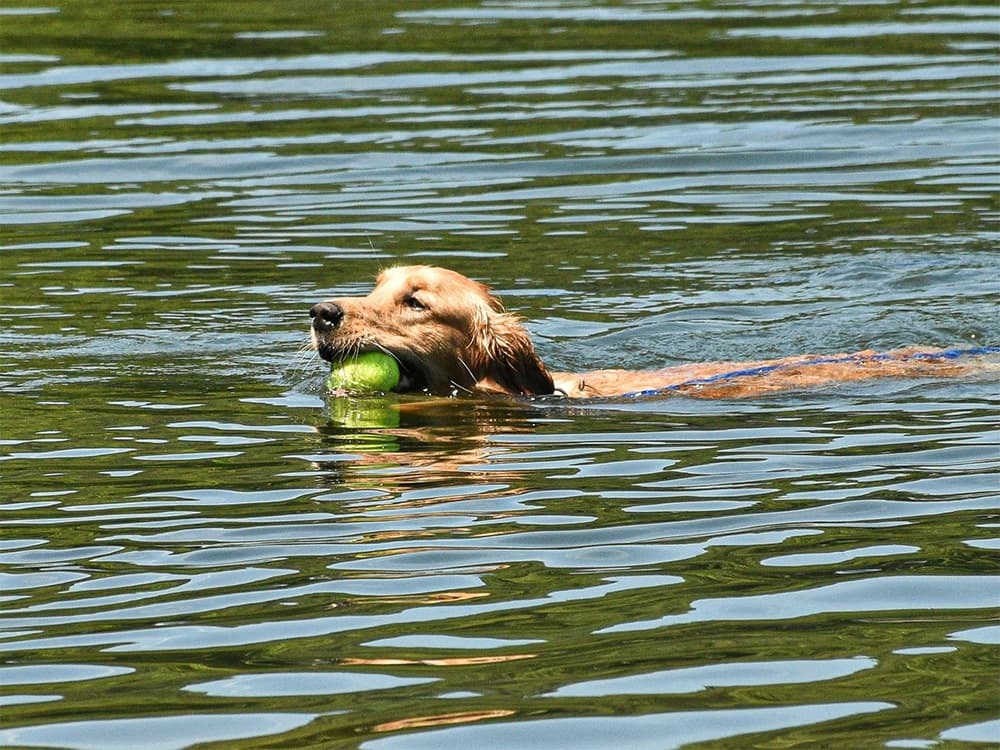
A retriever’s main job is to stay close to a hunter until they are sent out to retrieve (or, fetch and return with) a downed bird without damaging it. Most retrievers fetch birds over land and from lakes and other bodies of water, so they’re usually excellent swimmers. Popular retrievers include Golden Retrievers and Labrador Retrievers.
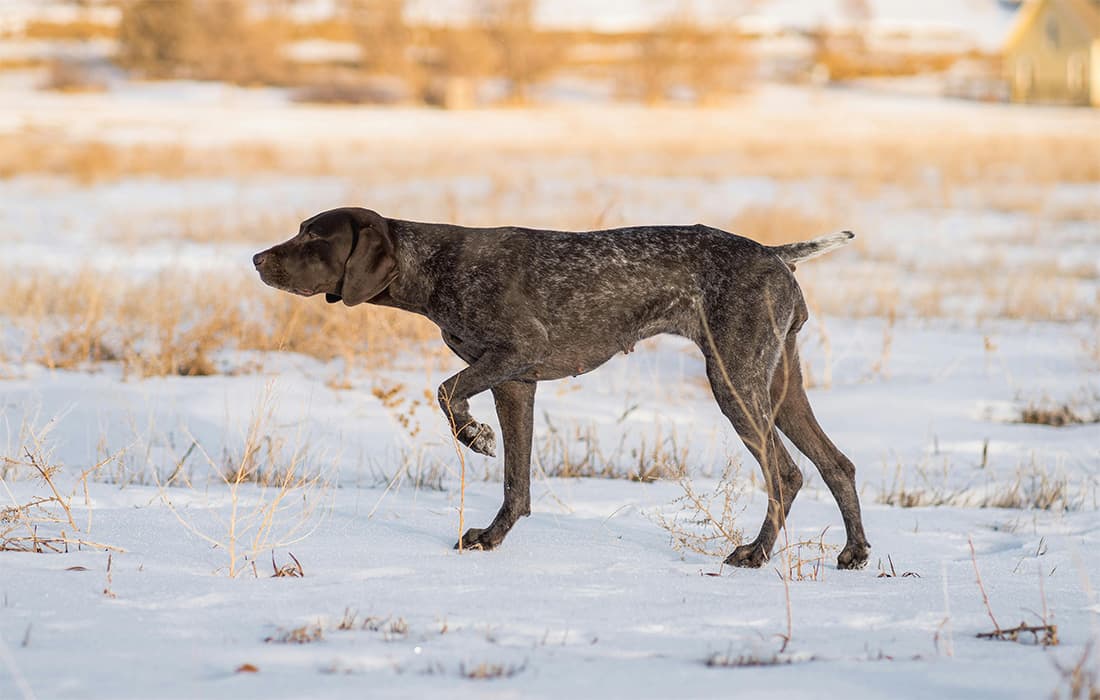
A pointer uses their nose to sniff out hidden birds in bushes and grass. They then point them out to the hunter by freezing in place with their nose aimed right at the spot, so the hunter can scare them out of hiding. Many pointers also lift one paw and hold their tail straight out, making their “point” unmistakable. Some of the more common pointing breeds include German Shorthaired Pointers, Pointers (English Pointers), and Weimaraners.
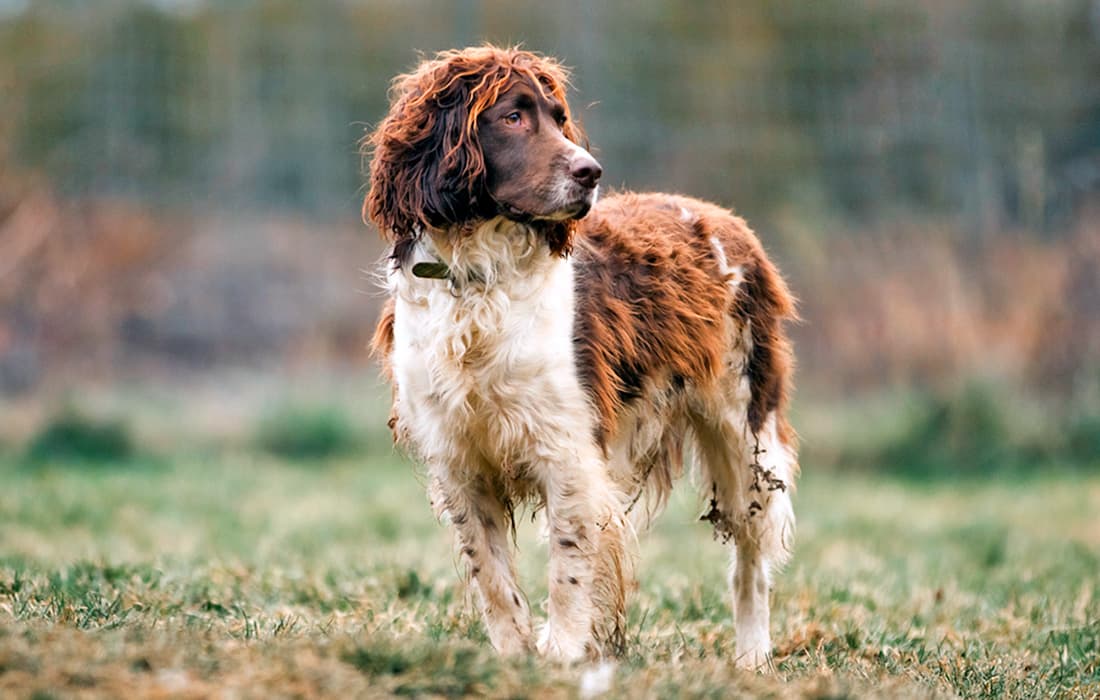
Like pointers, flushing dogs are meant to find hidden birds. But instead of freezing, they “flush” (or startle) the birds from brush and grass so they take flight. Spaniels are the most common flushing dogs. Popular flushing breeds include Cocker Spaniels, English Cocker Spaniels, and English Springer Spaniels.
Cavan Images / Alamy Stock Photo
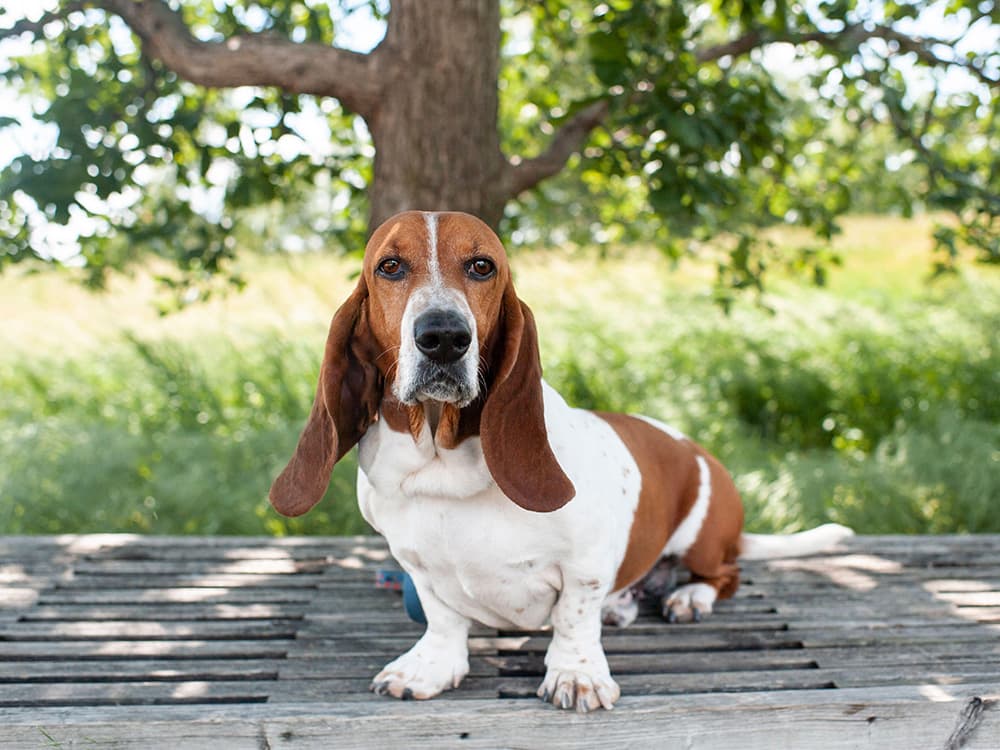
Hounds are chunked into two types: scent hounds (who track animals with their excellent sense of smell) and sighthounds (who chase animals with their excellent eyesight and speed). Some popular scent hounds include Beagles, Basset Hounds, and Bloodhounds. Examples of sighthounds include Afghan Hounds, Greyhounds, and Rhodesian Ridgebacks.
English Foxhound
Some of the traits that make dogs excellent at hunting can become a bit problematic in pet homes unless they are managed and channeled appropriately. Unlike breeds developed to be mellow lap companions, hunting breeds were designed to work all day in the field. They have tons of energy, stamina, and drive to find and capture their prey. Some hunting breeds — especially hounds — bark and howl so the hunters can hear them when they range ahead on the chase. All hunting breeds have a high prey drive (the instinct to find, chase, capture, and sometimes kill prey).
Below are challenging behaviors seen in many hunting breeds.
Excessive energy: When a dog bred to work for hours a day isn’t exercised enough, their bodies and minds suffer. Hunting dogs who don’t get adequate physical activity can have trouble settling down and become destructive or anxious.
High prey drive: Prey drive is what compels hunting dogs to find, chase, and retrieve or dispatch their prey. Because many hunting dogs have high prey drives, this instinct can result in problematic behaviors, such as chasing the family cat, running after kids, bikes, scooters — and most dangerously — cars. A high prey drive can also cause dogs to chase or kill wild animals such as squirrels, lizards, and birds.
Escaping or running away: When hunting dogs catch sight or smell of a small animal, the chase is on. Often, no matter how much training you’ve done, they simply don’t hear you calling them to return, or can’t fight the urge to capture their prey. Hounds are especially notorious for running off when not on a leash or in a safely enclosed yard.
Inappropriate chewing: Breeds who retrieve can be orally fixed, which can lead to an intense desire to chew. This is not a problem when the chewing is directed at something appropriate, like a bone or toy. But it is problematic if the dog chews on things such as shoes, clothing, furniture, remote controls, or rocks.
Excessive barking or howling: This is generally seen in hounds, who love to use their loud, often melodious voices. Excessive barking or howling can cause problems with neighbors if you live in an urban environment.
Hunting dogs are some of the most loyal, loving dog breeds, and many make excellent family pets. The key to living happily with a hunting dog is to understand what’s driving their instinctive behaviors, meet their needs for exercise and mental stimulation, and keep them safe from accidents.
Provide as much vigorous physical activity as you can through walking, hiking, and games of fetch in a safe place — either a fenced-in yard or a dog park, or if your dog has a good recall, a large open space away from traffic. Burning off all of their energy will make a hunting dog feel happier and more balanced overall.
All dogs need basic obedience training, but hunting dogs will especially thrive with more advanced training that challenges their minds and puts their hunting instincts to good use. If you don’t hunt, consider training for field trials or hunting tests, or signing up for nosework classes, agility, or flyball.

Dogs need attention, love, and a trusting connection with their pet parent.
Recognize that a high prey drive means managing your dog’s environment to prevent escape and accidents. Don’t allow your dog to chase after kids, joggers, or bikes. Keep them on a leash or in a securely fenced yard if they won’t come back when you call them. Keep cats and smaller pets safely separated — use barriers, if necessary — if your dog chases them.
Work with your dog, not against them. Although barking or howling can potentially be reduced through training, hounds in particular will likely be vocal. Some hunting breeds simply aren’t safe around cats and small, furry (or feathery) pets. Be realistic about your dog’s limitations to keep all your pets safe. If your dog is not reliable off-leash, keep them leashed or in your yard to prevent them from following their nose or a fast-moving critter into the road.
There are tons of pets sitting in shelters and rescues, all ready to kick off their next chapter with someone who gets them. No matter what you’re looking for, there’s a pet out there who’s the perfect fit, just waiting for the chance to meet you.
Start your search on Adopt a Pet, where you can filter pets by age, color, breed, and more, such as whether they’re good with kids or other pets.
Hunting dog personality traits include high energy and high prey drive. Retrievers are often mouthy chewers, and hounds tend to be vocal (howling or barking).
The type of dog best suited for hunting depends on the hunting you plan to do. Retrievers, pointers, and spaniels are excellent bird dogs and duck hunters. Hounds are great for hunting squirrels, raccoons, and other small animals.
Humanities, Virginia. “Hunting Dogs.” Wvnet.edu, 2024, wvencprod.wvnet.edu/entries/711.
“Hunting with Dogs - Coping with Feral Hogs.” Coping with Feral Hogs, 8 May 2024, feralhogs.tamu.edu/hunting-with-dogs.
“Training Dogs for Field and Fowl.” State of New Hampshire Fish and Game, 2025, www.wildlife.nh.gov/news-and-media/blog/training-dogs-field-and-fowl.
Jackie Brown lives in sunny Orange County, CA, where she works as a freelance writer and editor. When she’s not on deadline, you can find her paddling her outrigger canoe in the Pacific Ocean or hiking in the foothills with her miniature poodle and two young boys.
Breed Info
Breed Info
Breed Info
Behavior & Training

Breed Info
Is this smart, affectionate, but energetic breed right for you?

Breed Info
Looking for a dog with a larger-than-life personality (and size to match)? These giant breeds might be perfect for you.

Breed Info
Are Dachshunds the worst breed ever? No — but they get a bad rap. There’s a lot of charm behind those quirks. Learn why they might just be the best breed ever.

Breed Info
Are you thinking of adopting a small dog? Learn more about small dog breeds and what it takes to keep them happy.

Behavior & Training
Are bark collars the right choice? Not really. Try these expert-approved solutions instead.