What’s the Difference Between a Silky Terrier and a Yorkie?
Not all toy terriers are created equally. This is how you can tell the two breeds apart.
Not all toy terriers are created equally. This is how you can tell the two breeds apart.
by Adrienne A. Kruzer, BBA, RVT, LVT, | December 29, 2025
glebchik / Shutterstock
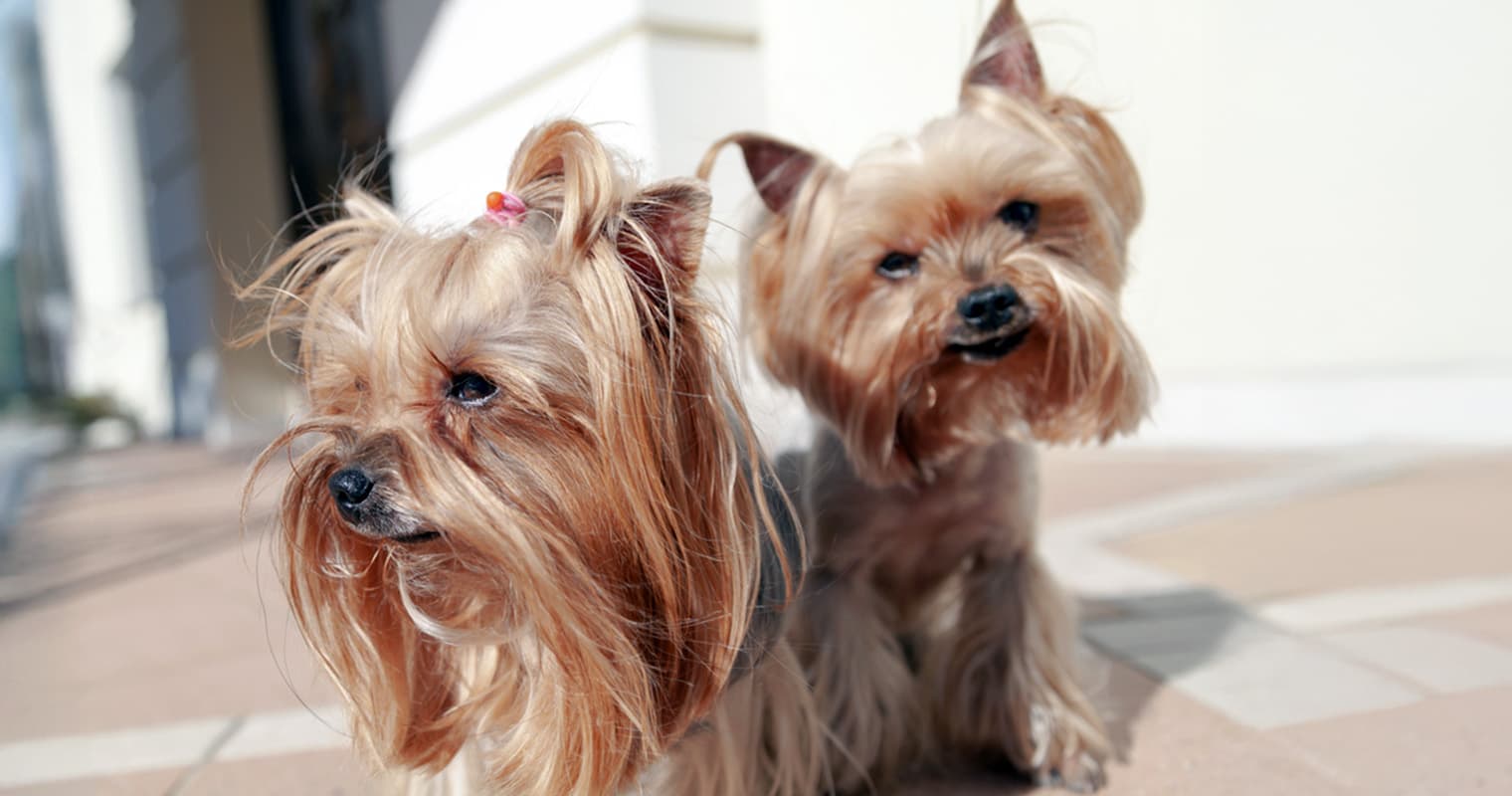
Silky Terriers (Silkies) and Yorkshire Terriers (Yorkies) are one of those breed pairings that make even seasoned pet parents do a double-take because at first glance they look nearly identical. From their glossy blue-and-tan coats to their compact, confident builds, these closely related dogs are sometimes difficult to tell apart, but the longer you look, the clearer it becomes that they are different breeds.
Silkies have shiny coats that are perfectly parted down the center but don’t quite reach the ground, while Yorkies have coats that do reach the ground (along with a cute top knot to keep the hair out of their eyes). Overall, Yorkshire Terriers are smaller, topping out at just seven pounds, while Silky Terriers can grow to be 11 or 12 pounds. Here are some differences between these two terrier breeds.
TL;DR: Silky Terriers and Yorkshire Terriers (Yorkies) are both small, silky-coated toy terriers. But Silkies are slightly larger, more athletic and energetic, and have a stronger terrier temperament with higher prey drive, while Yorkies are more lap dogs, adaptable to less active lifestyles, and somewhat easier for first-time pet parents. Both breeds require daily brushing to prevent matting, professional grooming every six to eight weeks, and consistent training to manage typical terrier stubbornness, barking, and bold personalities.
Yorkshire Terriers originated in Yorkshire, England, in the 1800s. The true origin of the breed is debated, but it is widely agreed upon that they were developed as small hunters to catch vermin in small spaces such as mines, factories, and burrows. Over time, they became popular as companion dogs, so they were selectively bred to be smaller.
Silky Terriers, once known as Australian Silky Terriers, originated in Australia after the Yorkshire Terrier and Australian Terrier were mixed together, also in the 1800s. The shiny coat of the Yorkie and the hardy build of the Australian Terrier were desirable. But by breeding Yorkies with Australian Terriers, a dog with a Yorkie coat and a slightly sturdier Australian Terrier body resulted. The breed eventually settled on the Silky Terrier name when it came to America, but was previously known as the Sydney Silky Terrier and the Australian Silky Terrier while growing in popularity in the land down under.
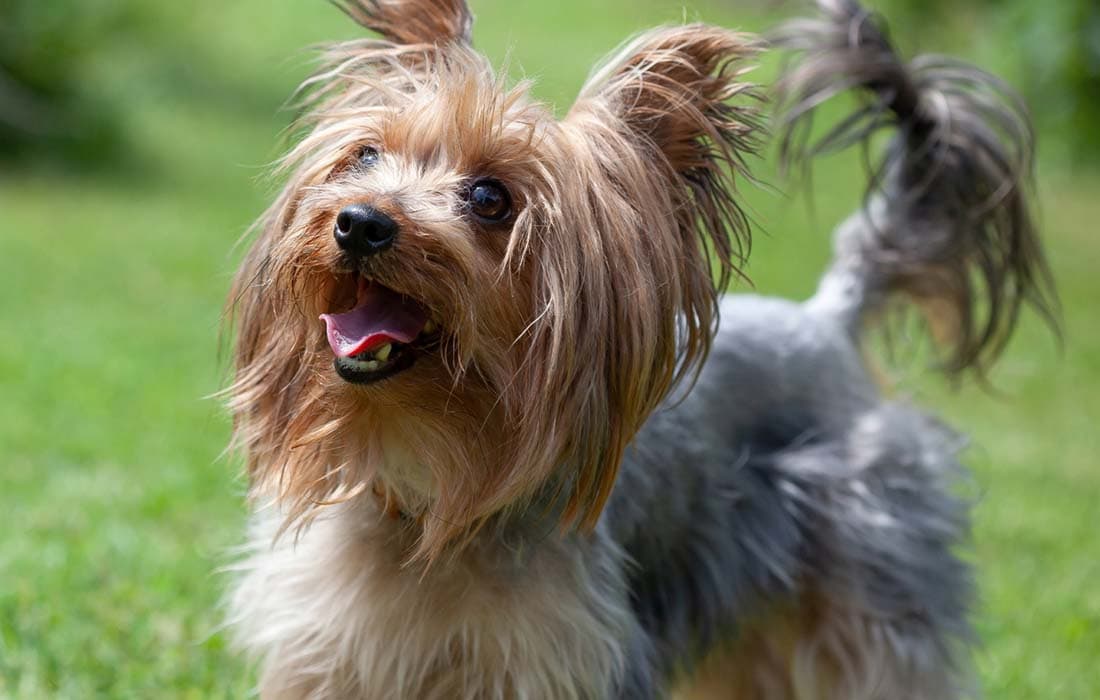
With the intentional crossbreeding of the Yorkie and the Australian Terrier, Silky Terriers are similar to their Yorkie relatives, but the two breeds still have some unique physical qualities.
Yorkshire Terriers are toy breed dogs who can weigh up to seven pounds. Yorkies are overall smaller and have a more compact build than a Silky Terrier. They are perfectly sized to jump onto your lap.
Silky Terriers are slightly larger than Yorkshire Terriers, but they are still small dogs. At most, Silkies should only weigh 11 pounds, but they have a sturdier and more robust build than a Yorkshire Terrier. They are perfectly sized to chase vermin but tend to have longer bodies than Yorkies.

Feisty, smart, and loyal — why terriers are so special and so loving.
When compared to a Silky Terrier, Yorkies have slightly wider ears at their base. Silky ears are sometimes described as being V-shaped and are larger than those of a Yorkshire Terrier.
Silky Terriers can grow to be 10 inches tall at the withers, while Yorkshire Terriers only grow to be nine inches tall. Both breeds aren’t very big, but Silkies are slightly taller.
Yorkies have slightly wider ears at the base and a rounder head. Silkies have narrower ears that are sometimes described as being V-shaped, along with more slender or pointed snouts than Yorkies.
Blue and tan are the accepted coat colors of both the Silky Terrier and the Yorkshire Terrier. This shared color scheme causes a lot of confusion between the two breeds. Other colors seen in both breeds include black and tan, blue-silver and tan, gray and tan, silver and tan, or silver-black and tan. White markings may also be present in some Yorkies.
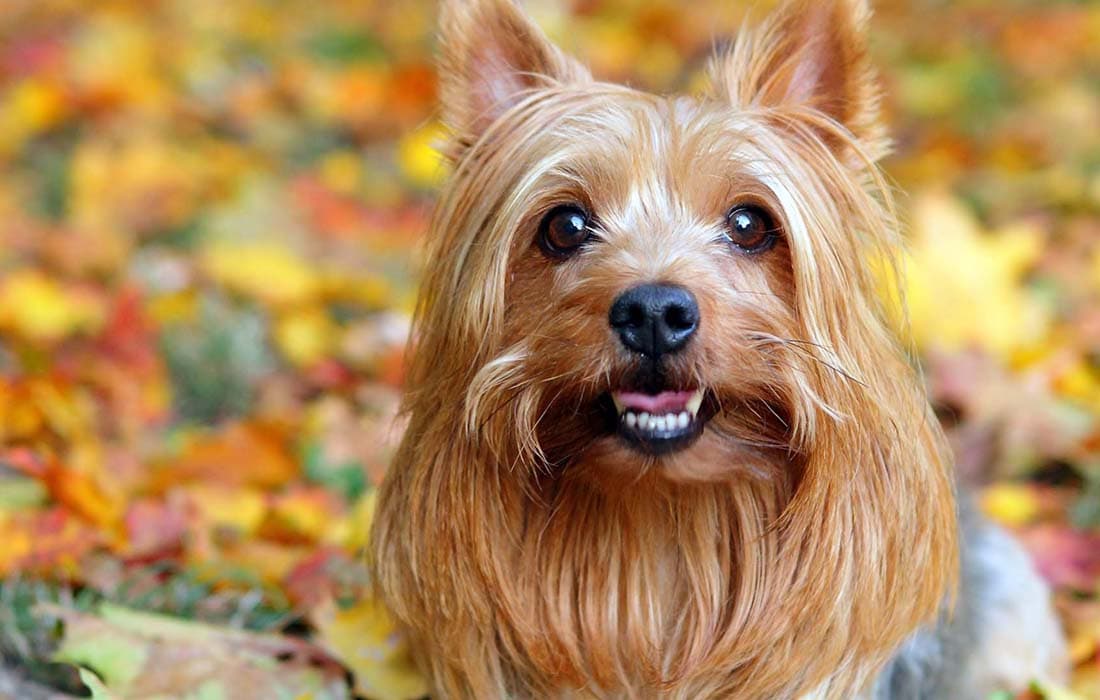
They may look and sound similar, but Yorkies and Silkies do have some differences in their personalities. Both small breeds have attitudes larger than their physical sizes and can make wonderful companions, but the Silky Terrier has a naturally tougher temperament than the affectionate Yorkshire Terrier.
If you’re trying to determine if you’re hearing a Yorkshire Terrier or a Silky Terrier based solely on how much they bark, you’ll be stumped. Both breeds are very vocal and make great watchdogs.
The Yorkie and Silky Terrier personality differences are obvious when it comes to digging. Silky Terriers have great hunting instincts and love to dig in the yard, while Yorkshire Terriers may burrow into a blanket on your couch.
Silkys require a lot of social interaction, but Yorkies are typically more affectionate. The Silky Terrier is tenacious and has a very classic terrier attitude, whereas Yorkshire Terriers may be feisty but are looking for a companion to cuddle with. Both can be introduced to other dogs and pets, but introductions should be slow; ultimately, their compatibility will depend on the individual pets and their temperament.
As with other terriers, both Silkies and Yorkies are very smart breeds — but this doesn’t mean training is always easy. While they have the intelligence, stubbornness is also a common trait in both breeds. So, training may require some patience and motivation.
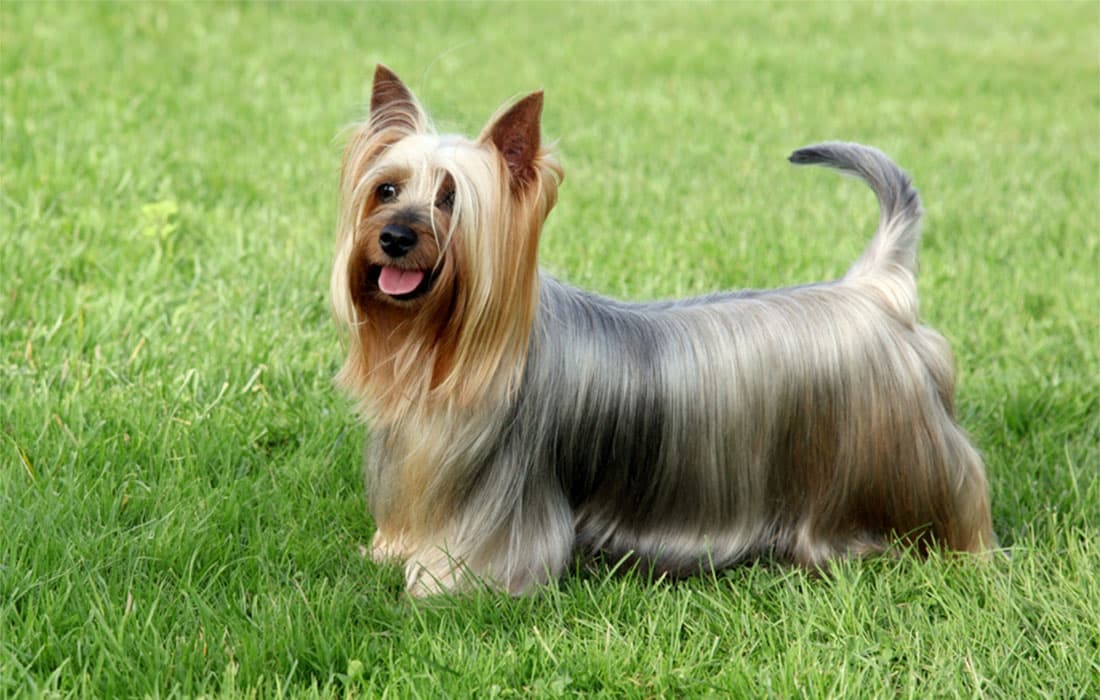
Silkie and Yorkie health concerns can be similar, but some are more likely to be seen in one of the breeds than the other. Some of the more common health issues in Silkies and Yorkies include the following.
Both breeds are at risk for developing certain eye problems. Progressive retinal atrophy (PRA), cataracts, dry eye, and lens luxation are all health issues in both dogs, so breeders often pursue CFA eye certification to try and prevent congenital eye problems from being passed down to these breeds’ puppies.
Yorkies are generally smaller than Silkies, so they are more prone to dental overcrowding and dental disease. But neither breed is very large — so both are at risk. Regular, at-home toothbrushing is necessary for both breeds to maintain appropriate dental health, but don’t be surprised if your veterinarian recommends professional dental cleanings, too. While these vet visits can be costly, dental disease that is ignored can cause serious issues, because the bacteria from the mouth enter the bloodstream and affect major organs.

Regular vet visits are key to keeping your pet healthy. Here’s what happens during a checkup, when to get them, and what to bring.
It’s common for small dogs to have luxating patellas, or loose kneecaps, and Silkies and Yorkies are no exceptions. Low-grade luxations are not usually problematic, but high-grade luxations may require surgical correction. Occasional limping is a common sign of a low-grade luxating patella.
Coughing and difficulty breathing are signs of a collapsing trachea, from which both Yorkies and Silkies can suffer. Although this can affect any size or breed of dog, some, like Yorkies, may have genetic predispositions to the issue. Because there is a concern for this issue, using a harness instead of a collar during walks is often recommended to avoid putting unnecessary pressure on the neck.
Also known as hip joint degeneration, this disease is common in small or toy dog breeds like Yorkies and Silkies. The cause of this disease is unknown, but may be due to genetics. Limping, arthritis, hip pain, and a reduced range of motion are often seen in dogs with this genetic condition.
Especially prevalent in very small puppies, hypoglycemia occurs when a dog’s blood sugar level drops too low. Since Yorkies are usually smaller than Silkies, it is more likely a problem for them — but Silkies are also at risk. Severe cases of hypoglycemia can cause seizures and death, so it’s important to ensure your dog doesn’t stop eating, especially if they are a newly adopted small puppy.
A condition that results in an abnormally small liver, liver shunts can affect both Yorkies and Silkies. This is most often a congenital condition, but about 20 percent of dogs can develop liver shunts later in life. Some dogs with a liver shunt may not show any symptoms, but many will experience seizures, not grow, and stumble around.
Silky Terriers are more prone to environmental allergies, food sensitivities, itchiness, and skin infections than Yorkies. This likely comes from their Australian Terrier side of their lineage, but both Yorkies and Silkies can experience skin issues.
There are tons of dogs sitting in shelters and rescues, all ready to kick off their next chapter with someone who gets them. No matter what you’re looking for, there’s a pet out there who’s the perfect fit, just waiting for the chance to meet you.
Start your search on Adopt a Pet, where you can filter dogs by age, color, breed (including Yorkies and Silkies), and more.
The Silky Terrier was bred by crossing the Yorkshire Terrier and the Australian Terrier breeds. Over the years, the name of this new breed changed, but eventually settled as Silky Terrier.
Yes, a Silky Terrier is bigger than a Yorkie. Silky Terriers can weigh up to 11 or 12 pounds, while a Yorkie should only weigh a maximum of seven pounds. It can be difficult to tell the two breeds apart based solely on their size, but Yorkies are usually a little smaller than Silkes.
Yes, both dog breeds require regular grooming. Brushing, baths, and haircuts are ongoing as Silkies and Yorkies both have long coats that need regular maintenance. Daily brushing will help keep coats from matting, while baths and haircuts every six to eight weeks will keep them clean.
“Breed Info.” Veterinarians Humble | Atascazoo Animal Hospital, 2025, atascazooanimalhospital.com/client-resources/breed-info/australian-terrier.
Cohen, Aly. “Patellar Luxation.” Cornell University College of Veterinary Medicine, 24 Feb. 2023, www.vet.cornell.edu/departments-centers-and-institutes/riney-canine-health-center/canine-health-information/patellar-luxation.
“Common Canine Eye Disorders - Croney Research Group - Canine Welfare Science.” Canine Welfare Science, 21 Apr. 2025, caninewelfare.centers.purdue.edu/resource/common-canine-eye-disorders.
Diener, Michelle. “Silky Terrier.” Petmd.com, PetMD, 20 Feb. 2024, www.petmd.com/dog/breeds/silky-terrier?utm_source=chatgpt.com.
Kleszynski, Brittany. “Legg-Calve-Perthes Disease in Dogs.” Petmd.com, PetMD, 28 May 2024, www.petmd.com/dog/conditions/musculoskeletal/legg-calve-perthes-disease-dogs.
“Liver Shunt or Portosystemic Shunt (PSS) in Dogs - the Animal Medical Center.” The Animal Medical Center, 29 Jan. 2025, www.amcny.org/pet_health_library/liver-shunt-or-portosystemic-shunt.
“OFA (CERF) Exams.” Veterinary Eye Institute, 22 Oct. 2024, www.veterinaryeyeinstitute.com/ofa-cerf-exams.
Paul Pion, D. V. M., and Gina Spadafori. “Veterinary Partner.” VIN.com, 8 Aug. 2017, veterinarypartner.vin.com/default.aspx?pid=19239&id=4952622.
“The Silky Terrier Dog Breed.” Hill’s Pet Nutrition, 2025, www.hillspet.com/dog-care/dog-breeds/silky-terrier.
“Silky Terrier Dog Breed Information | Purina US.” Purina.com, 2025, www.purina.com/dogs/dog-breeds/silky-terrier.
“Tracheal Collapse in Dogs | VCA Animal Hospitals.” Vcahospitals.com, vcahospitals.com/know-your-pet/tracheal-collapse-in-dogs.
“The Yorkshire Terrier Dog Breed.” Hill’s Pet Nutrition, 2020, www.hillspet.com/dog-care/dog-breeds/yorkshire-terrier#about.
“Yorkshire Terrier: Traits, Health, Nutrition.” Royalcanin.com, 2020, www.royalcanin.com/ae/dogs/breeds/yorkshire-terrier.

Adrienne Kruzer is an accomplished veterinary technician and writer with over 15 years of hands-on experience caring for domestic and exotic animals.
Breed Info

Breed Info

Breed Info

Adoption Advice
Preparing to adopt a dog? Here are seven tips for acing your inspection and bringing your new pup home.

Adoption Advice
Adopting a new puppy? We've created a checklist to help you get organized before bringing your new friend home.

Adoption Advice
The beginning of puppy parenthood can be rough, but it does get better — especially when you implement this advice.

Adoption Advice
Want to adopt a dog but rent your home? Here’s how to navigate the rules while keeping your neighbors and landlord happy.
Adoption Advice
Learn the many benefits of adopting a dog from a shelter or rescue, and why giving a dog a second chance at a home is truly rewarding.

Shelters & Rescue
If you’re in search of a pup with a big personality in an adorably small package, you’ve come to the right place.