Are Daisies Toxic to My Cat?
They’re cute in the garden, not so much for your cat. Here’s why.
They’re cute in the garden, not so much for your cat. Here’s why.
by Kerensa Cadenas, expert review by Dr. Barbara, DVM | July 5, 2024
Anna Artemenko / Stocksy
It’s summertime, and everything is blooming and gorgeous. It might be the right time to bring some nature indoors in the form of flowers or give your cat a bit of outdoor time. But before you do, it’s important to know what kinds of plants might be toxic for your cat.
Daisies (Bellis perennis) are a common flower to receive as a gift or already might be growing in your backyard. While daisies might be one of the cutest flowers, they are unfortunately toxic to cats. While the white petals and the yellow center of the daisy in the Chrysanthemum genus is the most toxic for a cat, all parts of the flower can be dangerous.
If your cat digests a part of a daisy (even those of a different variety than the common white daisy), monitor them for any signs of poisoning, including drooling or vomiting. Dr. Barbara, veterinarian at NHV Natural Pet, some tips on how to keep your cat safe from this flower.
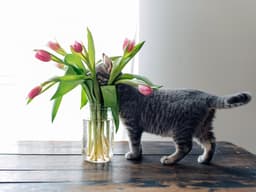
These flowers are cheerful, but you need to keep them far away from your kitty.
According to Dr. Barbara, common daisies are poisonous for cats. “The common daisies—the ones with white petals and yellow centers are toxic to cats. They have compounds that can damage their nervous systems,” she says. However, there are other types of daisies than just the ones you might see in your backyard. She mentions that some species of daisies are non-toxic for cats, but a pet parent should still err on the side of caution, because many daisies look similar enough that it can be hard to distinguish which is which.

Good news for your begging cat: Some of your favorite snacks are safe to share.
If you spot your cat getting close to eating a daisy, take the flower from their mouth, and gently rinse out their mouth with a damp cloth to remove any remaining plant from their mouth.
However, if your cat does eat and digest a daisy, Dr. Barbara has specific advice. “Should they manage to successfully eat and swallow some, closely monitor them for signs of poisoning like vomiting and diarrhea. If they become lethargic, have trouble walking, or experience difficulty breathing, reach out to your vet ASAP.”
If you think your cat ate any part of a daisy, you should call your vet or a pet-poison-control hotline immediately. They will tell you what symptoms to look out for in order to diagnose your kitty with plant poisoning.
Dr. Barbara says to keep a look out for the following symptoms: skin irritation, lethargy, trouble standing or walking, belabored breathing, or drooling. The gastrointestinal symptoms include vomiting and diarrhea. She also notes poisoning symptoms may also depend on the plant and the severity of the reaction.
As always, you should always contact your veterinarian if your cat has ingested something foreign. Treatment involves reducing the amount of toxins absorbed by a cat, delaying the absorption rate, or speeding up the elimination of the toxins. Dr. Barbara says that treatment can vary depending on the timing of the treatment: “Your veterinarian may give your cat activated charcoal to help absorb any toxins that remain in the gut. Medication to protect the damaged areas of the stomach may also be used.”
It’s also possible that the vet might try to induce vomiting in your pet. “In extreme cases, they may choose to perform a gastric lavage, which is the removal of matter directly from the stomach through a tube (more commonly known as a ‘stomach pump’). Only induce vomiting under the supervision of a veterinarian. It is not safe to induce vomiting at home in a cat, so seek veterinary care immediately if your pet cat ingests it,” Dr. Barbara says.
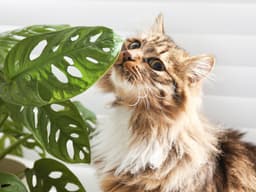
These plants might be beautiful, but they’re deadly to feline foragers.
The most toxic parts are the pollen and the petals, but cat parents should treat a daisy as toxic as a whole for their pet.
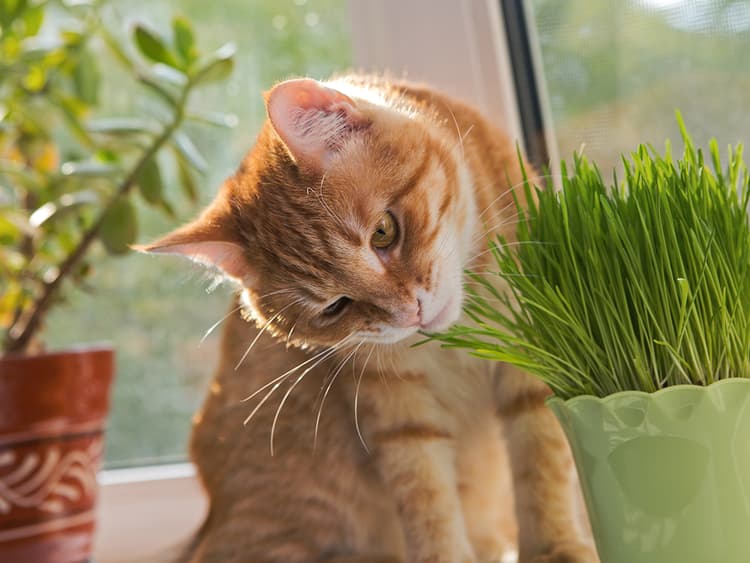
Make sure that daisies or any other toxic plants aren’t in your home or yard. And if your cat goes outside, be sure to monitor them when they’re outside. For cats that are plant- obsessed, getting cat grass or catnip is a good way to redirect their grazing.
Yes, as we’ve reiterated above, daisies are poisonous to cats.
Dr. Barbara above suggests cat grass or catnip for felines that love plants. She also suggests asking for advice. “You can also ask your primary veterinarian if valerian, which is a pungent plant that draws cats in, similar to catnip, can be given to your cat. For cats that are not affected by catnip, cat thyme can offer a similarly stimulating effect,” she adds.
Other plants and flowers like daffodils, lilies, English ivy, tulips, and jade plants are also toxic for cats. Dr. Barbara suggests that introducing any new plant into a cat household should be well researched.
“Be sure to do your research and consult an expert source before introducing any new plant around cats, as some plants can be dangerous even in small quantities. However, amongst cat-safe plants, your fur-kiddo can still enjoy the sights and smells of nature without fear,” she says.

Kerensa Cadenas is a writer based in New York City. She’s previously worked at The Cut, Thrillist, Cosmopolitan, and Complex. Her work has been featured in Vulture, GQ, Vanity Fair, and others.
Pet Wellness

Behavior & Training
Behavior & Training
Pet Wellness
Find out whether you can get that elaborate flower arrangement—or if you should skip it.