Are Ferns Toxic to Cats?
They’re great plants to brighten any home. But is your cat safe around them?
They’re great plants to brighten any home. But is your cat safe around them?
by Savannah Admire, | December 4, 2024
New Africa / Adobe Stock
When it comes to brightening up your home with greenery, ferns are an obvious choice. They’re subtle, often simple to care for, and come in a variety of shapes and sizes. But are ferns safe for your cat to be around?
Fortunately, ferns are non-toxic to cats and won’t even cause any skin irritation if your little pal brushes up against them. Most species of fern, including the Boston fern, staghorn fern, and bird’s nest fern, are completely safe for cats.
Learn more about ferns and what plants to look out for when adding greenery to your living space.
Most ferns contain no toxins that are dangerous to cats, but only if they’re “true ferns.” That means that they’re part of the fern family. There are some plants that look like ferns — and even have “fern” in their name — that are actually not ferns and could be dangerous for your cat. An example is the asparagus fern (also known as the lace fern), which has leaves and berries that are toxic to felines.
“There are many plants that we commonly refer to as ferns, but they are different species,” veterinarian Dr. Amy Fox says. “Some may be perfectly safe, while others may carry some risks of toxicity.”
As long as you do your research and stick with only “true ferns,” you can safely have these plants in your home. Just keep in mind that any amount of plant ingestion can cause an upset stomach in cats.
“The best way to determine if a plant is safe is to know its scientific name and to look it up on the ASPCA poisonous plant website,” Dr. Fox says.
Know which ferns and fern-like plants are toxic to cats and which are safe. If you’re unsure, do research online or ask your veterinarian or a pet-poison-control helpline. For the most part, true ferns are safe for cats to consume, unless they eat a lot. Too much plant matter can give your cat an upset stomach but isn’t likely to cause any serious health issues or require veterinary care.
If you’re worried that your cat has eaten a plant that’s toxic to them, take your pet to the vet immediately. Bring along a sample of the plant if you can or let the vet know the exact type of plant your cat consumed. If you can’t identify the plant, the vet will likely need to run a series of tests to determine what toxin your cat ingested and develop a treatment plan.
Plant poisoning can result in symptoms that are anywhere from mild to severe, depending on the toxin ingested. Look out for these symptoms if you suspect your cat has eaten a poisonous plant:
Vomiting or diarrhea
Abdominal pain
Drooling
Lethargy
Loss of appetite
Mouth or tongue irritation
Difficulty swallowing
Tremors or seizures
How a vet treats your cat for plant poisoning depends on the type of toxin they consumed, as well as how much. Inducing vomiting in cats can be difficult, so the vet may suggest decontamination, which involves administering activated charcoal. In mild cases, your cat may be treated for nausea or diarrhea. In more severe cases, they may need to be hospitalized and treated with intravenous fluids. Your vet may also recommend running tests to look for any damage to the liver or kidneys.
The best way to prevent plant poisoning is to keep any toxic plants out of your home. Be aware of which plants pose a risk to your cat and learn to identify the signs of toxicity. You should also take steps to keep plants away from your cat, whether in a room with a door or in hanging planters. It’s best to err on the side of caution when choosing which plants to add to your home or garden.
“In general, it is always a good idea to keep plants out of reach of cats, even if they are nontoxic,” Dr. Fox says. “Cats who eat large amounts of plant matter can still get sick from the excessive fiber and may experience digestive upset if they eat too much of any plant.”
All parts of a fern are generally safe for cats to be around, and the texture of these plants can even offer them something to investigate safely. Just make sure to do your research before bringing a new plant home and make sure that it’s an actual fern and not a lookalike.
The best way to stop your cat from eating any plant is to keep plants out of your home. But if you’re as much of a plant lover as a cat lover, consider setting up a room in the house with a door you can close just for plants or use hanging planters to keep plants out of your cat’s reach. If your cat is allowed outside, use fencing in your garden to protect your cat from your plants — and vice versa.
If you want to brighten up your home or garden while keeping your feline friend safe, look for some of the following cat-safe plants:
Bamboo
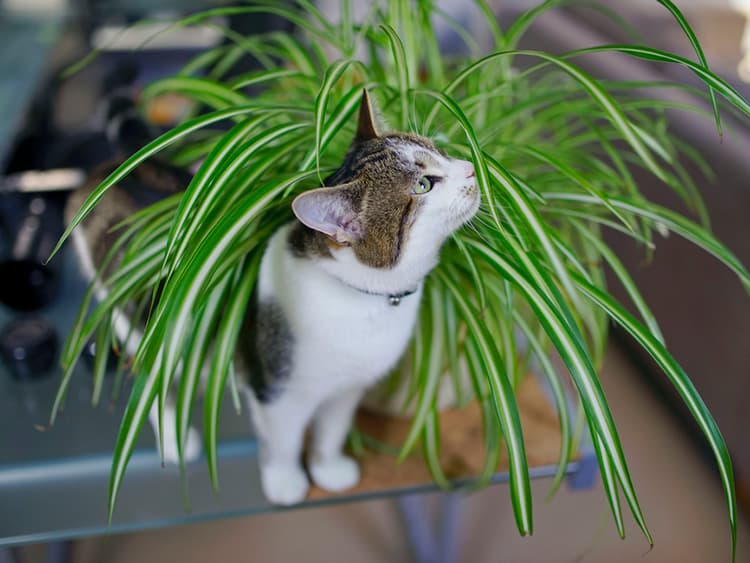
Spider plant
Money tree
Orchid
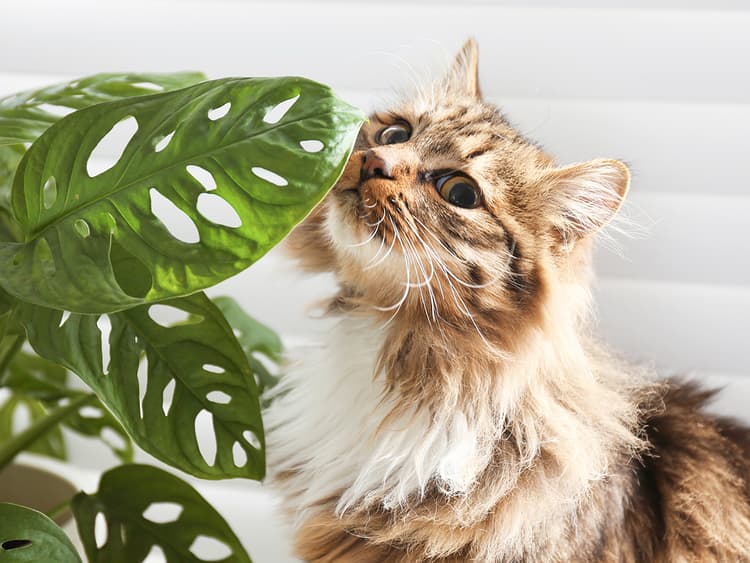
Mosaic plant
Friendship plant
Ponytail palm
Before adding any new plants to your home, research to find out if they’re toxic to your pets. Stay away from these plants if you have cats in the house:
Aloe
Ivy
Foxglove
Bird of paradise
Peony
Periwinkle
American holly
Amaryllis
Gardenia
Azalea
Most ferns are not poisonous to cats, but only if they’re “true ferns.” Be careful to avoid plants that may have “fern” in their name and even look like ferns, but aren’t actually part of the fern family. Do plenty of research before adding any plant to your home to make sure it is actually safe to have around your cat.
Because ferns are not toxic to cats, the worst your pet can expect from eating the plant is an upset stomach from consuming too much raw plant material.
No, ferns are not poisonous to cats whether they eat them or smell them.
“Find a Plant | North Carolina Extension Gardener Plant Toolbox.” Plants.ces.ncsu.edu, plants.ces.ncsu.edu/find_a_plant/.
Medicine, Center for Veterinary. “Animal Health Literacy.” FDA, 14 July 2023, www.fda.gov/animal-veterinary/resources-you/animal-health-literacy.
“Poisonous Plants.” ASPCA, 2015, www.aspca.org/pet-care/animal-poison-control/toxic-and-non-toxic-plants.
Whitcomb, Amy A. “10 Garden Plants That Are Toxic to Pets.” UC Davis, 20 Mar. 2017, www.ucdavis.edu/one-health/garden-plants-toxic-to-pets. Accessed 27 Nov. 2024.

Savannah Admire is a writer and pet mom to two dogs and a cat. Under the name Savannah Cooper, she has published poetry in 40 different publications, as well as a poetry book, Mother Viper (2025). When she’s not writing, you can find her reading, taking photos, or volunteering as a content creator for her local community theatre. As a pets writer, she focuses on cat and dog behavior and pet parenthood. She currently lives in Western Maryland.
Pet Wellness
Lifestyle
Pet Wellness
Lifestyle
These plants might be beautiful, but they’re deadly to feline foragers.
Pet Wellness
Find out whether you can get that elaborate flower arrangement—or if you should skip it.
Pet Wellness
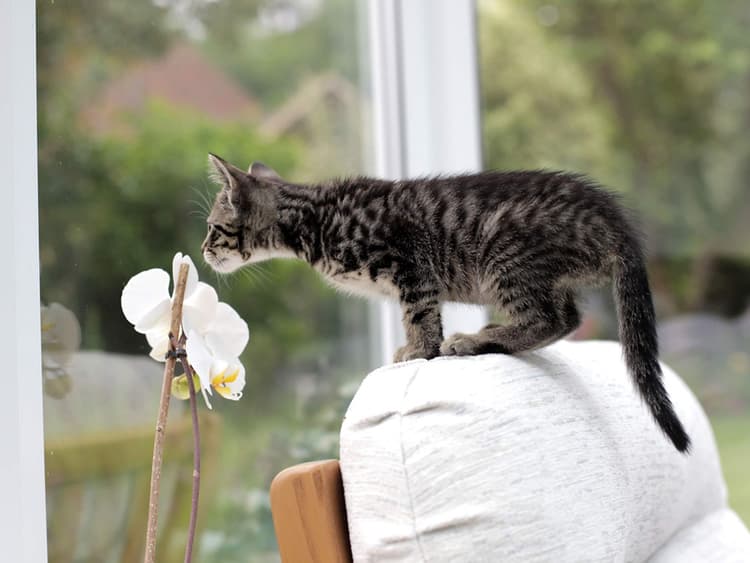
If your kitty is poking exploring your garden, this flower isn’t much of a danger. Here’s why.