Why Does My Cat Lick Their Fur Off?
A guide to what to do when your cat’s licking goes from fastidious to extreme.
A guide to what to do when your cat’s licking goes from fastidious to extreme.
by Dr. Maria Zayas, DVM, | December 26, 2025
Роман Самсонов / Adobe Stock
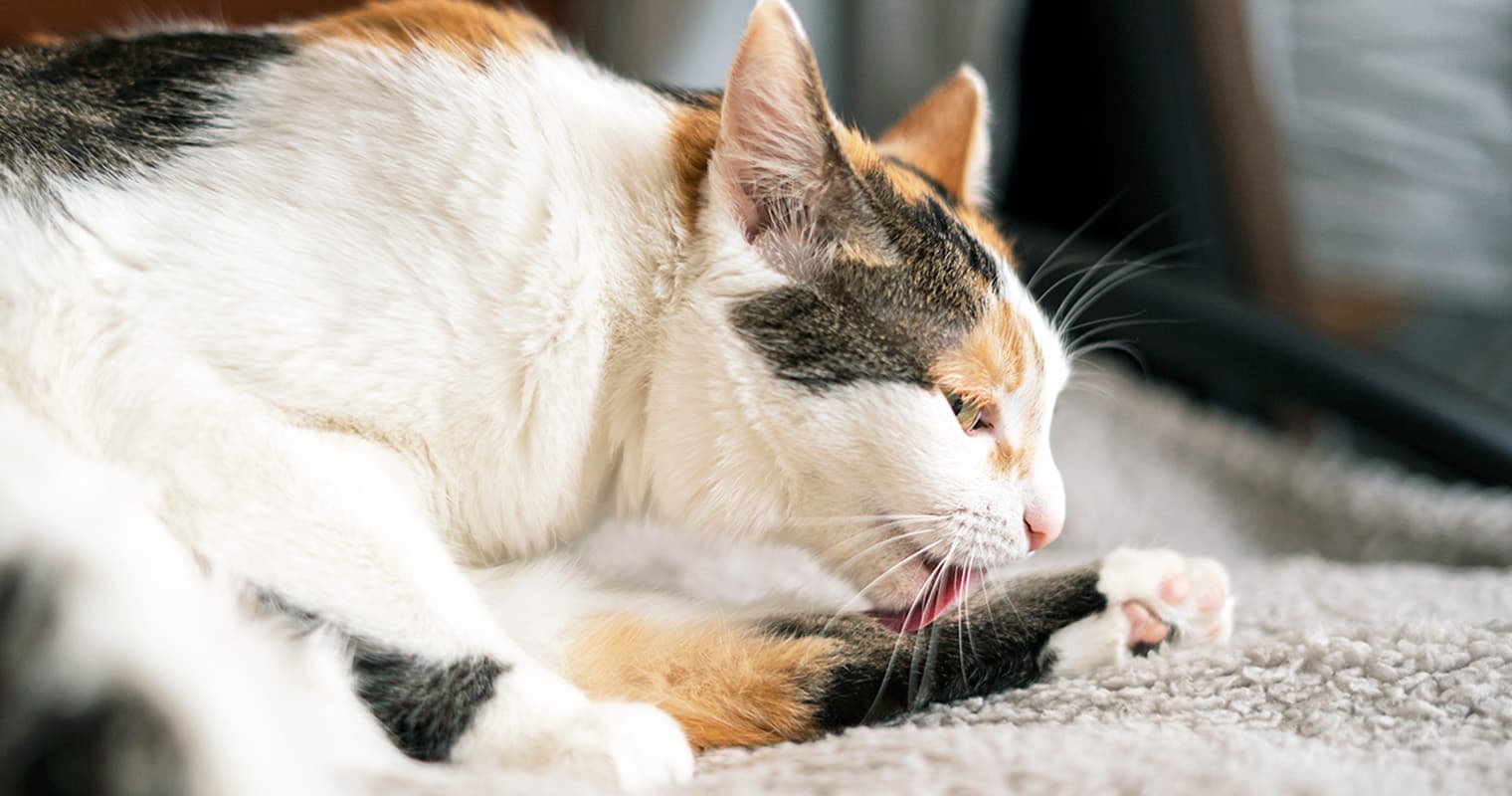
Cats make great pets because they are conveniently sized, social, and obsessively clean family members — who may add a bit of sass or chaos to your home, for an added element of fun. They spend up to half their waking hours licking their coats with a rough tongue to maintain their grooming needs. Using their sense of smell and taste to identify anything on their coat, from dust to parasites, they can then groom themselves thoroughly throughout the day to stay clean.
If a cat spends too much time grooming or licks excessively in one area, they can start to lick the fur off their body and even affect the skin underneath. This can happen for many reasons and is known as over-grooming. If you want to help your cat keep their coat luscious and clean, read on to learn more about over-grooming, why it happens, and how to help prevent or stop it.
Cats will groom themselves, unlike many other species, such as dogs. They use their tongues to work through their coat and remove dirt, dead skin cells, shed hair, parasites, and anything foreign that may be dirtying their coat. This process leaves the coat with no added odors (as long as they aren’t suffering from dental disease) and can even prevent matting in longer coats. It is, unfortunately, also why cats frequently develop hairballs — but this can be minimized by helping your cat remove shed hair so it isn’t all ingested by them.
If a cat spends too much time grooming, they can start to pull out or break the hairs in their coat. Bald spots, thinned spots with the skin visible underneath, or “barbered” areas with shorter hairs can develop when there’s trauma from too much grooming, also known as over-grooming.
Cats are fastidious about their own cleanliness, but that doesn’t mean you won’t need to give them a little help along the way. Here’s how.
In severe cases, a cat will continue to over-groom an area even if there isn’t much hair left and will start damaging the skin instead. This can cause skin infections and scabbing that need medical treatment to heal. For a cat to do this, they usually have a reason to lick the area beyond just cleaning it, which is why they don’t stop once the coat is clean.
Common areas you’ll notice over-grooming on your cat are:
The belly
Inside the legs
Over joints
Cats can lick their fur off for many reasons. Here are some of the most important ones to know.
Grooming is a social behavior between cats and a form of self-soothing when they groom themselves. They learn this from their mothers as kittens. If a cat experiences stress, anxiety, or is even bored and looking to soothe themselves, they may start grooming more than they should. In most cases of over-grooming due to stress, they won’t cause trauma to the skin — just the hair coat, though this can vary by cat and be influenced by the severity of the stressor.
If you notice your cat has been over-grooming, your first thought should be to take them to a vet to be screened for allergies. Although stress and boredom are the most well-known reasons for a cat to over-groom, allergies are the most common reason they are doing it.
Chronically itchy cats may show other signs, such as small, pinpoint scabs throughout their coat (especially around their neck), dandruff, and have a history of ear infections. These cats are more likely to have trauma to the skin as well as skin infections, but could just be over-grooming in some cases.
Once an infection sets in, the inflammation can be irritating, even itchy. Cats will often try to lick the area, because saliva can help kill some bacteria. But licking can also help other bacteria grow, and this behavior can ultimately make the infection worse. It’s best to always have a cat with an infection anywhere evaluated by a vet before they can potentially start over-grooming the area, making things worse.
Infections can come from bacteria, yeast, and even fungal infections such as ringworm, which is contagious to people.

Kitties are very good at hiding pain, so recognizing the signs is critical in helping them when they’re suffering.
Similar to anxiety and stress, pain can trigger those problems and also be something a cat wants to soothe. As with humans, applying pressure to something that hurts or touching it lightly can sometimes ease the pain. Cats with joint pain or belly pain from an organ are prone to over-grooming. Licking the fur off their wrists, elbows, or knees is a sign of arthritis. Licking the fur off their bellies can indicate bladder or kidney pain. Sometimes, where they over-groom can tell us what the underlying reason is.
Cats experiencing anal gland discomfort will instinctively lick the area. This is their attempt to express, or empty their anal glands, and relieve the discomfort. The area is delicate and not covered with hair, though, and their tongues are rough. Due to this — and the extra bacteria in the area — over-grooming due to anal gland issues often causes an infection of the skin in the area or even in the anal glands themselves. It may appear wet, bloody, and stinky under their tail, which is how you’ll know you have an issue.
Cats who pick up parasites that live on their skin are also prone to over-grooming. Fleas, lice, mites, and ticks are all possibilities. They are at higher risk if they spend time outdoors or live in states with high populations of these parasites, but even a housecat in a cool weather area can suffer from skin parasites and start over-grooming.
The first step to help stop a cat from over-grooming is to find out why they’re doing it. Once you notice the problem, take them to their veterinarian for an evaluation. They will help you narrow down the reason they are licking their fur off and suggest a treatment plan. Some of the strategies they may recommend include the following.
If you know about a stress trigger that started a problem, you can try to help your cat manage that. Moving recently, introducing a new animal to the house, and construction are common triggers. Giving them an extra litter box and a quiet place to be alone. General noise control can help with issues like this. There are also pheromone sprays, diffusers, and calming probiotics that help reduce stress for cats at home.
If a cat’s anxiety is bad enough, it’s possible they need anxiety medication to ease their over-grooming. Cats with pain may also need pain medication, joint supplements, and other therapies to keep them comfortable. Prescription diets from the vet can likewise help treat a cat when they don’t take to medication well. There are diets for joint support, anxiety, kidney disease, bladder inflammation, and more — all of which could potentially help a cat who is over-grooming.
Cats with allergies often need to take daily medication, but if they have a food allergy, they may need a special diet to avoid their allergen as well.
Meanwhile, parasite treatments for cats who over-groom due to infections can include topical medication, oral medication, or even medicated baths.

A bored cat can develop everything from behavioral issues to physical ailments. Here’s how to keep your kitty mentally stimulated.
Giving bored cats more to do throughout the day and night can significantly improve their coat health. Puzzle toys for their food instead of bowls can go a long way to help engage their minds. Keeping them moving with interactive cat toys encourages more and better sleep, which leaves less time for grooming.
In persistent cases of over-grooming, especially if the cat is causing damage to their skin, they may need to wear bandages or clothing around the area to keep them from licking off their fur. A cat might need to wear a cone if they remove or get around barriers such as bandages and onesies.
When a cat licks their fur off, it usually means that there is an underlying health concern, such as pain, anxiety, or allergies, that a cat needs help with to prevent more licking.
The best thing to do is take them to a vet to find out why they are chewing their fur off. Then, they can receive treatment for the issue and hopefully stop the behavior.
Brooks, Wendy. “Fur Mowing in Cats.” Veterinary Information Network, Veterinary Partner, 2025, veterinarypartner.vin.com/default.aspx?pid=19239&id=4952646.
Dr. Maria Zayas attended Ross University School of Veterinary Medicine where she completed her veterinary degree in addition to participating in and presenting research related to aquatic animal medicine. She spent her first year as a doctor working with a low cost spay/neuter and general practice clinic before returning to her home state of New York and entering the world of housecall veterinary medicine. Falling in love with this area of medicine, she launched her own housecall veterinary practice in addition to writing pet health articles. She loves all things related to water and continues to travel and explore with her three dogs and one cat, all of whom also love to swim.
Pet Wellness

Behavior & Training

Adoption Advice
Behavior & Training
Behavior & Training
Behavior & Training
From overstimulation to hidden pain, here’s what might be behind your cat’s unexpected swats or bites.

Pet Wellness
Kitties are very good at hiding pain, so recognizing the signs is critical in helping them when they’re suffering.

Behavior & Training
If you’re patient and know what to expect in the first 30 days, you and your cat will get along just fine.

Behavior & Training
Anxiety is a very common reaction for a cat or dog entering a new home, but there are several ways to treat this fear-driven behavior.