A Guide to Dog Eye Discharge: Learn When It Could Be a Problem
When to worry and what to do when your dog’s eyes look bleary.
When to worry and what to do when your dog’s eyes look bleary.
by Dr. Shelby Neely, DVM, expert review by Dr. Heidi Cooley, DVM CHPV CCXP | February 27, 2025
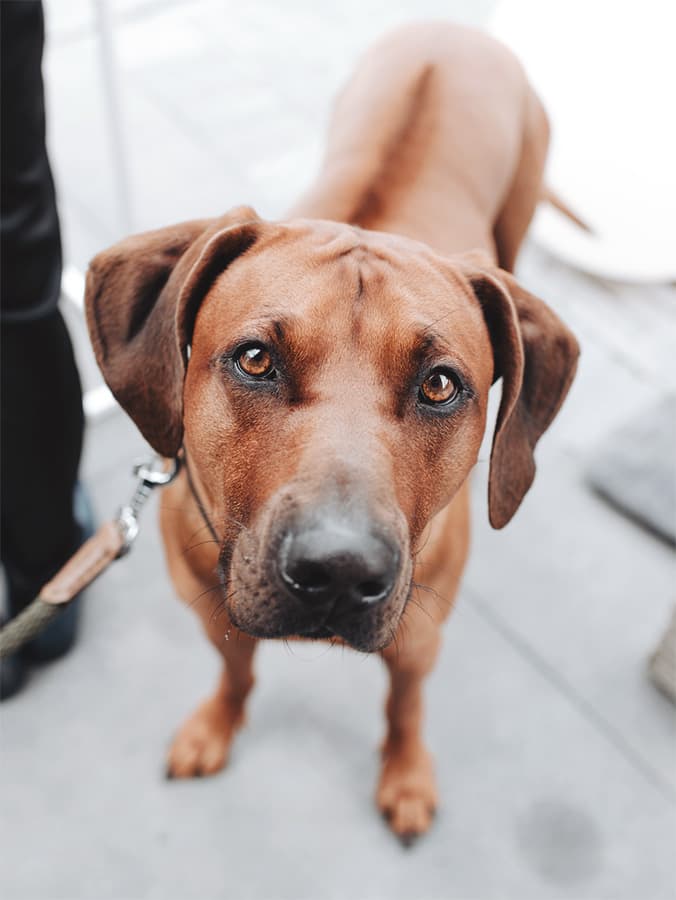
Tomasz Majchrowicz / Shutterstock
Most of the time, we don’t have to do anything to care for our dog’s eyes. But occasionally, your dog may develop an eye problem that needs your vet’s attention. One of the first things that happens when there’s something wrong with your pet’s eyes is the development of discharge.
When that happens, you need to take your dog to the vet to find out if it’s normal and if no treatment is needed. In most cases, your vet may need to do some diagnostic tests to find out for sure.
Read on for a better understanding of why your dog may have eye discharge and some possible treatments they may receive to heal their eyes.
Dog eye discharge refers to any fluid that comes from their eyes. It can be clear, watery, or thicker in colors such as yellow, white, or green. This discharge can be normal, like tears helping to clear debris out of the eyes, or more serious, such as irritation, infection, or a systemic health condition.
Several factors can contribute to eye discharge in dogs, including:
Allergies
Bacterial or viral infections
Foreign bodies
Blocked tear ducts
Eye injuries
Dry eye (also known as keratoconjunctivitis sicca)
Breed-related issues
There are treatments for each type of condition in your dog’s eyes.
Your dog sees you as their best friend, so keep those eyes healthy.
Understanding the various types of discharge secreted from a dog’s eyes can help you or your vet understand your dog's potential health concerns. The following are common types of dog eye discharge.
Some eye conditions that may produce a watery discharge include allergies, minor irritation, or wind exposure. If the discharge continues, this could indicate an underlying eye condition or a more chronic issue, such as blocked tear ducts. Blocked tear ducts are fairly common, but without surgery, the condition will not disappear. Many people elect not to have surgery performed on their dog, so it becomes a chronic condition that’s more of an aesthetic issue (tears running down your dog’s face and staining their fur) than something harmful.
Thick, mucus-like discharge, which may accumulate overnight and cake around the eyes in the morning, could be a sign of dry eyes. This is caused by a lack of tear production. The condition can cause chronic irritation and even damage the cornea. In these cases, the eyes cannot go untreated. At the very least, you must put artificial tears in your dog’s eyes several times daily.
A yellow or green discharge is typically a sign of infection. This could be due to bacterial conjunctivitis, an infected wound around the eyes or on an eye’s cornea, or a more serious condition requiring veterinary attention.
Although mild, occasional eye discharge should not cause concern, other symptoms may require a vet visit. These include:
Persistent or excessive discharge
Yellow, green, or bloody discharge
Squinting or excessive blinking
Swelling or redness around the eyes
Pawing at the eyes due to discomfort
Cloudiness or visible changes in the eye
Any of these signs indicate that your dog needs to be examined by your vet. Dogs get all the same serious eye diseases as people, including ulcers, glaucoma, cataracts, and infections. Early diagnosis and treatment will lead to a better outcome.
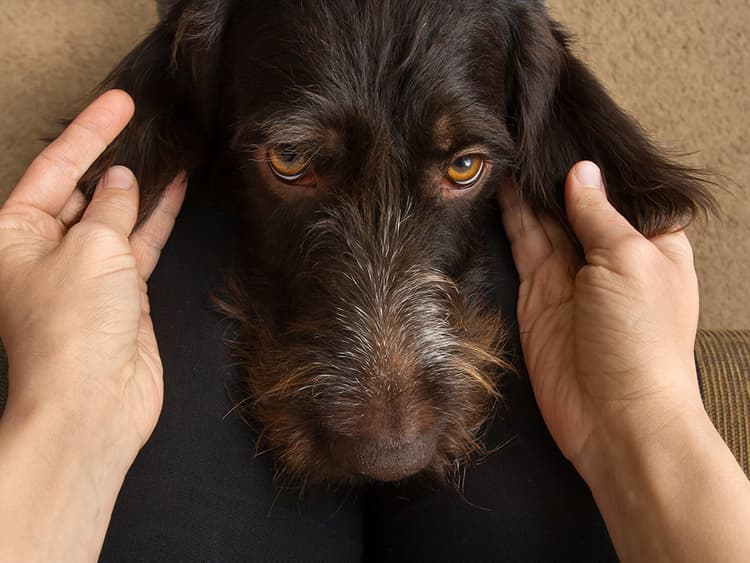
They aren’t fun, but you can’t leave them alone.
There are several eye tests a vet may conduct when evaluating a dog with eye discharge.
A physical examination (specifically of the eye)
A tear production test
A fluorescein stain test, using a special dye that stains corneal ulcers or scratches
A bacterial culture to identify infections that may require antibiotic treatment
An eye pressure test to check for glaucoma by checking eye pressure
The treatment for dog eye discharge depends on the underlying cause. You may be able to treat it from home, but in more serious cases you’ll need to visit a vet for treatment.
Antibiotic eye drops or ointments to treat bacterial infections
Oral medications that can help with underlying conditions
Artificial tears to help manage dry eyes by keeping the eyes moist
Anti-inflammatory medication to reduce inflammation and irritation
Possible surgical correction for blocked tear ducts, cataracts, or breed-related issues
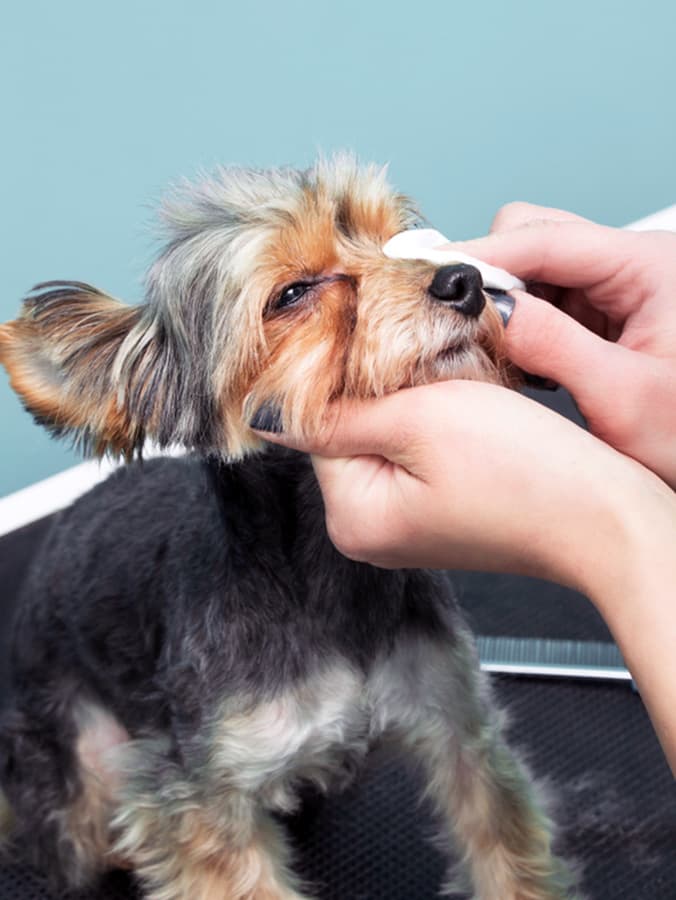
A damp, clean cloth to clean gently around the eyes
A sterile saline solution to help flush out minor irritants
Warm compresses to help reduce inflammation and loosen crusty buildup
In cases of allergies, limit exposure to known allergens, and possible vet-recommended antihistamines
Eye discharge in dogs can range from harmless to serious, depending on the cause.
By recognizing different types of discharge and knowing when to seek veterinary care, pet parents can help protect their dog’s eye health.
Regular eye cleaning, routine check-ups, and prompt treatment for infections or underlying conditions will ensure your dog’s eyes remain bright, clear, and comfortable.
Hwang, Jiyi, et al. “Bidirectional Corneo-Conjunctival Transposition for Large and Deep Canine Corneal Wound Healing.” Journal of Biomedical Translational Research, vol. 23, no. 3, Sept. 2022, pp. 67–71, www.jbtr.or.kr/archive/view_article?pid=jbtr-23-3-67, https://doi.org/10.12729/jbtr.2022.23.3.67.
Thomasy, Sara. “Canine Conjunctivitis: Causes and Treatment.” BSAVA, BSAVA, Apr. 2020, www.bsavalibrary.com/content/chapter/10.22233/9781910443774.ch6sec1.
Wolfer, J, and B Grahn. “Diagnostic Ophthalmology. Periocular Discharge and Swelling around the Eye in a Dog.” The Canadian Veterinary Journal, vol. 36, no. 10, Oct. 1995, p. 661, pmc.ncbi.nlm.nih.gov/articles/PMC1687110.

Dr. Shelby Neely is a freelance writer and veterinarian who graduated from the University of Pennsylvania School of Veterinary Medicine and has practiced veterinary medicine for 30 years, specializing in small animals. Her work has appeared in Allivet, AsktheCatDoctor, WhiskerDocs, Ask the Cat Doctor Radio, Ask the Cat Doctor TV, and numerous other websites, brochures, newsletters, newspapers, and ebooks. In her spare time, Dr. Neely likes to spend time with her three children, two grandchildren, three cats, two grand-cats, and five grand-dogs.
Pet Wellness
Pet Wellness
Pet Wellness
Behavior & Training
The reason for your midnight jump-scare? Turns out it’s just your dog’s spooky eyes.