13 Common Dog Skin Conditions
Our experts explain signs, symptoms, and treatments.
Our experts explain signs, symptoms, and treatments.
by Dr. Chyrle Bonk, DVM, | July 24, 2026

Akimov Igor / Shutterstock
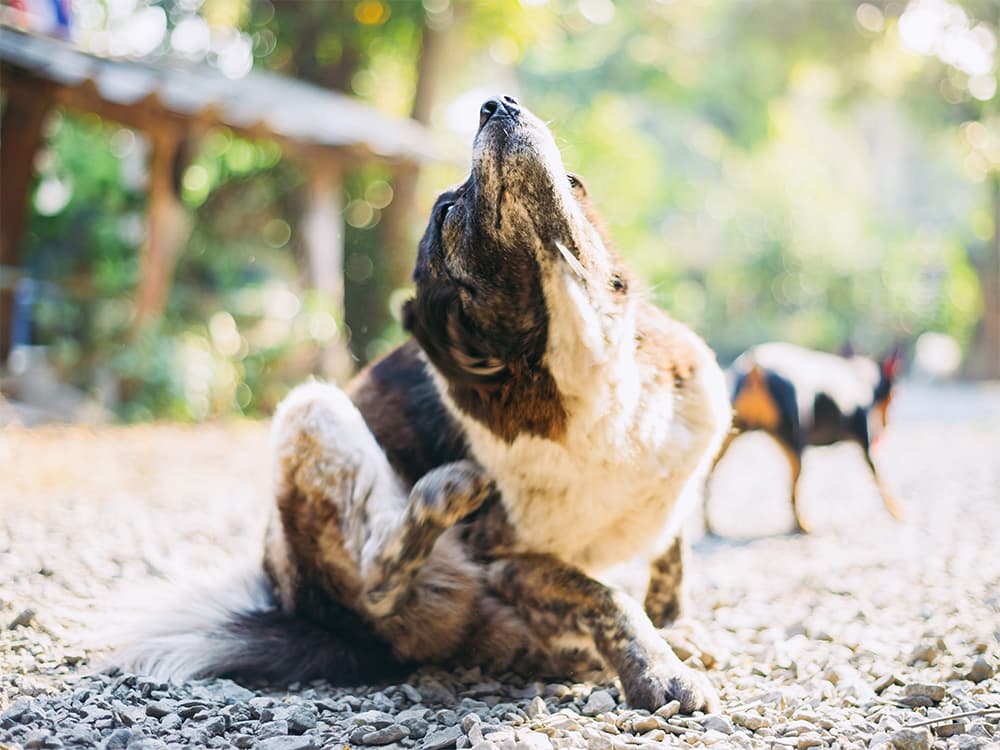
For those of you who have lay awake, listening to the jingling of your dog’s collar tags as they work at yet another itchy spot or who have had your dinner interrupted by the thumping of your dog’s foot as they dig at their skin, we hear you. Dogs and their skin can have a complicated relationship, one that doesn’t always exist in harmony. So, let’s take a look at some of the most common dog skin conditions so that you can get your pup the relief you both need.
The skin is a complex and vast organ that does so much for your dog’s body. It protects it, holds things in, and gives each pup their unique look. It can also be the source of a lot of trouble. Signs that your dog has a skin condition can include:
Redness
Swelling
Lumps or bumps
Flakiness, scaliness
Hair loss
Itching
Scabs
Odor
Sores, wounds
Discoloration
None of these are considered normal, so speak to your veterinarian if your dog shows up with any of these signs.
nateejindakum / AdobeStock
From everyday environmental allergies to underlying infections, here are some common reasons your dog might be itching, flaking, or breaking out.
Allergic dermatitis affects a lot of dogs. Allergies to things like fleas, foods, pollen, or plants can all create an itchy, rash storm on your dog’s skin. Allergies can be tested for and treated with avoidance or antihistamines.
Fleas are external parasites that crave a warm body. They can bounce from animal to animal, laying eggs wherever they go. Fleas create problems because they feed on your dog’s blood by biting the skin, which can create a reaction or even spread disease. Look for itchiness as well as small red bumps at the base of the tail and neck. Adult fleas can sometimes be seen moving around on your pup.

Thankfully, there are treatments. But first, you have to figure out why they have an itch to scratch.
Fleas and ticks are often mentioned in the same breath because they’re similar in their methods. Both bite dogs to feed on their blood, and both can be bothersome. Ticks tend to be more of a spring and summer thing in temperate climates and can create a lot of irritation as well as spread tick-borne diseases. Ticks are fairly easy to spot, especially when engorged with blood. Look for them in the dark caverns of your dog’s body, such as the ears, armpits, and groin.
Ringworm is the most common term for an infection with dermatophytes fungus (even though it’s not actually a worm or always in a ring). It creates patches of hair loss and scaly skin, and is very contagious to other animals and you. Often, treatment with an anti-fungal will take care of it.
Mites are little parasites that cause mange when they infest a dog’s skin. Scabies and demodex are two of the most common, and they can lead to hair loss, itchiness, and scabs. Fortunately, mites often respond well (for you and your dog) to an anti-parasiticide.
Healthy dog skin contains a smattering of yeast and bacteria in a healthy balance, benefiting rather than bothering each other and your dog. That perfect harmony is imperative because if things get out of whack, your dog can have some real trouble pop up on their skin. Yeast infections in dogs can show up as crusty, smelly, flaky, red skin that could eventually become thickened and dark if untreated. Most yeast infections will improve with medication, which helps recreate a healthy skin environment.
Similar to yeast infections, bacterial skin infections can pop up when something throws off the skin balance. Bacterial dermatitis can be very itchy and smelly, as well as red and oozy. There may be wounds or a bumpy rash as well. Bacterial infections typically respond to antibiotics and restore skin health.
Impetigo is sort of like acne for dogs. It’s a skin infection that creates raised, pus-filled bumps on a dog’s skin. It usually happens in puppies and may be the result of a developing or weakened immune system, concurrent illness, or unsanitary living conditions. Most cases will do well with proper cleaning and medications.
Also known as moist dermatitis, hot spots seemingly pop up overnight and quickly become all your dog can think about. Hot spots are often the result of an allergy or irritation that sets off areas of redness, heat, and oozing. Treating with an anti-inflammatory and antibiotic will often clear up hot spots.
Plus, other alternatives that might be better.
Dogs are losing hair all of the time, but when that hair loss becomes severe and concentrated, it’s known as alopecia. Alopecia can be the result of endocrine imbalances, infections, genetics, allergies, or medication reactions. Along with hair loss, a dog’s skin may be discolored or red, develop a rash, or look completely normal.
We all know the toll that cooler temperatures can take on our skin. It seems to suck all available moisture out, causing flakiness, itching, and even pain. Dry skin can be treated with moisturizing shampoos, conditioners, or sprays. Some dogs will need a little moisturizing boost every winter.
Lumps and bumps on the skin are common. The likelihood that your dog will pop up with one in their lifetime is very high. There are many types of tumors, some that are cancerous and some that aren’t. Knowing which is which is near impossible without a veterinary diagnosis, so be sure to contact your vet if your dog shows up with a new lump or bump on their skin, even if you think it’s merely a skin tag.
The immune system is there to protect your dog from outside invaders, such as bacteria and viruses. Sometimes, the immune system can get a little over-zealous and actually create more problems than it prevents. Autoimmune disorders are when the immune system turns on the body, potentially creating blistering crusts or sores, along with other signs. Autoimmune diseases will require immunosuppressive drugs to treat.

Brat Co / Stocksy
A dog’s skin is pretty tough, but waiting too long to treat an issue can turn a minor irritation into a painful secondary infection. You should skip the home monitoring and get your veterinarian involved if you notice any of the below.
Rapid changes or new growth: Any lump or bump that appears suddenly, grows quickly, or has an irregular shape needs a professional evaluation.
Persistent or worsening distress: If the redness, flakiness, or odor doesn’t improve after a few days — or if your dog is biting and scratching relentlessly — they need medical relief.
Open wounds or signs of infection: Abrasions, oozing sores, or warm, swollen skin mean bacteria or yeast may have taken hold, which usually requires prescription treatment.
Changes in behavior or appetite: When skin discomfort starts affecting your dog’s sleep, mood, or eating habits, it’s a clear signal that the pain or itching has reached a severe level.
Some skin conditions are pretty straightforward, while others will require a more in-depth diagnostic approach. Your vet is going to first and foremost hear you out, so be ready to tell them when you noticed the changes in your dog’s skin, what you’re seeing, how your dog is acting, and if you’ve tried anything at home.
They will then take a good look at the skin to check for visible parasites or areas of hair loss, rashes, or redness. Most of the time, a skin scraping or biopsy will shed more light on what’s going on at and beneath the surface for further diagnosis.
A study from Mars Petcare’s Biobank project has found that French Bulldogs and Boxers are twice as likely to develop atopic dermatitis. Researchers examined the DNA of 1.2 million dogs using samples from the Mars Petcare Biobank and Wisdom Panel and determined that a splice variant in SLAMF1 — a protein that plays a crucial role in the immune system — was a likely contributor to an increased risk of atopic dermatitis.
Additionally, the study detected the SLAMF1 variant in 71 percent of French Bulldogs and 40 percent of Boxers, which means those two breeds are twice as likely to develop atopic dermatitis.
Most of the time, new skin conditions will require a veterinary diagnosis and treatment. That may include anti-parasiticides for parasites, medications for allergies or infections, removal of tumors, or topical products for dry skin.
Mild skin conditions can sometimes be treated at home, but more severe cases will need veterinary treatment. So, depending on what your dog is dealing with, a little at-home care can go a long way. Just be sure you know what you’re up against beforehand by getting a veterinary diagnosis.
Dry, itchy skin often responds to moisturization. This can come in the form of shampoos or sprays that you put on your dog’s skin. Oatmeal and lavender are common ingredients that help to calm the itchiness.

Spoiler: These at-home remedies are probably already in your pantry.
If your dog is suffering from allergies, pinpointing the culprit and avoiding it is the best option. Take notice of when your dog’s signs are worse to determine what’s triggering your dog’s reaction so that you know whether it’s food or environmentally based, and then try to remove the allergen.
Skin conditions that create more than a little dry skin will need veterinary care.
Skin conditions in dogs are fairly unique but can look very similar. Signs include redness, swelling, a rash, lumps or bumps, oozing, flakiness, and itching.
Dermatitis is simply inflammation of the skin, which can be caused by a number of things, including allergies or infections. Most dermatitis shows up as itchiness, redness, or a rash. It can also cause flakiness, oozing, or hair loss depending on the cause.
Most parasites cause small red bumps on a dog’s skin due to irritation from their bite or presence. You may also see hair loss, itchiness, or scabs.
Fungal infections tend to cause a lot of dryness, scaliness, or flaking of a dog’s skin. They often come with a musty or “cheesy” odor and a lot of itchiness.
Keeping your dog in tip-top shape is the best way to prevent skin and a lot of other conditions. Make sure you’re providing a good quality diet, plenty of water, and regular exercise. Use a flea-and-tick preventative year-round and seek regular veterinary care, especially if you notice an abnormality.
“Canine Skin Autoimmune Diseases.” Richard P. Riney Canine Health Center. https://www.vet.cornell.edu/departments-centers-and-institutes/riney-canine-health-center/canine-health-information/canine-skin-autoimmune-diseases.
“Tick-borne Disease: Prevalence, Prevention, and Treatment.” Canine Health Foundation. https://www.akcchf.org/canine-health/sporting-field-dogs/tick-borne-disease.html.
“Uncovering & Managing Impetigo in Puppies: A Comprehensive Guide.” Animal Friends Dermatology. https://www.animalfriendsdermatology.com/site/blog/2024/03/15/uncovering-managing-impetigo-puppies.
“Understanding Yeast Dermatitis in Dogs.” Memphis Veterinary Specialists & Emergency. https://www.memphisveterinaryspecialists.com/site/blog-cordova/2024/04/15/yeast-dermatitis-dogs.
Villalobos, Alice E. DVM. “Tumors of the Skin in Dogs.” Merck Veterinary Manual. Sep 2024. https://www.merckvetmanual.com/dog-owners/skin-disorders-of-dogs/tumors-of-the-skin-in-dogs.

Dr. Chyrle Bonk has been a mixed-animal veterinarian since 2010, with a special interest in rehabilitation. When she's not practicing or writing about veterinary medicine, you may find her exploring the outdoors with her family or tending to her cows, horses, chickens, or cats and dogs.
Pet Wellness
Pet Wellness
Pet Wellness
Pet Wellness
It’s worth asking, especially ahead of all those hikes you’ll take together this summer.

Pet Wellness
Here are some signs your dog needs medical attention.

Behavior & Training
They especially love to do this when they’re ignoring you.

Pet Wellness
Some like it hot (but not most dogs). Here are the season’s health hazards, from fleas to foxtails.