How Often Should Dogs Be Bathed?
Hint: It’s less than you think.
Hint: It’s less than you think.
by Dr. Maria Zayas, DVM, | May 5, 2026
nikkimeel / Adobe Stock
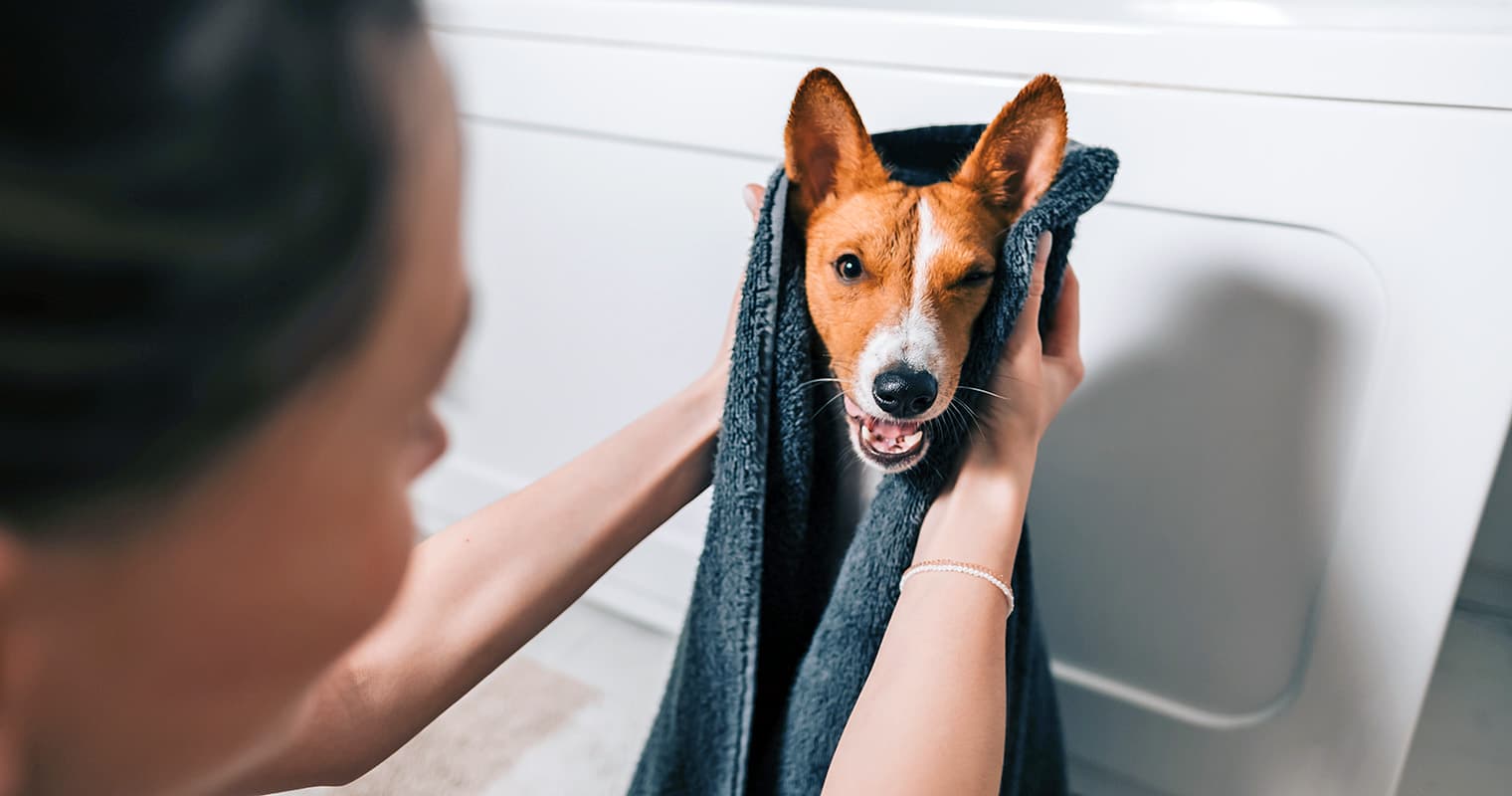
Sharing your home with a (typically) four-legged friend who potties outside, loves a good roll in the grass, and tends to their personal grooming with their mouth can definitely have you wondering how many baths are too many?
Although people often shower once a day, giving a dog a bath every day can damage their skin barrier and hair coat. Spot-cleaning their paws and booty when they come inside is fine for most dogs, but a full body scrub? That’s actually a bit technical of an answer. Whether you’re new to dog parenting or a seasoned pro, here’s what you need to know.
In most cases, regularly bathing a dog more frequently than every three weeks can lead to skin health problems.
Some breeds and coat types benefit from regular bathing, while others benefit from minimal bathing.
Your dog’s lifestyle and activity level (and preferred activities) impact their recommended bathing frequency.
There are other ways to help keep your dog clean between baths, such as brushing, rinsing with water, and spot-cleaning dirty areas, such as muddy paws.
Some health conditions impact skin and coat health, and can require special shampoos or bathing schedules. In a similar vein, remember to always use shampoos and other bathing products formulated for dogs, and not for people.
In general, you can bathe a dog up to every three to four weeks. Some breeds or coat types require a bath and coat maintenance every four to six weeks — otherwise matting can happen. Matting of the coat is painful and can lead to hair loss and skin infections, so staying on schedule for these dogs is important.
Other dogs may not require regular bathing at all. If they don’t have a health condition or coat feature that requires bathing, and they are clean without increasing odor, bathing them a couple of times a year — or only when something messy happens — can be perfectly safe.
Here are the factors you should consider when deciding how often to bathe your dog.
Before eight weeks of age, puppies have a hard time regulating their own body temperatures. Baths can be dangerous to them, so you should try to spot clean them as needed — then focus on drying them immediately after. Once they’re eight weeks old, you can start a normal bathing schedule of every three to 12 weeks or so, based on their needs.
Senior dogs with mobility issues may find baths to be painful and stressful. Try to provide a non-slip surface for them to stand on during baths and keep baths to a minimum. Like puppies, they may have trouble regulating their body temperature after a bath, especially if they have certain health conditions.
As dogs go through life, they can develop any number of health conditions that require more frequent bathing. Some of these are short-term issues, and you shouldn’t hesitate to bathe your dog as frequently as needed to clear up the problem, if advised to do so by your vet. These include:
Giardia
Generalized surface-level bacterial or yeast skin infections
Toxin exposure
Fleas, ticks, and other (skin-dwelling) ecto-parasites
Ringworm
There are also long-term, chronic health conditions your dog can have, and treatment might include more regular baths. In these cases, bathing them every three to four weeks is usually fine, but your veterinarian will advise you on your dog’s best bathing schedule. Some examples include:
Allergies
Hypothyroidism
Cushing’s
Dogs taking steroids
Health conditions requiring long stretches of time between baths are rare. But some might cause you to avoid bathing your dog for a short period:
Open wounds
Surgical incisions
Ear infections, if you can’t keep water out of their ears
Skin rashes treated topically with creams or ointments
Dogs living an active lifestyle don’t necessarily need more regular baths. Unlike us, they sweat almost exclusively through their paw pads and lower their body temperature by panting, which keeps them from getting stinky every time they exercise. That being said, dogs going into fresh or salt water, running through tall grass that could have fleas or ticks, or going into dirty areas with mud, stagnant water, strong plant or wildlife smells, could all likely benefit from a more frequent bathing schedule — compared to dogs who mostly travel on the neighborhood sidewalk.
One of the most important things to know when deciding when to bathe your dog is the type of coat they have.
Breed examples: Beagle, Boxer, short-haired Dachshund, short-haired Chihuahua, and Great Dane
Features: One inch (or shorter) hair that lies smoothly against the skin. They don’t have a double coat and may not be easy to brush (try a curry comb), but they can still shed extensively.
Bathing needs: As needed, two to four times per year
Breed examples: Labrador Retriever, Corgi, Border Collie, Australian Shepherd, Newfoundland, Great Pyrenees, and triple-coated Arctic breeds (such as the Pomeranian, Samoyed, Alaskan Malamute)
Features: Their haircoat has two layers, the topcoat and undercoat. The topcoat features longer, coarser hairs, while the undercoat consists of softer fur. Breeds with an extra insulating undercoat may be referred to as triple-coated.
Bathing needs: Every six to eight weeks, with daily to weekly brushing between baths to avoid mats
Breed examples: Poodle, Pumi, Bedlington Terrier, Airedale Terrier, Bichon Frise, and Cocker Spaniel
Features: Their coats may be wiry or soft/furred, single- or double-coated. Most breeds can grow long hair with proper maintenance.
Bathing needs: Every six to eight weeks, with regular brushing between baths, every four to six weeks without
Breed examples: All Doodle mixes (Goldendoodle, Maltipoo, Labradoodle, Cockapoo, and so on)
Features: These pups feature the more wire-haired curly coat of a Poodle with the undercoat (and possibly topcoat) of the breed mix’s coat. This significantly impacts the importance of coat maintenance, because they are prone to more significant, frequent matting.
Bathing needs: Every three to six weeks, with daily to weekly brushing in between
Breed examples: Chinese Cresteds and Xoloitzcuintli
Features: Most of their body is hairless or sparsely haired with coarse guard hairs. Usually, most of their hair will be on their heads.
Bathing needs: Up to once weekly, due to the accumulation of dirt and oils directly on the skin, which requires more human-like bathing needs.
Bathing your dog more frequently than they need is called over-bathing. Since a dog’s haircoat helps maintain the hydration of the skin and distribute oils the skin produces (without becoming greasy), introducing soap to their coat too often can mess up this balance.
Their skin can become dry, flaky, or develop dandruff. In very thick or densely coated breeds, their skin can even become moldy if not dried properly. Once the skin barrier is damaged, your dog can become susceptible to skin infections, worsening allergy symptoms, and even chronic hair loss or bald spots.
It takes time for problems like these to develop, so if your dog runs through a mud puddle two days after you just gave them a bath, don’t hesitate to give them another one. If this is a regular occurrence, though, it’s time to try just rinsing them instead of using shampoo.
Some breeds, namely Poodles, Doodles, and long-haired breeds, rely on a thorough bath and brush-out at regular intervals to keep their coats healthy. Waiting longer than, say, six to eight weeks can lead to matting — and having to shave their coats. For breeds with less strict bathing needs and lower stakes, here’s how to know when it’s time to bathe them.
Unpleasant odor
Dusty or dirty coat
Greasy coat
Red skin
Itchy skin
Moist areas of the skin or coat when your dog hasn’t gotten wet
Anything sticky is caught in their coat
For dogs who get stinky quickly, you can try using a deodorizing shampoo, dry shampoo, waterless shampoo, brushing their teeth, and rinsing or spot cleaning as needed between baths to avoid over-bathing.
When getting ready to bathe your dog, you should have the correct shampoo ready to go. Always choose a shampoo formulated for use on dogs. The pH and active ingredients are often different than those used in shampoos for people. Some scents in human shampoos, such as tea tree oil, can also be toxic to dogs — so always use a dog shampoo for your dog.
Dog shampoos generally fall under the following categories:
Typical use
Deodorizing
Soothing or gentle on skin
Medicated
These are run-of-the-mill shampoos. Their job is to safely clean your dog’s skin and coat, while potentially providing a scent that lingers for a day or so after the bath. This is usually your cheapest option, but also a perfect choice for most dogs. Other types of shampoo try to help with specific problems or health conditions that your dog may not have.
For stinky pups whose natural fragrance is an attack on the senses, try deodorizing shampoo. If you feel like you can still smell your dog’s natural scent even after a bath, no matter what shampoo scent you use, these are the shampoos for you.
For puppies, seniors, and dogs with sensitive or thin skin, gentle shampoos, such as oatmeal-based ones, will be your best friend. If your dog has had an allergic reaction to shampoo in the past, this is also a good family of shampoos to try, because they often lack any fragrances and contain minimal ingredients.
Medicated shampoos contain one or more of the following: an antibacterial agent, an anti-yeast agent, and/or something to help repair the skin barrier. Dogs with allergies and skin conditions that make them prone to skin infections (which can be bacterial, yeast, or both) benefit from these shampoos and may help them avoid oral medications. When paired with proper allergy control, regular medicated baths can help remove allergens from a dog’s coat and maintain a healthy skin barrier. If your dog has allergies, ask your vet for a medicated shampoo recommendation.
If you wash your dog with any soap or shampoo and they become red, itchy, possibly develop hives, or show any other potential signs of an allergic reaction, talk to a vet as soon as you can. Be ready with the name of the exact product you used, which could be the culprit.
Try to acclimate your dog to the bathing area outside of bath time. Ask them to hop into the shower area or tub for meals, treats, and toys.
Provide a non-slip surface during bath time.
Use warm water with medium-to-low water pressure.
Avoid the face (and especially the eyes and ears) as much as possible.
Don’t punish them for panicking or shaking. This will often make things worse.
Dry and warm them afterwards, so the bath ends on a good note.
You should only consider bathing your dog once a week if they are a hairless breed.
Yes, bathing a dog can really help with shedding. For very dense coated breeds, this might be the only time you can safely brush out their coat without damaging it.
Baby shampoo can be drying on a dog’s skin and coat, so you should avoid it and use a gentle dog (or puppy) shampoo instead.
Puppies shouldn’t be fully soaked in a bath before they are eight weeks old. After that, you can bathe them as often as is recommended for their breed and hair coat.
Although dogs don’t need conditioner, some long-coated breeds can do well with it because it helps with brushing and de-shedding their coats.
Try working with a trainer to make bath time less scary, or talk to your vet about using anxiety medication during bath time.
A good grooming session for most dogs will include a bath. Which step of the grooming process includes the bath varies by dog breed and coat type.
Waldorf Gewirtz, Elaine. “Double-Coated Dogs: What the Double-Coat Does for Breeds.” American Kennel Club, 1 Apr. 2024, www.akc.org/expert-advice/dog-breeds/double-coated-dog-breeds.
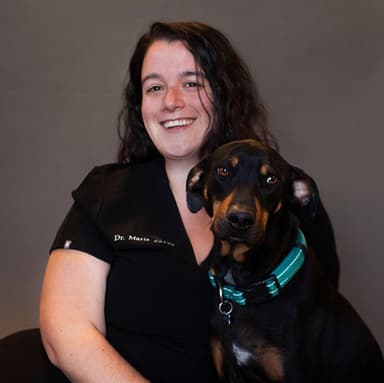
Dr. Maria Zayas attended Ross University School of Veterinary Medicine where she completed her veterinary degree in addition to participating in and presenting research related to aquatic animal medicine. She spent her first year as a doctor working with a low cost spay/neuter and general practice clinic before returning to her home state of New York and entering the world of housecall veterinary medicine. Falling in love with this area of medicine, she launched her own housecall veterinary practice in addition to writing pet health articles. She loves all things related to water and continues to travel and explore with her three dogs and one cat, all of whom also love to swim.
Adoption Advice

Pet Wellness

Breed Info

Breed Info
From grooming to exercise, here’s everything you need to know before adopting one of the happiest, most affectionate dogs.

Breed Info
These dogs turn heads everywhere they go — just be ready to brush (a lot).
Breed Info
Is this smart, affectionate, but energetic breed right for you?
Pet Wellness
Does your dog have the itch? It could be this common, treatable skin condition. Here’s everything you need to know about the Ringworm.
Adoption Advice
Thinking of adopting a dog? Learn more about the average monthly costs of dog parenthood.
Pet Wellness
These tips on maintaining good hygiene for your dog are crucial for their health, comfort, and overall well-being.