Is Neosporin Safe for Dogs?
No, you should not use Neosporin on your dog’s wounds.
No, you should not use Neosporin on your dog’s wounds.
by Dr. Bartley Harrison, DVM, | June 29, 2023
BONNINSTUDIO / Stocksy
No, Neosporin is not an appropriate medication for cleaning your dog’s wounds. Your dog might lick the Neosporin off, leading to loss of appetite, vomiting, and diarrhea.
Neosporin is the trade name of a petrolatum-based triple antibiotic ointment made for humans. Petrolatum is also known as petroleum jelly, soft paraffin, or white petrolatum. The three antibiotics are bacitracin zinc, neomycin sulfate, and polymyxin B, which are effective against a broad spectrum of bacteria. Some products contain a local pain killer called pramoxine as well.
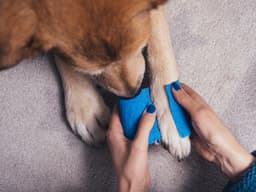
Use of Neosporin on dog wounds is not recommended. Dogs (and any other pets in the household) tend to lick any product applied to their skin or fur. Constant licking further contaminates the wound and allows the dog to ingest the medication. Applying Neosporin is generally unnecessary because small wounds tend to heal well on their own if kept clean, and larger or deeper wounds require veterinary attention.
Don’t freak out—here’s what to do.
If your veterinarian recommends using Neosporin or another triple antibiotic ointment on your dog’s wounds, it is applied in a thin layer to clean skin. It is never used in the eyes, ears, or by mouth. It is not intended for deep wounds or lacerations. If the wound is in an area your dog can lick (and they can turn into little acrobats when they really want to lick something), an e-collar will be needed to prevent them from licking. Before applying a new layer, the area should be gently cleaned to remove the previous layer of ointment.
There are no proven benefits of using Neosporin on wounds in dogs. In humans, Neosporin is used as a first-aid product to help prevent infection of minor scrapes and burns. The formulation promotes wound healing faster than bandaging alone, and it may help minimize the appearance of scars.
If ingested by a dog, Neosporin can cause loss of appetite, vomiting, and greasy diarrhea. If your dog ingests a large amount of the ointment, contact your veterinarian or an animal poison control center for advice.

And what to do to help them.
If your dog is showing signs of an allergic reaction to Neosporin, contact your veterinarian or an emergency vet as soon as possible. If you have applied the ointment topically, clean the area well to remove the product. If your dog ingested the ointment, do not induce vomiting unless specifically advised to by your veterinarian. Petroleum products have an increased risk of getting into the lungs, causing pneumonia when vomited.
Like any drug, Neosporin can cause an allergic reaction in dogs. This can result in localized or generalized redness, itchiness, swelling, or hives. Anaphylactic reactions to triple antibiotic ointments are rare, but can result in vomiting, diarrhea, pale gums, weakness, and collapse.
If ingested, Neosporin can cause GI upset, with symptoms including vomiting, loss of appetite, and diarrhea. One of the antibiotics, neomycin, belongs to a class of drugs that can cause ototoxicity, which can result in hearing loss. This is not expected with topical use, but is a risk associated with these types of drugs.

And how to help them feel better fast.
There are many different types of topical products for treating wounds in dogs. They are all best used under the guidance of your vet after they have assessed the wound and determined its severity, stage of healing, risk for infection, and need for sutures or bandaging. For contaminated wounds, some veterinarians will use Manuka honey, antibiotic-infused gauze, silver sulfadiazine, or other topical products beneath bandages to reduce contamination and speed healing of wounds.
Other at-home remedies, such as calendula ointment and tea tree oil have not been proven to be effective in dogs and may be harmful. Tea tree oil can cause serious problems in dogs, including loss of balance, muscle tremors, stiffness, and central nervous system (CNS) depression. Never apply or give something to your dog without consulting your vet’s office first.
While Neosporin is commonly used to help wound healing in people, it’s not very useful for dogs. There’s no evidence that it helps, and dogs are prone to lick it off anyway. If your dog has a small, superficial scrape, just clean it gently with soap and water and watch it to make sure it’s healing well. If your dog has a bigger or deeper wound, see your veterinarian to make sure you give it the best chance to close up without incident.
Using Neosporin on your dogs’ wounds is not recommended. Small wounds heal well on their own if kept clean, and bigger wounds need veterinary attention.

What to expect from and how to make the most of a trip to the ER.
Neosporin can cause local irritation and allergic reactions. Dogs also love to lick ointments off their wounds, which can introduce more bacteria into them.
Neosporin can cause loss of appetite, vomiting, and greasy diarrhea if ingested. Keep Neosporin and all other medications out of the reach of your dog.
Your veterinarian may recommend different ointments to help your dog’s wound healing based on the wound’s age, size, and depth. Ointment is not needed for most wounds.
If your veterinarian recommends Neosporin for your dog’s wound, apply it per their instructions. Make sure your dog is not able to lick the ointment off.
If your dog has an allergic reaction to Neosporin, contact your vet or animal poison control center ASAP. Gently clean off any visible product. Do not induce vomiting.

Dr. Bartley Harrison is a veterinarian with more than 19 years of experience. He has treated a variety of species in emergency and speciality practices for both large and small animals. His primary interests as a vet are emergency medicine and critical care.

Pet Wellness

Pet Wellness

Pet Wellness

Pet Wellness
Thriving plants are spring’s whole thing—but these offenders can be perilous to pets.

Pet Wellness
Some like it hot (but not most dogs). Here are the season’s health hazards, from fleas to foxtails.