Here’s How You Can Prevent Dangerous Bloat in Your Dog
Bloat is one of the leading causes of death in deep-chested dogs. This elective surgery can lower the risk.
Bloat is one of the leading causes of death in deep-chested dogs. This elective surgery can lower the risk.
by Daniela Lopez, | September 27, 2022
Michael Drager / Adobe Stock
As humans, we experience bloat after an especially indulgent meal. Besides unbuttoning that top button on our pants and taking an antacid, all we need to do is wait until we feel less like Violet Beauregarde when Willy Wonka blows her up like a blueberry.
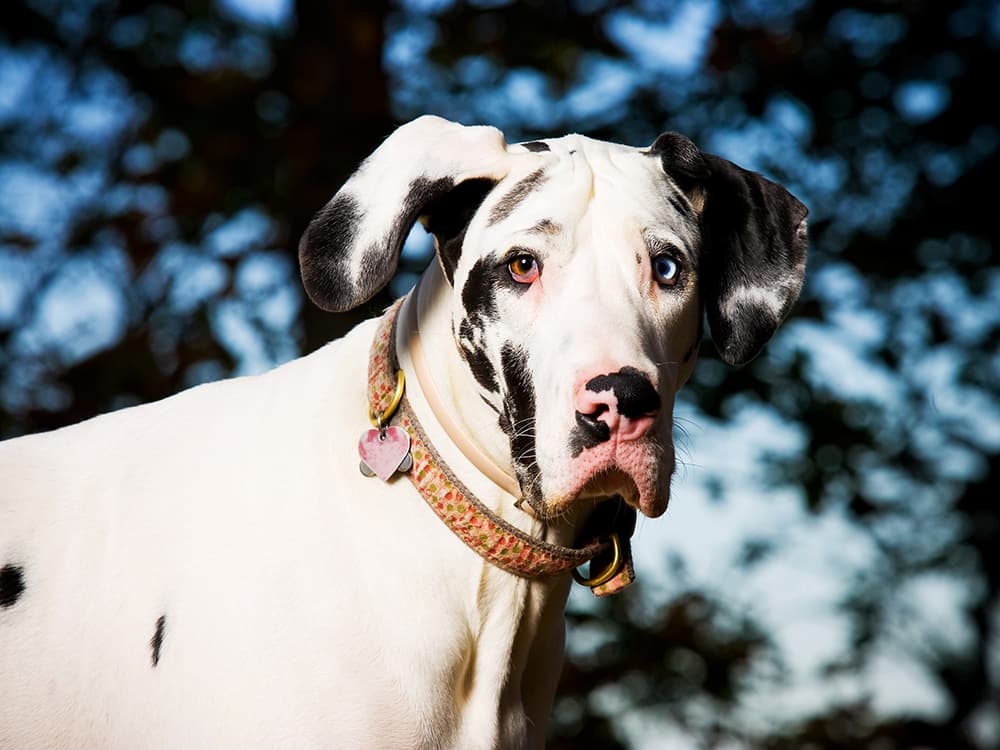
But bloat in dogs is more often a very serious issue. The last thing any pet parent wants to think about is gastric dilatation and volvulus (GDV), commonly known as bloat. For those with deep-chested dogs — including Great Danes, Labradors, and Weimaraners — it’s a fear that’s always lurking.
GDV is quickly fatal and one of the leading causes of death in dogs of these breeds. During an episode of bloat, a dog’s stomach dilates and fills with air or fluid. Occasionally, the condition stops there, but it often progresses into volvulus, full GDV. During this stage, the stomach twists upon itself. Bloat can kill a dog within hours if not treated immediately. The treatment for bloat is called a gastropexy.
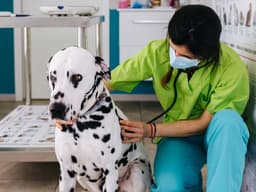
And when to be concerned.
During this surgical procedure, a veterinarian will suture your dog’s stomach to the wall of the body to prevent twisting. Prior to applying the suture, the veterinarian will untwist the stomach, returning it to its normal position. A gastropexy is most commonly performed as an emergency surgery in response to an episode of bloat, you do have the option of preventative surgery, called prophylactic gastropexy, to prevent a future episode. Often, veterinarians will perform a prophylactic gastropexy at the time they spay or neuter a dog. For dogs who have already been altered, a laparoscopic option is available which is minimally invasive with only small incisions made. With a laparoscopic gastropexy, only minor complications have occurred — most commonly a temporary skin fold.
While the gastropexy is not effective at preventing bloat of the stomach (filling up with gas), it does prevent the life-threatening twisting of the stomach. And that’s a good thing. But Dr. Michael Willard, professor at Texas A&M University College of Veterinary Medicine & Biomedical Sciences adds an important caveat: “Prophylactic gastropexy may greatly lessen the risk of recurrence, but it does not completely eliminate it.”
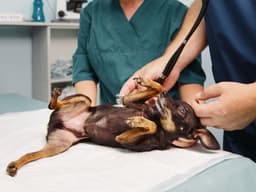
It's every pet parent's nightmare — but knowing what happens when you take your dog to the ER can make the experience a little less stressful.
So, how much does preventative gastropexy lessen the risk? It can decrease the rate of recurrence from 55 percent to four percent. When it comes to determining if a prophylactic gastropexy is a good solution for your dog, your first stop should be your veterinarian. Talk with your vet about your concerns. They can help review your dog’s health and the potential occurrence and risk factors with you.
Large-breed dogs have a 24 percent chance at developing GDV, and that risk increases with age. Dog breeds predisposed to bloat include Great Danes, St. Bernards, Weimaraners, Rottweilers, Irish Setters, Gordon Setters, Boxers, Standard Poodles, Basset Hounds, Doberman Pinschers, German Shepherds, Bloodhounds, Newfoundlands, and Old English Sheepdogs.
Willard estimates the average cost of treating a GDV case with surgery to be between $2,000 and $5,000, but if there are complications, the cost could be much higher. Beyond the general risk of surgery and anesthesia, gastropexy is generally well tolerated by most dogs, though some dogs have experienced gastrointestinal issues.
It covers your pet so you can get that broken leg fixed—while keeping your wallet happy.
If you’re thinking about getting a gastropexy for your dog, seek an experienced veterinarian surgeon. Remember: If bloating of the stomach occurs in your dog, seek out veterinary attention immediately regardless of if your dog has had a gastropexy. It could save your pup’s life.

Daniela Lopez is the content manager at Adopt a Pet. She has previously contributed to The Bark, Kinship, and more. She has volunteered for several animal shelters and rescues and is currently an animal foster for her local SPCA. In her free time, she has two mixed-breed rescue dogs keeping her on her toes.