The Best Cat Scratching Posts, Pads, and Everything in Between
Save your sofa.
Save your sofa.
by Avery Felman, expert review by Dr. John Iovino, DVM | July 15, 2026
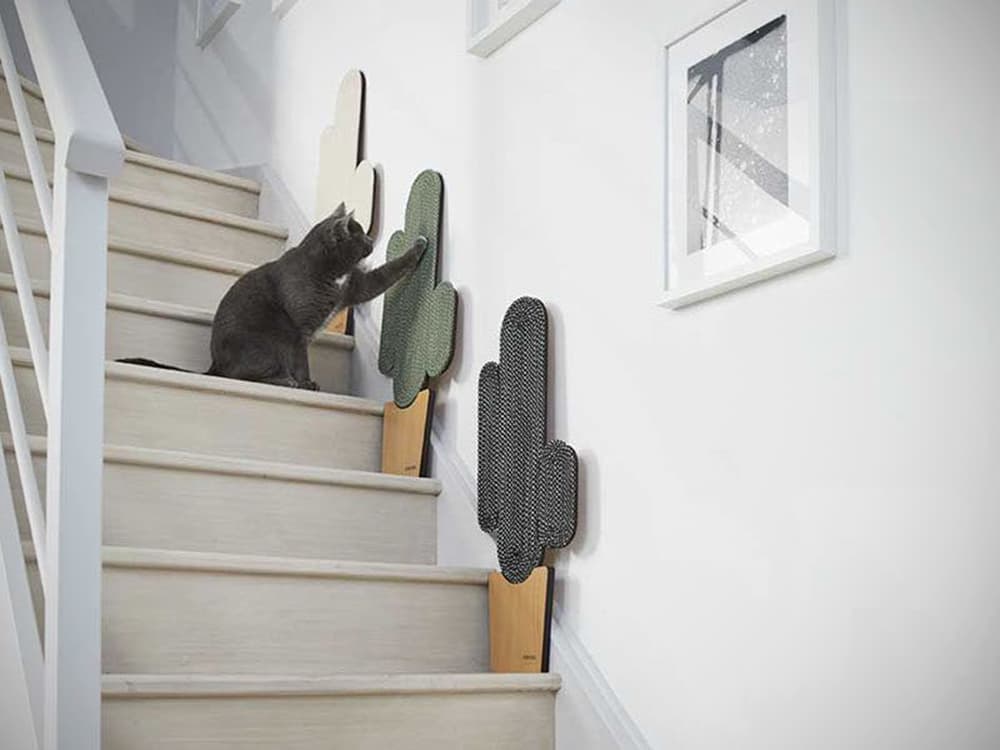
Courtesy of Meyou Paris
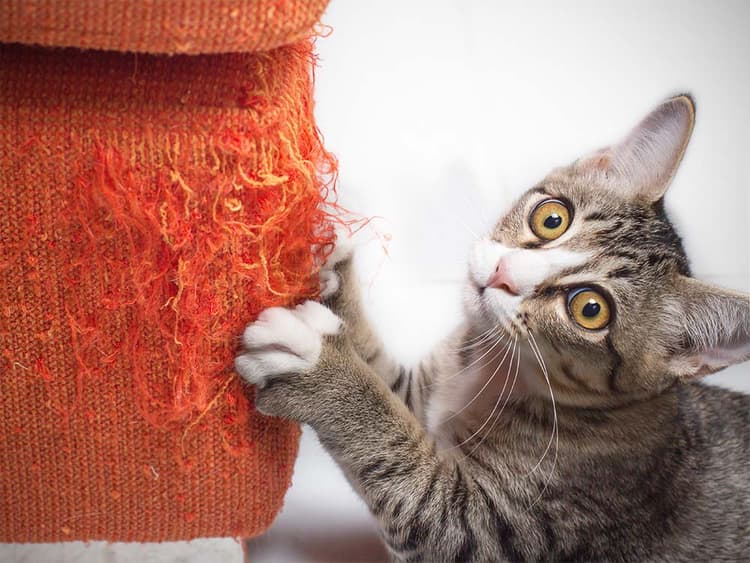
If there’s one thing new cat parents learn pretty quickly, it’s that their sharp-clawed family member has a deep instinctual need to scratch sh*t up. If you don’t indulge this primal need — by way of strategically placed scratching posts and pads, cat trees, towers, and toys — they may decide to sharpen their claws on your couch.
Some cat parents may think that removing scratching posts from your home will help keep their cat’s claws safely tucked away. Out of sight, out of mind, right? But this is likely to backfire, causing your cat anxiety and leading to even more destructive behaviors. (And we have to note here: Never, never declaw a cat. Here’s why.)
Yes, cats need to scratch. Thankfully, there are ways to get them to scratch the right things.
Providing cat-scratching posts with materials that your cats can dig their claws into satisfies their natural behaviors while saving your furniture from destruction. Durable cat scratcher designs also encourage full body stretching, exercise, and play. A great cat scratcher is a purchase that all parties will appreciate.
Remember: Your cat isn’t trying to destroy your furniture because you forgot to give them a treat last night, or because you went on vacation and left them with a cat-sitter. Scratching is a healthy expression of emotion, from excitement to stress. In addition to trimming their own nails and getting a good stretch in, scratching is also a way for cats to mark their territory, as they release pheromones through their pads. (Trimming your cat’s nails is an important part of their grooming routine, but it won’t save your furniture or curb their need to use their claws.)
We asked veterinarian Dr. John Iovino and cat behaviorist Stephen Quandt to weigh in on the best cat scratchers to keep your cat’s claws occupied — and your couch free of claw marks.
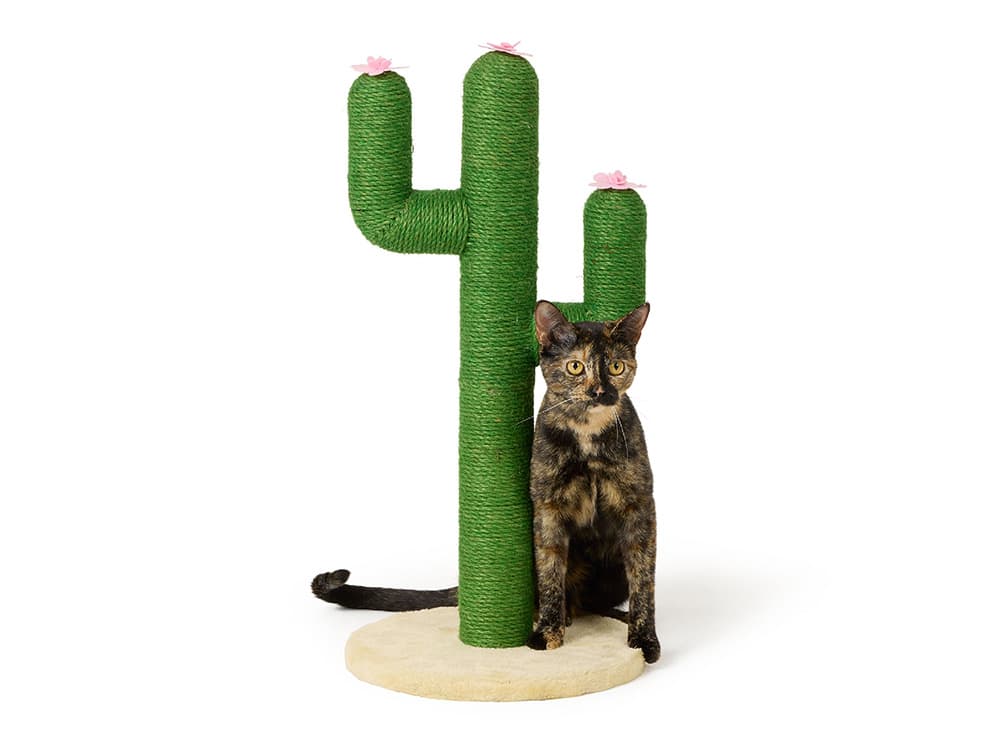
Photo Courtesy of PetSmart
Scratching helps cats sharpen their claws, stretch their muscles, and mark their territory. To that end, you’ll find a variety of cat scratchers on the market, each designed to suit different cats and and different homes.
“Before picking a scratching surface for your cat — be it a post, pad or ramp — it will be helpful to know if your favorite feline likes to scratch vertically or horizontally, and if they have a texture and/or material preference, as scratching surfaces can come in rope fiber (sisal), carpet, corrugated cardboard, and even wood,” Quandt explains. “You might have a cat who likes a flat carpet pad, or vertical sisal post, or any combination of the above.” Here are a couple of things to consider when buying a scratcher.
Type: Traditional vertical scratchers, often wrapped in sisal rope, provide a sturdy surface for cats to dig their claws into and stretch upward. Horizontal scratchers, typically made of cardboard, offer a flat, textured surface that many cats find irresistible.
Space: If you’re looking to save space or add a touch of creativity, wall-mounted scratchers are an excellent option as well, combining functionality with a sleek design. Multi-functional scratchers, such as those integrated into cat trees or furniture, offer the added benefit of climbing and lounging spots, making them a hit in multi-cat households.
Durability: Unless you plan to frequently replace your cat-scratch post, you’ll want one that can withstand plenty of scratching. That’s where durability comes in. It’s wise to get the best quality cat scratching post you can find.
Stability: Stability, too, is important, as it prevents the scratcher from tipping over or wobbling, which can discourage your cat from using it and lead them to target the arm of your sofa, or another equally undesirable spot.
Material: From Sisal to wood scratches, each type of scratcher comes with pros and cons — but this list has something for every cat, from the energetic kitten to the laid-back senior.
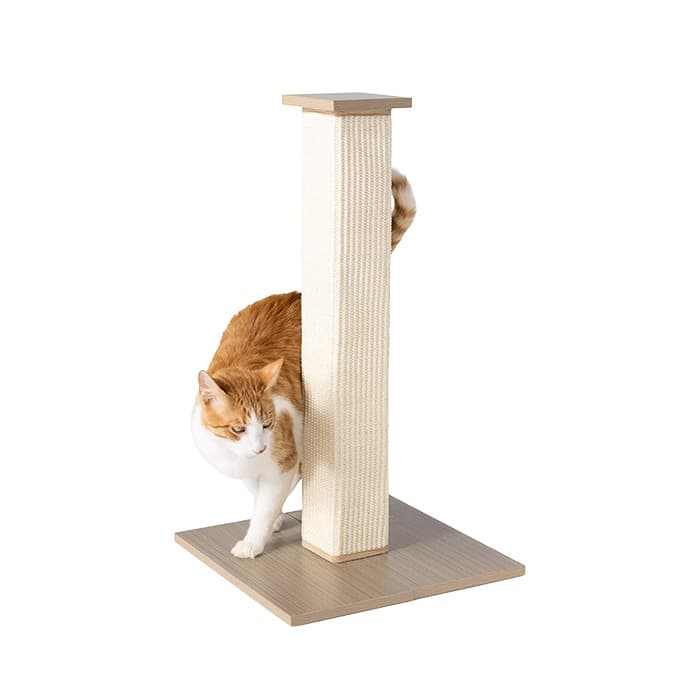
What’s the best material for a cat-scratching post? Many people (I mean, cats) prefer sisal. It’s incredibly durable, which means it can withstand repeated scratching without fraying or wearing out quickly. And its coarse texture provides an ideal surface for cats to sharpen their claws, satisfying their natural instincts and preventing damage to your furniture.
Carpet makes an excellent material for these posts as well. Its soft, fibrous texture closely mimics the feel of natural surfaces, making it highly appealing to cats. Additionally, carpeted scratch posts provide a comfortable, cozy surface for cats to rest on, so they can double as both a scratching spot and a lounging place.
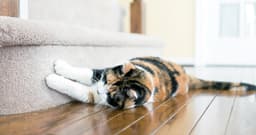
With a few easy tweaks, you can keep your carpet and your cat happy.
Cats love climbing trees (or at least, most indoor cats would love it if they were allowed to). So, why not give them the next best thing — a wooden scratch post? “Cats scratch trees because it feels good,” Quandt says. “Bark allows their nails to sink in, and then they drag and pull and this stretches their tendons and muscles, which is good for them.”
Wood is also naturally sturdy and provides a stable, satisfying scratching surface. Plus, its longevity ensures that the scratch post can endure heavy use without deteriorating, offering a lasting solution for your cat’s scratching needs.
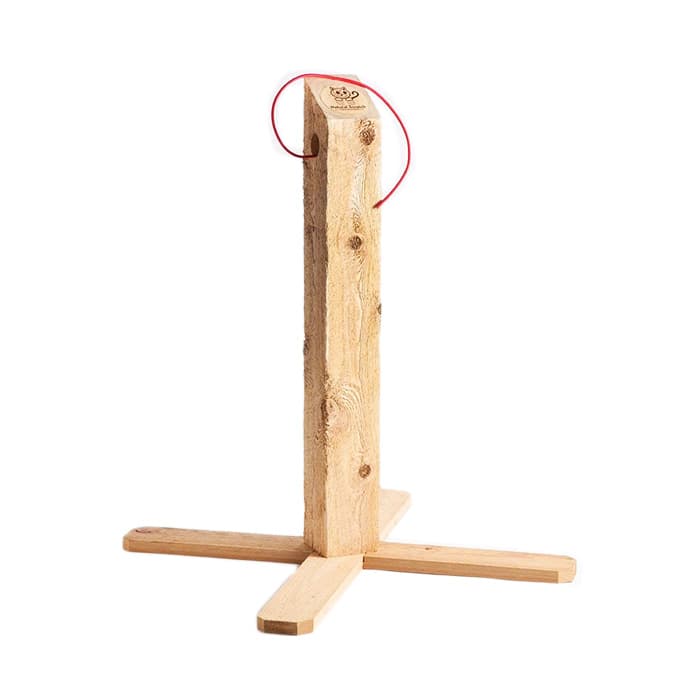
A tall vertical post may be the best cat scratching solution for large cats. It allows them to fully stretch their bodies, promoting healthy muscle tone and flexibility. Additionally, the height of the post can help satisfy a cat’s instinct to climb and perch, providing both physical exercise and mental stimulation. Try one of these for your favorite adventurous kitty.
A horizontal scratch post offers a spacious, sturdy surface for cats to scratch and lounge, and can accommodate cats of all sizes. Because it’s horizontal, cats get to engage in natural scratching behaviors while also resting and playing.

A rundown of the most common cat expenses.
Of course, budget is a consideration too. You can spend hundreds of dollars on a cat scratching post if you want to — but it’s certainly not necessary. Your cat won’t care about the price tag, anyway. If you’re interested in carpentry, Dr. Iovino suggests turning this into a building opportunity. “Using a heavy, wood base that is then covered in your cat’s preferred material can be easy to put together for an appropriate scratcher.
From there, the complexity, and creativity would depend on each situation.” We’re more likely to opt for the less involved alternative, but it’s certainly an option.
If you’re looking for a tall cat scratching post, you’ll find some options above. Tall cat scratch posts are available in a variety of materials and styles. Think you don’t need a tall scratch post? Think again. “If you’re adopting a kitten, don’t get a kitten-sized post, as they will quickly outgrow it,” Quandt says.
Sisal rope is highly durable and provides a coarse texture that cats find satisfying to scratch. This helps keep their claws healthy and sharp. Sisal rope is also natural and non-toxic, making it a safe and eco-friendly option for cats (and their pet parents).
There’s no one right answer to this question, but Quandt urges cat parents to look for two qualities in particular: height and stability. “Height allows your cat to really stretch their muscles and tendons — this is one of the reasons why your cats scratch in the first place. Stability is needed because if your cat is able to knock down or pull the post over on its side, they likely won’t return to it.”
“Every cat is different,” Quandt says. “The best way to figure out which type of material your cat prefers is through trial and error. Buy a few budget-friendly options and see what your cat goes for!”

Avery is a writer and producer. She has written for numerous publications, including Refinery29, BuzzFeed, and V Magazine. When she’s not at her computer, you can find her reading, practicing her Greek on Duolingo, and delving into the Sex and the City discourse. She lives in Brooklyn, New York with her husband and their cat, Chicken, who rules with an iron fist.
Behavior & Training

Adoption Advice
Behavior & Training
Behavior & Training
A bored cat can develop everything from behavioral issues to physical ailments. Here’s how to keep your kitty mentally stimulated.
Behavior & Training
Placing a cat tree or post in a room only, uh, scratches the surface of solving this problem.
Adoption Advice
Curious about cat-proofing? Learn how to make your home safe and enjoyable for your cat.
Behavior & Training
Cats may not need a lot of space, but it’s what you do with it that matters. Read on for tips to keep your cat mentally and physically at ease.

Adoption Advice
Adopting a new kitten? We’ve created a checklist to help you get organized before bringing your new friend home.

Adoption Advice
Make nail trimming less stressful for your cat with these easy tips.