How to Choose the Right Dog Harness for Your Pup
Experts talk about everything from fit to material to leash attachment — here’s what actually matters.
Experts talk about everything from fit to material to leash attachment — here’s what actually matters.
by Avery Felman, expert review by Dr. John Iovino, DVM | August 27, 2026
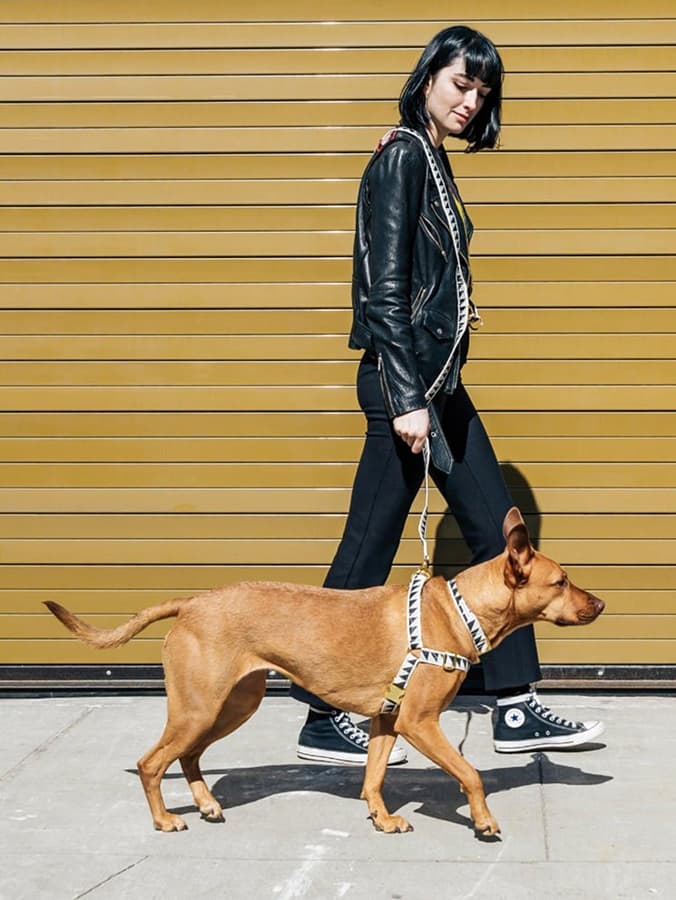
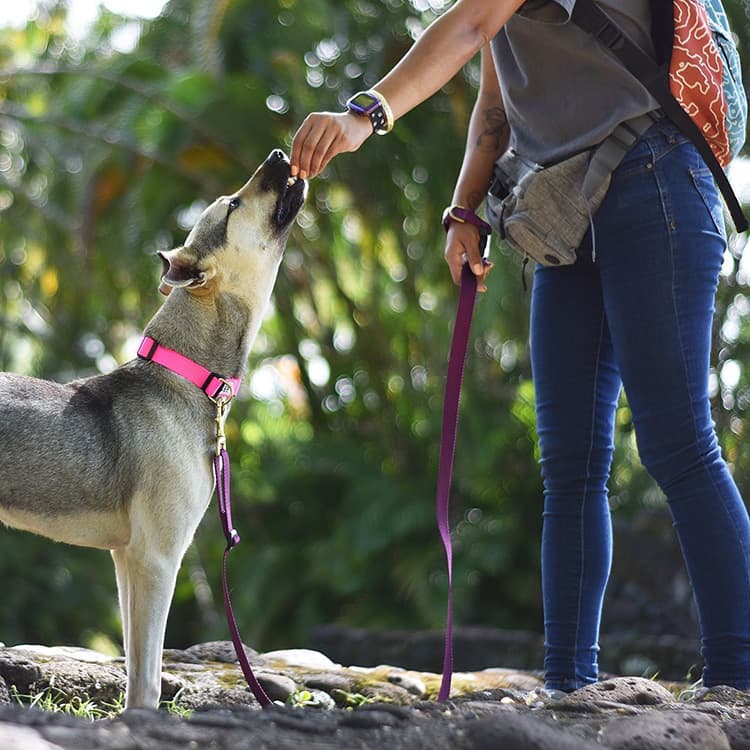
Courtesy of By Scout
As all dog parents know — or quickly find out — there are certain life hacks that become essential to raising your pup. And picking the right harness for your pup is one of those things that, once you find the right one, you latch onto it like a toddler with a stuffed animal.
This is especially true when you’re on a walk together and exposed to all of the dangers of the outside world: loud noises and other stimuli, cars zooming past, and — our personal favorite — passersby who don’t respect your pup’s boundaries. That’s where a harness comes in handy.
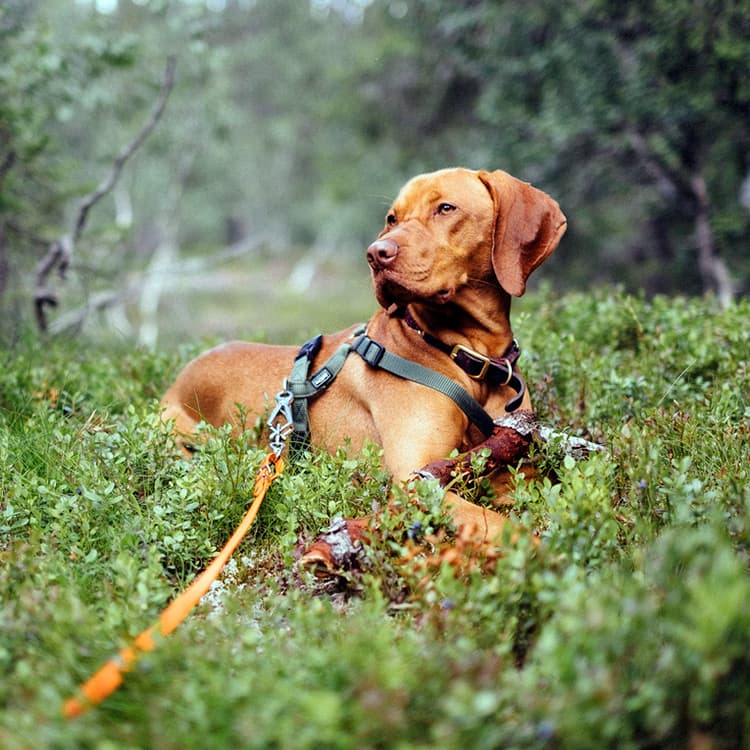
Ivar Østby Simonsen / iStock
Dog harnesses are enormously useful because they can give you more control over your pup’s behavior while releasing them from the restriction of many traditional collars. They’re comfier than collars for some dogs, especially if they strain their necks against their collars, and there are a variety of types to choose from — whether you need to reduce pulling, keep your pup from escaping during walks, or just up your pup’s style game.
There’s a lot to consider before investing in one, though. Veterinarian Dr. John Iovino advises looking for a first-time harness by “paying attention to size — with younger dogs especially, getting something adjustable, something they can grow into. From there, getting something that’s durable and sturdy.”
In terms of material, Annie Grossman, owner and co-founder of School For The Dogs, recommends a harness with “velvet-lined underarm straps, which can reduce chafing.”
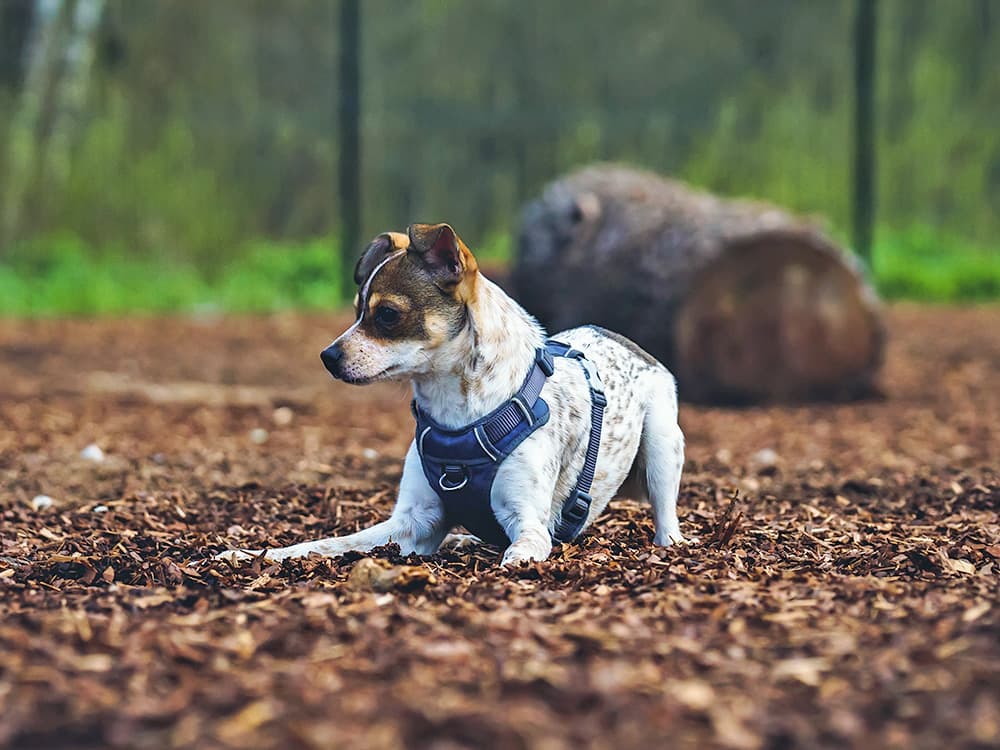
M-Production / AdobeStock
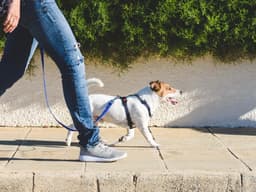
When picking a harness for your dog — the fit, material, and clip placement all play a role in keeping your pup safe and comfortable. Here’s how to get it right.
While it goes without saying that the best harness for a five-pound Terrier is likely not the best one for their Great Pyrenees counterpart, that doesn’t mean that the way you fit a harness to your pup isn’t worth examining. Just as you wouldn’t buy yourself a pair of shoes two sizes too big, you wouldn’t buy your dog a harness that hangs off them like a poorly tailored jacket (your veterinarian will also tell you about the dangers of that).
Taking into account your dog’s potential for growth (are they in puppyhood or adulthood?), their temperament (are they anxious for attention or aloof?), and their nature (are they skittish or calm?) is the most foolproof way to ensure that their harness is correctly fitted.
Dr. Iovino recommends “making sure that [the harness] is pretty snug. If it’s too loose, dogs can get spooked, and then they’re out of their collar or their harness, so it’s really important to make sure that it’s not too loose.”
Dog behaviorist Karen B. London’s 7 tips to help get your parked pet moving.
Alternatively, he shares that many dogs have been using the same harness or collar since they were first brought home. “I’ve had a few dogs grow into their harnesses, or even their collars, and clients don’t realize, and you go to feel it, and it’s so tight. They grow fast, so it’s something to be aware of.”
Finding a happy medium between the control of a harness that fits snugly and the comfort of a looser fit is something that can easily be established by the good old-fashioned two-finger test. Dr. Iovino instructs: “You still want to be able to fit two fingers between all the areas that the harness is contacting.”
Meanwhile, Grossman warns against using harnesses that aren’t fitted properly: “A harness should be snug but not tight. You want to be able to comfortably put a couple of fingers between the harness and your dog when it’s on.” Having a properly fitted harness will help prevent dogs from injury and removes the potential for escape.
From the safest gear to training recs.
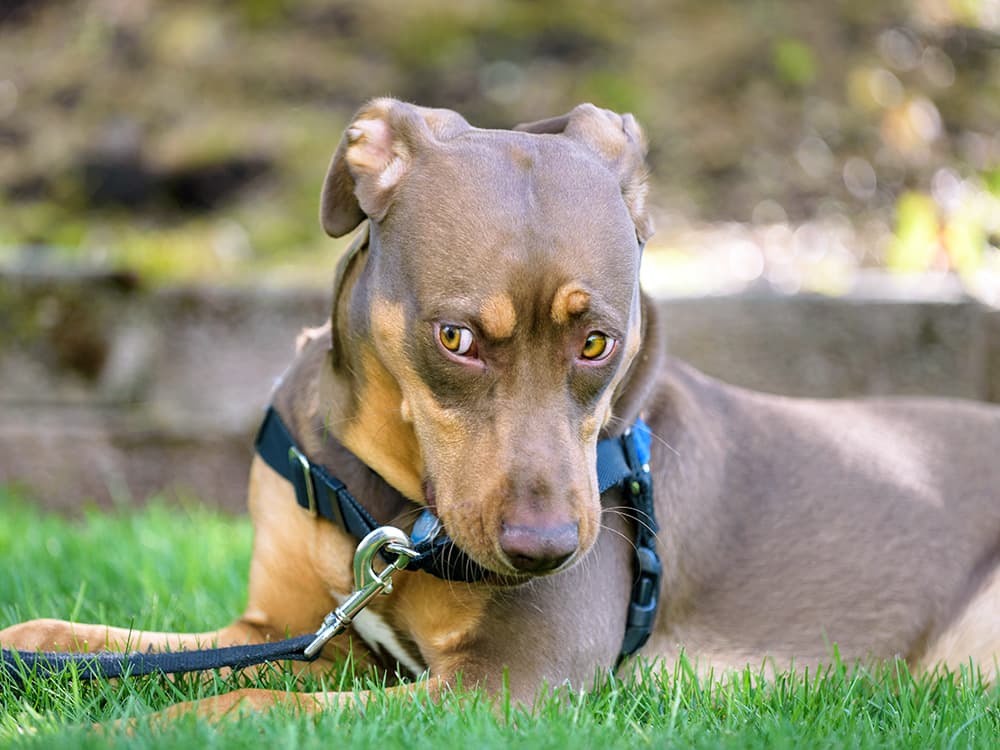
Where your dog’s leash clips on their harness is mostly a matter of personal preference, but the options each have distinct advantages and disadvantages. For example, a front clip effectively allows you to lead stubborn, walk-resistant dogs forward, but it’s notably a terrible idea for small dogs who are lower to the ground and will cause the leash to drag.
Dr. Iovino recommends looking for a harness with a back attachment. “It’s just more practical when they walk and sniff, especially if you have a short dog. It’s a lot easier to keep the leash above ground and just a little bit of tension when it’s hooked on the back than the front,” he says.
Murri also makes a case for when a dual-clip harness may be beneficial: “My favorite harness, and the one that I use with my dog, is the Freedom harness. I like the harness because it has two points of attachment. It has one on the chest and one in the back. The one in the back has a martingale on it, which has a little loop that gets tighter every time the dog pulls, so it makes it harder for the dog to slip out of it.”
knelson20 / Adobe Stock
Getting your dog in their harness shouldn’t be complicated, and if it feels like you’re untangling a necklace, there’s a good chance it’s not the most streamlined design. While the choice is entirely yours, many veterinarians recommend introducing your dog to the concept of a harness before you begin your hunt for the one.
“I would just expose the dog to a normal basic harness at first,” Dr. Iovino advises. “My dog just kind of knows now. She feels the collar part go over her head and instantly lifts her leg. If you just do that repetition on a basic harness, getting it on and off should be just as easy.”
From there, you can choose the harness to your and your pup’s liking — whether that be one that is placed over their head, clips on after being slipped on the legs, or snapped and Velcroed on the chest.
While Murri doesn’t have a preference toward any particular method, she advises us on the dangers of step-in harnesses. “I mean the easiest one obviously is the step-in harness, but the problem with that is if you get a fearful dog and the dog gets scared of something, they start pulling away; they can slip out of that harness really easily,” she warns. “Before you even realize, the dog is going to be gone.”
Harnesses can be better for some dogs because they can alleviate back pain and stop a heavy-pulling pup from pulling a collar against their throat. Harnesses can also provide more control to pet parents.
Different dog harnesses are put on dogs in different ways; some go over the head, while others are step-in or clipped on around the chest and limbs.
If a dog wears a harness continually, it can cause chafing and discomfort.
The best material for dog harnesses depends on your dog’s needs. Breathable mesh can prevent overheating, while nylon and leather are super durable.
Improving Dog Training Methods: Efficacy and Efficiency of Reward and Mixed Training Methods

Avery is a writer and producer. She has written for numerous publications, including Refinery29, BuzzFeed, and V Magazine. When she’s not at her computer, you can find her reading, practicing her Greek on Duolingo, and delving into the Sex and the City discourse. She lives in Brooklyn, New York with her husband and their cat, Chicken, who rules with an iron fist.
Behavior & Training
Pet Wellness
Lifestyle
Pet Wellness
How to make the snowy season your dog's favorite time of year.
Lifestyle
All the things you’ll want on hand as a new pet parent, from the must-haves to the nice-to-haves.