How to Dog-Proof Your Home
Our room-to-room guide to get your house in dog-safe shape.
Our room-to-room guide to get your house in dog-safe shape.
by Daniela Lopez, | July 16, 2021
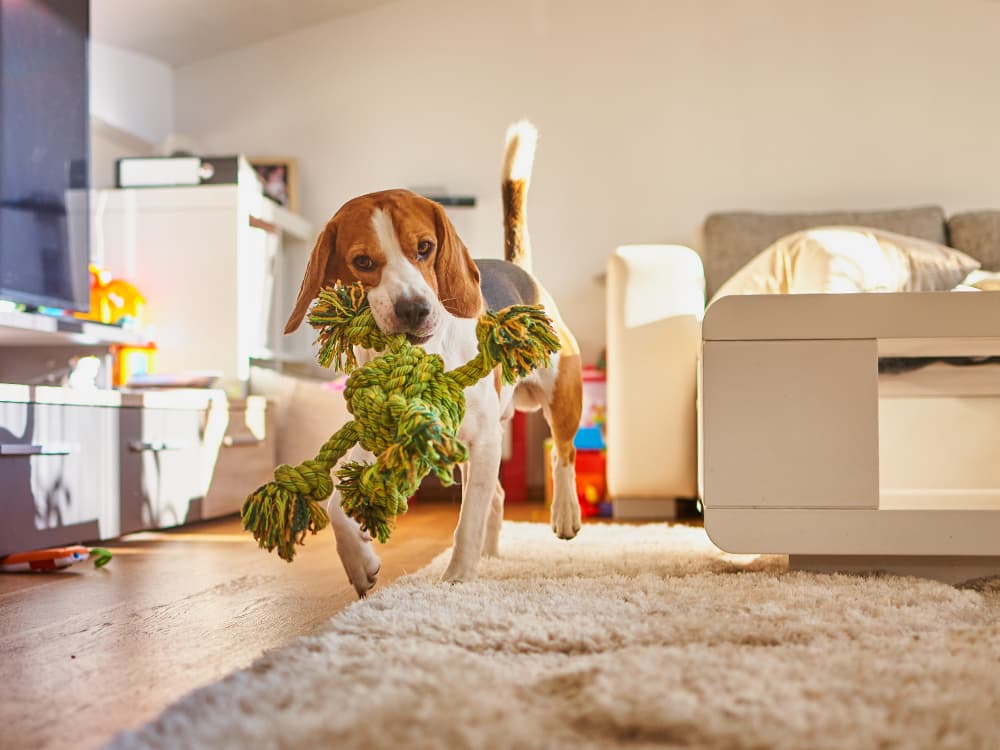
Przemyslaw Iciak / Adobe Stock
Adopting a new dog, especially a puppy, isn’t like bringing home a baby — it’s like having a curious toddler who’s itching to sniff, claw, and nibble their way into every nook and cranny of your home. Some dangers like toxic plants and food are common knowledge, but do you know about the other threats that might lurk around your home? From the bathroom and laundry room to the office and kitchen, there are plenty of hazards your pup can get into.
If you’re lucky, you may have a naturally chill dog, or you may be able to crate-train them and end up with a dog who’s content not chewing lamp cords or eating the bag of chocolate chips on the kitchen table. But even with the best-behaved dog, you’ll likely need to do some degree of pet-proofing in your home, at least at the beginning.
Boutique NYC nursery The Sill gives us the dirt on dog-friendly plants.
Dog-proofing isn’t about creating impossible challenges for your dog to defeat (hey, they might just think: Challenge, accepted!). And it’s not really about protecting your property either, no matter how much you love that vintage rug. It’s about safeguarding what’s truly important: your dog.
Use this list to dog-proof your house from top to bottom — and keep your pup safe and sound.
Food is the biggie here. There might be plenty of dangerous foods for dogs sitting around including grapes, nuts, onions, and garlic. Keep it off the counters as much as possible, and keep cabinets closed to be sure that snooping dogs don’t get tempted.
Celebrity dog trainer Victoria Stilwell’s pro tips for keeping paws off your charcuterie platter this holiday season.
But you’ll want to look beyond food, too, as it’s not just cookies or bacon that will have your pup lunging for the counter: Dogs have been known to eat all sorts of small items like twisty ties, bread clips, and even sponges, so make sure to tuck small objects away in cabinets or drawers. And always store knives and other sharp utensils safely.
The kitchen trash can (and the smell) might be too enticing for some pups. Stop your dog from getting into the trash while keeping them safe by using a covered garbage bin. Consider getting one with a locking mechanism if you have an especially inquisitive dog.
It might be a small space, but hazards abound in the bathroom. There’s a lot to pet-proof here, especially if you’ve got a mischievous dog. Keep cleaning supplies, medication, and vitamins secured away.
Dog trainer Pat Miller’s pro tips for preventing your pup from darting out the door.
As you can imagine, drinking from the toilet isn’t an ideal water source for dogs, especially with all harsh chemical cleaners. So, keep the toilet lid down. Other common hazards in many households include hair ties, floss, and other loose accessories; store them up high and safely away from pets.
Your dog might think an open washer or dryer looks like a cozy place to curl up for a nap. So keep the doors to both shut anytime you’re not loading or unloading clothes. And stash laundry detergent (especially the pod variety) and fabric softener on a high shelf or tucked away where your dog can’t reach them.
They may just look like boring rubber cords to you, but those cords from lamps, the TV, and other electronics could very well entice your dog to get to gnawing because of the plastic coating. It is a good idea to cover or tuck them all out of sight.

How to treat and prevent confinement anxiety.
If you must keep plants toxic to dogs around, ensure they are high up and entirely out of reach. All plants, including non-toxic ones, should be secured so that a dog (or cat) cannot knock them over.
Move children’s toys, small valuables, and any other loose ends out of sight of your pets. While open windows are an excellent way to let in the breeze, don’t leave them open while you’re away. Dogs can (and will!) jump through screens if a bird or squirrel is tempting them from the other side.
The room where you snooze is generally safe, but loose socks can be a real hazard if you have a dog who eats everything. Put away laundry, and if you have a low dresser, make sure loose change or other small objects are contained.

How to get your pet to stop chewing on inedibles from clothes to couches.
Puppies chew on everything. So, it’s important to safely put away anything valuable. Those ballet flats, Air Pods, purse, or even your phone could all turn into super expensive chew toys if you don’t watch out.
To completely dog-proof your whole house, get on all fours and think outside the box! Pets can get into all sorts of things, from rubber bands to plastic bags to items that may never cross your mind. While these dangers might not be an issue for all animals, it just takes a moment of curiosity for them to cause an emergency for your pet. Get down and look at the world from your dog’s point of view to see what could be a potential hazard in your home.

Daniela Lopez is the content manager at Adopt a Pet. She has previously contributed to The Bark, Kinship, and more. She has volunteered for several animal shelters and rescues and is currently an animal foster for her local SPCA. In her free time, she has two mixed-breed rescue dogs keeping her on her toes.
Pet Wellness
Lifestyle
Nutrition
Nutrition
This healthy snack for humans isn't so healthy for your pup. Here's why it's best to avoid them.
Lifestyle
The East Coast just had a rare earthquake. A vet breaks down what to include in an emergency go-bag for your pet in times like this.
Behavior & Training
Dog trainer Robert Haussmann’s tips for dealing with a protective dog that’s taken their duties too far.