Running With Your Dog Is Possible — It Doesn’t Just Happen in Photoshoots
You — yes you! — can be one of those fun people who runs with your dog. Just be smart about it.
You — yes you! — can be one of those fun people who runs with your dog. Just be smart about it.
by Madeleine Aggeler, | July 16, 2026
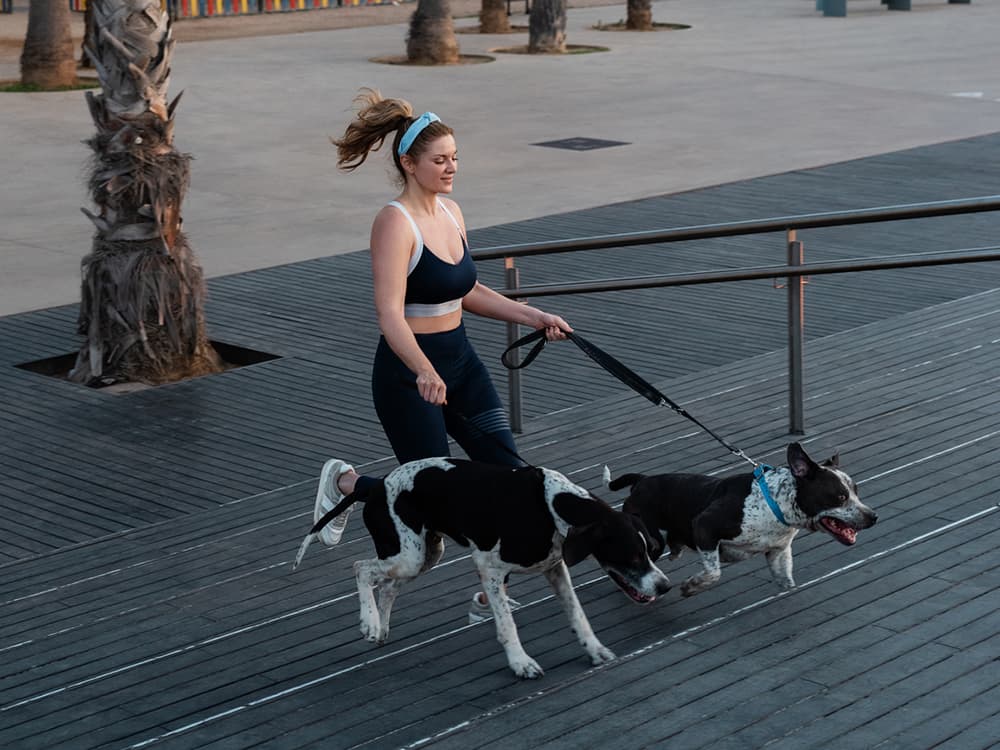
Milles Studio / Stocksy
When I was training for a half-marathon last year, there were a lot of people I envied. I envied the runners who could finish a long run looking like something vaguely resembling a human being, while I would close out my miles looking like a wet dishrag someone had backed over with their car. I envied those who bounded up hills like gazelles, and those who could comfortably hold a conversation well into mile five. But there was one group of runners I envied above all others, a group I felt exemplified fun, fitness, and an adventurous joie de vivre that I was desperate to emulate: people who jogged with their dogs.
Running with your dog can be great. “It’s a bonding experience,” says Angi Aramburu, the founder of Go Fetch Run, a fitness class for pet parents and their dogs. “It’s something where you can spend more time with your dog, and do something healthy and fun.”
But not all humans are meant to be runners, and not all dogs are, either. My own dog, Cleo, is a decidedly indoors-y gal who glares at me if our walks go too long for her liking. Below, what you need to know if you’re considering being one of those enviable fun people who runs with their dog.
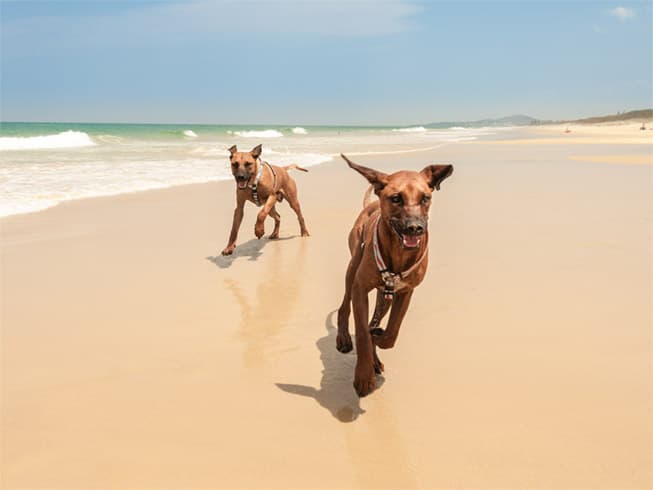
Gillian Vann / Stocksy
Not all dogs are built for endurance. Brachycephalic dogs — dogs with smushed-in noses, like pugs and bulldogs — can have difficulty breathing, and have a tendency to easily overheat. “They are not running dogs,” Aramburu explained. “They just can’t get enough oxygen to sustain them.” Even if your dog is not brachycephalic, check in with your vet to make sure they’re healthy enough to start running with you.
A few minutes — or even a few steps — are all you need to add joy to your dog’s day.
As disciplined and eager as you may be about running in all weather, consider whether the conditions are safe for your dog. In the hot summer months, dogs risk overheating, and hot pavement can be painful on their paws. In the winter, snow and ice can be tricky to navigate, though coats and booties can help keep them warm.
In an interview for Runner’s World, veterinarian, Dr. Marcia Smith, says that sore pads are an easy indicator that you’ve gone too far too fast. A gradual increase in miles will toughen up your dog’s pads, in addition to making them less susceptible to injury. Marcia stresses the importance of proper hydration and monitoring dogs for overheating even when the temperature doesn’t seem that hot. Because dogs don’t sweat, they are especially vulnerable.
Unless you’re a regular runner, or training for a race, most humans can’t get up one day and knock out five miles. We need practice, training, and conditioning. And so do our dogs. Aramburu recommends trying a couch-to-5K program with your dog and seeing how they respond.
“For the first day, you might do 20 minutes where you walk for two minutes, and then jog for one minute. You’ll soon figure out what you’re able to do and what they’re able to do, and then you can go from there.”
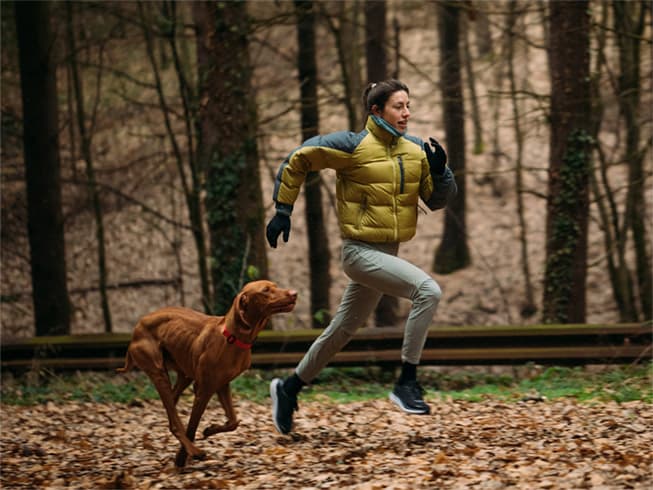
Studio Firma / Stocksy
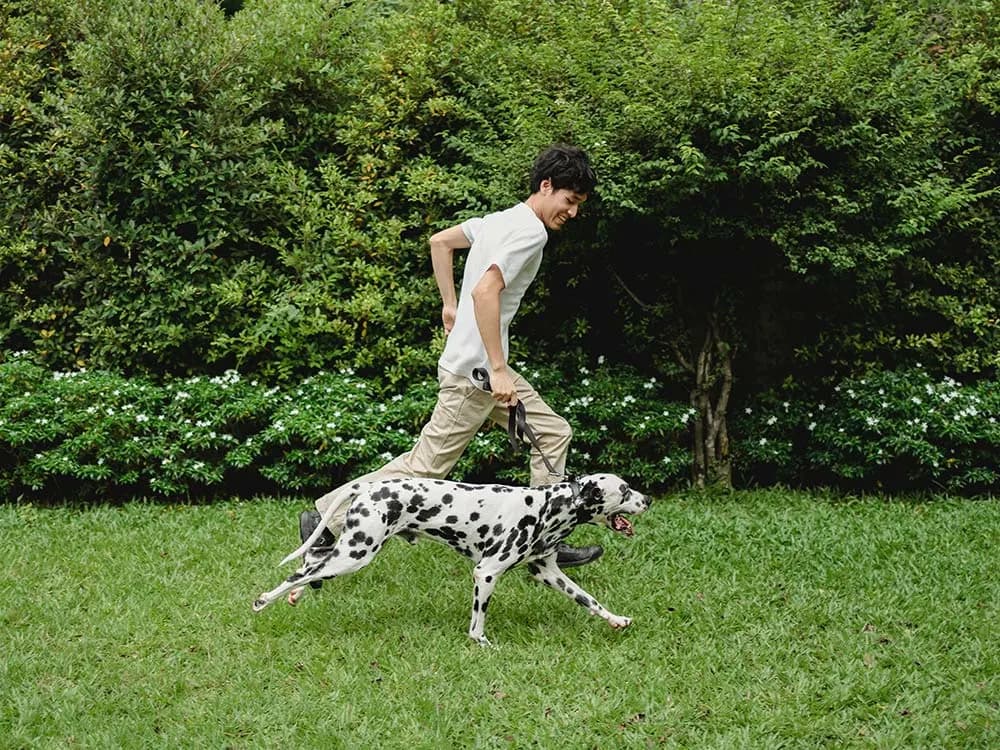
First and foremost, you need a leash. “Even the best-trained dog can see a squirrel and run off and get hit by a car,” Aramburu says. Also, make sure you have a water bottle on hand in case your dog overheats or gets thirsty. And it’s probably a good idea to bring some poo bags with you, just to be safe.
A lot of runners favor a hands-free leash that wraps around their waist. Besides allowing your hands to move freely, it removes the risk of you dropping the leash mid-run.
“The hands-free leash only works well if the dog knows how to heel properly,” says veterinarian Dr. John Iovino. He notes that while hands-free leashes can be a great option for many dog parents, there are a few stipulations to consider.
Not ideal for dogs who aren’t leash-ready. If a dog is erratic or aggressive with a standard leash, they will still require the same attention with a hands-free option and the possible hazards will likely be more severe. “If the dog is not good on a regular leash, they’re probably not going to be good on a hands-free leash,” Dr. Iovino says.
Length is also a key consideration, especially for jogging. Dr. Iovino recommends using a shorter leash to help secure the dog to your side for the duration of the exercise; but it’s not just the dog’s safety you should consider. “I think having something around your lower back with a dog, especially if it’s a larger dog, I can definitely see that becoming a potential for injury,” warns Dr. Iovino. Ideally, the leash shouldn’t be much longer than four feet long — much longer than that and you risk chaos like getting the leash tangled on trees and telephone poles, and tripping up passersby — and would have bright, reflective features on it that make it visible in the dark.
There are other risks of injury. There are two methods of strapping a hands-free leash to yourself. You can either strap it over the shoulder or wear it around your waist. While he gives a slight edge to the off-the-shoulder option for safety reasons, Dr. Iovino cautions that both can cause possible back damage. And the bigger the dog, the bigger the risk.
All that being said, if your dog is well-behaved on a leash and you are actively aware of your surroundings throughout, Dr. Iovino agrees a hands-free leash could be a great option for walking, running, or even hiking.
Remember when your parents told you to wait 30 minutes after eating before going in the pool? Well, that probably wasn’t necessary. But you should wait at least an hour after feeding your dog before taking them on a run. Engaging in strenuous physical activity immediately after eating can cause bloating in a dog, and could lead to nausea and vomiting.
Bethany Ferr / Pexels
Because they can’t verbally tell us when they’re feeling too hot, or tired, or achy, it’s important to keep an eye on your dog throughout the run, and watch for any signs of pain or discomfort. If your dog keeps stopping, or starts panting heavily, or looks unhappy, let them take a break. And if necessary, even if you’re just half a mile in, be willing to call it a day.
“You have to be willing to let the dog lead,” Aramburu says.
Sometimes, the promise of a runner’s high isn’t enough to make us lace up our shoes. We need another incentive. To make running fun for your dog, consider tacking on a fun treat for them at the end — maybe a trip to the dog park, or a visit to that place that has ice cream for dogs.
“You can make it something your dog looks forward to,” Aramburu says. “So they know, Okay, I’m running, and I get to do this fun thing.”

Temperatures are rising dangerously. Keep your pet safe with these tips.
Once you get home, make sure your dog is doing well, and that they didn’t bring any unwanted visitors home by accident. Check their paws for any cuts, or any sticks, gravel, or seeds that might have gotten lodged in their feet, and check their body, face, and ears for any insects or debris.
Finally, keep in mind that as long as you’re mindful about how you do it, running can be great exercise for you and your dog.
“The most important thing is to always think of the safety and comfort of your dog first,” said Aramburu. “Sometimes people are runners and they think, Oh, I’ll get a dog to go running with me. But they don’t think about helping the dog to build up to that level. And they need to be understanding if the dog will never get to their running level. Sometimes they just won’t be the best running partner, and you love them anyway.”
Madeleine Aggeler is a freelance journalist and copywriter in Washington, D.C. Previously, she was a writer at New York magazine’s The Cut. She lives with her dog, Cleo, who works primarily as a foot warmer.
Breed Info
Lifestyle
Lifestyle
Behavior & Training
5 reasons to get your dog in the agility game, from burning energy to building confidence.
Lifestyle
And why you shouldn’t skip the longer routes.
Breed Info
If you love being outside and are looking for a pup who’ll share in that enthusiasm, check out these dogs who are happiest when they’re active.

Breed Info
If you’re a fan of pups like Shepherds, Collies, and Rottweilers, start here to learn more about what to expect once you adopt one of these smart dogs.
Breed Info
From bloodhounds to beagles, here's what to expect when you bring home a hound.
Behavior & Training
All kinds of fun—with a competitive edge.