Can Dogs Eat Black Pepper? Health Effects and Safe Alternatives
Rule of thumb: Just because you like something, that does not mean it’s good for your dog.
Rule of thumb: Just because you like something, that does not mean it’s good for your dog.
by Dr. Shelby Neely, DVM, | March 22, 2026
Михаил Решетников / Adobe Stock
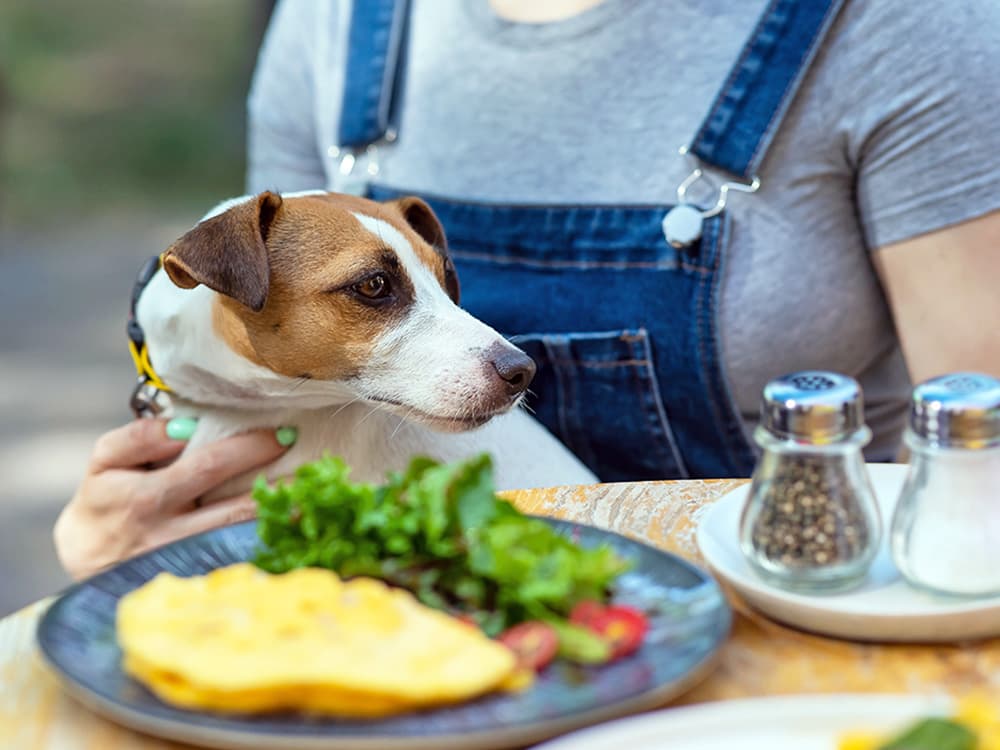
Not only do pet parents like to share a bit of their human food with their dogs, but they also sometimes look at their pet’s food and wonder if they could sprinkle a little something on it to make it tastier. Lots of people like to add generous amounts of pepper to their food, but just because it’s safe for humans doesn’t mean it’s safe for dogs. There are a few reasons why people and dogs differ in what they can eat.
It’s always wise to research or ask your vet if it’s OK to give your pet a new food, including spices.
Black pepper, along with salt, is often used in human foods to enhance flavor. It comes from the dried berries of the Piper nigrum plant. It’s a staple in American cuisine. The spiciness that people like about pepper comes from a substance called piperine. Humans really enjoy the added flavor, although it can irritate some people’s stomachs. Likewise, a dog’s digestive system can get quite irritated by piperine. In addition, dogs really don’t need added seasonings to enjoy their meals.
Dogs evolved to eat relatively plain foods. Their ancestors depended primarily on prey, and even though it’s been thousands, or even millions, of years, our present-day canine pets still retain many of their ancestors’ features.
Seasonings don’t improve a dog’s nutrition.
Some spices that feel mild to people can be overwhelming to dogs’ noses and stomachs.
Consider these facts when selecting the food that your dog eats.
Although pepper isn’t recommended for dogs, they can tolerate very small amounts of it without harm. (Larger amounts can lead to digestive upset.) While most people find pepper very tolerable and desirable, what seems mild to a human can be very intense for a dog. And there’s no nutritional value in pepper for your pet.
Black pepper is never completely risk-free for dogs. But if they eat it in very small quantities, it is low-risk. Too much can cause coughing, stomach issues, or sneezing. And if you feed your dog a restaurant-cooked meal, it will likely contain salt, spices, and other seasonings that will further upset your dog’s digestive system. The best thing is to avoid pepper altogether.
Bear in mind that there’s a difference between an accidental sprinkle and intentionally seasoning your dog’s food. Accidents can occur easily while your family is eating dinner, especially if you have young children. Table scraps are actually the most common way dogs get pepper. However, remember that tiny amounts are unlikely to cause harm.
It can be more problematic if the table scraps have salt or spices along with the pepper. Some spices are even toxic to dogs, and salt is not healthy for them. Many human foods also contain oils, garlic, or onions, which are toxic to dogs. The safest plan to follow is the one that emphasizes that plain is safer for dogs.

It’s worth asking.
Unfortunately, most of the effects of black pepper on dogs are negative.
There are no health benefits for dogs.
Piperine has been studied in humans, but there is insufficient research in dogs.
Many pet parents know that dogs may drool, vomit, or develop diarrhea if they ingest pepper, as it irritates the stomach.
If you have a dog with a particularly sensitive stomach, then it can lead to even more serious reactions.
Keep in mind that just because something is natural or used in human supplements doesn’t mean it’s helpful for dogs. Your canine pet definitely doesn’t need spices for health benefits. In other words, there's no real reason ever to give your dog black pepper.
If your dog accidentally gets into something with black pepper, or you sprinkle a small amount on your pet’s food, you should:
Watch for licking, coughing, diarrhea, sneezing, or vomiting.
Offer them fresh water and give it some time. (This will often resolve mild digestive upset.)
Contact your veterinarian if symptoms continue or if large amounts of pepper were eaten.
Get more immediate care if other spices or salt were involved.
The safest thing is to keep all black pepper away from your dog. Prevention is always easier and cheaper than treatment.
Fortunately, dogs care more about smell and texture than they do spices. Therefore, a small amount of unsalted bone broth on plain cooked vegetables, pumpkin, or just by itself, can be a real treat for your pet. Before giving any herbs to your canine, check with your veterinarian.
You can also enhance your dog’s dining experience by warming food and rotating textures. Adding dog food toppers is another way pet parents help their pets enjoy their meals.
Many human foods contain pepper, but dogs don’t need black pepper. If a small, accidental sprinkle ends up on their food, it won’t harm them. But regularly seasoning their foods with pepper or giving them large amounts of seasoned foods can cause digestive problems.
Spices, salt, and pepper shouldn’t be fed to your pet. Stick to foods made for dogs, keeping things safe and simple for their GI tracts. Simple, consistent diets are usually best for long-term digestive health.
Cortinovis, Cristina, and Francesca Caloni. “Epidemiology of Intoxication of Domestic Animals by Plants in Europe.”The Veterinary Journal, vol. 197, no. 2, Aug. 2013, pp. 163–168. https://doi.org/10.1016/j.tvjl.2013.03.007.
Cortinovis, Cristina, and Francesca Caloni. “Household Food Items Toxic to Dogs and Cats.” Frontiers in Veterinary Science, vol. 3, no. 26, 22 Mar. 2016. https://doi.org/10.3389/fvets.2016.00026.
Dorrigiv, Mahyar, et al. “Onion (Allium Cepa) and Its Main Constituents as Antidotes or Protective Agents against Natural or Chemical Toxicities: A Comprehensive Review.” Iranian Journal of Pharmaceutical Research: IJPR, vol. 20, no. 1, 2021, pp. 3–26, pubmed.ncbi.nlm.nih.gov/34400937. https://doi.org/10.22037/ijpr.2020.112773.13940.

Dr. Shelby Neely is a freelance writer and veterinarian who graduated from the University of Pennsylvania School of Veterinary Medicine and has practiced veterinary medicine for 30 years, specializing in small animals. Her work has appeared in Allivet, AsktheCatDoctor, WhiskerDocs, Ask the Cat Doctor Radio, Ask the Cat Doctor TV, and numerous other websites, brochures, newsletters, newspapers, and ebooks. In her spare time, Dr. Neely likes to spend time with her three children, two grandchildren, three cats, two grand-cats, and five grand-dogs.