Can Dogs Eat Peanut Butter?
Elvis famously loved peanut butter. So, can your “Hound dog” lap it up, too?
Elvis famously loved peanut butter. So, can your “Hound dog” lap it up, too?
by Daniela Lopez, | February 21, 2023
Photoboyko / Adobe Stock
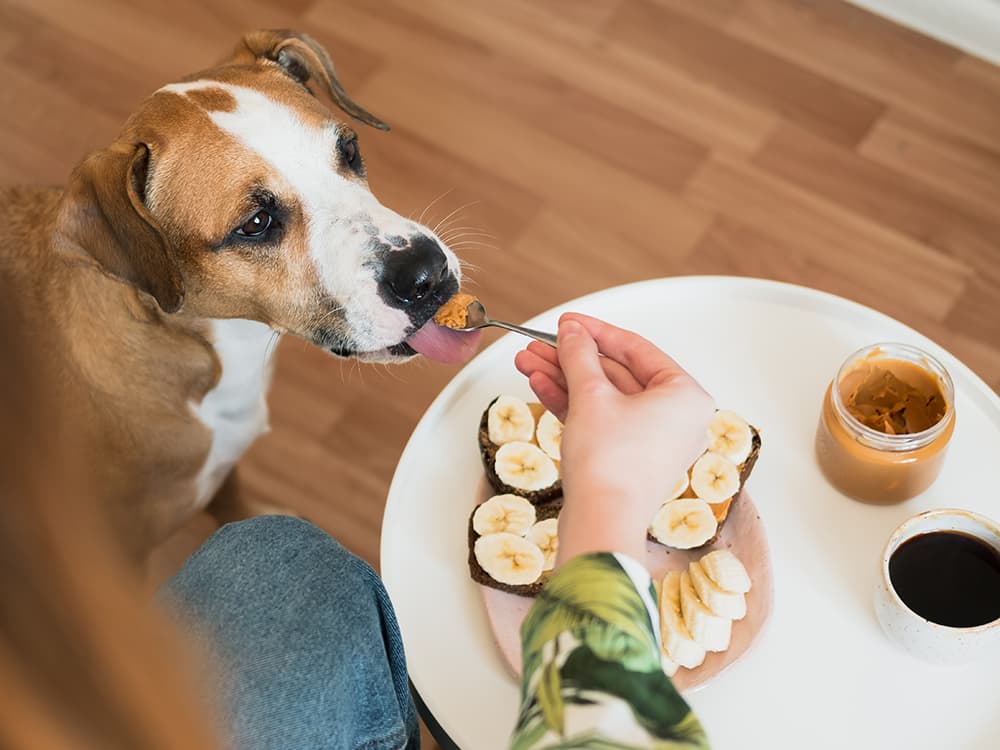
Peanut. Butter. It’s one of those treats that humans and dogs can agree on; it’s super enticing to dogs, and it’s nutrient-dense with plenty of health benefits. It’s functional, too: It can be used as an aid for keeping dogs entertained when you’re away, for hiding pills, and as a training reward. While peanut butter is a healthy and delicious treat for most dogs, there are a few caveats to watch out for, like xylitol, which is toxic to dogs. Let’s start with a few reasons why peanut butter can be a great treat to add to your dog’s balanced diet.
Peanut butter contains a multitude of health benefits for dogs, such as:
Roasted peanuts contain 22 percent more antioxidants than uncooked peanuts.
Peanut butter packs vitamin E and cholesterol-regulating monounsaturated fats.
The vitamins in peanut butter, such as vitamins H and K, give dogs a shiny coat.
Peanut butter is cholesterol-free.
It is full of iron and calcium, which are essential for healthy, strong bones.
PB packs plenty of protein, 8 g of protein per two-tablespoon serving.
Beyond the health benefits, there are plenty of ways to use peanut butter safely with your pet to keep them happy. “Peanut butter can be used multiple ways with your dog. It can be used to give pills. For dogs with separation anxiety, a frozen peanut butter kong can help occupy them while you are away,” says veterinarian Dr. Amber Karwacki of Heart + Paw Veterinary.
Some of these ways include:
Stress and boredom: Alleviate boredom and give your dog plenty of mental exercise with a peanut butter stuffed frozen Kong or a lick mat slathered in peanut butter. These mentally stimulating toys can help reduce behavioral issues, such as barking and destructive chewing and can soothe separation anxiety and reduce stress.
Medications: You won’t need to worry about your dog rejecting their meds if you add a little peanut butter. Because peanut butter is a high-value treat, most dogs will gobble up the peanut butter-covered pill straight away — though they might get a little messy.
Training: For leash training, peanut butter can be an easy way to treat your dog. As you walk with your dog, reward them with a few licks off of a peanut butter-coated spoon.
Distraction from nail trims: Don’t forget about grooming. Most dogs aren’t fans of getting their nails trimmed, but a lick of peanut butter between each trim might just be the reward they need to get excited about it. Dr. Karwacki adds, “if your dog is reluctant to stay still for nail trims or bath time, a peanut butter smear on the wall or floor can be a helpful distraction.”
“Peanut butter has healthy fats and protein that are good for your dog,” says Dr. Karwacki. You might think that peanuts are nuts (it’s in the name), but they’re actually a legume, like soybeans and lentils. Peanuts and tree nuts are similar in their taste and nutritional profile as they’re all rich in healthy unsaturated fats and fiber. And dogs love that nutty smell mixed with the sweet and salty flavors.
Do you like creamy or crunchy peanut butter? Dogs like both. It’s safe for dogs to have smooth and crunchy peanut butter. Just like you had very specific peanut butter preferences in kindergarten, each dog has their own preference, though the smooth variety might be easier to lick and spread. And peanut butter isn’t just for older dogs — puppies can have peanut butter, too.
Peanut butter is a good source of protein and healthy fat for your dog — in moderation. As with any treat, especially those high in calories, be careful not to overindulge. Peanut butter contains around 80-100 calories per tablespoon, which quickly adds up. Generally, treats should account for less than 10 percent of your dog’s daily caloric intake, so watch those daily calories. If your dog doesn't have any other treats, they can have some peanut butter every day. Dr. Karwacki advises that smaller dogs should have no more than one-half to 1 tablespoons a day while larger dogs can have up to 1 to 2 tablespoons a day.
“When first giving peanut butter, give a small amount to make sure there are no reactions or upset tummies. Dogs that have pancreatitis should not eat peanut butter due to its high-fat content.” Pups should stay away from this high-calorie treat if they are overweight or have health issues such as:
Sensitive stomach
While peanut butter is generally safe for pups, some peanut butter contains a toxic ingredient that should be avoided. Safe peanut butter for dogs shouldn’t have xylitol or too many added sugars. Here are a few things to watch out for when buying peanut butter for your dog:
Xylitol: Check your peanut butter label for sugar substitutes like the artificial sweeteners xylitol, which is highly toxic to dogs. You’ll find this sweetener in sugar-free foods, chewing gum, and baked goods. The bad news? Certain brands of peanut butter have been found to include xylitol. Even small amounts can result in a life-threatening drop in blood sugar (known as hypoglycemia) or liver failure when ingested.
Too much sugar: Store-bought peanut butter brands, such as Jif and Skippy, are generally safe to give to dogs. But they contain preservatives and high sugar levels that aren’t necessary for dogs. While sugar isn’t toxic to dogs, it isn’t healthy for them, either. Look for organic peanut butter brands with simple ingredients — ideally just peanuts. One way to ensure you’re giving your pup the healthy stuff is to make your own peanut butter at home (it’s super easy with this homemade peanut butter recipe.)
To keep your dog safe and enjoy the many benefits of peanut butter, just remember to give in moderation and make sure xylitol isn’t one of the ingredients. As always, before introducing any new food, consult your veterinarian with any questions or concerns.
Ritz crackers: You wouldn’t want to feed Ritz crackers to your dog all the time but, rest assured, if one falls from your cheese plate, it won’t harm your pup.
Yogurt: Plain yogurt is not only safe for dogs, it’s also healthy.
Bananas: Bananas are a healthy and delicious treat for your dog.
Pecans: Pecans are toxic for dogs and should not be given to them in any form.
Grapes: All grapes and raisins are highly toxic for dogs and should be avoided.
Garlic Bread: Though plain bread by itself can be safe for dogs, the addition of garlic—which can be toxic—makes garlic bread something to avoid.
Certain human foods, like peanut butter, are safe for dogs to eat, though only in moderation. Like all treats, peanut butter should be supplementary to a complete and balanced dog food diet.
Yes, peanut butter is rich in nutrients and safe for dogs.
Peanut butter is a good source of protein and healthy fat for your dog — in moderation. When first giving your dog peanut butter, try giving only a small amount, to avoid a stomachache.
Dogs like peanut butter for many of the same reasons that humans do—it’s high in fat and proteins, and has a nutty smell mixed with sweet and salty flavors.
When given in moderation, peanut butter can be good for dogs, due to its high amounts of protein, iron, calcium, and many more nutrients.

Daniela Lopez is the content manager at Adopt a Pet. She has previously contributed to The Bark, Kinship, and more. She has volunteered for several animal shelters and rescues and is currently an animal foster for her local SPCA. In her free time, she has two mixed-breed rescue dogs keeping her on her toes.
Nutrition
Nutrition
Pet Wellness
Pet Wellness
Hmm, sugar sugar. Pet Poison Helpline veterinary toxicologist Dr. Ahna Brutlag explains how this artificial sweetener can be fatal for your pet.
Pet Wellness
Even if they aren’t too proud to beg, you shouldn’t let your pup in on these snacks.