What You Need to Know About High-Fiber Cat Food
Beyond your knowledge from old Fiber One commercials, here’s the full report on why your kitty might need fiber in their diet, too.
Beyond your knowledge from old Fiber One commercials, here’s the full report on why your kitty might need fiber in their diet, too.
by Dr. Amy Fox, DVM, | May 22, 2023
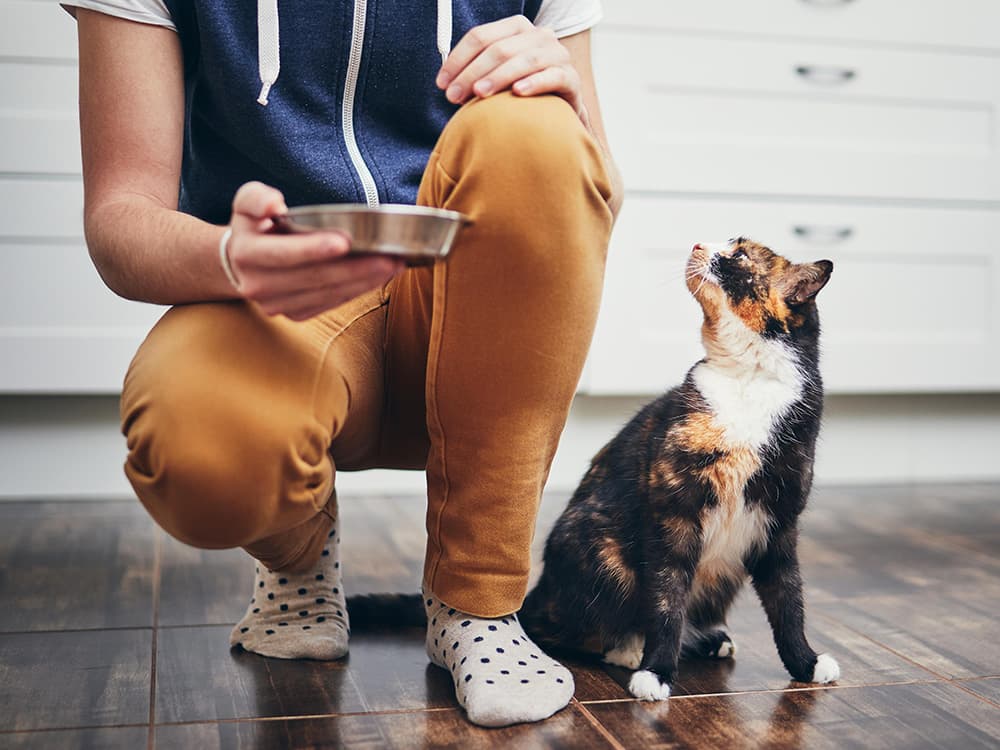
Jaromír Chalabala / Alamy
Fiber is a hot topic in the world of nutrition these days, with benefits ranging from improved gut health to enhancing the regularity of morning, er, constitutionals. So, you may be wondering if the same benefits hold true for your cat and which circumstances would warrant a high-fiber diet for cats. For starters, it is important to understand that fiber can be divided into two main categories: soluble and insoluble fiber, which serve different functions.
Insoluble fiber includes ingredients such as wheat bran or cellulose, which take up space within the digestive tract and lead to feelings of fullness. Soluble fiber, such as inulin, acts to draw water into the digestive tract, creating a gel-like substance that modifies digestion time. Some types of fiber in both categories also encourage fermentation that is actually good for all those important microbes in the gut. There are different situations where one of these kinds of fiber may be more beneficial than another, and some sources of fiber — such as psyllium husk — are a mix of both types.
Why you should only be packing on the calories in certain situations.
There are ways to be more confident about the amount of fiber your cat is consuming by using either a prescription diet that is high in a specific kind of fiber or by using a fiber supplement. Your reasons for increasing your cat’s fiber intake will determine which route you should go.
The main reasons your cat might benefit from a high-fiber diet would be to help with conditions such as obesity, diabetes, or digestive tract problems, including hairballs or diarrhea. In each of these situations, fiber plays a different role in helping to treat a medical problem, so different kinds of fiber may be more useful in each case. As always, consult with your veterinarian to make sure you choose the right diet and that any other health problems are addressed at the same time.

Get ready for a sigh of relief — this food doesn’t have to be pricey.
There are no short-cuts to weight loss in cats. The formula for weight loss can be oversimplified to taking in fewer calories while expending more calories on activity. Anyone who has ever tried to “take in fewer calories” knows that approach just leaves you feeling hangry. A hangry cat can also be a mischievous cat, unfortunately. Enter fiber, nature’s healthy filler food that can add bulk to the digestive tract, leading to feelings of fullness and satisfaction, even when the total calorie count of the meal is decreased.
Many cat foods aimed at weight loss, as well as those labeled specifically for indoor cats or less-active cats, use high-fiber ingredients to produce a food that is satisfying in a reasonable portion size with fewer calories. These diets often use a mix of soluble and insoluble fiber and may have other important variables, such as higher-protein contents, and/or lower total carbohydrates. It is also important to note that these diets are specially balanced to provide all of the important nutrients cats need in their daily diet, despite having fewer overall calories. It can be dangerous to limit your cat’s food intake without a special weight-loss food, both because they will be hungry all the time, and because giving smaller portions of a regular diet likely would not meet all of their nutritional needs.
If they’ve lost their hourglass figure, then not that much — according to a veterinary nutritionist.
High-fiber diets for diabetics are a bit more complicated and controversial. In theory, fiber can play a role in regulating blood sugar by preventing extreme spikes or drops in blood glucose levels. At the same time, diabetic cats often benefit from high protein/low carbohydrate diets, sometimes referred to as the “Catkins Diet,” which also help to prevent spikes and drops in blood sugar. Some diets that are higher in fiber are also higher in carbohydrates, so it can be a trade-off as to which benefit is more important for a diabetic cat.
Often, it comes down to each individual cat and what other medical challenges they have, as well as which diets they prefer and will eat consistently. Most diabetic cats are also overweight or obese, and getting their weight down to a healthy range can have huge benefits in improving control of their diabetes and their overall health. Some cats may lose more weight with a higher-fiber diet, while others may do best on a high protein/low-carbohydrate diet, so it is important to consult with your vet in this case.

You’ve got questions. Dr. Bruce Kornreich, director of the Cornell Feline Health Center, has answers.
In addition to specific therapies aimed at treating certain diseases, fiber can be beneficial in a variety of digestive tract conditions, including hairballs, inflammatory bowel disease (IBD), colitis, constipation, diarrhea, and anal sac impactions. These benefits stem from fiber’s ability to promote the health and growth of important microbes in the gut, to modify transit time of food through the digestive tract, and to add bulk to the poop while also making it softer.
Depending on the condition, different kinds of fiber in different combinations may be most effective. For conditions that affect the large bowel, or colon, of the digestive tract, including constipation, colitis and/or anal sac disease, insoluble fiber may be best. Diseases of the small intestine, such as IBD, might be most responsive to soluble fiber. Many of the prescription diets designed to treat these conditions will contain a specific kind of fiber in a quantity known to have beneficial effects.

Dr. Audrey K. Cook’s tips to getting to the bottom of a sh*tty situation.
The answer to this question depends on why your cat needed a high-fiber diet in the first place. Some cats may benefit from a short-term high-fiber diet, if the goal is weight loss or to firm up soft poop or diarrhea caused by certain kinds of colitis or inflammation of the colon. In these cases, once those goals are achieved, a cat could be transitioned to another diet if your vet approves.
Your vet might recommend a long-term high-fiber diet if your cat has a chronic disease that needs to be managed forever, such as hairballs, chronic constipation, IBD, or recurrent anal sac impactions. Diabetic cats who are well-controlled on a high-fiber diet can remain on that diet long-term. Others may need to switch to a high-protein/low-carbohydrate diet if their diabetes is difficult to regulate. Any diet that will be used long-term needs to be balanced to meet all of a cat’s nutritional needs.
This diet could be just right for your cat. But keep these things in mind before you make the switch.
Fiber can be a very useful tool for treating many different conditions in cats as long as it is used properly and with guidance from a vet. Many high-fiber diets or supplements will increase the size of a cat’s poops, as well as their frequency, so be prepared to clean out the litter box more often and consider adding in an extra litter box to help prevent accidents.
Also, be aware that adding large amounts of fiber suddenly to the diet can lead to bloating and gas, which is uncomfortable and may temporarily decrease how much your cat wants to eat. For this reason, it is best to introduce fiber gradually so your cat has time to adjust. If you are considering a fiber supplement, make sure it is safe for cats and does not contain any ingredients that could be toxic to cats.
Also, make sure that the amount you are giving to your cat will not dilute other important nutrients from your cat’s diet if it leads to your cat feeling more full and eating less. When used properly with expert guidance, fiber can be a great tool for improving your cat’s health.

Amy Fox, DVM is a small animal veterinarian in New York City with over thirteen years of experience in a mixture of general practice, emergency medicine, and shelter medicine. A lifelong animal lover, Dr. Fox studied biology in college and then worked as a veterinary nurse before pursuing veterinary school at Cornell University. Her expertise includes surgery, dentistry, and management of chronic conditions, and she is interested in toxicology, pain management, nutrition, care of senior pets, and educational outreach. Dr. Fox also enjoys writing about veterinary medicine and teaching, and her work has previously appeared in Spruce Pets. In her free time, she loves to cook, garden, go for long runs, and hang out with her goofy mixed-breed dog May, who provides never ending comic relief!
Nutrition
Nutrition
Pet Wellness
Pet Wellness
This National Pet Obesity Awareness Day, here are pro tips to help make sure your pet isn’t packing on too many pounds.
Nutrition
Discover when supplements for cats are truly necessary, how to support coat and joint health, and what vets recommend.

Nutrition
The Because, Animals co-founder on the eco-friendly way we could feed our pets.