Here’s How Much Wet Food You Should Feed Your Cat
It’s much better than dry food, but that doesn’t mean your can can eat as much of it as they want.
It’s much better than dry food, but that doesn’t mean your can can eat as much of it as they want.
by Dr. Shelby Neely, DVM, | May 8, 2025
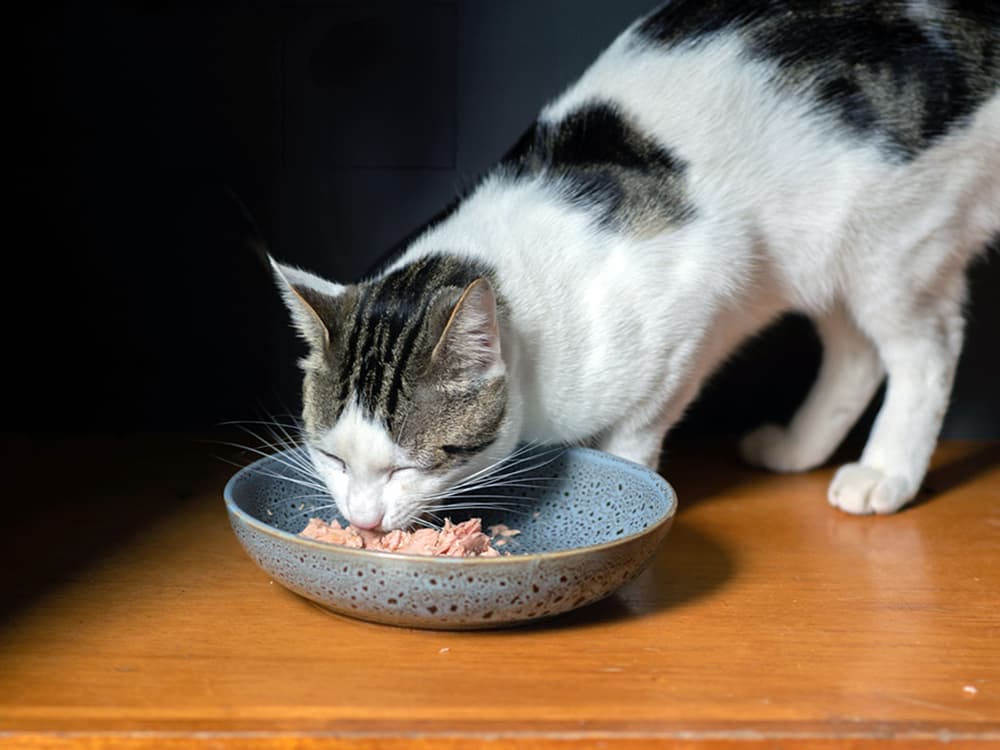
Gillian Vann / Stocksy
Feeding your cat dry food versus wet food has long been an issue of debate in the veterinary and pet community. The pendulum often swings entirely one way, only to reverse to a different direction not long after. It’s a subject worth debating because diet is critical to a cat’s health.
It’s not just about what a cat likes — it’s about feeding food that will keep them healthy. In this guide, we look at the amount of wet food a cat should eat each day, the types of food a cat should eat, the differences between wet food and dry food, how to choose the most nutritious canned cat food, and how to maintain your cat’s optimum weight.
The amount of wet food a cat should eat depends on a few key factors: primarily, their weight, age, activity level, and health status. You will see estimates given in ounces, but you really should be looking at calories. A general rule of thumb is that most adult cats need about 20 calories per pound of body weight per day. The average three-ounce can of cat food has roughly 70 to 100 calories, so a typical adult cat would need to eat two to three cans of food per day.
Since the average five-and-a-half ounce can of wet food contains roughly 120 to 150 calories, an eight-pound adult cat may require around one to one-and-a-half cans daily. Many adult cats weigh closer to 10 pounds, so you may need almost two cans.
However, this is only a guideline. To be more accurate, you must look at not just calorie content but also your cat’s individual needs. We created the following chart to help you feed your cat the right amount of wet food each day.

Four veterinary nutritionists pick apart the claims so that you can choose the right food for your kitty.
Cat Type | Weight Range | Daily Calories | Number of 5.5 oz. Cans | Recommended Schedule
|
|---|---|---|---|---|
Kitten | 1–10 lbs | 60–100+ | 1 to 3+ | 3 to 4 small meals per day |
Lean adult cat | 8–10 lbs | 180–220 | 1.5 to 2 | 2 meals per day |
Overweight cat | 8–12 lbs | 150–180 | 1.25 to 1.5 | 2 meals per day, measured strictly
|
Pregnant cat | Varies | 250–350+ | 2 to 3+ | 3 meals per day |
Nursing cat | Varies | 350–600+ | 3 to 5+ | Free-feeding or 4+ meals/day
|
These are broad ranges and should be customized based on your cat’s individual needs and the caloric content of the specific brand you’re using.
Here’s how to calculate the right amount of wet food for your cat.
Estimate your cat’s ideal weight. Ask your vet for help if you’re not sure.
Multiply by 20 to 30 calories per pound daily, depending on your cat’s activity level. If your cat is a couch potato, use 20 calories per pound. If you have a kitten who’s a skilled athlete, use the upper end of the range. Check the label on the wet food you feed to determine calories per can.
Divide the total daily calories by the calories per can to determine how many cans your cat should eat — it’s simple math.
Here’s an example: An eight-pound cat who’s moderately active needs about 180 calories per day. Feed two cans daily if your wet food contains 90 calories per can.

Sometimes, they actually do need to eat.
Should you feed your cat an exclusively canned diet, or do they need dry food, too? Let’s talk about wet food first. Canned food offers a range of health advantages, especially for cats prone to urinary tract issues, dehydration, or obesity, which is at an epidemic these days.
Hydration: Wet food has a high moisture content (around 75 to 80 percent), which supports kidney and urinary health, and good health in general.
Satiety: It often helps cats feel fuller due to its volume and texture. This is good for our ever-growing population of obese kitties.
Palatability: Wet food is highly palatable, ideal for picky eaters or cats with medical issues and decreased appetites.
Weight control: It’s easier to control portions with wet food than with free-fed dry food.
[CHART HERE]
Each has pros and cons. But if you examine them closely, it’s easy to see which is healthiest for your cat. Let’s start with moisture. Dry food has almost no moisture, which is bad for your kitty. Cats do not drink enough to compensate for this, so cats on a dry food diet walk around somewhat dehydrated all the time. This is not good for their urinary tract system and general health.
Next, let’s look at shelf life. Dry food may look advantageous at first glance, but it’s not. Leaving food out is a big part of the reason we have too many obese cats. They can nibble anytime they want. Caloric density also contributes to our population of overweight cats. It is lower per ounce in wet food and better for your cat.
And then there’s the dental health argument. Even if dry food helps reduce tartar (and that’s debatable), it’s not going to keep it all away. Your kitty’s teeth will still need brushing and professional dental cleanings regularly.
In other words, canned cat food is the way to go.
As we said earlier, several factors influence how much canned food you need to feed your cat. They include age, overall health, activity level, weight, and reproductive status.
Kittens need more frequent, high-calorie meals. They are in a growth stage, and if you haven’t had a kitten in a while, try to remember how athletic they are. All that activity needs fuel.
Adult cats benefit from consistent portions tailored to maintain weight. Once your kitten is an adult, it’s essential to achieve a proper weight and keep it there. Consistency is key.
Senior cats may need less food or more specialized formulas. As our cats age, certain health conditions may arise. Arthritis can slow their activity, and more serious conditions, such as diabetes or kidney disease, may require special diets.
Cats with chronic illnesses, such as diabetes, kidney disease, or hyperthyroidism may need dietary modifications. Wet food can often be easier to digest and is available tailored to specific health conditions.
An indoor cat who naps most of the day is less active and requires fewer calories than an outdoor cat (not that letting your cat outdoors is recommended). Also, kittens will be much more active than other cats, and that will affect caloric requirements.
An overweight cat needs caloric restriction, while an underweight cat may need additional food or supplements. Wet food helps in both cases through controlled portions. You can give your cat a certain amount of canned food in the morning and again in the evening. Since they tend to eat all their canned food at once, you can control their intake more easily than if you’re feeding dry food, which they tend to graze on.
Pregnant and nursing cats have significantly higher caloric needs. Nursing cats, especially, can require up to two to three times the normal amount of calories.
Some pet parents feed wet and dry food to give their cats the best of both worlds. However, as we already discussed, dry food is unhealthy for them. If you disagree, or have a particular reason you must use dry food, here’s how to give them dry food.
Split calories between the two (i.e., 50 percent wet, 50 percent dry).
Feed wet food in meals and leave dry food out for grazing if your cat self-regulates.
Be mindful of total calories. Use a measuring cup for dry food, and check both products’ calorie content.
Monitor weight regularly. Adjust portions if your cat starts gaining or losing weight unexpectedly.
Cats prefer their food at room temperature. Be sure to wash their bowls after each feeding. If the food has been refrigerated, you can microwave it slightly to make it palatable, but be careful not to make it too hot. Serve it in measured amounts based on your feeding plan. If you prefer, you can split cans into multiple servings throughout the day to keep them fresh and in compliance with portion control.
Unopened wet food should be kept in a cool, dry place.
Refrigerate unused portions in a sealed container.
Use within two to three days.
Consider using silicone lids or plastic wrap to preserve moisture and reduce odor.
Microwave the food so it is warm to the touch, to increase palatability.
Absolutely not. Unlike dry food, wet food spoils quickly once opened. It should not sit out for more than one to two hours, especially in warm environments. (And even that is excessive.) Discard any uneaten portions to prevent bacterial growth.
You may be overfeeding your cat if you notice the following signs:
Rapid weight gain
Less interest in activity due to being overweight
Loose stools and possible vomiting from eating too quickly
Here are some signs that you may be underfeeding your cat:
Weight loss
Less active
Food begging
Poor coat condition
Weigh your cat monthly and consult your vet if you notice changes in weight or appetite.
Visually assess your cat’s shape. You should be able to:
Feel your cat’s ribs easily without pressing hard, but you shouldn’t see the ribs
Stand over your cat and look down, seeing a visible waist when viewed from above
Observe a slight tummy tuck from the side
Adjust feeding portions or caloric intake as needed to maintain these ideals. Regular play and interactive toys can help manage weight and prevent boredom or depression.
Even if your budget is tight, there are certain criteria for selecting the best wet cat food. Look for:
An Association of American Feed Control Officials (AAFCO) certification indicating complete, balanced nutrition
Protein as the first ingredient, preferably named meats such as chicken, turkey, or salmon
Limited fillers and additives (ie, avoiding artificial colors, by-products, or unnamed meat meals)
A mix of high protein, low carbs, and medium fat, which cats need to prevent obesity and diabetes
If a label doesn’t have the information you need, go to catinfo.org for information about most commercial canned foods. Also, choose formulas specific to your cat’s life stage: kitten, adult, senior, or medical needs (like urinary support).
Wet food does not cause dental problems. Not brushing your cat’s teeth and not having professional cleanings regularly causes dental disease. There’s controversy about whether or not dry food helps scrape plaque off teeth. But even if it does, this does not replace the need for professional cleanings from time to time. Learning to brush your cat’s teeth will also help, as will offering dental treats and water additives.
Not true. Wet foods vary in several ways:
The type of protein
Caloric content
Nutritional balance
Texture and palatability
Read labels and consult your vet to find the right match for your cat. Your cat will also offer their input.
While wet cat food is better for cats than dry food, more is not always better if it leads to weight gain. Even with wet food, overfeeding can lead to obesity and health issues. Balance is key.
Tiki Cat: High protein and low carb, with very natural ingredients — healthy, but higher in cost
Weruva: Human-grade ingredients with interesting textures
Fancy Feast Classic Pâté: Affordable and generally well-balanced, available in many different flavors and textures
Wellness CORE: Grain-free with premium protein sources
Many other brands are suitable for cats. These are just a few examples. You can also try Iams, Hills, Royal Canin, and Purina wet cat food. Do your research, and follow our tips on the criteria for a good cat diet. Your cat will love you for it.
The right amount of wet food depends on your cat’s age, weight, activity level, and health status.
After calculating your cat’s needs, you may need to do some fine-tuning using calorie counts and vet guidance.
Wet food has many advantages over dry food, but any food can lead to obesity. This can lead to diabetes and other medical conditions.
Protein should be the first ingredient in cat food. Stick with high protein, low carbohydrates, and moderate fat. Avoid excessive fillers and additives, and check the label for the AAFCO certification seal, indicating complete and balanced nutrition.
Yes, even though wet food has fewer calories per gram than dry food, wet food can still lead to obesity. Always check labels and monitor how much your cat is eating, factoring in their age, size, and health status.
Ideally, you should feed your cat wet food only. Take care of your cat’s dental needs with home brushing, water additives, and professional cleanings.
Wet food is more aromatic and palatable than dry food, making it more desirable to most cats. It’s not unusual for cats to prefer it.
Probably. Since wet food is about 75 percent moisture, cats often drink less water when eating it, especially if they were previously on dry-only diets.
Each Fancy Feast Classic can is about 85 calories. Two cans equal 170 calories. This is suitable for a small or moderately active cat, but not enough for a large or pregnant cat.
This depends on the calorie content. Most pouches are 70 to 90 calories each. Two pouches (140 to 180 calories) may suffice for a small adult cat, but probably not for kittens, large breeds, or active cats. Also, look for high-quality animal proteins as the first ingredient. Avoid by-products, fillers, and artificial additives. Aim for nutritional completeness that says “complete and balanced,” per AAFCO standards. Make sure there’s no extra sugar or excess salt for taste.
Barker, J, and R C Povey. “The Feline Urolithiasis Syndrome: A Review and an Inquiry into the Alleged Role of Dry Cat Foods in Its Aetiology.” Journal of Small Animal Practice, vol. 14, no. 8, 1 Aug. 1973, pp. 445–457, https://doi.org/10.1111/j.1748-5827.1973.tb06484.
Buffington, CA Tony. “Dry Foods and Risk of Disease in Cats.” The Canadian Veterinary Journal, vol. 49, no. 6, June 2008, p. 561, https://pmc.ncbi.nlm.nih.gov/articles/PMC2387258.
Thomas, D. G., et al.. “The Effect of Changing the Moisture Levels of Dry Extruded and Wet Canned Diets on Physical Activity in Cats.” Journal of Nutritional Science, vol. 6, 2017, https://doi.org/10.1017/jns.2017.9.

Dr. Shelby Neely is a freelance writer and veterinarian who graduated from the University of Pennsylvania School of Veterinary Medicine and has practiced veterinary medicine for 30 years, specializing in small animals. Her work has appeared in Allivet, AsktheCatDoctor, WhiskerDocs, Ask the Cat Doctor Radio, Ask the Cat Doctor TV, and numerous other websites, brochures, newsletters, newspapers, and ebooks. In her spare time, Dr. Neely likes to spend time with her three children, two grandchildren, three cats, two grand-cats, and five grand-dogs.
Nutrition
Nutrition

Nutrition
Pet Wellness
Dr. Bruce Kornreich explains why going this route isn’t always the answer.
Nutrition
Good news for your begging cat: Some of your favorite snacks are safe to share.