Parvo Puppies: How One Rescue is Upping Game in the Treatment of Parvo
What pet parents should know about adopting a parvo puppy.
What pet parents should know about adopting a parvo puppy.
by Julie Zeilinger, | March 19, 2024
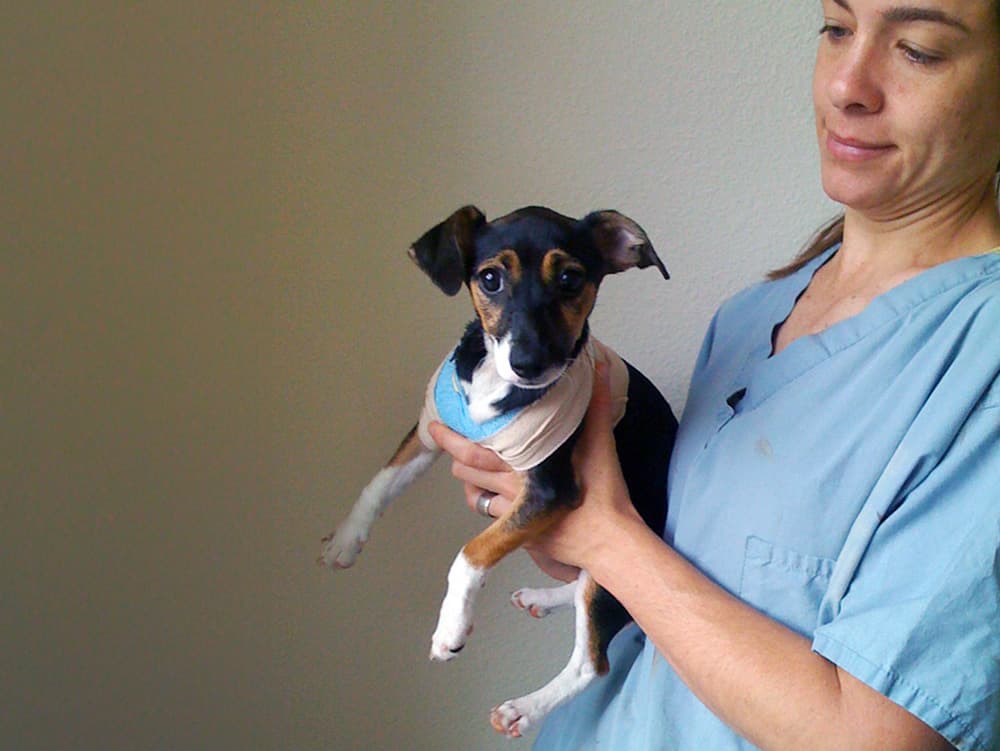
via / Austin Pets Alive
For years, canine parvovirus (CPV) (opens in a new tab), or “parvo,” was essentially a death sentence for dogs in shelters. Treating parvo can cost thousands of dollars (opens in a new tab) in private veterinary practices, making it unaffordable for most shelters (not to mention many pet parents). The highly contagious nature of the virus also led many shelters to euthanize dogs (opens in a new tab) in their care who tested positive (opens in a new tab) for CPV rather than attempt to treat them in order to prevent the spread of the virus to others.
Austin Pets Alive (opens in a new tab)!, an organization founded in 1997 as an all-volunteer advocacy group that turned into a rescue group in 2008, has become a beacon of hope for spreading awareness about how to save parvo puppies in shelters. Under the leadership of Dr. Ellen Jefferson, who founded APA!’s Parvo Puppy ICU (opens in a new tab) in her bathroom, about 9,000 dogs have been treated for and survived parvo.
Canine parvovirus (opens in a new tab) is a highly contagious viral disease that causes infectious gastrointestinal illness. Parvo infects and destroys rapidly dividing cells of the small intestine, lymphopoietic tissue, and bone marrow, according to the Merck Veterinary Manual (opens in a new tab).
Not every dog who comes in contact with parvo will be infected — infection depends on factors including a dog’s immune status — and the disease primarily impacts puppies between six and twenty weeks old. But infection is a very serious matter: Parvo has a fatality rate of over 90 percent (opens in a new tab) if untreated.
Pet parents and other caretakers may notice the following symptoms in dogs who may have parvo, including:
Lethargy
Depression
Loss/lack of appetite
High fever
Vomiting
Diarrhea
A diagnosis of parvo can be confirmed (opens in a new tab) using a fecal ELISA (enzyme-linked immunosorbent assay) test, in which antibodies may attach to parvovirus proteins if they’re present.
When Dr. Ellen Jefferson joined Austin Pets Alive! as its executive director in 2008, any puppy who entered an Austin shelter (or many shelters across the country) who was even suspected of having parvo — as well as their littermates or any dogs who had been in that puppy’s vicinity — were euthanized. The same year, she ended up fostering puppies who had tested positive for parvo and decided to treat them in her bathroom, giving them fluids and medications to keep them hydrated and avoid them becoming septic.
Dr. Jefferson continued to treat puppies in her home until APA! opened a facility in Austin that is the first-ever, large-scale parvo treatment ICU in the country. Because of its highly contagious nature, the ICU is far from both foot traffic and the APA!’s healthy dogs; the facility helps isolate parvo patients to prevent the disease from spreading.
Dogs primarily come to the clinic (opens in a new tab) from city shelters in which they tested positive for parvo. Typically, the shelter will call the APA! with a deadline to pick up the dog, and a transport volunteer then picks up the dog and brings them to the parvo ICU, where they will typically stay for about a week.

Devesh Chander / pexels
The APA! also shares their program (opens in a new tab) with shelters nationwide and has encouraged many other animal welfare organizations to stop euthanizing parvo puppies. Here’s how parvo affects puppies and how Dr. Jefferson’s team treats them:
While any dog can contract parvo, puppies are more susceptible than adult dogs because their immune systems are still developing (which also makes them more susceptible to other illnesses). Puppies under six weeks old whose mothers were vaccinated for parvo will still have antibodies from them, but should still be vaccinated for parvo as early as six weeks.
Puppies whose mothers were not vaccinated for parvo — like most puppies who end up in shelters — are immediately vulnerable to becoming infected and can be exposed to parvo (opens in a new tab) through direct contact with an infected dog or indirectly, by coming into contact with a person who has touched an infected dog or object (such as food or a water bowl) that a dog has been contaminated with parvo.
Parvo symptoms generally develop (opens in a new tab) within five to seven days of infection, but that period can range from two to 14 days. In the days before symptoms appear, there is an incubation period (opens in a new tab)during which a dog is infected but not yet outwardly sick. During this period, the virus targets the most rapidly dividing cells in the body and starts attacking.
Parvo usually begins (opens in a new tab) by attacking the tonsils or lymph nodes of the throat, then essentially moving on to white blood cells and ultimately entering the bloodstream, where it targets rapidly dividing cells — most intensely in the bone marrow and the cells lining the small intestine. The virus destroys immune cells, causes a dog’s white blood cell count to drop, and invades the gastrointestinal tract.
The most common way (opens in a new tab) shelters diagnose parvo is through a fecal ELISA (enzyme-linked immunosorbent assay) test, which can be completed in minutes. A CPV fecal PCR test, which can detect small pieces of viral DNA specific to parvo, may also be used but must be sent to a lab and requires more time. A dog’s white blood cell count can also indicate parvo because the virus infects their bone marrow.
One of the most crucial parts of treating parvo puppies, Dr. Jefferson says, is combating the dehydration that occurs from vomiting and diarrhea — and one of the challenges is administering antibiotics and fluids so these puppies can keep them in their systems. The APA! facility treats (opens in a new tab) the puppies in their care by administering IVs, subcutaneous fluids, antibiotics, and antiemetics, (which prevent vomiting).
It’s also crucial to keep puppies with parvo as warm as possible because the more severe their illness, the more prone parvo puppies are to becoming hypothermic.
“All of these organ issues feed on each other,” Dr. Jefferson says. “If they’re sitting on their own vomit or having a lot of liquid diarrhea, it will get them even colder. Heat maintains their body temperature, fluids maintain their blood pressure and hydration status, IV dextrose helps maintain their blood sugar levels — it’s all trying to keep track of them as patients who can become critical, if they’re not already critical, at any time.”
In her work with parvo puppies, Dr. Ellen Jefferson has identified three tiers of the severity of the illness, and the ICU treats their patients accordingly.
Infected puppies in the first tier aren’t “that sick, but they need treatment,” per Dr. Jefferson. This likely includes vomiting and diarrhea, but these puppies are awake and alert, their paws feel warm, and their gums and mouth appear pink. The APA! ICU treats parvo puppies in this stage with fluids, antibiotics, and anti-vomiting medication.
In the second tier, parvo puppies experience poor circulation, their paws feel cold, their gums appear white, and their mental status appears to have been affected by their illness. Because parvo causes such extreme dehydration, puppies may not even absorb fluids “because they don’t have any blood vessels open near their skin,” Dr. Jefferson says. The ICU team, therefore, inserts IV fluids directly into the vein to treat hydration and cause their blood pressure to go back up. They may also put dextrose into the fluid to give hypoglycemic puppies blood glucose.
The most severe phase of illness, Dr. Jefferson has observed, occurs when infected puppies are not as responsive, have cold paws and white gums, and are nearing death. At this point, the ICU “pulls out all the stops,” and gives them a protein supplement in their IV fluids to help keep fluids in their veins, dextrose, administering forced-feedings, and doing everything they can to keep those puppies alive.
Luckily, “we can reverse many of those [cases] and get them back to the living,” Dr. Jefferson says.
While parvo treatment can become prohibitively costly at private veterinarian offices, the APA! keeps costs low thanks to the help of highly trained volunteers such as veterinary students, grants, and donated supplies. Their wealth of knowledge is also hugely beneficial.
“We’ve become very fluent in parvo because we see so many cases a year, and most private practitioners are going to see maybe one a month, if that,” Dr. Jefferson explained. Private vets, she added, will run bloodwork and other tests every day due to their lack of familiarity with the disease, while the ICU is “assessing [parvo puppies’] internal values externally because we’ve seen it all.”
According to Dr. Jefferson’s research (opens in a new tab), after a dog is treated for parvo, there is no significant impact on their long-term behavioral or health outcomes. Deciding to adopt a dog (opens in a new tab) who has been treated for parvo, therefore, should be approached with the same care and consideration that deciding to adopt any dog should be.
Sunlight does not effectively kill parvo. According to Dr. Ellen Jefferson, only chemicals, such as those found in Clorox, can completely kill the virus.
It is unlikely for a puppy to get parvo twice, as they will have antibodies in their system (opens in a new tab) as a result of their first infection.
Parvo treatment can cost thousands of dollars when administered by private veterinary clinics. APA!’s Parvo Puppy ICU is able to treat parvo for far less.
Experts estimate (opens in a new tab) that parvo can live in the soil for anywhere between six months and a year.
Many describe parvo as having a distinct metallic smell (opens in a new tab) and/or a rotting smell (opens in a new tab) as it moves through the digestive tract.
According to the American Veterinary Medical Association (opens in a new tab), in most cases, puppies receive a first vaccine (opens in a new tab) at six to eight weeks and then receive boosters every two to four weeks until they are at least 16 weeks old. They should receive a booster at six months and then again at regular intervals throughout their lives.
Cornell Vets Canine Parvovirus (opens in a new tab)
History spread to the entire population (opens in a new tab)
Merck Vet Manual Canine Parvovirus (opens in a new tab)
Parvovirus Spreads (opens in a new tab)
Know Canine Parvovirus (opens in a new tab)
Parvo Poop (opens in a new tab)
AVMA Client Canine Parvovirus (opens in a new tab)
Canine Parvovirus Treatment in Shelters (opens in a new tab)
Julie Zeilinger is a NYC-based writer and editor whose writing has been published in Marie Claire, Vox, HuffPost, Forbes, and other publications. She is also the author of two books: College 101: A Girl’s Guide to Freshman Year (2014) and A Little F’d Up: Why Feminism Is Not a Dirty Word (2012). She is the mom to Baloo, a two-year-old Bichpoo and foster mom to dogs via Badass Animal Rescue.
Shelters & Rescue

Shelters & Rescue

Pet Wellness
Adoption Advice
Worm infections are more common than you’d think, especially in puppies. But the good news? They’re very treatable.
Adoption Advice
We’re sharing what you need to know about dog pregnancy and caring for a pregnant dog.
Adoption Advice
The beginning of puppy parenthood can be rough, but it does get better — especially when you implement this advice.

Adoption Advice
Deliberating between the two? One is more affordable, comes with fewer health issues, and saves a life.

Adoption Advice
Wondering what to expect from your puppy’s first vet visit? Read more to learn about how to prepare and what to expect.