Boston Terrier vs. French Bulldog: A Comparison Guide
They’re both small, friendly, and adorable, but they come with distinct differences.
They’re both small, friendly, and adorable, but they come with distinct differences.
by Katie Koschalk, | December 26, 2025
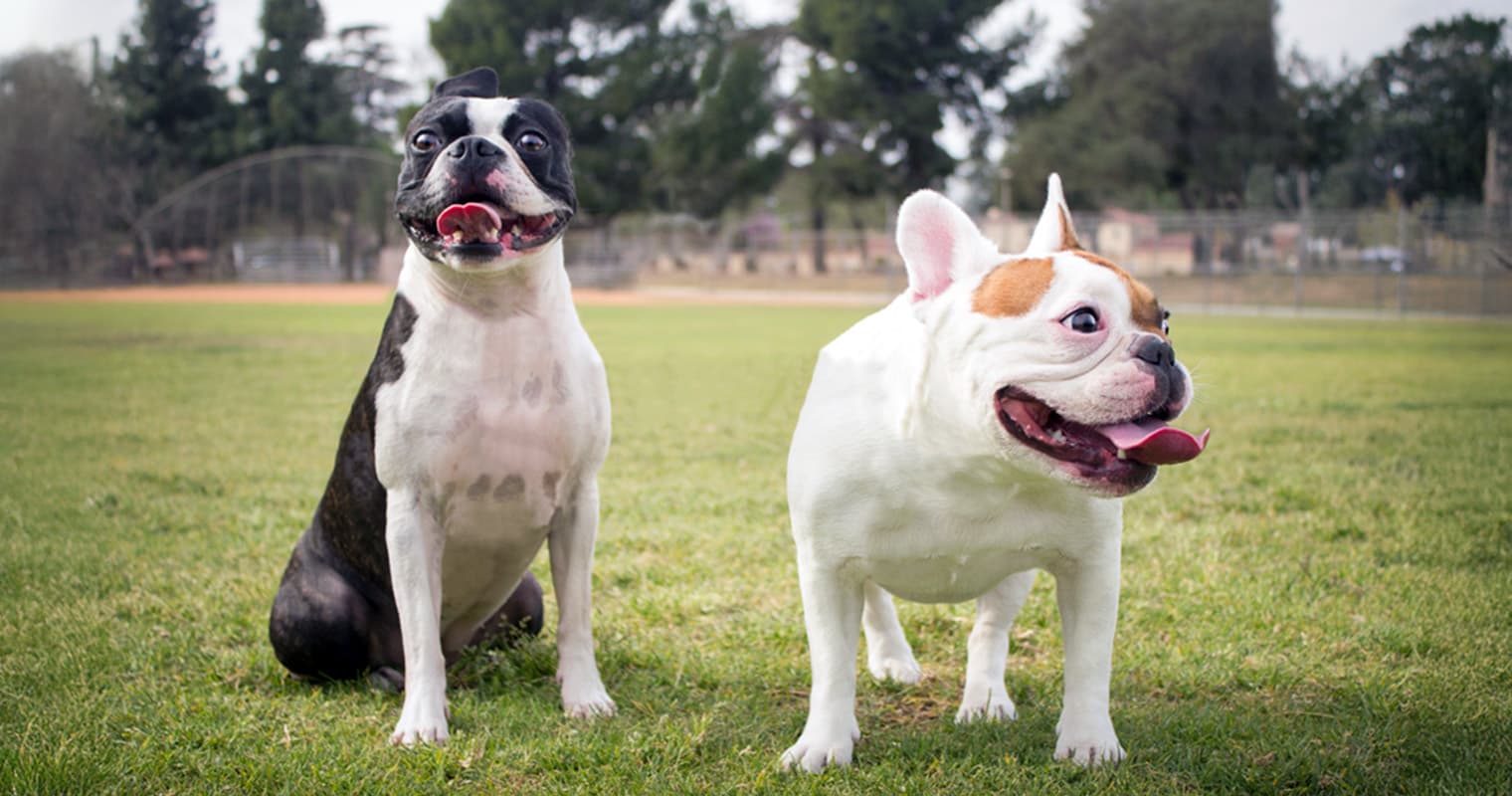
Mokuahi / Shutterstock
Boston Terriers and French Bulldogs may look similar at first glance, with their compact bodies, short snouts, and signature bat-like ears. But these two breeds have distinct differences. If you’re trying to decide which one to adopt, understanding those differences is key to making an informed choice for both you and the dog.
Read on for a closer look at how these popular pups compare in appearance, personality, and health so you can determine which breed might be the better fit for your home and lifestyle.

Eve Photography / Shutterstock
The Boston Terrier and the French Bulldog (aka Frenchies) look similar because both trace back to a common ancestor: the Bulldog. But their histories differ.
French Bulldogs were developed in France in the 19th century by English immigrants who wanted a smaller, more portable companion than the Bulldogs they brought with them. As Frenchies gained popularity abroad, American travelers took notice and eventually brought the breed back to the United States. Today, Frenchies hold the title of America’s most popular dog breed.
In contrast, the Boston Terrier was developed in Boston in the late 1800s. The first Boston Terrier was a cross between an English Bulldog and the White English Terrier (which no longer exists). Although early breeders hoped to create a more compact fighting dog, they ultimately produced a gentle, well-mannered companion. Nicknamed the “American Gentleman,” the Boston Terrier earned this title thanks to their tuxedo-like coat pattern and polite, affectionate nature.
Christine Bird / Shutterstock
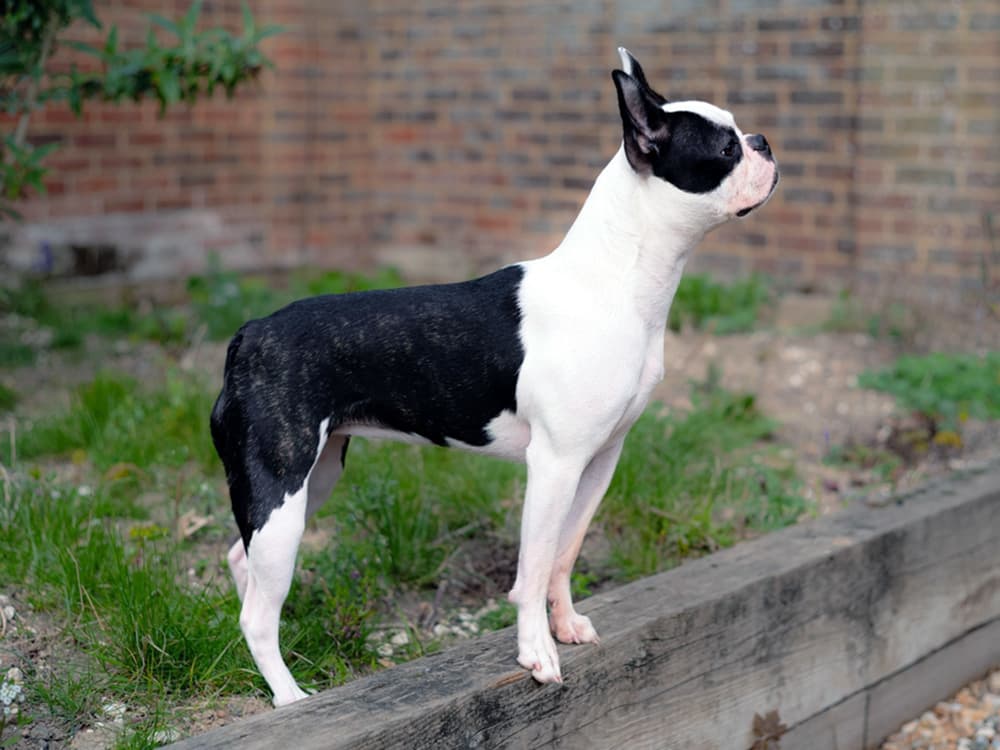
French Bulldogs and Boston Terriers share similar physical features. But they’re easy to tell apart once you know what to look for.
Ears: Boston Terriers have pointed, upright ears, while Frenchies have larger, more rounded “bat ears.”
Head shape: Bostons have rounder skulls, whereas French Bulldogs have broader, square-shaped heads.
Body: Boston Terriers are lighter and leaner, typically weighing less than 25 pounds. Frenchies have a thicker, heavier build and can weigh up to 28 pounds.
Height: They are similar in height, though Frenchies may be slightly taller.
Coat colors: Both breeds can be black and white, but Boston Terriers usually have clean, tuxedo-like markings. Bostons can also come in brindle and seal, and typically have a white stripe between the eyes — a feature that’s not consistently seen in Frenchies. Frenchies come in a wider range of colors, such as brindle, fawn, cream, and white, and their patterns can be more varied.
Boston Terriers are playful, affectionate, and eager to interact with their people. Bred as true companion dogs, they typically get along well with people of all ages and are often welcoming toward strangers. They enjoy playtime and activities like agility, but they also have a mellow side and happily unwind with their families.
French Bulldogs share that people-focused, friendly nature, but they bring their own twist to it. They’re known for their goofy and occasionally sassy personalities, and can be a bit stubborn and independent at times. They also generally prefer a more relaxed, laid-back lifestyle than Boston Terriers.

hedgehog94 / Shutterstock
Boston Terriers typically live 11 to 13 years, while French Bulldogs have a slightly shorter average lifespan of 10 to 12 years.
Both breeds are brachycephalic, meaning they have short snouts and flat faces that can cause breathing difficulties. As such, both breeds are at risk of heatstroke and should not be intensely exercised, especially in hot or humid conditions.
Boston Terriers have less-flat faces than French Bulldogs, which often means fewer breathing issues and better physical agility.
In addition to breathing problems, French Bulldogs are also at increased risk for:
Patellar luxation
Hip and elbow dysplasia
Spinal problems
Heart disease
Skin fold infections (due to deep skin folds and wrinkles)
Eye problems (cherry eye, cataracts, corneal dystrophy, etc.)
Weight gain and obesity
Skin and food allergies
Dental disease
Additionally, because of their bulky, front-heavy structure, Frenchies cannot swim and should never be left unattended near a tub, pool, or body of water.
In addition to breathing problems, Boston Terriers are prone to the following:
Patellar luxation
Deafness
Spinal problems
Eye problems (glaucoma, ulcers, cataracts)
Dental disease
Skin and food allergies
Cushing’s disease
Lumina / Stocksy
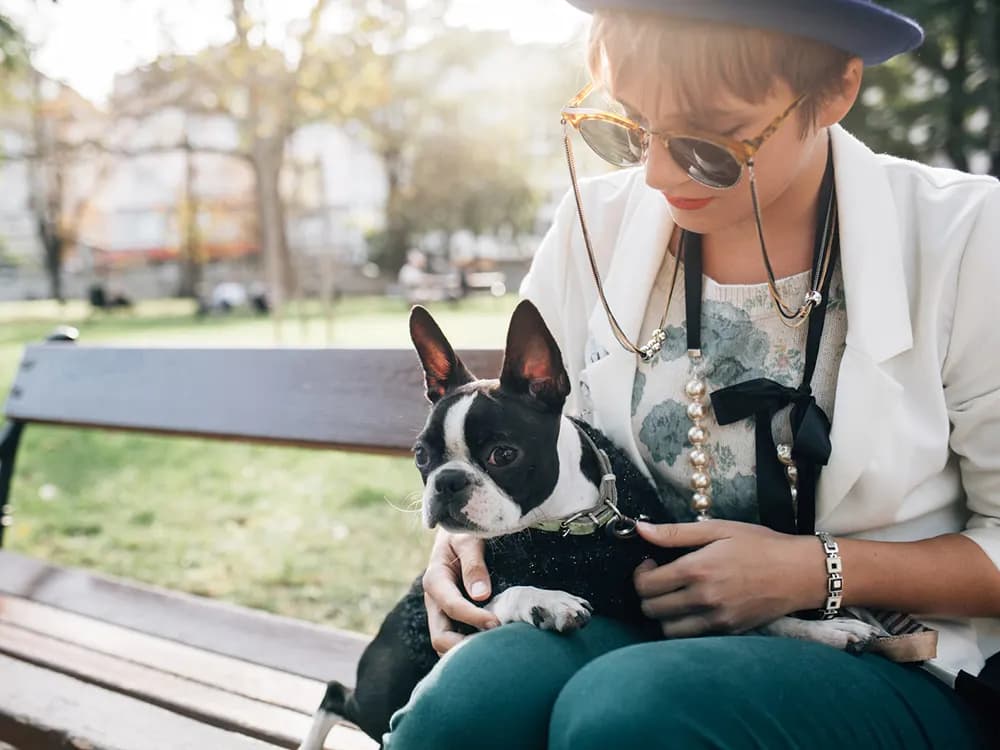
Choosing between a Boston Terrier and a French Bulldog comes down to what you’re looking for in a companion and your ability to provide the care they need.
Here are a few key points to keep in mind when deciding which breed is the best match for you.
Both breeds adapt well to living in apartments or houses. If you want a dog who’s happy with a calm, slower-paced lifestyle, a Frenchie might be the better fit. If you prefer a dog with a bit more pep and agility, a Boston Terrier may be the right choice.
Although both breeds are brachycephalic, French Bulldogs tend to experience more serious breathing problems and a wider range of genetic health issues than Boston Terriers. Prospective adopters may need to prepare for higher veterinary care costs for French Bulldogs.
Both Bostons and Frenchies are typically eager to please and quick to learn, making training relatively easy. That said, French Bulldogs can have a stubborn streak, which can make training a bit more challenging. Both breeds learn best with positive reinforcement training and short sessions.
Both breeds have short, low-shedding coats, but Frenchies require more skin-fold cleaning and may need extra care to prevent infections. Bostons are generally lower-maintenance in this area.

Short answer: Yes. Here are the many reasons why.
If you’re ready to welcome a Boston Terrier or French Bulldog into your home, adoption is a wonderful way to give a dog a second chance and reduce the burden on overcrowded shelters and rescues. Here’s where to look for your new family member.
Your local shelter is always a great place to start. Boston Terriers, French Bulldogs, and their mixes sometimes end up in municipal shelters or humane societies through no fault of their own. Often, this happens because of changes in their previous family’s circumstances, medical needs, or housing.
Breed-specific rescues focus solely on a specific breed, such as Boston Terriers or French Bulldogs, or a group of similar breeds. These rescues often take in surrendered or at-risk shelter dogs. They rely on foster homes, which means dogs are living in a home setting where their behavior, personality, and needs can be better understood before adoption.
Many all-breed rescue organizations take in small companion dogs, including Boston Terriers, French Bulldogs, and their mixes.
Online adoption platforms, such as Adopt a Pet, make it easy to search for adoptable Boston Terriers or French Bulldogs (and their mixes) from shelters, rescues, and private rehoming listings nationwide. You can filter by age, location, activity level, and compatibility with children or other dogs, making it easier to find a dog who fits your lifestyle.
Both breeds are brachycephalic (flat-faced), but French Bulldogs generally face a higher risk of breathing problems and other genetic health issues than Boston Terriers.
A Frenchton (a Boston Terrier–French Bulldog mix) may inherit fewer breathing issues and be slightly more active than a purebred Frenchie. However, health and temperament can vary widely from dog to dog. Ask the rescue, shelter, or individual if they can provide information about the specific dog you’re interested in.
Boston Terriers and French Bulldogs are both low-barking breeds, though Bostons may be a bit more vocal.
“Boston Terrier.” American Kennel Club, www.akc.org/dog-breeds/boston-terrier.
“Boston terrier.” University of Prince Edward Island - CIDD Database, cidd.discoveryspace.ca/breed/boston-terrier.html.
“French Bulldog.” American Kennel Club, www.akc.org/dog-breeds/french-bulldog.
“French Bulldog.” University of Prince Edward Island - CIDD, cidd.discoveryspace.ca/breed/french-bulldog.html.
“French Bulldog vs. Boston Terrier: Similarities and Differences.” American Kennel Club, 25 Nov. 2025, www.akc.org/expert-advice/dog-breeds/french-bulldog-vs-boston-terrier.
Grenus, Brittany. “23 French Bulldog Health Issues Pet Parents Should Know About.” Pet MD, 5 June 2023, www.petmd.com/dog/general-health/french-bulldog-health-issues.

Katie Koschalk is a freelance writer based in Northern California. Fusing her love and knowledge of animals with her journalism degree and years of professional writing, Katie is dedicated to improving the lives of pets and their caretakers by sharing helpful and accurate information. When she’s not at her desk, you can find her exploring trails with her Aussie, Hunter, cooking plant-based meals, and talking to her two cats, Jax and Sadie, in really ridiculous voices.

Pet Wellness

Adoption Advice

Breed Info

Breed Info
Looking for a chill companion? Here are some low-energy dogs who love a relaxed lifestyle.

Breed Info
From Pugs to French Bulldogs, squishy-face dogs are pretty hard to resist. Here is your guide to these loving, adorable breeds.

Breed Info
They’re awfully cute, but they also come with some health risks you should never ignore.

Adoption Advice
It’s basically a safe space to comfort your pup.

Breed Info
Looking for a devoted dog? These breeds and mixes won’t let you out of their sight.

Behavior & Training
The answer is not so cut-and-dry. Here’s a deep dive into small-dog behavior.