French Bulldog Mixes: What to Know Before You Adopt
Thinking about adopting a French Bulldog mix? Here's what to expect from these small but mighty dogs — and how to find one at a shelter near you.
Thinking about adopting a French Bulldog mix? Here's what to expect from these small but mighty dogs — and how to find one at a shelter near you.
by Cammi Morgan, | June 23, 2026

Kristen Curette & Daemaine Hines / Stocks
French Bulldogs are one of the most recognizable breeds thanks to their small, squat build, prominent bat ears, flattened muzzle, and endearing, silly personality. It’s not surprising that interest in adopting Frenchie mixes has risen over the last decade, given the popularity of the breed, which the AKC has listed as number one for the past four years.
However, several organizations, including the ASPCA, have expressed serious welfare concerns over the increasingly extreme physical features of purebred Frenchies. Most purebred French Bulldogs can’t breathe efficiently, can’t cool themselves properly, and often can’t give birth without our assistance (or via C-section). By embracing mixed-breed Frenchies with healthier builds, advocating for breed standards that don’t cause unhealthy characteristics, and choosing adoption over buying, you can help support canine welfare while finding yourself an adorable buddy to love and care for.
Read on to learn what makes Frenchie mixes special, the care they need to thrive, and how to find the right one for your home.
While physical and personality traits of French Bulldog mixes can vary widely, they often retain a number of breed-specific features. Frenchies are especially unique in their appearance, and at least some of these characteristics remain prominent in crossbreds.
Purebred French Bulldogs are compact, muscular little dogs with flat, short-muzzled (brachycephalic) faces, broad chests, and iconic upright, rounded ears. They typically weigh less than 28 pounds. When mixed with another breed, some of these traits carry through, although the degree to which they resemble purebreds may vary.
Facial structure: Frenchies have some of the most prominent profiles of any breed. Mixed-breed puppies might inherit a fully flattened muzzle or a partially brachycephalic structure. The latter is actually healthier for the dog because fully brachycephalic pups can have significant breathing issues throughout their lives.
Ears: Their famous bat ears are dominant traits that frequently show up in Frenchie mixes, although sometimes in a softer or semi-upright form.
Body shape: Many Frenchie mixes retain the broad chest and compact frame of their French Bulldog parent. Even when they’re a bit leggier, the stocky build typically remains prominent.
Coat: Purebred French Bulldogs have short, smooth coats that come in a range of colors and patterns, including brindle, fawn, cream, piebald, white, and a combination of these — any of which a mix may inherit.
Size: Most Frenchie mixes fall within the small-to-medium range, typically weighing between 18 and 35 pounds.

Breeds with those squished-in faces are charming — but their health issues are not.
French Bulldogs are famously friendly, people-oriented, and snuggly. They are lap dogs through and through, and thrive in social homes where they are included as part of the family. These traits tend to persist in mixed-breed pups.
Friendliness: Mixed-breed dogs often inherit the friendly, happy-go-lucky nature of their Frenchie parent. This is especially true when they are thoroughly socialized from a young age and feel comfortable in a range of environments.
Energy: Pure Frenchies are not high-energy dogs and tend to struggle to breathe when exerting themselves. If they are mixed with a more active breed, such as a Jack Russell Terrier, their energy levels can bump up considerably. However, if they still inherit a strongly brachycephalic face, you’ll need to make sure they don’t overdo it and exacerbate breathing issues.
Playfulness: Although they aren’t built for speed or agility, these dogs are definitely still playful. Just in short bursts. Mixed-breed individuals often inherit this playful attitude. People tend to describe Frenchies as clowns or comedic, and this tendency towards silliness often shines through in mixed pups.
Sociability with other pets: Purebred French Bulldogs usually exhibit a low prey drive and tend to get along well with cats, small household pets, and other dogs. If they are mixed with a breed with a higher prey drive, like many of the small terrier breeds, this trait might not be as reliable. Early socialization and positive reinforcement to teach gentle behaviors around animals can go a long way in ensuring your new pal gets along with other pets.

David Utt / Unsplash
French Bulldog mixes can be wonderful canine companions for a wide range of households and lifestyles. Although they aren’t for everyone, the fact that these pups tend to be adaptable, social, and lower energy can make them suitable for a variety of homes.
The biggest consideration for first-time pet parents is that these dogs can have serious breathing issues if they inherit the fully brachycephalic muzzle of their Frenchie parent. This is particularly significant if you live in a hot environment: Dogs with flattened muzzles are more prone to overheating and developing respiratory distress than other breeds. If you live somewhere hot and humid, make sure your pup has consistent access to shade, fresh water, and air conditioning. This isn’t a reason to avoid adopting a Frenchie mix, but it’s definitely going to be a reality in carefully managing their environment each day.
Frenchie mixes are endearing and super-loving, but there are specific considerations worth knowing before you commit to adoption.
French Bulldogs are intelligent and respond well to positive reinforcement training. However, they are famously headstrong and aren’t typically fans of being bossed around (who can blame ’em?). Thankfully, relationship-based, positive-reinforcement training strengthens your bonds, builds trust, and is highly motivating for these smart but stubborn pups. For this mix, short and engaging sessions beat long, repetitive ones every time.
Most Frenchie mixes are sociable and easygoing enough to do well in family environments. They aren’t usually timid and can be great little pals for kids. Still, children should understand that they must play gently with mixes who have a brachycephalic facial structure and not rile them up too much.
Grooming needs vary by the traits inherited from a pup’s parent breeds. If your Frenchie mix has retained a wrinkled muzzle, they’ll need consistent facial skin-fold cleaning every couple of days to prevent moisture buildup and skin irritation. You can use a diluted, dog-friendly shampoo, a clean and damp cloth, or wipes specifically made for bulldog facial folds to clean in between their wrinkles. Make sure to thoroughly dry afterward.
As for their coats, if they take after their Frenchie parent, you only need to occasionally brush them. Mixes with longer or curlier coats, like a Frenchie-Poodle mix, require grooming multiple times a week and occasional trims to prevent tangles and matting.

It’s one of several health problems facing brachycephalic breeds.
French Bulldogs are prone to certain health conditions, including respiratory issues, spinal problems, eye diseases, and skin allergies. Mixed-breed dogs often have better overall health than their purebred counterparts thanks to greater genetic diversity, but they still can inherit these conditions.
If a Frenchie mix inherits a strong flattened face, brachycephalic obstructive airway syndrome risks remain due to a narrowed and shortened airway. If they inherit this feature, they’re also more prone to developing heat stroke and exercise-induced collapse. If their body structure is like that of their Frenchie parent, they’re more likely to develop intervertebral disc disease, which can cause chronic back pain, nerve damage, and eventually hind leg paralysis. A range of eye disorders, including a prolapsed third eyelid, ulcers, and cataracts, are common in French Bulldogs.
Additionally, purebred Frenchie mothers are about 16 times more likely to suffer from difficult births compared to their mixed-breed counterparts. They often have to undergo C-sections to deliver their puppies, because natural birth is highly dangerous for this breed due to their narrow pelvic canal. This results in a high chance of obstructed labor, in which puppies can become trapped in a birth canal. Thankfully, a mixed-breed French Bulldog has a much lower risk of suffering these complications.
Most Frenchie mixes do well with mild-to-moderate amounts of exercise daily. About 30 to 45 minutes of walking and play is usually good for these less athletic pups. If they inherited a shortened muzzle, avoid exercising them in the heat, and look for signs of labored breathing, excessive panting, or fatigue. These can indicate heat exhaustion or even heat stroke and require an urgent trip to the vet. For mixed-breed pups with longer snouts, higher amounts of exercise should be fine, and you won’t need to be as vigilant about preventing them from playing outside in hot weather.
The good news for anyone with their heart set on adopting a Frenchie mix is that you won’t have to look too far. Across the country, thousands of French Bulldog mixes are waiting in shelters and rescues for their forever homes. Below are some of the more common Frenchie mixes you’ll find.

BiancaGrueneberg / iStock
Sometimes called a French Bullhuahua, this tiny but mighty mix has an almost comically outsize personality. They tend to inherit the friendliness and silliness of the Frenchie with the spunk and alert nature of the Chihuahua. Both parent breeds are among the more Velcro-type of dogs out there, so this mix can become super attached to one person in particular. It’s important to foster a deep bond while also teaching them some independence training early on — so your pup can feel safe, secure, and comfortable in your absence. These pups often land in the 10 to 20 pound range, and the Chihuahua traits can provide the health benefit of a longer muzzle and a less extreme body shape.
Yuval Helfman / AdobeStock
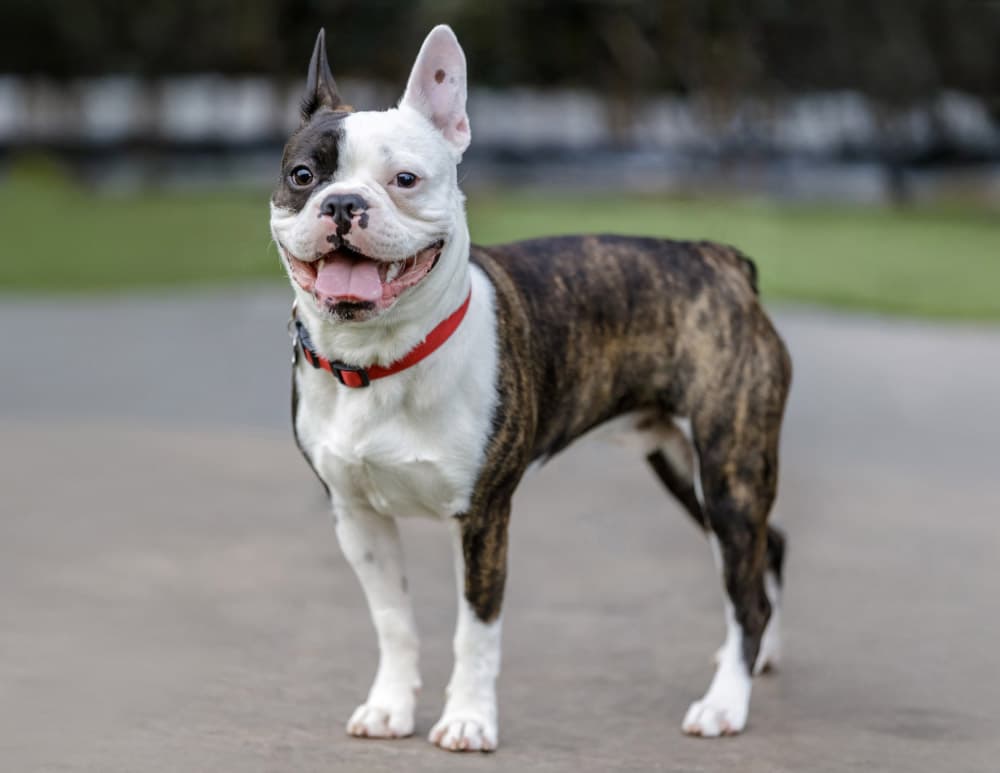
The French Bulldog–Boston Terrier mix, or Frenchton, is one of the most common Frenchie mixes you’ll encounter. These dogs tend to be more energetic than a purebred Frenchie, with a leaner frame and slightly longer legs. This gives them a bit more endurance on walks and during playtime. Although Boston Terriers are also brachycephalic, their slightly more elongated muzzle offers improved respiratory function. This is especially true for mixes whose features match the original breed standard and don’t present an extremely flattened muzzle. Still, if you adopt a Frenchton, carefully managing them in hot environments and preventing overexertion are crucial.

yhelfman / iStock
A French Bulldog–Poodle mix, or Froodle, packs a ton of cuteness, intelligence, and friendliness into one small package. This mix tends to feature a longer muzzle thanks to the Poodle genes, which can greatly benefit their respiratory health. They also often inherit a wavy-to-curly coat that needs a bit more grooming, although this coat type typically sheds less. Poodles are famous for being super-smart and eager to learn. They excel in training but also love to solve puzzles and play brain games, so it’s important to provide plenty of mental enrichment.

Antanas Tusla / iStock
This spirited mixed breed, also known as a Frengle, is one of the higher-energy French Bulldog mixes. Beagles love to play, follow their nose, and go on adventures. If your French Bulldog–Beagle mix has the more athletic build and non-brachycephalic facial structure of a Beagle, they should be able to safely exercise and romp around. They often feature a bit more stockiness than a purebred Beagle, and their ears can be floppy to fully upright. Both breeds are famously friendly and cheerful, so don’t be surprised if your Frengle friend wants to enthusiastically greet every person and pet they meet.
Мария Старосельцева / Adobe Stock
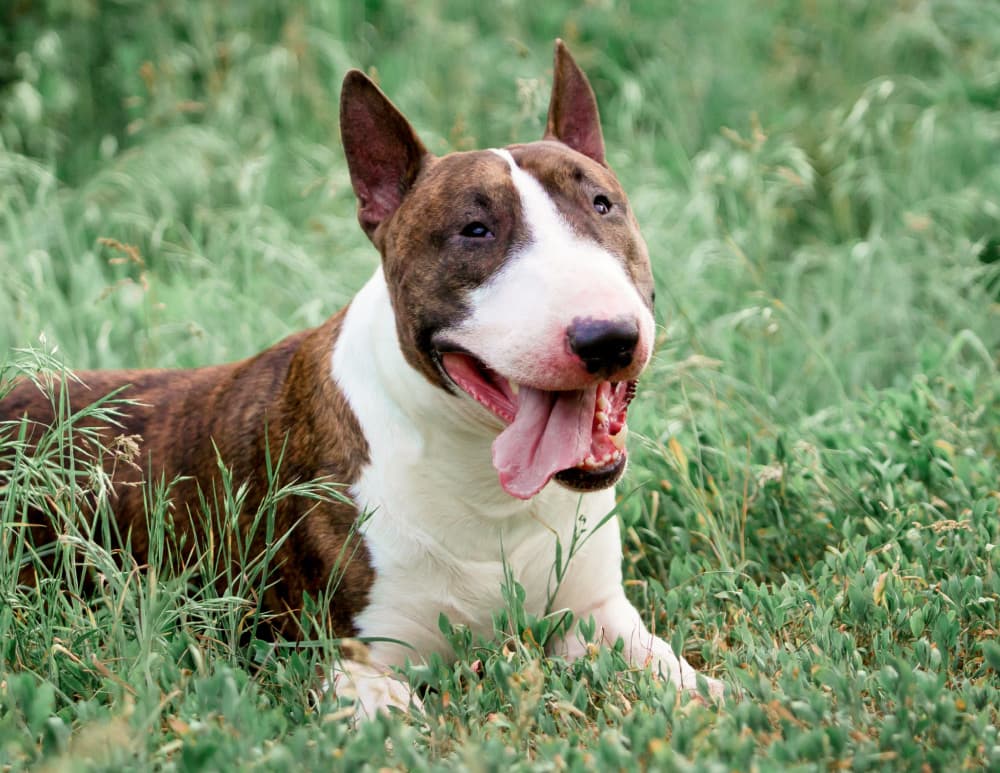
Because both parent breeds are adored for their comical and goofy personalities, you can expect the French Bulldog–Bull Terrier mix, aka the French Bull Terrier, to be a truly entertaining pup. Standard Bull Terriers can be 50 to 70 pounds, so this mix is a cross between the French Bulldog and the Miniature Bull Terrier. The mini variety typically weighs 20 to 35 pounds. Both breeds are quite stocky and feature upright ears, so you can expect these traits with this mix. Thankfully, the Bull Terrier’s muzzle is quite elongated, so a French Bulldog mix should have a much easier time breathing and exercising. Both breeds can be strong-willed, so make sure to incorporate lots of rewards, play, and toys into training sessions to keep them engaged and interested.
You can find a French Bulldog mix to adopt by checking your local shelters, dog rescue organizations, and online rescue sites. Adopt a Pet’s search platform allows you to narrow your search by location, distance, and other options including breed, age, size, and if a pup is comfortable with kids or other pets. The breed selection includes mixed-breed individuals in the results, so you’ll find all types of Frenchie mixes looking for their forever homes.
Fluffy French Bulldogs can be mixed with a number of small, fluffy breeds such as Miniature or Toy Poodles, Pomeranians, or Shih Tzus.
No, French Bulldog mixes are not hypoallergenic. A Frenchie mixed with a Poodle might have a low-shedding coat, but they still won’t be truly hypoallergenic.
How big French Bulldog mixes get depends on the breed they are mixed with, but many weigh 18 to 35 pounds.
No, French Bulldog mixes are not hard to train when you use positive reinforcement and make learning sessions fun and engaging.
Most French Bulldog mixes can live about 12 to 15 years.
Brachycephalic Obstructive Airway Syndrome (BOAS). (n.d.). Cornell University College of Veterinary Medicine. https://www.vet.cornell.edu/departments-centers-and-institutes/riney-canine-health-center/canine-health-topics/brachycephalic-obstructive-airway-syndrome-boas.
Coapeadmin. (2024, February 28). The importance of mental stimulation for pets. COAPE. https://coape.org/the-importance-of-mental-stimulation-for-pets.
French bulldogs more prone to birthing problems than other breeds - News - VetCompass - Royal Veterinary College, RVC. (n.d.). https://www.rvc.ac.uk/vetcompass/news/french-bulldogs-more-prone-to-birthing-problems-than-other-breeds.
Tomlinson, F., O’Neill, E., Liu, N.-C., Sargan, D. R., & Ladlow, J. F. (2024). BOAS in the Boston Terriers: Similarities to and differences from the bulldog breeds. In University of Cambridge Department of Veterinary Medicine. Retrieved May 19, 2026, from https://www.vet.cam.ac.uk/files/media/tomlinson_boas_in_the_boston_terrier_v1_poster.pdf.

Cammi Morgan is a nature and pet care writer living off-grid with her pack of rescue and foster dogs in the mountains of Southeast Appalachia. In addition to her work with Adopt a Pet, she has contributed to Animal Wellness Magazine, PetsRadar, Global Comment, A-Z Animals and other online publications. Her passions include animal rescue, mycology, hiking, and caving.

Breed Info

Pet Wellness

Lifestyle

Adoption Advice
Thinking about adopting one of these perfectly adorable pups? Here are more names that you could dream of, for inspiration.

Breed Info
They’re awfully cute, but they also come with some health risks you should never ignore.
Pet Wellness
Veterinarians must do more to discourage the breeding of animals with conditions known to seriously compromise their welfare.

Breed Info
From Pugs to French Bulldogs, squishy-face dogs are pretty hard to resist. Here is your guide to these loving, adorable breeds.

Breed Info
Love the Pug’s charm? These similar breeds offer the same affectionate, Velcro dog personality, with a unique twist.

Pet Wellness
Here’s how to spot the eye condition and help your dog see more clearly.