11 Big Dogs Who Look Like Pit Bulls
Meet other large-breed dogs who resemble Pit Bulls in looks, personality, or both.
Meet other large-breed dogs who resemble Pit Bulls in looks, personality, or both.
by Cammi Morgan, | April 29, 2026
StockMe / Adobe Stock
The loveable land seal, velvet hippo, pibble, Pittie: There’s no shortage of endearing terms used to describe Pit Bulls. But what actually is a Pit Bull? In reality, “Pit Bull” is an umbrella term that encompasses several distinct dog breeds. The most commonly accepted breeds include the American Staffordshire Terrier, American Pit Bull Terrier, and Staffordshire Bull Terrier.
If you want to adopt a Pit Bull or Pit Bull-adjacent breed, the following guide is for you. Below, we’ll delve into large breeds who look like Pit Bulls, and which lifestyles they’re best suited for.
“Pit Bull” is more of an umbrella term that encapsulates many breeds.
American Pit Bull Terrier: The breed most people picture when they hear “Pit Bull.” American Pit Bull Terriers are very athletic, loyal, and people-oriented.
American Staffordshire Terrier: Stockier and slightly calmer than the American Pit Bull Terrier, the American Staffy shares the same affectionate, confident personality.
Staffordshire Bull Terrier: The compact, British cousin may be smaller in size, but Staffordshire Bull Terriers are still big on personality.
American Bully: A newer, more heavily muscled breed developed from Pit Bull lines, bred specifically for companionship.
Some other large dogs get mislabeled as “Pit Bulls” because of their head shape and build (see list, below).
Either way, all Pit Bull-type dogs tend to share a handful of standout physical traits: broad, blocky heads, muscular and compact builds, wide stances, short coats, powerful jaws, short, stout muzzles, and low-set tails.
It’s common for many dog breeds with muscular builds and short coats to be misidentified as Pitties. However, these breeds may look like Pit Bulls, but they are totally distinct breeds.
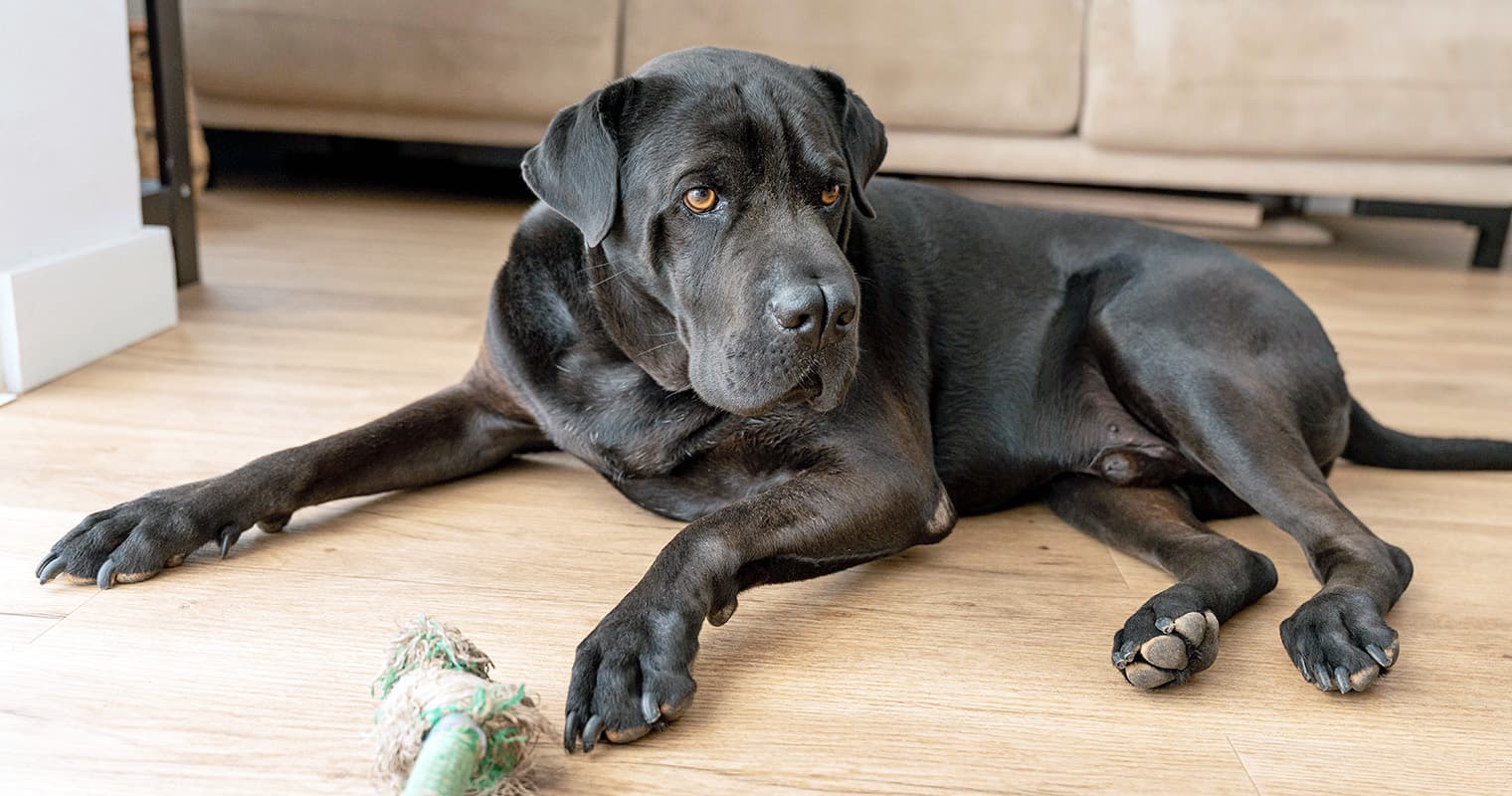
The Cane Corso is an Italian Mastiff descended from Roman war dogs, historically used for guarding, hunting, and cattle driving. Because they tend to be a bit suspicious of unfamiliar situations or guests, they need careful, thorough socialization from puppyhood to help them feel comfortable in a range of environments.
How they compare to Pit Bulls: Cane Corsos are much larger than traditional Pit Bull breeds. They feature more prominently drooping jowls and a heavier build. As guardian dogs, they are a bit less inclined to be lovey-dovey with strangers.
Weight: Up to 110 pounds
Height: Up to 27.5 inches
Considerations: Cane Corsos do best in active homes, where they can get up to two hours of exercise and play per day.
Marianna / AdobeStock
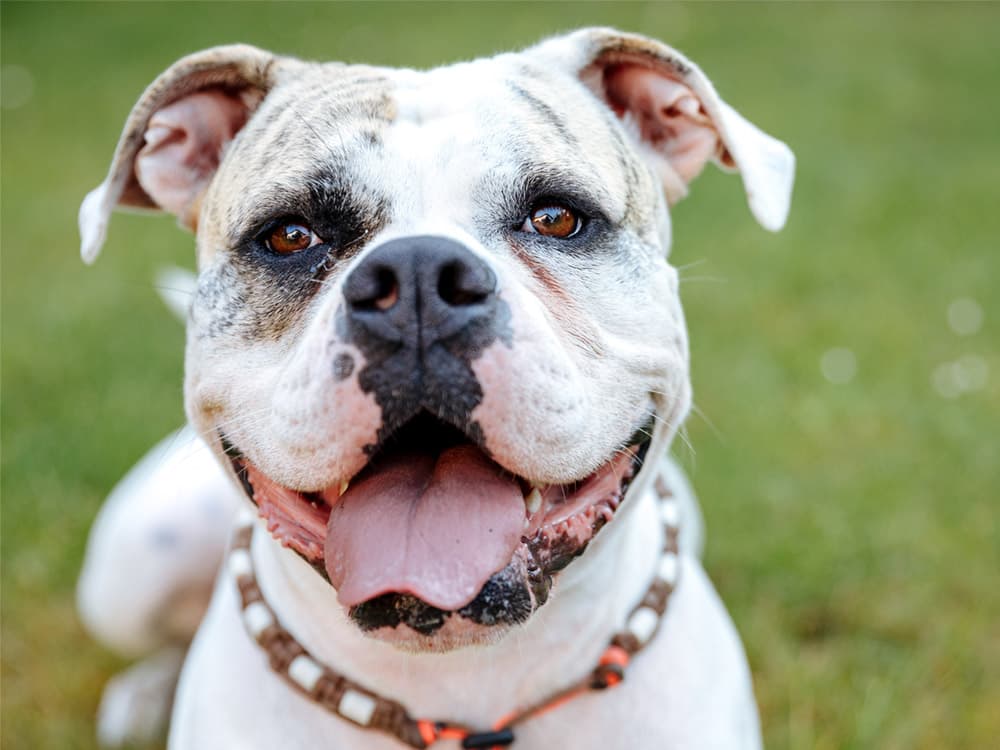
The American Bulldog is, historically, a working breed originating in the American South. Starting in the 18th century, farmers used these powerful pups as cattle-catch dogs and farm guardians. Today, these dogs are family pets and rarely take on working roles. Instead, they’re beloved as affectionate, goofy, social companions.
How they compare to Pit Bulls: American Bulldogs are often mistaken for a type of Pit Bull. Both are family-oriented, affectionate, and typically great with new people. But these dogs are often stockier and heavier-boned with a more pronounced underjaw and jowls, and their snouts can be a bit shorter.
Weight: 60 to 125 pounds
Height: 20 to 25 inches
Considerations: American Bulldogs have shorter muzzles than many breeds, which can cause some breathing issues. And some of these can have a high prey drive.
encierro / AdobeStock
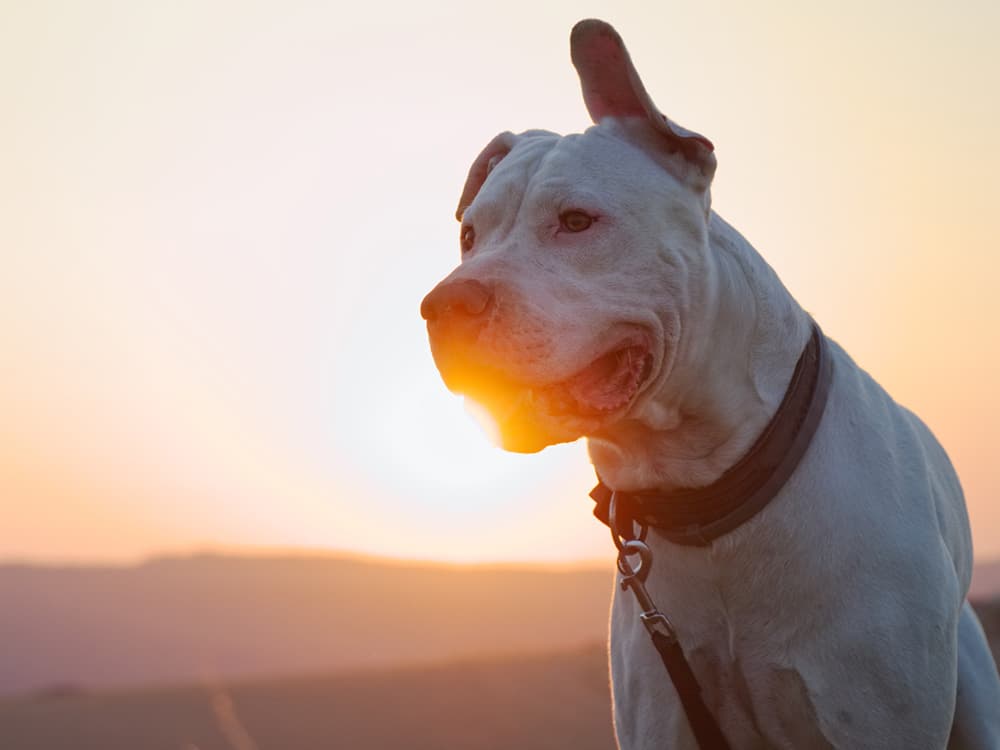
The Dogo Argentino is a large, muscular breed developed in Argentina. They are super loyal and affectionate with their families. Socialization is essential for this breed. Teaching them to play gently, be more welcoming to strangers, disengage quickly upon request, and to recall on cue are high priorities in positive reinforcement training.
How they compare to Pit Bulls: Dogo Argentinos are larger and more heavily muscled than most Pit Bull breeds. In contrast to the range of coat colors seen in Pitties, this breed has only a short white coat.
Weight: 75 to 100 pounds
Height: 24 to 26.5 inches
Considerations: Dogo Argentino carries very strong guarding instincts and has a high prey drive.
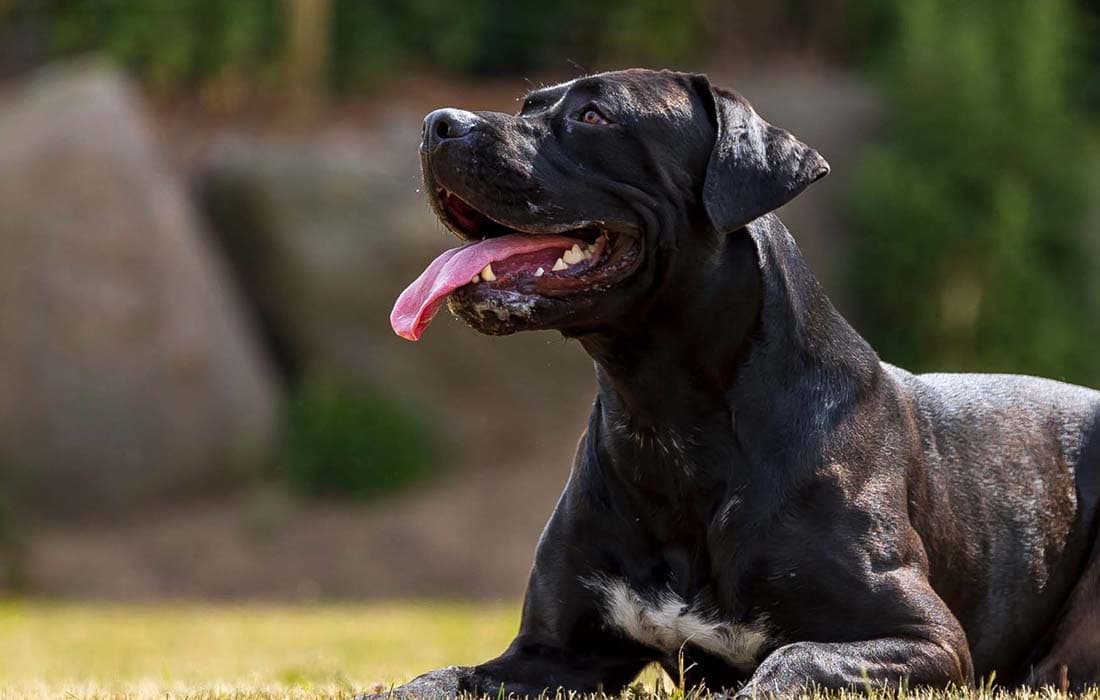
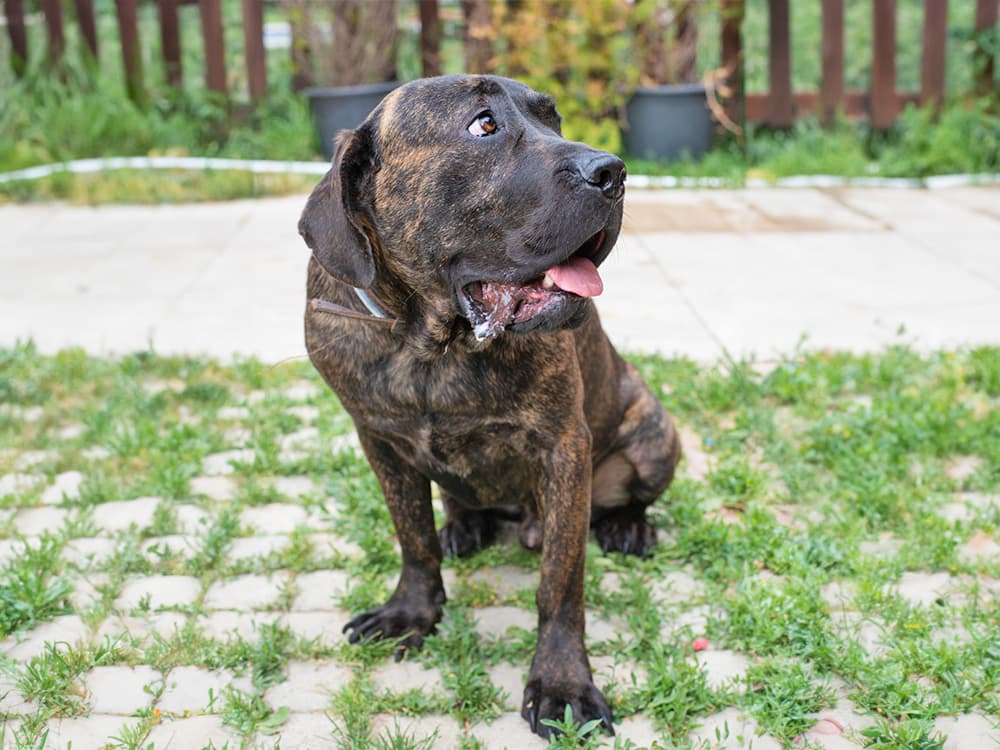
Also named the Canary dog, the Presa Canario originates from the Canary Islands. Farmers developed them over centuries to herd sheep and cattle, and to guard the homestead against predators and stray dogs. Although they’re now more integrated into family life, they’ve retained much of their traditional instincts. They are gentle, albeit a bit aloof, and not naturally warm toward outsiders.
How they compare to Pit Bulls: The Presa Canario is substantially larger than most Pit Bull breeds. Additionally, these dogs have more prominent muzzles, long jowls, and wrinkled foreheads that distinguish them from Pit Bulls.
Weight: 85 to 160 pounds
Height: 22 to 26 inches
Considerations: Their history of guarding against stray dogs also means they can be standoffish with members of their own species.
Monica Arauz / Shutterstock
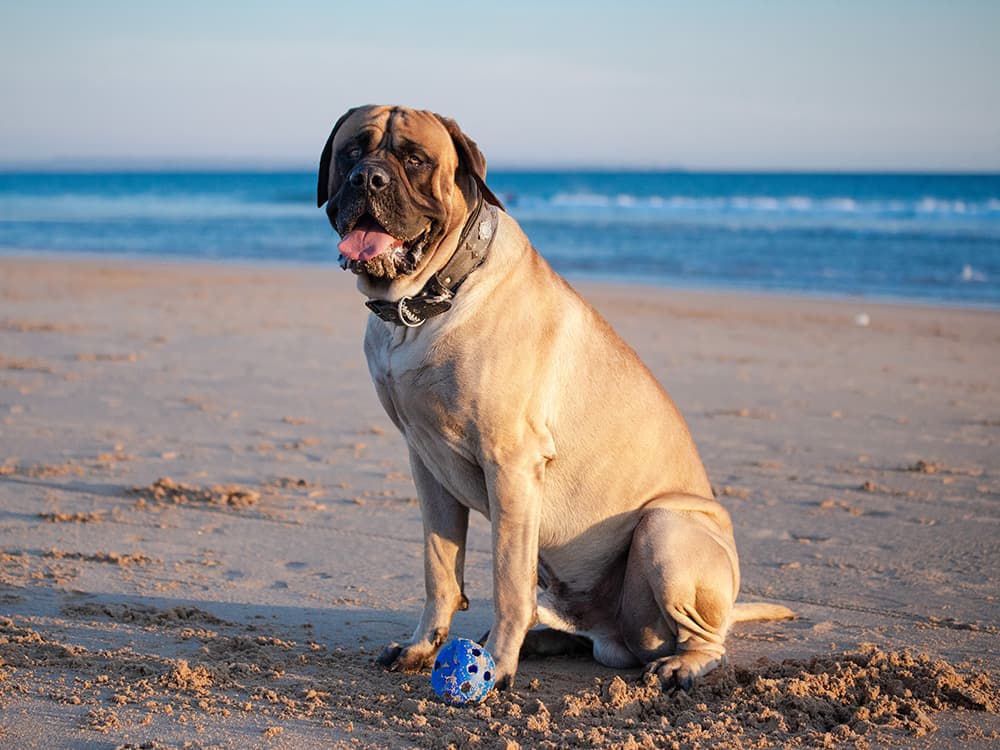
Sometimes called English Mastiffs, the Mastiff is an ancient breed dating back more than 2,000 years. Farmers used these imposing dogs to guard property and pull small carts to transport goods. These days, Mastiffs are gentle giants beloved by their families. Despite their intimidating appearance, Mastiffs are quite laid-back, rarely bark, and are certified couch potatoes.
How they compare to Pit Bulls: Mastiffs are truly a giant breed, while Pit Bulls range from medium- to large-sized. These gentle dogs share people-oriented traits with Pit Bulls, but they tend to have much less energy.
Weight: 120 to 230 pounds
Height: Up to 30 inches
Considerations: Giant breeds, like these Mastiffs, typically live shorter lives, six to 10 years.
Chris / Pexels
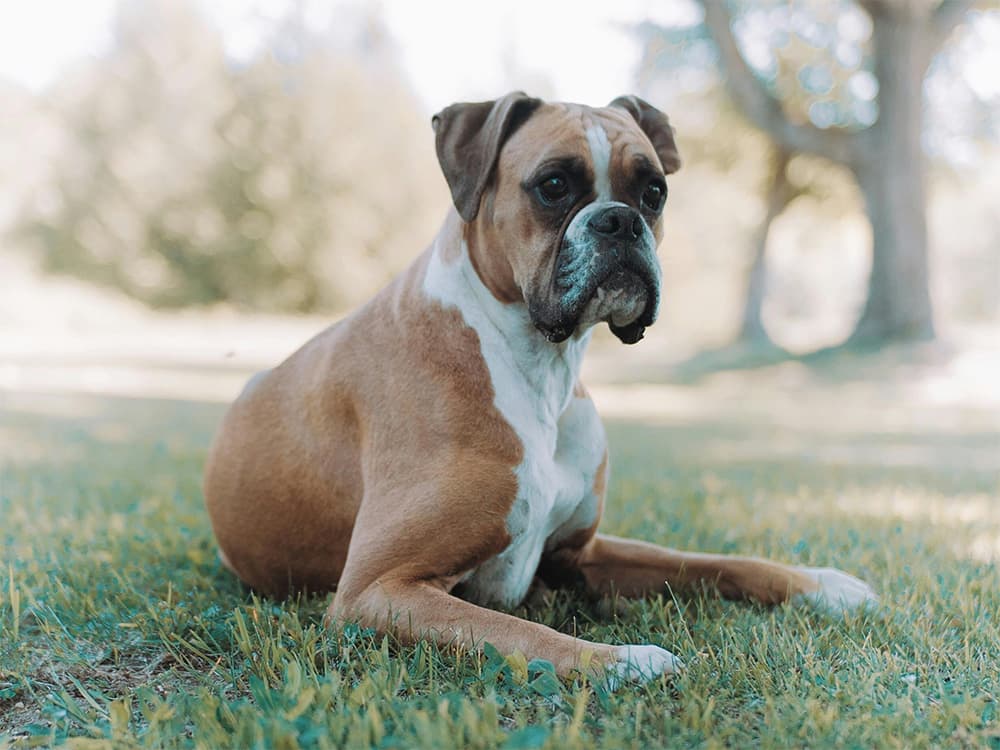
A descendant of the Old English Bulldog and the extinct Bullenbeisser, the Boxer originated in Germany in the 1800s. Bred to work closely with their human caretakers and other dogs, Boxers have always been highly social. They’re also energetic, enthusiastic, and beloved for their silly antics.
How they compare to Pit Bulls: Boxers and Pitties share several character traits, including their enthusiastic nature, playful energy, and people-loving personalities. Physically, Boxers are leaner and leggier, with a deeper-set chest and a pronounced underbite.
Weight: 50 to 80 pounds
Height: 21.5 to 25 inches
Considerations: Boxers are extremely energetic and love to jump. Teaching polite greetings is a must.
Ryhor Zasinets / Adobe Stock
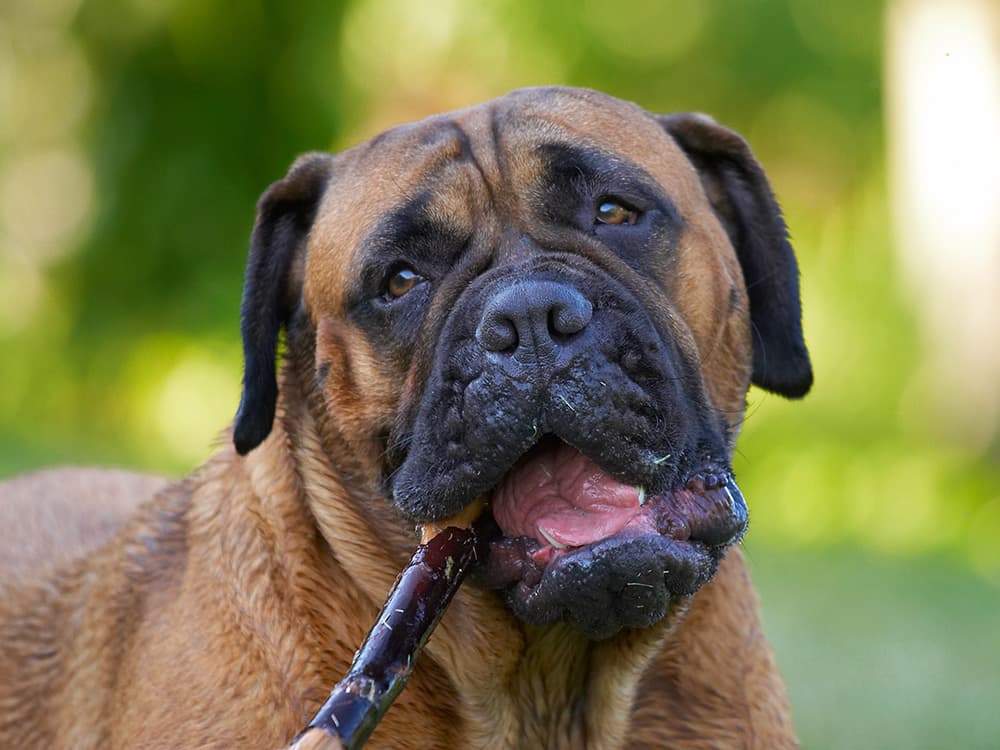
Not to be confused with their close cousin, the Mastiff (or English Mastiff), the Bullmastiff is a distinct breed of their own. A descendant of Mastiffs and Bulldogs, the Bullmastiff emerged in 19th-century Britain. They’re extremely loyal family pets, known to be gentle with children and protective when needed. Unlike some breeds, these dogs only have moderate exercise needs.
How they compare to Pit Bulls: Bullmastiffs are decidedly larger than Pit Bulls, with massive heads and thick, muscular necks. They have wrinkles around their muzzles, elongated jowls, and wrinkled foreheads. Their personality tends to be more aloof, although they deeply love their immediate family.
Weight: 100 to 130
Height: 24 to 27 inches
Considerations: They are a bit wary of strangers, so early and thorough socialization is crucial to prevent unwanted territorial behaviors.
primipil / AdobeStock
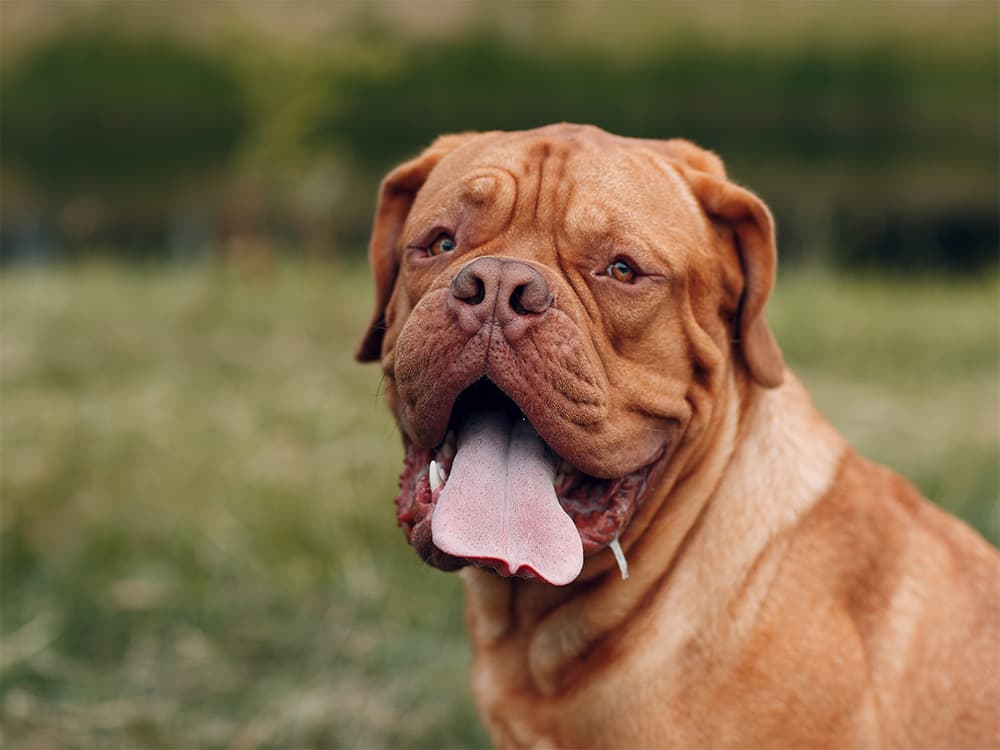
The Dogue de Bordeaux is affectionate and calm at home. They bond deeply with their immediate family and don’t do well alone for extended periods. Although the Dogue de Bordeaux can be watchful and protective in nature, they also can be quite well-rounded with other people and pets when socialized from a young age. These dogs tend to be quieter, sedentary, and a bit more subdued with their affection.
How they compare to Pit Bulls: The Dogue de Bordeaux is much larger and more heavily wrinkled than Pit Bull breeds. Their massive head is one of the largest of any breed relative to body size. And their drool situation is also in a different category entirely, placing them within the ranks of Saint Bernards. Personality-wise, these dogs share the loyalty and family devotion that make Pit Bull breeds so appealing.
Weight: 100 to 145 pounds
Height: 23 to 27 inches
Considerations: They have a flat face, which means breathing issues and heat sensitivity are all part of the package.
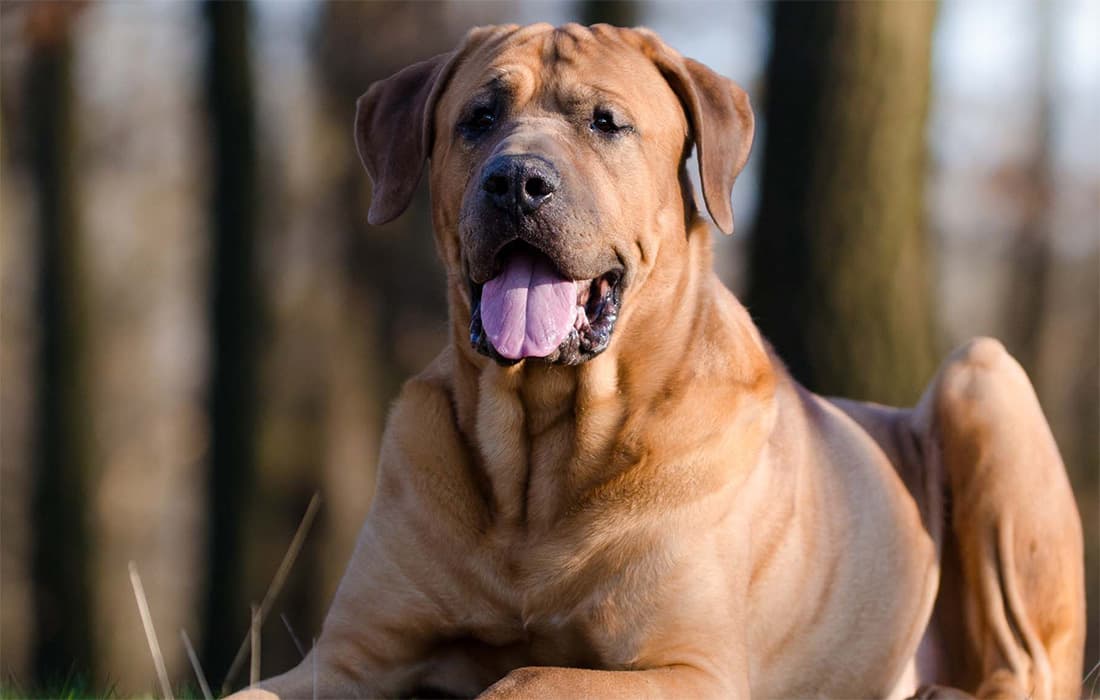
The Tosa, or Japanese Mastiff, was developed in the late 19th century when Japanese breeders began crossing native Shikoku dogs with the Mastiff, Bulldog, Great Dane, and Saint Bernard. Their loving personality towards their family and calm temperament at home are genuinely appealing, but they require experienced pet parents. Providing mental enrichment such as puzzle feeders, snuffle mats, and scent games is crucial to keeping them content and well-adjusted.
How they compare to Pit Bulls: Tosas share a high level of devotion to their family. With their trusted people, they’re affectionate and snuggly. However, they are wary of strangers. Tosas are also significantly larger, both in weight and height. Although they share a short coat with Pit Bulls, their skin is looser with wrinkles present around their necks and faces.
Weight: 100 to 200 pounds
Height: 22 to 32 inches
Considerations: Without careful, thorough, and frequent socialization, they have a higher likelihood of feeling threatened by other dogs.
alberto clemares exposito / Shutterstock
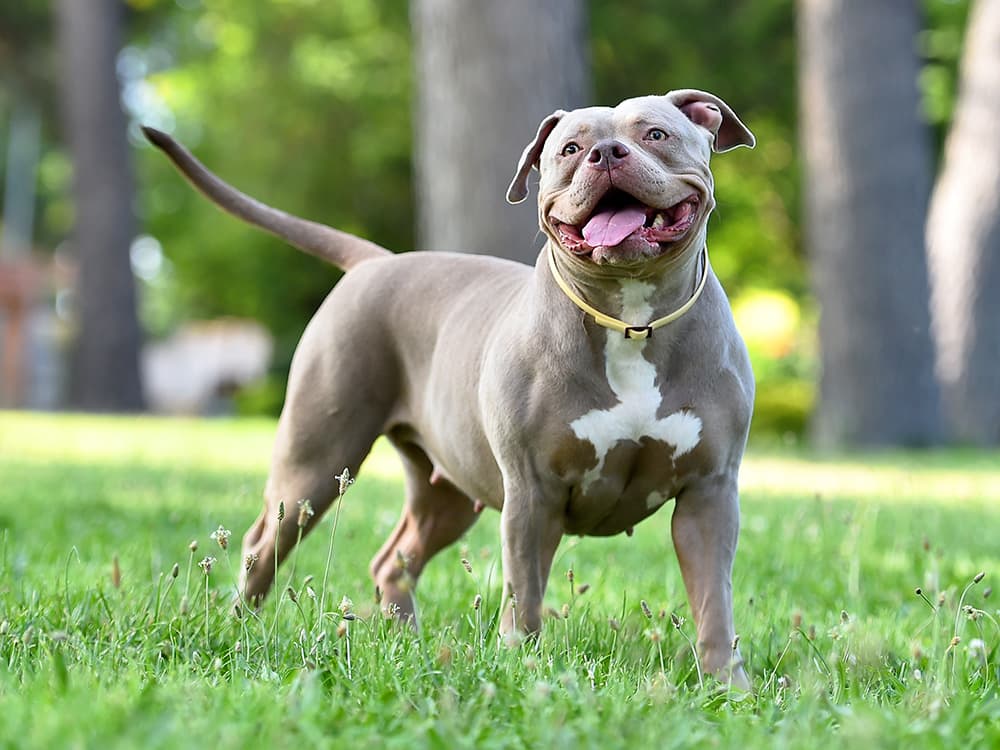
A newer breed inspired by the athleticism and build of the American Pit Bull Terrier, the American Bully was developed to dial up the muscle mass and incorporate some features of the Bulldog. The result is a pup with a wide stance, heavily muscled build, brachycephalic muzzle, and facial structure reminiscent of the English Bulldog without their characteristic wrinkles.
These dogs can be great with other pets when socialized early and are especially lovey-dovey with people.
How they compare to Pit Bulls: Although the American Bully was derived from the American Pit Bull Terrier, they are broader, heavier, and more compact, with a wider chest and denser bone structure. They are similarly enthusiastic in their love for people and have an overall exuberant nature.
Weight: 70 to 120 pounds
Height: 19 to 23 inches
Considerations: Backyard breeders often produce American Bullies with muzzles so short that breathing is compromised, and with bowed legs that impact bone and joint health.
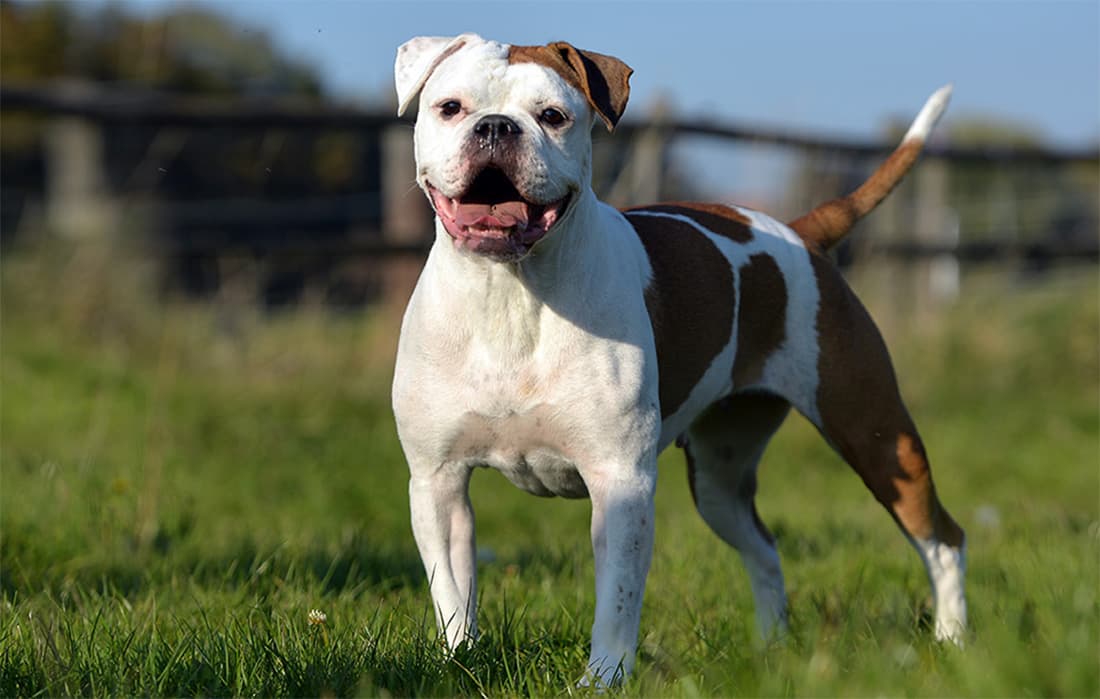
The goal of creating the Old English Bulldog — also known as Olde English Bulldogge (or OEB) — was to reprioritize traditional traits that lead to healthier dogs. This means longer muzzles, far fewer skin folds, and more proportional builds. OEB dogs retain some of the modern breed’s overall look while enjoying better respiratory function, fewer joint problems, and increased physical ability. This breed is highly sociable and a great choice for families. They are adaptable and can thrive in a range of living environments, as long as they get to be a close-knit part of the home.
How they compare to Pit Bulls: Olde English Bulldogs share similar size ranges and even carry some of the same genetic background as Pit Bulls. The main physical differences are the broader chest, shorter muzzle, and stockier build of the old English bulldog. Temperamentally, they are quite comparable, both being people-oriented, family-friendly, and responsive to positive reinforcement training. However, this breed is a bit more laid-back and subdued.
Weight: 50 to 80 pounds
Height: 16 to 20 inches
Considerations: This breed is prone to hip dysplasia, given their heavy, muscular build.
Walk into almost any shelter or rescue in the U.S., and you’ll find a significant portion of kennels labeled Pit Bull or Pit Bull mix. Research suggests that their labels may be, more often than not, incorrect.
One study published in The Veterinary Journal evaluated breed assessments of 120 dogs by 16 multi-year experienced shelter workers, including four veterinarians, at four separate shelters and rescues. Researchers revealed that staff identified 38 percent (of 95 dogs who lacked any Pit Bill DNA) as Pit Bull-type dogs. Of the dogs who did have at least 12.5 percent Pit Bull DNA, 21 percent were not listed as having Pit Bull heritage.
The reality is that without verifiable information on a specific dog, most breed labeling in shelters and rescues is based on educated guesses in high-volume, stressful environments. Although knowing breed history can certainly be helpful, choosing which dog to adopt goes far beyond what the breed label on the kennel says.

Guessing a dog’s breed mix often leads to inaccurate labels. Here’s how to more precisely determine your dog’s genetic makeup.
These dogs are amazing companions, but they’re not for everyone — here’s what to consider before you adopt one.
Know your strength: Extra-strong dogs can pull with great force while on a leash. They can accidentally knock over children or vulnerable adults.
Space and exercise needs: Most do best with room to stretch. While some are absolute couch potatoes, others aren’t ideal fits for apartment living — unless they get plenty of intensive exercise and mental enrichment.
Know your experience level: Some of these breeds do best with experienced pet parents who can confidently handle their physical strength and navigate their wariness toward strangers or other dogs.
Daily socialization: These dogs do best with pet parents who commit to supporting their social development with new, positive experiences each day.
Positive reinforcement training: Consistent, nonnegotiable training needs include loose-leash walking, gentle greetings, reliable recall, and quick disengagement from potential distractions.
Bring in a trainer: A positive-reinforcement or relationship-based dog trainer can be a great ally on this journey.
Many of the breeds listed in this guide are subject to breed-specific legislation (BSL) in certain regions. Depending on the BSL legislation, they may be banned from entire cities or counties, and landlords can refuse to rent to folks with the banned or restricted breeds.
These bans often use language that targets not only confirmed American Pit Bull Terriers and Pit Bull mixes, but also any dog who resembles or is visually determined to be a Pit Bull. This could apply to pretty much any dog at a shelter or rescue. Major credible animal welfare organizations — such as the American Veterinary Medical Association, ASPCA, Best Friends Animal Society, and the National Canine Research Council — all oppose BSL.
Whether you’re looking for a Pit Bull breed or a large breed who shares traits similar to the Pit Bull, you’ll probably find a great match by checking your local shelters and rescues.
Remember, the breeds on this list aren’t for everyone. Being honest with yourself about your lifestyle, experience level, and the type of life you can realistically provide are some of the most important self-assessments you can make before choosing a large, powerful dog to adopt. Focus on the individual dog, ask the staff questions, and spend time with them before deciding to adopt them.
If you’re ready to welcome a large Pit Bull-like dog into your home, get started on Adopt a Pet. Search by location and the breeds you’re looking for (results will include mixed-breed dogs), and fill out additional search criteria as needed, such as age range, size, and so on.
The biggest dog who looks like a Pit Bull is the Ambullneo Mastiff, who weighs an incredible 110 to 150 pounds.
No, a Cane Corso is not a big Pit Bull, but these breeds do share some physical and characteristic traits, such as loyalty and protectiveness. Even with the overlap, the Cane Corso is a distinct dog with a unique breed history.
Yes, large bully breeds can definitely be good with children. Early socialization and teaching children to be respectful of their canine friends will go a long way towards developing good relationships.
American Veterinary Medical Association. (2024, September 10). Literature Review on the Welfare Implications of Socialization of Puppies and Kittens. AVMA. https://www.avma.org/sites/default/files/2024-09/avma-lit-review-socialization-puppies-kittens-0924.pdf.
Breed-Specific legislation. (n.d.). ASPCA. https://www.aspca.org/about-us/aspca-policy-and-position-statements/breed-specific-legislation.
Cane corso. (n.d.). PDSA. https://www.pdsa.org.uk/pet-help-and-advice/looking-after-your-pet/puppies-dogs/large-dogs/cane-corso.
Elmbrook Humane Society. (2012). What is Positive Reinforcement Dog Training? EBHS. https://ebhs.org/wp-content/uploads/2023/03/What-is-Positive-Reinforcement-Dog-Training-Handout.pdf.
How to take action against Dog Breed-Specific Legislation. (n.d.). Best Friends Animal Society. https://bestfriends.org/pet-care-resources/how-take-action-against-dog-breed-specific-legislation.
NCRC. (2015). NCRC breed specific legislation. National Canine Research Council. https://nationalcanineresearchcouncil.com/wp-content/uploads/2023/02/Resources-for-Ending-Breed-Specific-Legislation.pdf.
Olson, K. R., Levy, J. K., Norby, B., Crandall, M. M., Broadhurst, J. E., Jacks, S., Barton, R. C., & Zimmerman, M. S. (2015). Inconsistent identification of pit bull-type dogs by shelter staff. The Veterinary Journal, 206(2), 197–202. https://doi.org/10.1016/j.tvjl.2015.07.019.
“Position Statement on Breed-Specific Legislation.” Https://Avsab.org/, American Veterinary Society of Animal Behavior, avsab.org/wp-content/uploads/2018/03/Breed-Specific_Legislation-download-_8-18-14.pdf.

Cammi Morgan is a nature and pet care writer living off-grid with her pack of rescue and foster dogs in the mountains of Southeast Appalachia. In addition to her work with Adopt a Pet, she has contributed to Animal Wellness Magazine, PetsRadar, Global Comment, A-Z Animals and other online publications. Her passions include animal rescue, mycology, hiking, and caving.

Breed Info
Breed Info

Breed Info

Breed Info
These goofy, loyal dogs will wiggle their way into your heart.
Breed Info
Meet the bully breeds who will melt your heart.

Breed Info
Guessing a dog’s breed mix often leads to inaccurate labels. Here’s how to more precisely determine your dog’s genetic makeup.
Breed Info
Are you thinking of adopting a dog that is easy to care for? Here is what it takes to keep them happy and healthy.

Breed Info
Loyal, playful, and full of heart, this pup blends Lab friendliness with Pit Bull spirit — a true people-pleaser with energy to spare.