How to Introduce Your Foster Dog to Your Current Pets
These steps help foster dogs and resident pets start off on the right paw.
These steps help foster dogs and resident pets start off on the right paw.
by Katie Koschalk, | March 4, 2026

ilona.shorokhova / Shutterstock
Bringing a foster dog into your home is one of the most impactful ways to help shelters and rescues. But if you already have pets at home, it’s not as simple as, “Surprise — you have a new roommate.” Thoughtful introductions matter because they set the tone for a safe, low-stress transition for your resident pets and for the foster dog, who may be feeling a little nervous.
Although there’s no one-size-fits-all approach to this process, the goal is to go slowly, read the room (aka: your pets), and adjust based on what you’re actually seeing. When in doubt, go slower, especially if your foster dog is fearful, your resident pets are sensitive, or you’re still building your fostering confidence.
Below, we’ll cover the basics of helping a foster dog settle into a new environment, the best ways to introduce them to resident dogs, and what to do if you’ve got cats in the mix.

Fostering comes with important responsibilities. Learn which shelter or rescue is right for you by asking these key questions.
The first few days are all about helping your foster dog feel safe. Before you focus on social time, training goals, or introductions, concentrate on stability and structure.
Keep things calm and low-key: Skip long outings, loud sounds, and lots of new visitors. A quiet environment reduces stress and allows your foster dog to decompress.
Set up a designated safe space: Prepare a crate, an exercise pen, or a separate room where your foster dog can decompress or retreat. Having a cozy, predictable “home base” helps them feel secure.
Establish a routine immediately: Feed at consistent times, schedule regular potty breaks, and keep sleep routines steady. Dogs feel more confident when they know what to expect.
Limit access to the entire house at first: Gradually introduce new areas instead of giving them full run of the home right away. This prevents overstimulation and makes supervision easier.
Keep walks short and structured: Early walks should be calm, short, and purposeful — not long adventures.
Watch for signs of stress: Pacing, excessive panting, hiding, clinginess, or lack of appetite can all signal stress. This doesn’t mean something is wrong — it simply means they need more time to adjust.

Pexels / Marco Allasio
Once your foster dog has had a day or two to settle in, you can begin careful introductions to your resident dog. The goal isn’t instant friendship, but rather calm, safe coexistence.
Go slowly, supervise closely, and remember that even dogs who are labeled “dog-friendly” still need proper introductions. Here’s how to approach this.
Start with scent before sight: Let the dogs get used to each other’s smell first. Swap bedding or allow them to sniff under a closed door. Scent familiarity lowers the intensity of that first face-to-face meeting.
Choose neutral territory for the first meeting: If possible, avoid introducing them inside your home right away. Meeting in a neutral area, such as a quiet sidewalk or park, can help reduce territorial behavior.
Use loose, controlled leashes: Keep both dogs on leashes, but avoid tight tension. Walk them parallel to each other at a comfortable distance before allowing closer interaction.
Watch body language carefully: Look for loose bodies, soft tails, play bows, and relaxed sniffing. Stiff posture, intense staring, raised hackles, or growling signal that they need more time and space.
Keep the first interaction short: A few calm minutes are enough. End on a positive note and separate them again. You can repeat short sessions over several days.
Supervise all early indoor interactions: Once the dogs can interact calmly outside, you can move to an indoor introduction. That said, even if the first meeting went well, don’t assume the indoor meeting will go the same way. Manage the initial indoor interaction carefully by using baby gates and keeping both dogs on leashes. From there, increase freedom gradually based on what you’re seeing.
Reward positive interactions: When both dogs remain calm, disengage appropriately, or respond well to redirection, offer quiet praise or a treat. Reinforcing relaxed behavior helps them associate each other’s presence with positive outcomes.
Slow down if needed: If you see tension, interrupt calmly and increase distance. There’s no downside to taking extra time, but rushing them can create setbacks.
Manage high-value resources: Feed them separately, pick up favorite toys, and avoid handing out treats in a way that creates competition. Many conflicts begin around food or attention.
Respect different energy levels: A playful, high-energy foster dog may overwhelm an older or more reserved resident dog. Step in if the play becomes too intense.
Reach out for support, if needed: If you notice concerning behaviors, contact the shelter or rescue organization. They typically have experienced foster coordinators or behavior support available.
Each dog pairing is different. Your job is to read the situation, advocate for both dogs, and move at the pace that keeps everyone safe.
Natalie Jeffcott / Stocksy
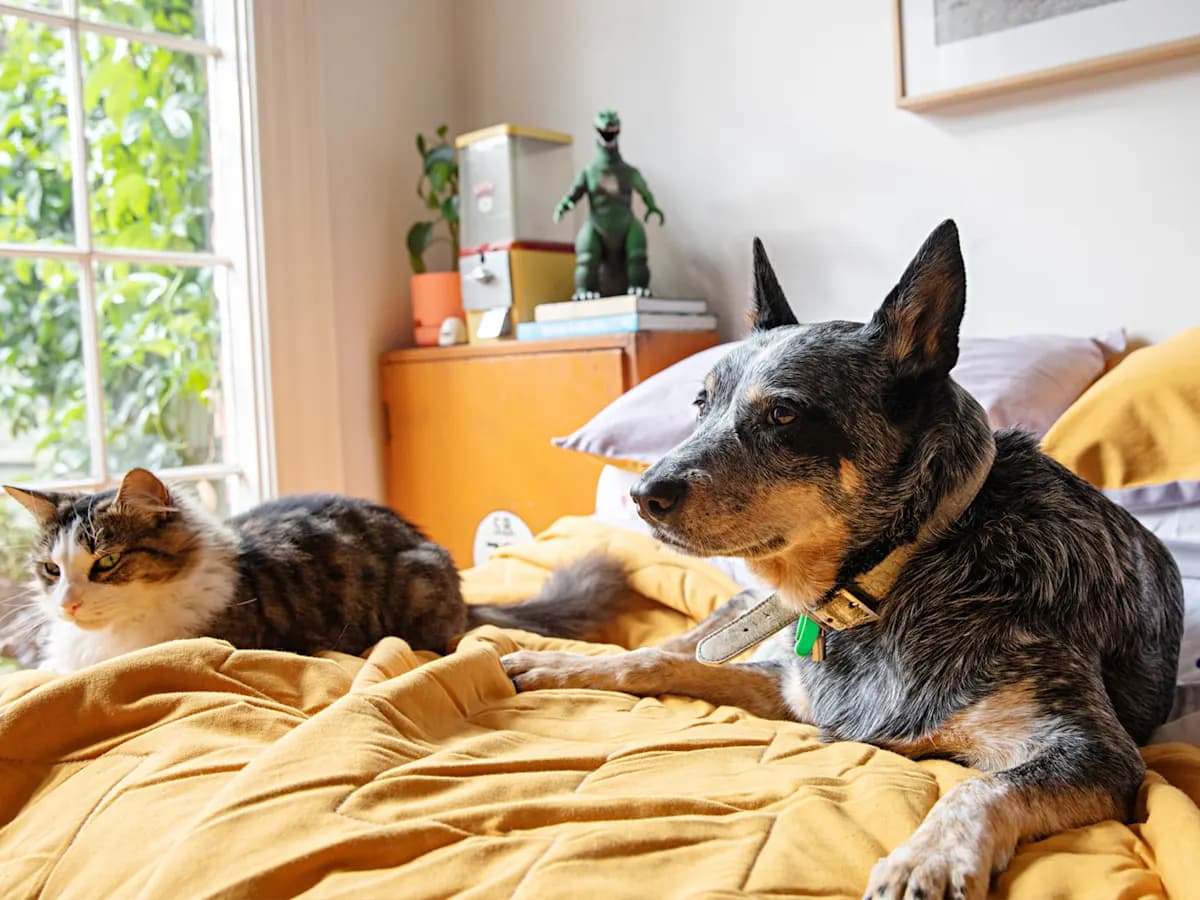
Introducing a foster dog to a resident cat requires extra caution. Even if a dog has been described as “good with cats,” stress, excitement, or uncertainty can heighten instincts and responses. As with dog-to-dog introductions, the goal isn’t instant friendship — it’s safe, low-stress coexistence. Here’s how to approach this.
Start with full separation: Keep the dog and cat completely separated at first. Let them adjust to each other’s scent by swapping bedding or allowing scent to travel under a closed door.
Set up escape routes and safe zones first: Your cat should always have access to elevated spaces (such as cat trees or shelves), baby gates with cat access, or a dog-free room. Cats need the ability to leave an interaction whenever they choose.
Introduce visual contact gradually: Use a baby gate or cracked door for the first visual exposure. Keep the dog on a leash and allow the cat to move freely. Never hold your cat in place for an introduction.
Watch the dog’s body language closely: Calm curiosity, brief glances, and relaxed posture are good signs. Intense staring, stiff posture, whining, lunging, or ignoring redirection are red flags that the dog needs more time and more distance.
Reward calm behavior: When the dog looks at the cat and then disengages, offer praise and a treat. This teaches the dog that calm behavior around the cat is rewarded.
Keep early interactions short and controlled: A few minutes at a time is enough. End sessions before either animal becomes stressed.
Never force interaction: If your cat chooses to stay hidden at first, that’s OK. Let them set the pace. Forcing closeness can create lasting tension.
Supervise closely for the first several weeks: Even if things appear calm, continue separating them when you’re not home. Trust should be built gradually.
While some foster dogs will adjust smoothly to living with cats, others may need significant management. And in rare cases, the pairing may not be safe. Move slowly and always prioritize your cat’s safety.

Thinking about fostering a pet? Read more to learn about the fostering process and benefits of fostering.
No two foster situations are exactly alike. Each dog comes with their own history, temperament, and comfort level. Some adjust quickly and confidently, while others may be fearful, undersocialized, or easily overwhelmed. It’s important to assess the dog in front of you, and not just rely on notes from the shelter (or past experiences).
It’s also important to note that foster parents bring different levels of experience and comfort to the process. If you’re new to fostering, it’s okay to move more slowly and lean on the shelter or rescue for support. A gradual, cautious approach is especially important if you’re still building confidence or if the foster dog shows signs of fear or anxiety.
There is no prize for fast introductions. Taking extra time prevents setbacks and keeps everyone (including resident pets) safe. When in doubt, slow things down, adjust encounters based on what you’re actually seeing, and contact the shelter or rescue if needed.
Many foster parents reference the 3-3-3 rule, or how dogs need about three days to decompress, three weeks to start learning the routine, and three months to fully settle in. Every dog is different, though, so that’s just a general guideline.
No. Give your foster dog time to settle in first. Early decompression reduces stress and may make introductions smoother. Rushing can create tension or setbacks that take longer to fix.
Some dogs need more time. Slow down introductions, manage resources, and supervise closely. If tension continues, contact the shelter or rescue for guidance. Not every pairing clicks.
In many cases, yes. Most shelters and rescue organizations allow foster families to adopt the pet they’re caring for. There’s even a nickname for it: a foster fail. Of course, it’s not really a failure at all, because the goal is for the pet to find a permanent home. Some organizations even offer formal foster-to-adopt programs, which allow families to foster with the intention of adopting if the pairing is the right fit.
Stiff posture, growling, hiding, excessive panting, or avoidance in dogs can signal stress. If you see these signs, increase the distance and slow the process. Extra time is always safer than rushing.
If you see persistent aggression, fixation, resource guarding, or escalating stress, reach out to your rescue for guidance. Early support can prevent larger issues.
Dogs, Foster. “Foster Dogs.” Foster Dogs, May 2018, www.fosterdogsnyc.com/blog/dog-dog-introductions.
“How to Introduce a Dog and Cat.” Animal Humane Society, www.animalhumanesociety.org/resource/how-introduce-dog-and-cat.

Katie Koschalk is a freelance writer based in Northern California. Fusing her love and knowledge of animals with her journalism degree and years of professional writing, Katie is dedicated to improving the lives of pets and their caretakers by sharing helpful and accurate information. When she’s not at her desk, you can find her exploring trails with her Aussie, Hunter, cooking plant-based meals, and talking to her two cats, Jax and Sadie, in really ridiculous voices.

Foster & Volunteer

Foster & Volunteer

Adoption Advice

Foster & Volunteer
Fostering is a great way to dip your toes into the pet-parenting waters, while helping a pet in need.

Foster & Volunteer
Want to help a dog who needs a temporary home? Here’s how.

Foster & Volunteer
They’re cute, but puppies are also a lot of work. Before you foster, just make sure you’re prepared, so it’s the heart-warming experience you’re hoping it’ll be.

Foster & Volunteer
Thinking about fostering? Here’s how much you can expect to pay for everything from food to vet care.

Foster & Volunteer
Sometimes, people aren’t approved for fostering. But the good news is that this rejection is nothing to take personally, and there’s no reason you can’t reapply later.

Adoption Advice
Adopting a dog is a BIG decision. If you’re considering getting a new pup, consider a foster-to-adopt program to test the waters first.