The Best Cat Brushes to Buy
Level up your grooming game.
Level up your grooming game.
by Elizabeth Laura Nelson, expert review by Stephen Quandt, Feline Training and Behavior Specialist | November 5, 2026

Aleksei Toropov /
If you’re lucky enough to live with a cat — or three, if you’ve really committed — then you’re probably familiar with the clusters of cat hair that go drifting across the floors like tumbleweeds when you don’t brush your cat regularly (and sometimes even when you do). Brushing a cat helps remove loose hair that’s been shed, so it doesn’t settle on every surface in your home and cling to your clothing. But brushing your cat has other upsides, too.
“Brushing your cat is not only beneficial, but can be a bonding experience for the two of you,” says cat behaviorist Stephen Quandt, founder of Stephen Quandt Feline Behavior Associates (opens in a new tab). “It also allows you to monitor for bald patches, unusual bumps, or wounds that need a vet’s attention.”
If you have a senior cat, brushing is even more important. “With older cats who are not as flexible as they once were, brushing assists them with areas on their bodies that are harder to reach,” Quandt says.

With a little patience and technique, you can fix this potentially painful issue.
There are lots of cat brushes on the market, and while some of them look fairly similar, many are actually quite different. You can find cat brushes with special features like undercoat rakes, dematting tools, and self-cleaning bristles. Some pet-grooming products are even eco-friendly, so you can do both the earth and your cat some love at the same time.
Choosing the right brush for your cat involves considering your cat’s coat type and preferences. For short-haired cats, a soft-bristle or rubber brush can effectively remove loose hair without irritating the skin. Long-haired cats benefit from slicker brushes or combs to prevent matting and tangling. Cats with dense undercoats may require a deshedding tool to reduce shedding.
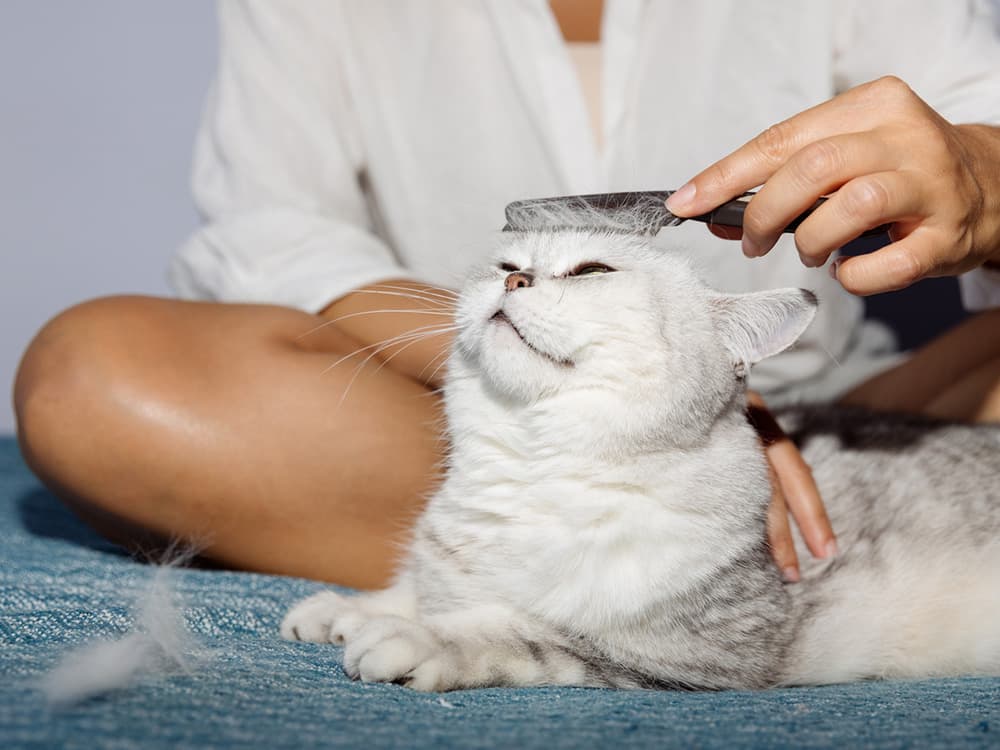
Aleksei Toropov / Stocksy
Cat brushes come in many designs, and with many different types of bristles. “The most important consideration is to use a brush your cat likes,” Quandt says. A good cat brush gets the job done with the least amount of struggle, for both you and your cat. Sterling emphasizes that your cat will ultimately decide which brush is the best. “Let the cat be the judge of which brush is the right one. Don’t force anything on the cat,” she says.
Quandt likes metal combs for all types of cats, basic soft-bristled combs for long-haired cats, and recommends a de-matting and undercoat-removing brush for long-haired cats, as well. You’ll want to make sure the handle is comfortable for you to use, and that the brush is easy to clean.

What’s not to love? These kitties love people, being pet, and have the most dreamy eyes.
Long-haired cats, such as Maine Coons, are the most in need of brushing, with many experts recommending a daily brushing session. They need consistent brushing and maintenance to keep their coats healthy and well-groomed. Using a deshedding cat brush helps remove their undercoat: the coat under your cat’s coat. (That’s right, some cats have double coats.) If you have a cat who frequently gets mats in their fur, or coughs up a lot of hairballs, a deshedding tool might be a good idea.
Medium-haired cats are pretty adaptable when it comes to which brush works best. While most any brush will work for these cats, remember to always brush in the direction of the coat, and be mindful of the rear, belly, and tail areas, which Quandt says tend to be extra sensitive.
You can get away with more infrequent brushing if you have a short-haired cat, but you’ll still want a brush with a comfortable handle — and since there’s less hair between the brush and your cat, be sure the bristles are gentle. These three choices fit the bill nicely.
Absolutely. The best brush for a Persian cat is going to be different from the best brush for a Ragdoll cat or the best brush for a Siamese cat. The way you brush these cats will be different as well. “Some breeds, like Burmese, have dense hair and no undercoat, so gentle brushing is all that is required,” Quandt says. “Flat-faced cats may benefit from gentle brushing around their faces, and very gently and carefully around their eyes with a soft toothbrush or a gentle cloth.”
“Brushing regularly will reduce matting in longer-haired cats and reduce the number of hairballs in potentially all cats and can reduce allergens in your home,” Quandt says. He suggests once or twice a week for short-haired cats, every other day or a few times a week for medium-haired cats, and every day for long-haired cats.
There’s no set amount of time that’s right for every cat. “Grooming should take just a few minutes, but be thorough and gentle, and take your time,” Quandt says. “It’s not a race, so think of it as a massage. Watch how your cat grooms themselves and use that as a guide for creating a gentle and methodical experience.”
Sterling encourages you to pay attention to how your cat is responding. “Go with the flow and with the cat's reaction: How does your cat like it? Where does your cat like it? How long does your cat like it? And then take it from there and work with your cat.”
“Brushing not only removes dead hair — which reduces shedding — it helps remove grease, dirt, skin flakes, and improves blood circulation in the skin,” Quandt says.

Elizabeth Laura Nelson is a writer and editor based in Brooklyn, New York, whose work has appeared in The New York Times, Jenny, Best Life, YourTango, Elite Daily, and more. She focuses her work on relationships, health and wellness, midlife, and lifestyle. As a child, Elizabeth was scared of cats (claws and teeth, yikes) but she has since gotten over her fear and now shares her home with three sweet and gentle feline companions who make life better (and cuddlier) every day.
Pet Wellness
Pet Wellness

Pet Wellness

Pet Wellness
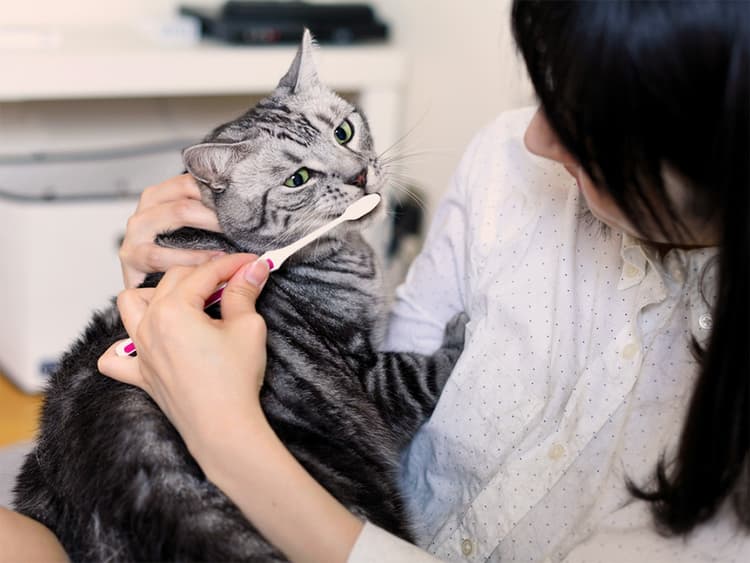
The thought of trying to brush your cat’s teeth may seem daunting. But keeping their teeth clean is more important than you may think.
Pet Wellness
You have to keep those pearly whites clean. Here are some tips on picking toothpaste that will do the trick.

Lifestyle
Turns out, it’s not an annoyance— it’s an opportunity to get creative.

Pet Wellness
Cats are fastidious about their own cleanliness, but that doesn’t mean you won’t need to give them a little help along the way. Here’s how.

Adoption Advice
Sometimes feline behavior can be a little…alien. If your kitty is odd, mysterious, or magical, we’ve got plenty of possible names for them.

Adoption Advice
Although they have a reputation for being independent, cats do still some care and attention.