Best Dog Nail Clippers: Types, Key Features, and How to Choose
What are the best dog nail clippers? Learn about scissor, guillotine, and grinder styles — and how to trim your dog’s nails with confidence.
What are the best dog nail clippers? Learn about scissor, guillotine, and grinder styles — and how to trim your dog’s nails with confidence.
by Dr. Maria Zayas, DVM, | September 10, 2026
Shutterstock / Starocean
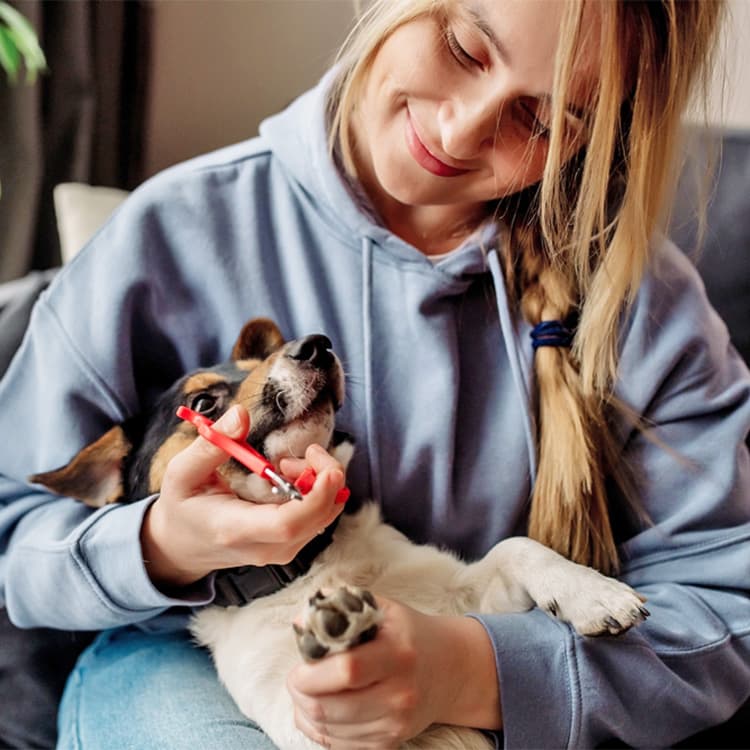
If you had to pick one task related to raising your dog that is worse than all the rest, what would you pick…and why is it nail trims? Most dogs hate it. Most new dog parents are intimidated by it. Even seasoned pros know that, sometimes, you just have to let groomers or vets take care of these things.
Amid a sea of well-meaning advice is the idea that if you pick the right clipper and do things a certain way, you can make nail clipping an easy task. I’m not here to tell you nail trims can be easy for every dog, but I can tell you that the tools you choose can make or break your odds of success.
This is a breakdown of the basic clipper types, the best alternatives to consider, and most importantly, how to use them safely — so your dog’s pedicure day doesn’t spiral into chaos.
Arvydas Lakacauskas / iStock
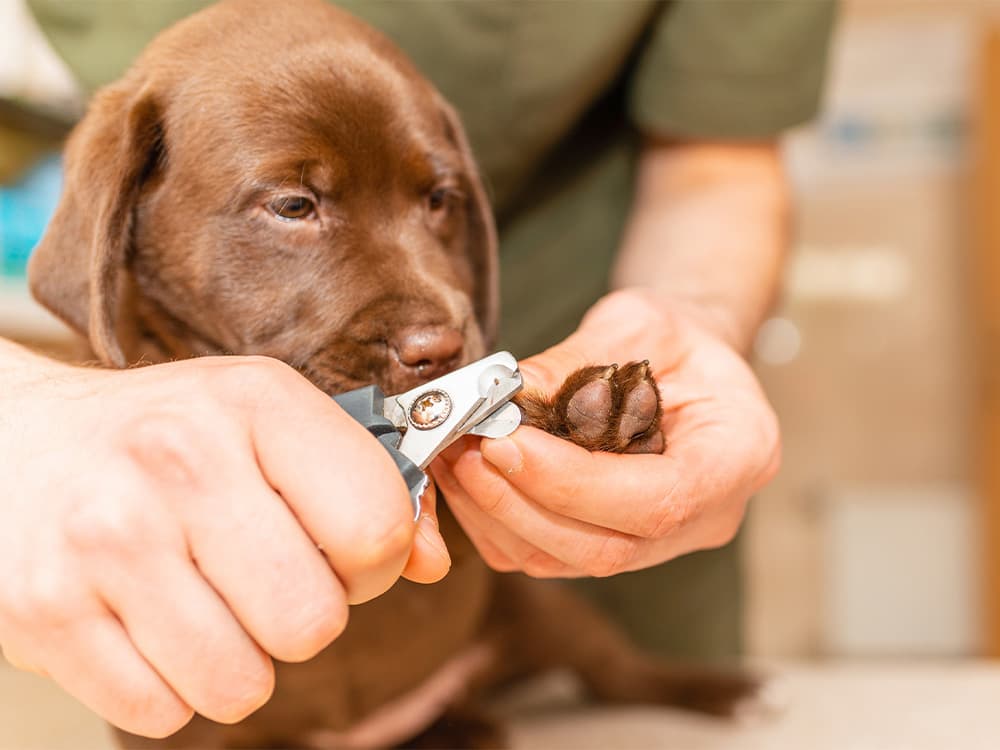
When choosing nail clippers for your dog, consider a few factors.
First, make sure you choose a nail clipper appropriate to your dog’s size. Nail clippers are not one-size-fits-all: Most clippers are designed, and only safely used, for specific-sized dogs. There’s nothing worse than convincing a large dog to finally let you cut a nail, only for this to require extra time to cut through it because your clippers are too small. Well, there’s nothing worse…except maybe trying to cut a wiggly little dog’s nail with big dog clippers, which have a width that’s half the length of the nail you’re trying to cut.
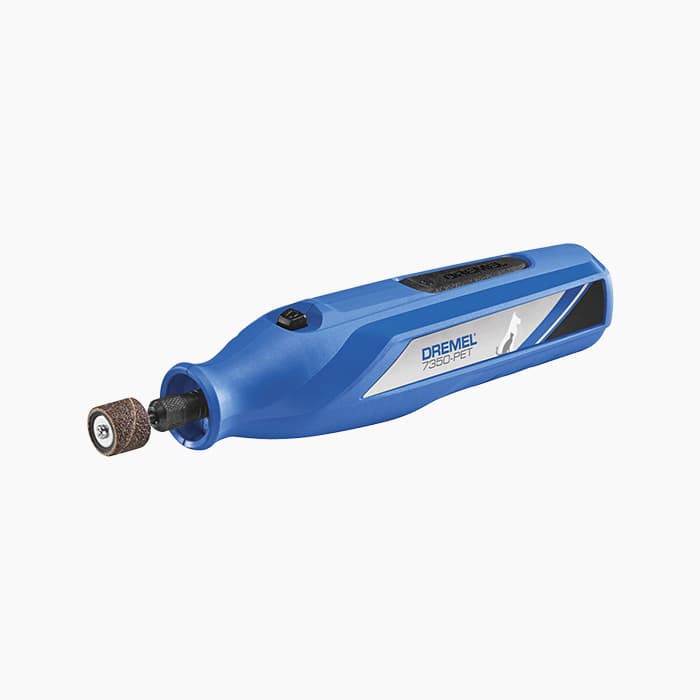
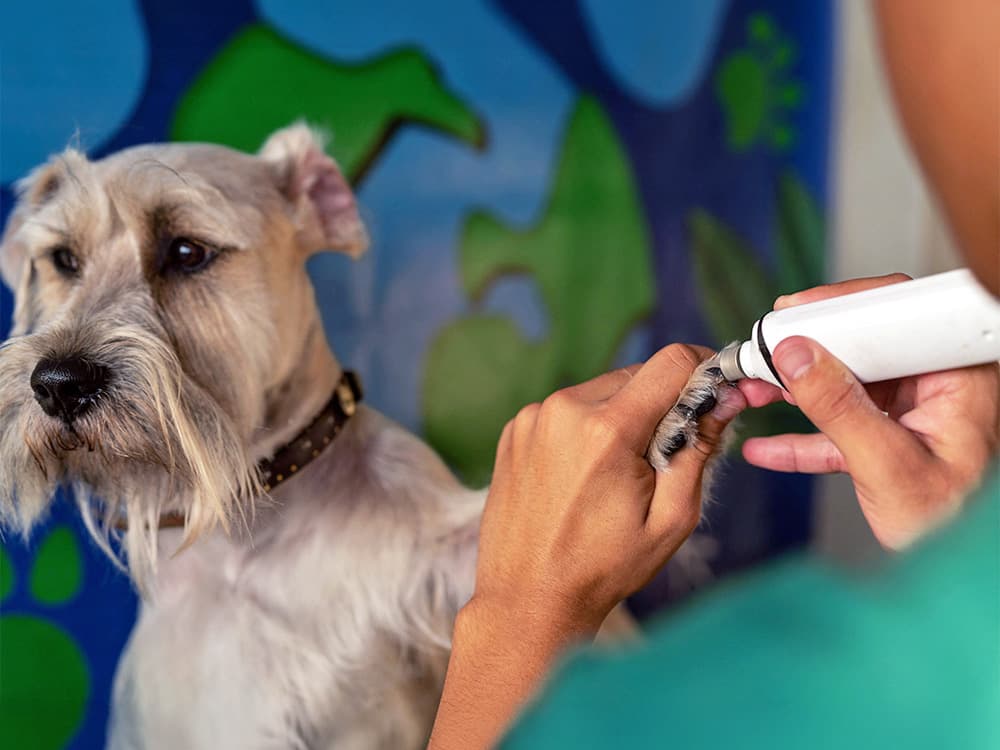
Next, you should consider the type of clipper your dog will best tolerate. In this guide, we primarily feature two types of clippers: scissors and guillotine (not as murderous as it sounds). There is a third type: a grinder, which isn’t actually a clipper at all and instead uses a gentle, rotating emery board (like sandpaper for nails) or a gritted metal cylinder to shave down your pet’s nails. Although this type of nail clipper is safe for your dog, your dog will most likely require time and training to become accustomed to the vibrating sensation.
Lastly, choose a nail clipper that is easy and comfortable for you to use. Your confidence and efficiency in cutting your dog’s nails will be key to getting the job done well. Below are some other features to consider while making your choice.
Most nail clippers come with a safety guard, an attachment that swings into place alongside the clipping surface, so you can only cut so much nail at a time. The idea is that it will prevent you from accidentally cutting a longer chunk of nail if your pup is wiggling around mid-cut. This is a great safety feature for your clippers, though it is still possible to cut a dog’s quick (the nerve and vein bundle in the nail, which hurts and bleeds if cut), especially while making more than one cut on the same nail.
The sharper the blade, the easier your job will be. High-quality stainless steel clippers, which hold a sharp edge for a longer time, are the way to go if you don’t want to replace them every year.

These tips on maintaining good hygiene for your dog are crucial for their health, comfort, and overall well-being.
Thin, possibly flexible, cheap plastic handles will break over time, hurt with use, and do a worse job transferring force from your hand to the clipper. Although most clippers have plastic handles, you want them to fit around a metal (or similar strength) center in each handle, be wide enough to squeeze against without pain, and have a no-slip grip surface. (A stressful nail trim can cause sweaty palms.) If you gently bend it and swish it around, everything about the handle should seem solid. Nothing should rattle around loosely, even the safety guard — otherwise, the materials are too weak, or the screws are too loose.
The bigger the dog, the bigger the nails. A puppy’s nails will also be thinner than an adult dog’s. For dogs more than 25 pounds, choose large dog clippers, while dogs under 25 pounds are usually better suited to small-dog clippers.
Cutting dark nails can be extra tricky, because you cannot see the quick that you’re trying to avoid. (White nails, in contrast, will have a visible pink-red area.) For dark nails, cut off small slivers of the nail at a time, so you can watch for the quick approaching the cut surface. (It will look like a little bull’s-eye as it comes through.) For dogs who are 25 pounds to 60 pounds and have dark nails, it’s useful to also have small clippers on hand to avoid mistakes while making these more delicate cuts.
Lil Pals Dog Nail Trimmer
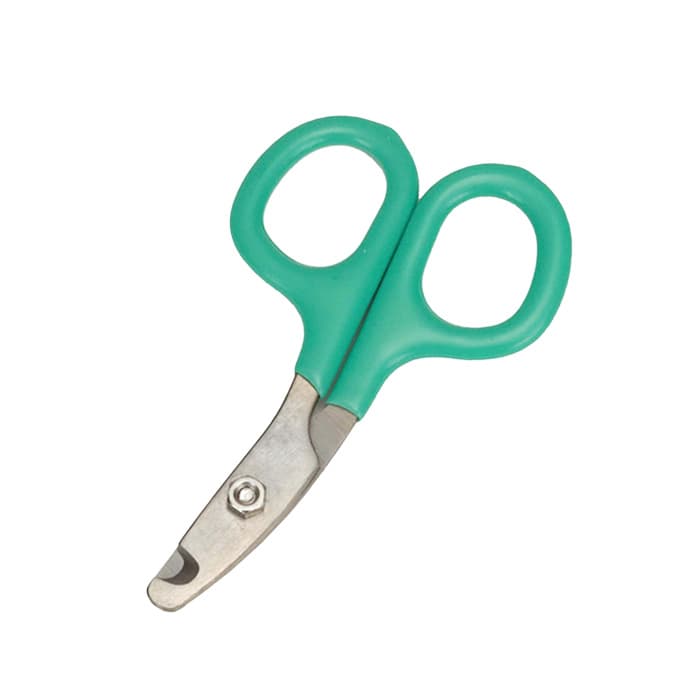
Classic. Simple. Tried and true. These are the nail clippers you probably picture in your head. They have a single screw/hinge with the cutting edges on one side and the handles on the other. You squeeze the handles, and the cutting edges come together — just like scissors, but for dog nails. Unlike scissors, the nail-cutting edges are pretty short, while the handles are as long as your hand. This means you can transfer a lot of cutting force to those small edges when you squeeze the handles. This style of nail clipper almost always includes a safety guard.
Coastal Pets
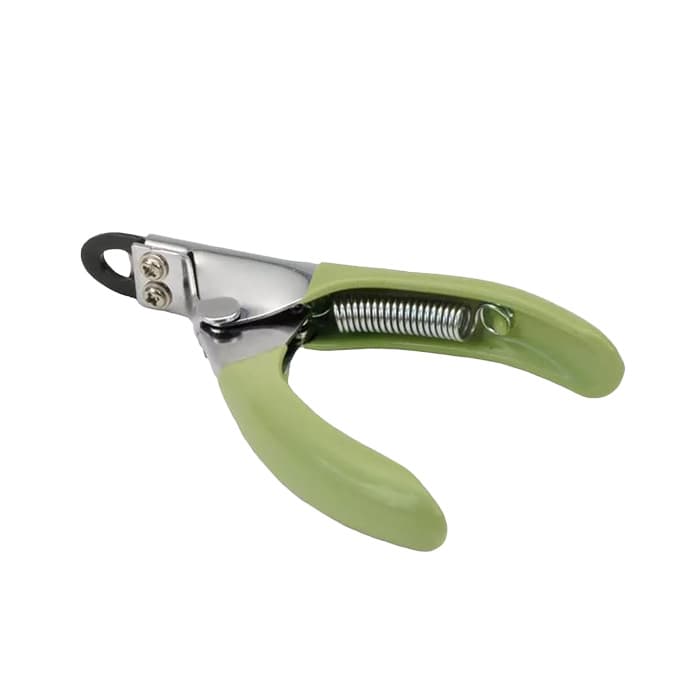
Certainly less intimidating and morbid than the name implies, these clippers do involve a cutting edge sliding up and down the cutting surface. While scissors-style clippers cut the part of the nail closest to the hinge first and cut/crush outwards from there, the draw of guillotine-style clippers is that they distribute the cutting force equally across the nail, which can be a bit more comfortable for everyone involved. These also tend to come with nifty features like a built-in light, magnifying glass, and/or catch space for nail clippings.
Dremel
These have a sandpaper-like surface wrapped around a metal cylinder (emery board) — or use a rough, sandpaper-like metal surface that’s not wrapped in anything. That surface then spins at various speeds to sand down the nail.
There’s no sudden snip of the clipper to startle a dog, and it’s easier to remove tiny amounts of nail at a time to avoid “quicking” your dog. They can also be used to smooth the cut surfaces of nails after clipping, instead of using multiple sizes or styles of nail clippers.
Nail grinders come in various sizes and styles, and may also have their own version of a safety guard. In this case, they have a cap with one gap that fits the tip of your dog’s nail, so it isn’t accidentally banging against adjacent toes and wearing down anything it shouldn’t.
ADDICTIVE STOCK CREATIVES / Alamy
Different styles have different strengths and weaknesses. In most cases, each one is best suited for a different type of dog.
For large dogs, you usually want the strongest clipping force, so it’s easy to use, and your hand doesn’t tire as you go. Scissor-style clippers for large dogs are going to be your best starting place. Remember that if a cutting surface is sharper and of better quality, it will require less force to cut — and you can do so more gently without creating a loud sound that startles anxious dogs.
Nail grinders can take an eternity to trim a large dog’s nails. And guillotine-style clippers often can’t create enough force, so you could get stuck halfway through the nail. For large dogs, especially ones with dark nails, you may want to pair a nail grinder or small-dog scissor-style clipper with your large one to fine-tune your work.
Really want to try guillotine-style clippers for your large dog? Get the sturdiest ones you can find, and soak your dog’s feet first to soften the nail — just like when you get a pedicure.
Guillotine-style clippers offer the most comfortable cut for dogs with the least amount of nail crushing involved. For small dogs and puppies with smaller, softer nails, this is a good clipper style to try if you’re comfortable branching out from the classic style.
The sharpest, easiest-to-handle clippers are the best solution here. You need to be able to move with confidence, cut quickly, and do so without creating a lot of pressure on the nail, which will more than likely lead to a loud cutting sound when you slam through. In theory, that means guillotine-style clippers for small dogs and scissor-style clippers for large dogs. But at the end of the day, use whichever clipper you can handle with the best control.
Another idea? The noise from a nail grinder can be difficult for noise-sensitive dogs. But if they don’t already associate it with nail trims, they can often be trained to adjust to it — especially if you purchase one designed to create the least amount of noise possible. Pairing a nail trim with something like a Happy Hoodie can also help alleviate sound anxiety for them.

Five simple steps for trimming your dog’s nails at home.
Prep your workplace with the clippers of choice, a towel, high-reward treats, a way to dispense them (like a snuffle mat or lick mat), a styptic powder in case you cut a quick (if you don’t have this, grab some cornstarch), turn on some soothing music or white noise, and outfit your dog with a Thunder Shirt and/or Happy Hoodie if desired. Also, grab a buddy for help if you’ve got one.
Work on cutting nails on whichever foot your dog is most comfortable with you handling. In one sitting, you may only be able to clip nails on one foot, or even only one nail at a time. It’s OK to take breaks or use multiple sessions to get the job done. Anticipating a real struggle? Identify the longest nails, and prioritize them.
Scolding a dog during a nail trim will lead to escalations. Focus on soft, encouraging words and tones, and lots of treats. Utilize a distractor or a person with treats if needed, and keep in mind that, for a dog, letting someone you can’t clearly communicate with take trimmers to your toes is objectively scary. Reward any positive progress they make, such as letting you touch or hold a paw. This helps them know that everything is going to be OK.
Inevitably, eventually, you’re going to accidentally cut your dog’s quick during a nail trim. It happens to all of us, so when it happens to you, take a breath and don’t panic. You’ll know as soon as it happens. Your dog may yelp, and then blood will start to well up at the cut nail surface.
If you’re prepared, you’ll have some styptic powder beside you. Apply a pinch of this to the bleeding edge, and this will stop the bleeding. You may need to apply it a couple of times to fully stop the bleeding, depending on how much was cut and/or the size of your dog. If you happen to panic, feel free to shove the toe directly into the powder, and push it around — that’ll work, too.
Guillotine-style clippers technically cause less trauma to the nail they’re cutting, but that’s only true if they’re strong enough to easily cut your dog’s nail. For little dogs, guillotines are usually best. For bigger dogs, scissor-style is usually better.
This depends on your dog’s size and age. Regardless of their size, dogs under six months of age usually do well with small clippers. Dogs under about 25 pounds also usually do best with small clippers, as can dogs with dark nails. Dogs more than 25 pounds usually do best with large-size clippers.
Apply a styptic powder to the area that’s bleeding, and it should stop the bleeding within seconds. Hang out for a minute, after which time your dog can move around freely without a problem.
Styptic powders are fine-dust powders that, when applied to a bleeding area, help contract blood vessels and stop bleeding within seconds. (Not all fine powders do this. Styptic powders have specific physical properties that shrink a bleeding vessel.) For nail trims, the classic example is Kwik Stop, or if you have cornstarch at home, that’s a styptic powder, too. Flour, however, is not.
Trimming your dog’s nails at home requires training for both you and your dog. We’ve put together a list of tips that can help, but this basically boils down to lots of patience, frequent breaks, and treats galore. Also, in between trimmings, consider investing in a filing toy that helps your dog maintain their nails without trims.
Your dog’s nail trim schedule is determined mainly by two factors: activity level and lifestyle. Generally, your dog will need a nail trim every two to six weeks. Dogs who are very active on pavement, however, may wear their nails down entirely on their own and require nail trims only a couple of times a year (mainly focusing on their dewclaws). Dogs with certain hormonal or skin conditions may require a strict two-week nail trim schedule.
A properly sized nail clipper is key to safe, comfortable nail-trimming. To elevate your pup’s spa day beyond a simple mani-pedi, check out our favorite grooming products here.

Dr. Maria Zayas attended Ross University School of Veterinary Medicine where she completed her veterinary degree in addition to participating in and presenting research related to aquatic animal medicine. She spent her first year as a doctor working with a low cost spay/neuter and general practice clinic before returning to her home state of New York and entering the world of housecall veterinary medicine. Falling in love with this area of medicine, she launched her own housecall veterinary practice in addition to writing pet health articles. She loves all things related to water and continues to travel and explore with her three dogs and one cat, all of whom also love to swim.
Pet Wellness
Pet Wellness
Pet Wellness
Pet Wellness
Tools to keep your pup looking so fresh and so clean, from brushes to nail clippers.

Pet Wellness
From diet to grooming to vet checkups, here is everything you need to know about keeping your pet healthy.

Breed Info
These low-maintenance breeds make great pets for busy professionals, first-time pet parents, and seniors.

Pet Wellness
As dogs age, it’s important to recognize both physical and mental changes they may be experiencing.

Pet Wellness
Ways to lower your bill—without compromising your pet’s health.