Why Your Dog Should Stay Far, Far Away From Blue-Green Algae This Summer
Toxic algae blooms are spreading — get tips on how to keep your dog safe.
Toxic algae blooms are spreading — get tips on how to keep your dog safe.
by Sheila Pell, | August 20, 2026
Brandon Herrell
Every year when the weather warms up, stories about the dangers of blue-green algae for dogs begin to pop up in the news. This year, sightings of the toxic bacteria have already been reported in Louisiana, Texas, California, and more states across the country. And it can cause serious harm to pups. Just last month, a dog tragically died shortly after taking a swim in a lake where blue-green algae had accumulated.
Most algae are harmless, but some species of blue-green algae produce toxins that can be fatal to a dog within minutes. Dogs who survive may develop health issues, such as chronic liver disease and possibly even tumors — problems that may go undetected until they’re severe.
Researchers suspect many deaths are missed because people don’t even know their dog was exposed to blue-green algae. Veterinarians may not recognize the symptoms, and tests to detect the toxin can be complex and costly. (Blue-green algae can be harmful to humans, too, but deaths are rare.)
In recent years, cases of blue-green algae poisoning in dogs have surged because nutrients like phosphorous and nitrogen get washed into waterways from agriculture, lawns, and other sources. Climate change also plays a role. Below, learn how to keep your dog safe from blue-green algae this summer.
Supratchai / AdobeStock
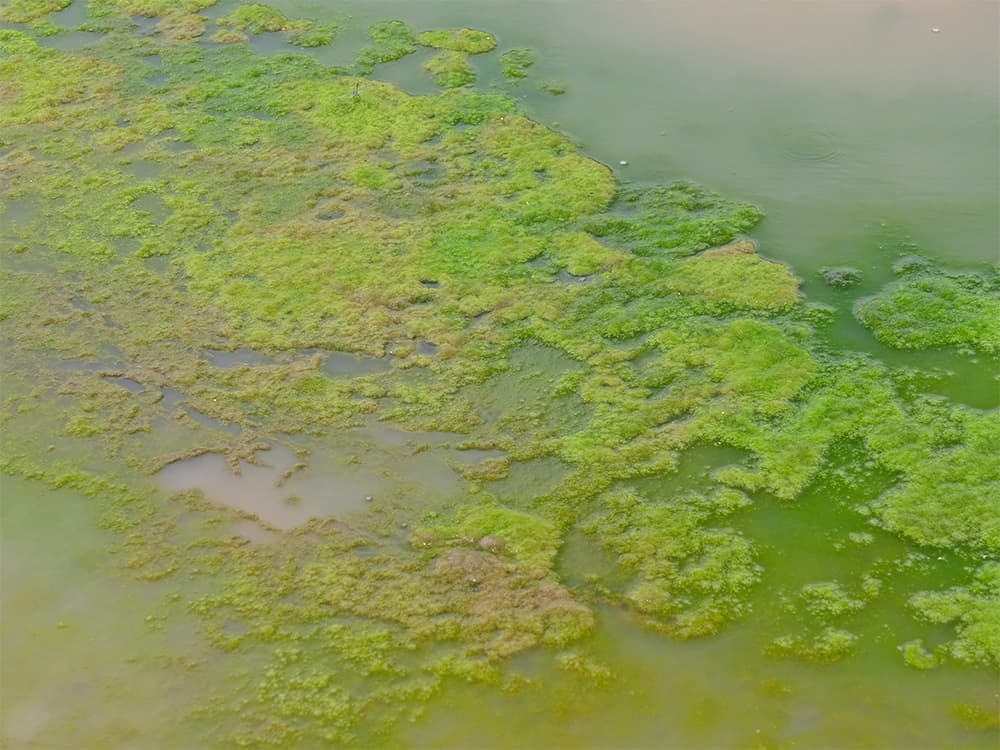
Blue-green algae (also known as cyanobacteria) can thrive in a variety of different terrains, as long as there are warm, nutrient-rich waters present. There are several ways to differentiate toxic blue-green algae from harmless green, brown, and other kinds of algae.
For starters, the color isn’t always blue-green. The algae can also be reddish-purple or brown and other hues. Algae is typically equally distributed throughout the water, but blue-green algae produces large blooms that are often concentrated along the water’s edge; it might look like slimy paint. These can still taint the water after it looks clear. Blooms may last for a week, and their toxins may last three weeks.
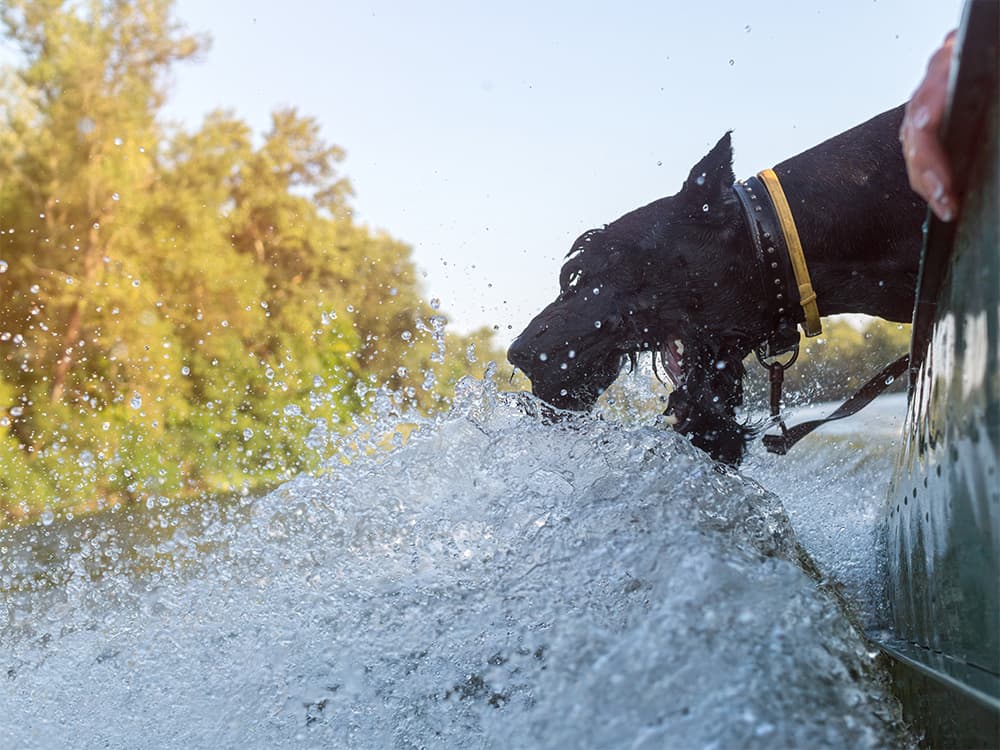
When blue-green algae isn’t floating visibly on the surface, it may still lurk below, moving up and down with available light and nutrients. At night, it often floats to the top, forming a scum. Wind and waves then concentrate toxic blooms in shallow areas or at the water’s edge — right where dogs like to wade, splash, or drink. The water doesn’t taste bad, so dogs will lap it up. Some adventurous pups even like to gobble down dried algae mats.
Maryna Konoplytska / AdobeStock
The Environmental Protection Agency (EPA) recommends that all visits with dogs to rivers, streams, and lakes should include an algae check. Dogs shouldn’t drink, wade, or swim in water that smells bad, is discolored, or contains mats of algae, foam, or scum. If your dog does get into scummy water, immediately rinse them off with tap water (the toxins can also be absorbed through a dog’s skin); ensure that they don’t lick algae from their fur. If your pup shows signs of poisoning, take them to your vet as soon as possible.
Here are the signs of blue-green algae poisoning to look out for:
Finally, be sure to report any blue-algae incidents to your state’s public health department to prevent other dogs from getting sick. You can also buy a testing kit to test the water you or your dog plan to swim in.
Sheila Pell is a freelance journalist who frequently writes about environmental issues. Her work has appeared in The Washington Post, Modern Farmer, San Diego Reader, The Bark, and American Forests. She lives in northern California with her husband and two large dogs.
Lifestyle

Lifestyle
Pet Wellness
Lifestyle
In the pool, a lake, a river, or the ocean.

Pet Wellness
Some like it hot (but not most dogs). Here are the season’s health hazards, from fleas to foxtails.
Lifestyle
Time to get your gear—and your pup—ready to go.