When Drinking Too Much Water Is Deadly
How to keep your swim fan safe.
How to keep your swim fan safe.
by Dr. Maria Zayas, DVM, | September 18, 2026
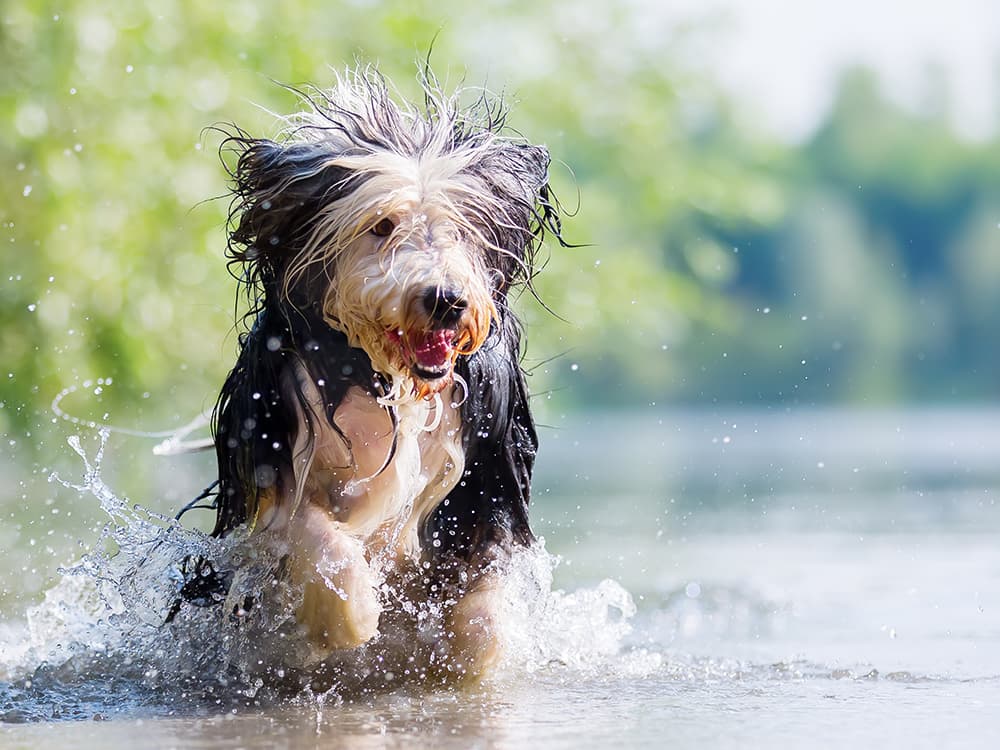
Christian Müller / Adobe Stock
A lot of pet parents assume that as long as their dog is a strong swimmer, playing in the lake or river is completely safe. But what many pet parents don’t realize is that dogs can have too much water — and when that happens, their electrolyte levels drop, their blood plasma thins, and this leads to swelling of the brain and other organs.
Symptoms of water intoxication can happen quickly, with dogs staggering and vomiting liquid, requiring immediate emergency veterinary care. Pet parents should be mindful of how their pups interact with water and encourage ample breaks. Dogs can even drink too much water from playing with a lawn sprinkler, believe it or not. Now that summer is officially here, it’s important to review the signs so you can get your dog to the vet as soon as possible.
Water intoxication (hyponatremia) occurs when a dog ingests too much fresh-water too quickly, causing dangerously low blood sodium levels and fluid buildup in cells.
Water toxicity is a critical medical emergency.
In the pool, a lake, a river, or the ocean.
The medical term for water toxicity is hyponatremia, meaning too low levels of salt in the body. Salt is the most abundant electrolyte in a dog’s body. It exists both inside and outside all its cells, but salt is highest outside the cells. Where salt goes, water follows.
Hyponatremia is rarely triggered because a dog has suddenly lost a bunch of salt. Instead, it happens when a sudden influx of water dilutes the salt level sitting outside the cells. So, when there’s suddenly extra water and salt levels start to seem too low, water flows into the cells instead, following the higher concentration of other electrolytes. The problem is that cells aren’t equipped to swell with extra water.
A dog may start to show symptoms as cells throughout the body swell with too much water (especially brain and nerve cells, which can tolerate less swelling than other cell types). Water intoxication can lead to brain damage, heart failure, and even death.
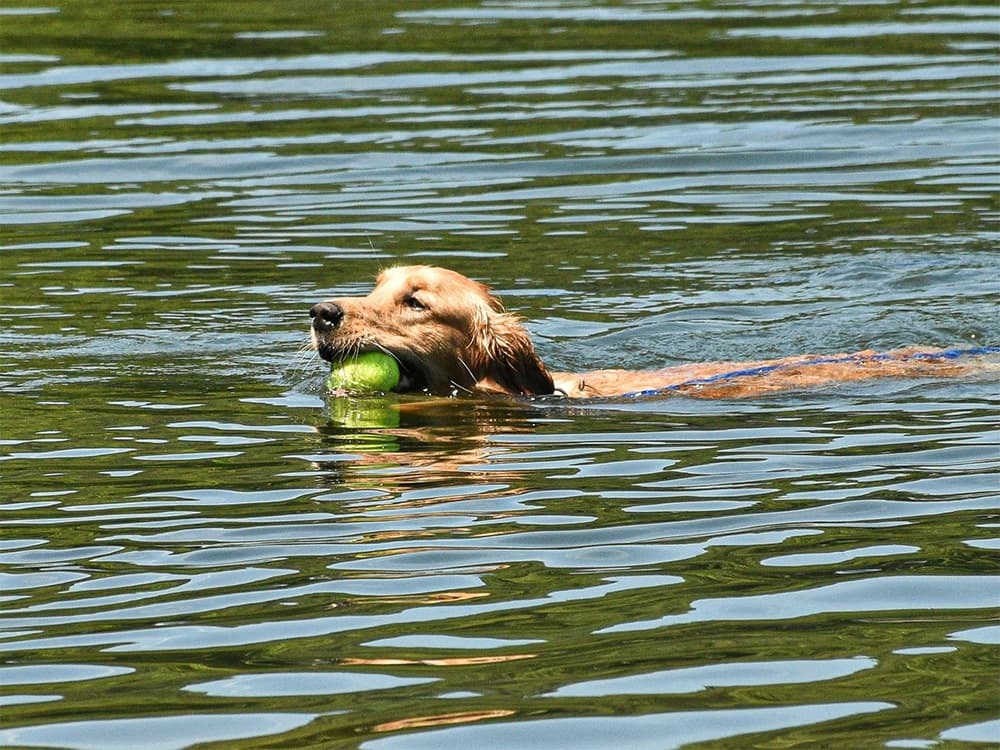
De Souza / Pexels
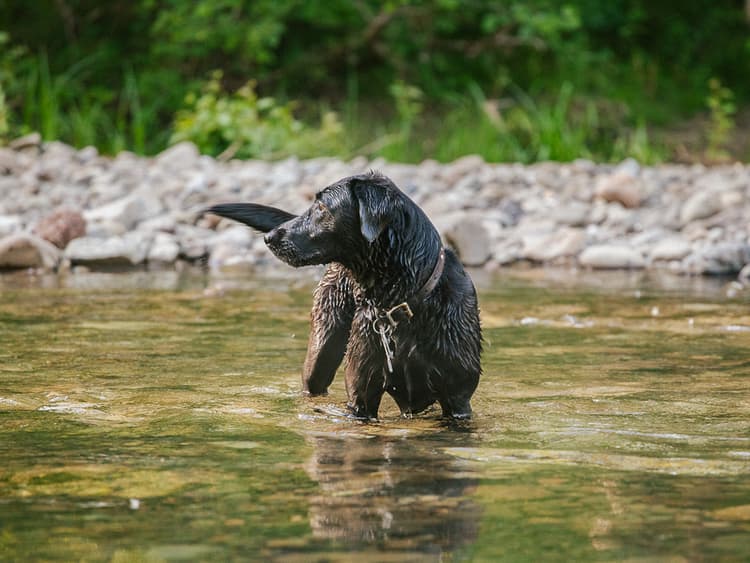
Dogs who are too distracted and too active in easy-to-reach water are more likely to experience water intoxication. Dogs playing hard enough to drink water due to exertion, especially in an area with a lot of water, are at risk of drinking too much. Similarly, dogs swimming in water too long and not just drinking water but swallowing it because their mouth is open while they swim are also at risk of water intoxication.
You want to be careful when they’re doing the following:
Swimming
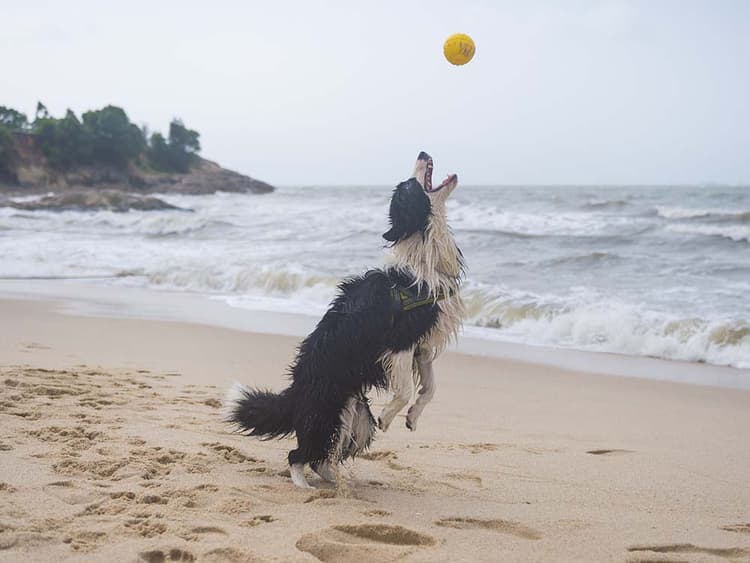
Playing fetch alongside bodies of water
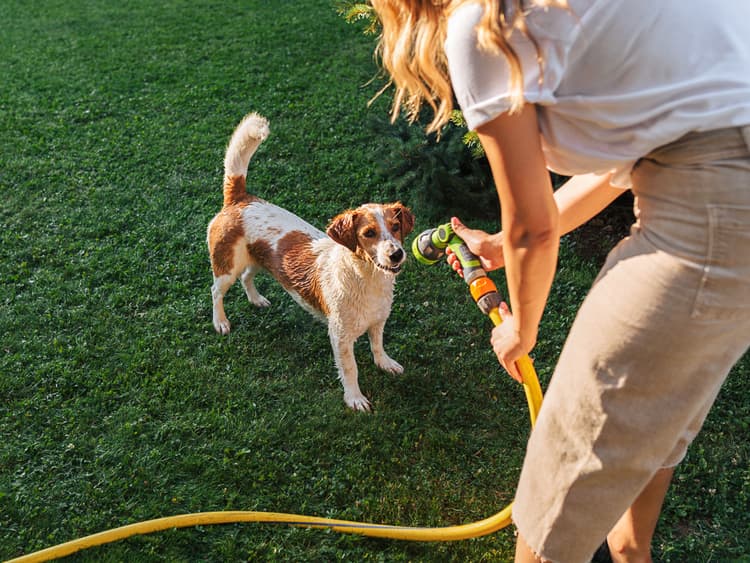
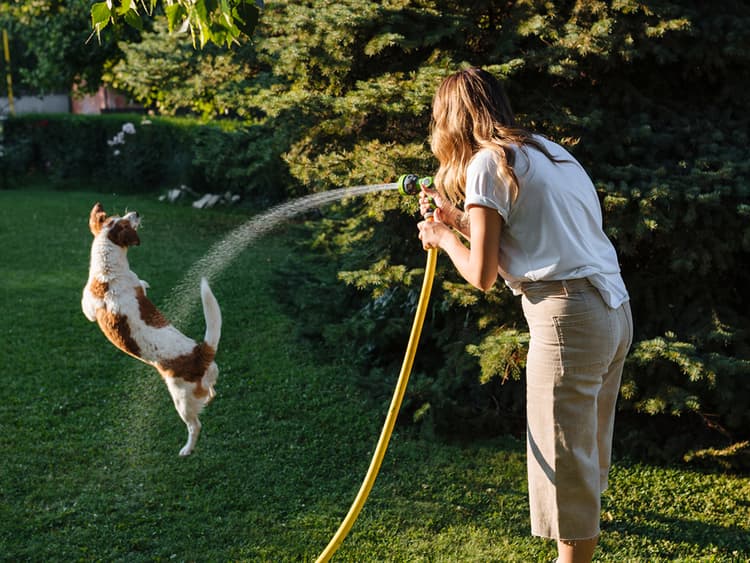
Playing with a hose or sprinkler
Going for runs alongside a waterway with free access to the water
In addition to activities, there are some medical conditions a dog could develop that put them at higher risk of water intoxication. These conditions, however, are not responsible for the majority of cases of water intoxication.
Severe vomiting or diarrhea
Taking diuretic medications
Heart failure
Psychogenic polydipsia
Dementia
If you’ve ever been out at a lake or other body of water with your dog and seen them drink so much water so frequently that they’re also urinating way more than usual, that was an early warning sign you might not have realized.
If a dog has had too much water too quickly, watch for these warning signs.
Significant increase in urination frequency and/or volume
Lethargy
Excessive drooling
Vomiting (likely water)
Having short moments of seeming out of it or not fully aware
Diarrhea
Breathing quickly and heavily
As things progress, water-induced brain swelling is the critical problem and what makes this condition so dangerous. Signs of this are:
Stumbling
Inability to stand
Swollen belly
Seizures
Paralysis
Loss of consciousness
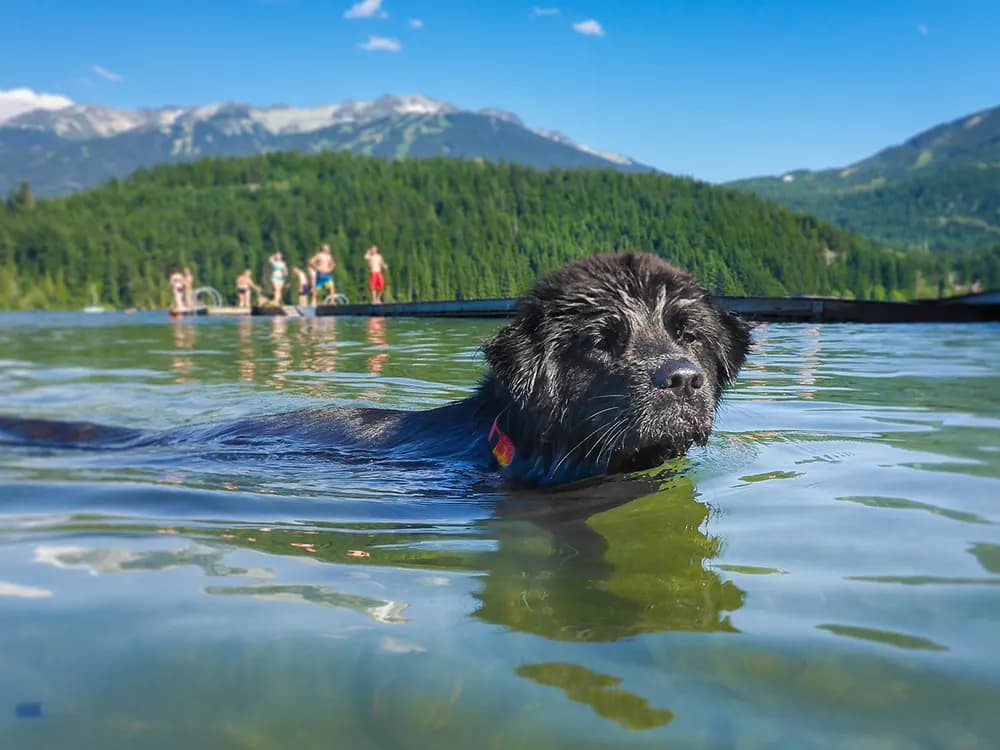
Lucas Brentano / Stocksy
If you’re just noticing that your dog has been playing with water too much and you’ve seen them need to pee a bit more, here’s what you should do:
Limit their water. The most important thing is to remove them from access to water.
Give them a little food. A treat or food helps them have more electrolytes available. But not too much food; you don’t want to contribute to or cause vomiting.
Keep an eye on them. If symptoms progress at all, then they need to go to the emergency room.
If your dog has more than one symptom of water intoxication, then they need to go to the ER so they can check their sodium levels. The earlier it is caught and the less severe the water intoxication, the more treatable it is.
The longer they go before treatment and/or the lower their sodium levels are, the more likely this is to be fatal.
If your dog needs treatment, a vet will most likely hospitalize your dog and administer intravenous fluids that have the ideal salt and electrolyte levels for your dog’s body, very slowly, to get the body to safely shift the water back out of the cells and into that much safer, outside-the-cells space that holds about one third of a dog’s water volume on a normal day.
If they’re able to do this and a dog isn’t too severe yet, then the neurological symptoms they developed will most likely go away and they will most likely recover.
This isn’t something you can fix at home. If a dog gets too much sodium in their fluids too quickly and the water quickly moves back out of the cell, it can cause cells to rupture or be permanently damaged. When this happens, it can be fatal or cause irreversible neurological damage, which is why you don’t want to just feed your dog handfuls of salt at home to fix this.
A little prevention goes a long way with water intoxication.
Dogs who drink water while swimming should only be allowed to do so for short periods of time, with long breaks in between, around an hour long between 10-minute swimming sessions. If your dog is new to you, it is safe to bring them out to swim and test what they do; just make sure to limit water access to mere minutes at a time if they’re drinking a lot and plan to keep an eye on them as you learn their behavior.
If you’re playing fetch near water, try to limit throwing the item directly into the water for them to jump in for. You can throw it in the water a couple of times, but not every time like a normal fetch session. It’s best to give them some breaks.
The shape of the toy may matter as well. Flat toys, like discs they can close most of their mouth around, let in less water while they swim back than balls and other large toys that keep their mouth more open.

Some like it hot (but not most dogs). Here are the season’s health hazards, from fleas to foxtails.
Sending your dog into the water with a well-fitted life jacket that has a front chest piece with foam or other buoyant material in it, which helps to keep and encourage a dog’s head to stay above water, helps keep them from taking on water while they’re swimming.
Remember to take lots of breaks whenever playing in or near water with your dog and training a “leave it” cue for your dog can be helpful as well. Make sure they’re supervised at all times in these situations so everyone can have a fun and safe day with no emergencies.
Symptoms can start in well under an hour, depending on the dog, in as little as 20 to 30 minutes, or it can take several hours to develop.
Yes, they can. The sooner the problem is identified and they start treatment, and the less severe their water intoxication is, the more likely they are to make a full recovery.
Salt water intoxication is also dangerous and possibly fatal, but is a different syndrome. This causes water to pull out of cells too quickly, instead of into the cells.
Rothrock, K. (2023). Hyponatremia (Canine). VINcycopedia. Veterinary Information Network. https://www.vin.com/members/cms/project/defaultadv1.aspx?pid=607&id=7760407

Dr. Maria Zayas attended Ross University School of Veterinary Medicine where she completed her veterinary degree in addition to participating in and presenting research related to aquatic animal medicine. She spent her first year as a doctor working with a low cost spay/neuter and general practice clinic before returning to her home state of New York and entering the world of housecall veterinary medicine. Falling in love with this area of medicine, she launched her own housecall veterinary practice in addition to writing pet health articles. She loves all things related to water and continues to travel and explore with her three dogs and one cat, all of whom also love to swim.
Pet Wellness

Pet Wellness
Pet Wellness
Pet Wellness
Temperatures are rising dangerously. Keep your pet safe with these tips.
Lifestyle
5 tips to help your pup have fun in the sun — safely.

Lifestyle
Pro tips to keep your pup safe, happy, and exercised during the warmer months.
Pet Wellness
It's every pet parent's nightmare — but knowing what happens when you take your dog to the ER can make the experience a little less stressful.
Pet Wellness
Lay the groundwork for quick, low-stress treatment.