Everything You Need to Know About Feline Hyperthyroidism
This guide will answer all your questions about feline hyperthyroidism, including how to manage it, address dietary needs, and ensure a great quality of life for your cat.
This guide will answer all your questions about feline hyperthyroidism, including how to manage it, address dietary needs, and ensure a great quality of life for your cat.
by Adrienne A. Kruzer, BBA, RVT, LVT, | October 17, 2024

Balazs Kovacs / Stocksy
Hearing that your cat has hyperthyroidism can feel like a lot to process at first. It’s natural to worry about their quality of life — or even wonder if you’re equipped to manage a long-term illness. The good news? While it sounds scary, this is actually one of the most manageable conditions a cat can face. You definitely don't need to make any drastic decisions like rehoming; with a few simple adjustments, your kitty can get back to their old self.
With generally easy, inexpensive treatment and a few lifestyle tweaks, most cats handle it incredibly well. In the end, you and your cat will enjoy each other’s company for years to come.
Hyperthyroidism (also known as thyrotoxicosis) occurs when a small gland in the neck, called the thyroid gland, produces an excess amount of hormones. They help regulate your cat’s metabolic rate, so if too many thyroid hormones are being produced, your cat will burn more energy than normal. (The opposite of hyperthyroidism is called hypothyroidism and occurs when too few thyroid hormones are being produced by the thyroid gland.) Hypothyroidism is extremely rare in cats.
Regular vet visits are key to keeping your pet healthy. Here’s what happens during a checkup, when to get them, and what to bring.
Feline hyperthyroidism is usually caused by a tumor on the thyroid gland. It is thought that dietary or environmental factors may play a role in tumor development. Most of these are non-cancerous tumors called adenomas, but in some rare cases, the tumors may be cancerous adenocarcinomas. These tumors cause an excess production of the thyroid hormones T3 and T4. Middle-aged and older cats are more likely to develop hyperthyroidism than younger cats.
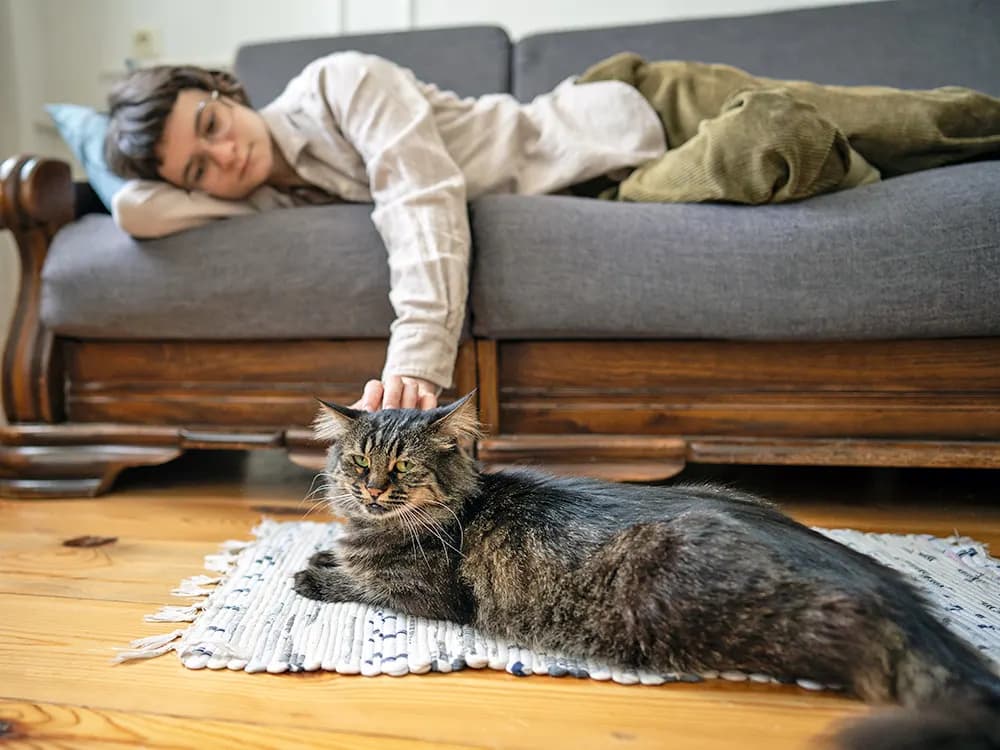
Adobe Stock / DimaBerlin
Symptoms of feline hyperthyroidism can vary. Because they may not be immediately noticeable, it’s important to know what to look for to nip potential problems in the bud.
Peeing outside of the litter box: Cats may pee or even poop outside of the litter box because of an overactive thyroid gland.
Weight loss: Cats with unmanaged hyperthyroidism will lose weight, even if they are eating.
Behavior changes: Cats with hyperthyroidism may exhibit behavioral changes including increased activity, excitability, and excessive grooming. Never ignore unnatural behaviors: If your cat is not acting normally, it may mean there is something wrong.
Increased thirst and urination: A litter box that has more pee clumps than usual, and a routinely dry water bowl, are signs that your cat has been drinking and peeing a lot and may have hyperthyroidism.
Changes in fur quality: You may notice your cat’s fur is thinning, patchy, oily, dry, matted, or unkempt due to hyperthyroidism.
Increased appetite: Despite the weight loss, hyperthyroid cats can have insatiable appetites. They may try to eat things they normally wouldn’t eat, and then don’t gain weight.
Upset stomach: Vomiting, diarrhea, or both may be seen in cats with hyperthyroidism. GI upset by itself is not indicative of a thyroid issue, but it may occur alongside other symptoms.
Heart changes: Untreated hyperthyroidism can cause heart changes, including increased heart rate, heart murmurs, and an enlarged heart.

Is your cat refusing to use their litter box? Explore these tactics to address and resolve this issue.
Treating hyperthyroidism in cats is usually easy and effective. Medications, special food, or a one-time injection may be recommended by your vet to manage, or perhaps even cure, your cat’s thyroid issue. Here are some treatment options you may encounter.
The most common treatment for cats with hyperthyroidism is a drug called methimazole. It helps reduce the amounts of T3 and T4 that your cat produces and is available inexpensively as oral tablets and liquids, or transdermal creams or gels. This drug is usually given twice a day for the cat’s entire life.
There is also a one-time treatment that cures hyperthyroidism in about 95 percent of cats: an injection of radioiodine (also called I-131 treatment). It is much more costly than using methimazole but usually means your cat will not need daily medication. Not every cat is a candidate for this treatment, but if they are and you can afford the cost, it is likely to cure your cat’s hyperthyroidism.
In addition to methimazole or I-131, various drugs may be needed to treat the symptoms of hyperthyroidism or the side effects of the drugs used to treat the disease.
Although more invasive than drug treatments, surgery is another option for some cats with hyperthyroidism. This procedure is called a thyroidectomy and usually cures hyperthyroidism, but there are risks involved with anesthesia and the procedure itself. Because of these risks, I-131 is instead typically recommended as a curative treatment option.
There is a prescription cat food made by Hill’s called y/d (opens in a new tab). This special food can treat a cat with mild hyperthyroidism, enabling them to avoid drugs or surgery. Since the thyroid gland needs iodine to produce T3 and T4, this food has a low iodine content. Cats eating y/d cannot eat any other foods or treats and must remain on this diet for life.
Some research shows a mixture of veterinary and nutritional supplements, such as vitamin E, curcumin, resveratrol, and quercetin, may benefit cats with hyperthyroidism. More research is needed, but these options can be discussed with your veterinarian to see if they can be used as part of your cat’s hyperthyroid treatment regimen.
If the feline hyperthyroidism is not cured through surgery or I-131 therapy, lifelong management of the disease will be needed. This management includes ongoing monitoring and care with the help of your veterinarian.
If your cat needs to take methimazole to treat their hyperthyroidism, they will most likely need to be medicated every 12 hours, every day, for the rest of their life. This medication routine should become a part of their daily routines, just like feeding them and cleaning their litter box.
However, if your cat’s hyperthyroidism can be treated by simply eating y/d, all you need to do is ensure they do not eat anything besides their y/d food.
Methimazole and y/d food treat, but do not cure, hyperthyroidism. So you should still monitor your cat for symptoms of the disease. If your cat is on methimazole, watch for side effects such as decreased appetite, vomiting, decreased activity level, itchy skin, hair loss, weight loss, behavioral changes, and diarrhea.
A cat who is being treated for hyperthyroidism with methimazole or y/d food still needs regular vet check-ups. These visits help monitor serum thyroid levels as well as kidney and heart health, both of which could be negatively affected by hyperthyroidism. Additionally, if your cat is taking methimazole, their liver function will need to be monitored due to how the drugs are metabolized in your cat’s body.
Yes, it is important to treat a cat with hyperthyroidism, because letting any illness go untreated can amplify symptoms. Unlike with other diseases, the treatment of feline hyperthyroidism is usually easy and inexpensive. Additionally, cats with any pre-existing conditions can be more difficult to rehome or adopt out (opens in a new tab). So it is absolutely worth treating your cat because hyperthyroidism is a very manageable illness.
If you recently adopted a cat, or you suspect your existing cat may have hyperthyroidism, schedule their first vet visit (opens in a new tab). Tell your vet about any abnormal behaviors or symptoms, along with details on what, how much, and how often your cat is eating.
Also inform them of any vaccines your cat has received, if they live with other cats, if they go outdoors, or if they have a history of any illnesses. After a physical exam of your cat, your vet may recommend blood tests to screen for organ function and to ensure there are no signs of infection, anemia, or other issues that aren’t always visible in your cat.
Diagnosis and Management of Feline Hyperthyroidism: Current Perspectives (opens in a new tab)
Disorders of the Thyroid Gland in Cats (opens in a new tab)
Hill’s Prescription Diet Y/D Chicken Flavor Dry Cat Food (opens in a new tab)
Hyperthyroidism in Cats (opens in a new tab)
Hyperthyroidism in Cats — Two FDA-Approved Drugs Available to Treat It (opens in a new tab)

Adrienne Kruzer is an accomplished veterinary technician and writer with over 15 years of hands-on experience caring for domestic and exotic animals.
Rehome
Rehome

Adoption Advice


Adoption Advice
Cat introduction process not going well? Here’s what might be causing the issues.

Shelters & Rescue
Sometimes life happens, and you need a temporary home for your pet while you get back on your feet. Here’s what to do.

Rehome
Thinking about adopting a pet that comes with a rehoming fee? No red flags here — they're like adoption fees (only less!) and are perfectly legit.

Adoption Advice
Falling victim to a pet scam is bad for you and the animals whom scammers are trying to sell. Here’s how to avoid them.
Behavior & Training
Whether you’re teaching them to sit “sit” or curbing couch-scratching, here’s how to effectively train your cat.