Here’s How Experts Say You Should Bathe Your Puppy
Because nothing is cuter than a puppy bath.
Because nothing is cuter than a puppy bath.
by Dr. Chyrle Bonk, DVM, expert review by Dr. Jessica Weeks, DVM, DACVECC | August 11, 2026
Anna Malkova / Stocksy
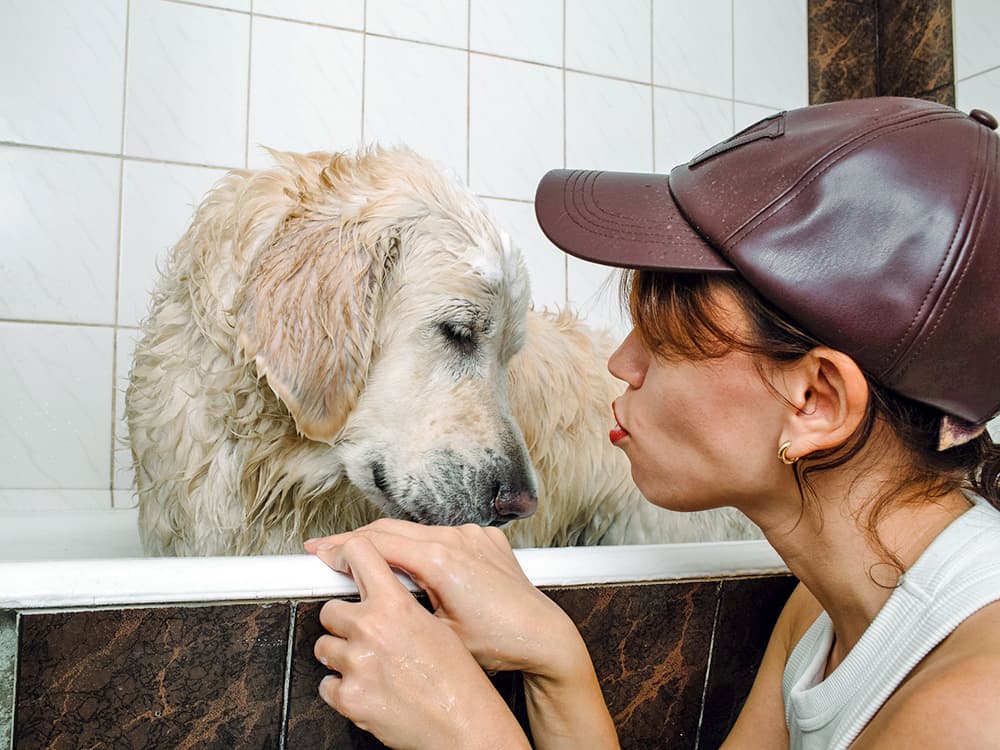
Puppies live life to the fullest, which often means getting dirty and loving it. Though your puppy may think grime is great, you may have very different feelings about their hygiene.
Daily baths can theoretically clean off the dirt and keep it away, but doing this too frequently isn’t safe for the puppy. So, how often should you bathe your puppy? Well, that depends. Read on for all the considerations to take into account before putting your pup on a bathing schedule.
By using most of your senses (let’s leave taste out of it), you’ll be able to tell when your puppy is bath-worthy. Foul odors that are more than a doggie smell, greasiness or oiliness, stickiness, or just plain dirt and mud on your puppy’s coat are all good reasons for a bath. You’ll especially want to bathe your puppy if they have something potentially dangerous on their hair, such as chemicals, that they might try to lick off their body.
Puppies practically major in getting into things that are stinky, sticky, or oily. And you should bathe your puppy whenever they seem to need it. That said, a puppy’s degree of dirtiness is relative, and you may like a cleaner puppy than most. But it’s still important not to bathe your puppy more than once every couple of weeks. More specifically, you should aim to bathe them no more than once every four to six weeks. If you need to bathe your dog more often than every two weeks to control odor, they may have an underlying dermatological issue, and should be seen by a veterinarian.
Baths leave a puppy smelling so fresh and so clean, so there’s no way you can do it too often, right? Well, bathing also removes some of the skin’s natural oils that help keep their hair soft and their skin moisturized. Bathing too frequently, especially with harsher shampoos, can leave their hair dry and brittle and their skin dry and itchy, even irritated. When a dog has itchy skin, it can lead to scratching and infections.
Also, puppies younger than two months of age can have problems regulating their body temperature, making it hard for them to stay warm once they get wet.
Puppies younger than eight weeks old shouldn’t be bathed for two reasons: Their mother is likely taking care of this, and young puppies have temperature regulation issues. If you have a younger puppy who really needs cleaning, try some of the spot-cleaning methods below in “Alternatives to giving your puppy a full bath.”
Squirmy puppy, shampoo, water—quite the adventure.
Preparation is key when bathing a puppy — because the last thing you want to do when you have a sudsy puppy in the tub is to run to get a towel. With this in mind, you’re going to want the following items on hand.
A tub or sink with a non-slip mat
A warm water source
Mild shampoo
A brush or comb
Towels
Treats
Optional, but highly valuable: another set of hands
If you have a silicone tub mat, we recommend making sure it’s in. Your pup will be trying their hardest to get out. Ensure that you keep all human products out of their reach — it would be best if they were completely out of the tub — so they don’t ingest anything. Make sure to reward your puppy with treats and praise for doing a great job to acclimate them to the bathtime experience.
Samantha Gehrmann / Stocksy
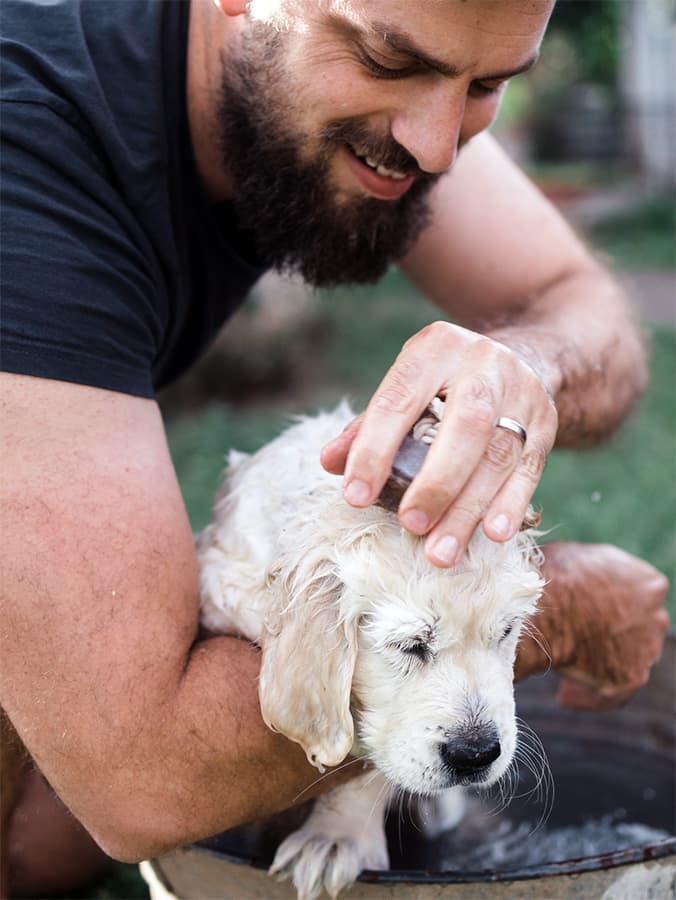
Bathing a puppy can be a lot of fun, or it can be your most dreaded chore — the choice is yours. Starting at a young age, going slowly, and offering lots of breaks and rewards are the best ways for both of you to enjoy the experience. And don’t worry if your puppy doesn’t take to baths right away: For some, it can be more of a learned enjoyable experience than an innate one. Give lots of treats and praise throughout, and take breaks as needed to boost morale.
Unless you want to see every item on your bathtub shelf get knocked into the water, we recommend clearing every bottle, brush, and bar of soap out of the tub. Clear out anything in the bathroom that you don’t want them running into and knocking over — e.g., your toilet paper holder. Getting a puppy into and out of a bath is going to be a workout, and you don’t want any collateral damage.
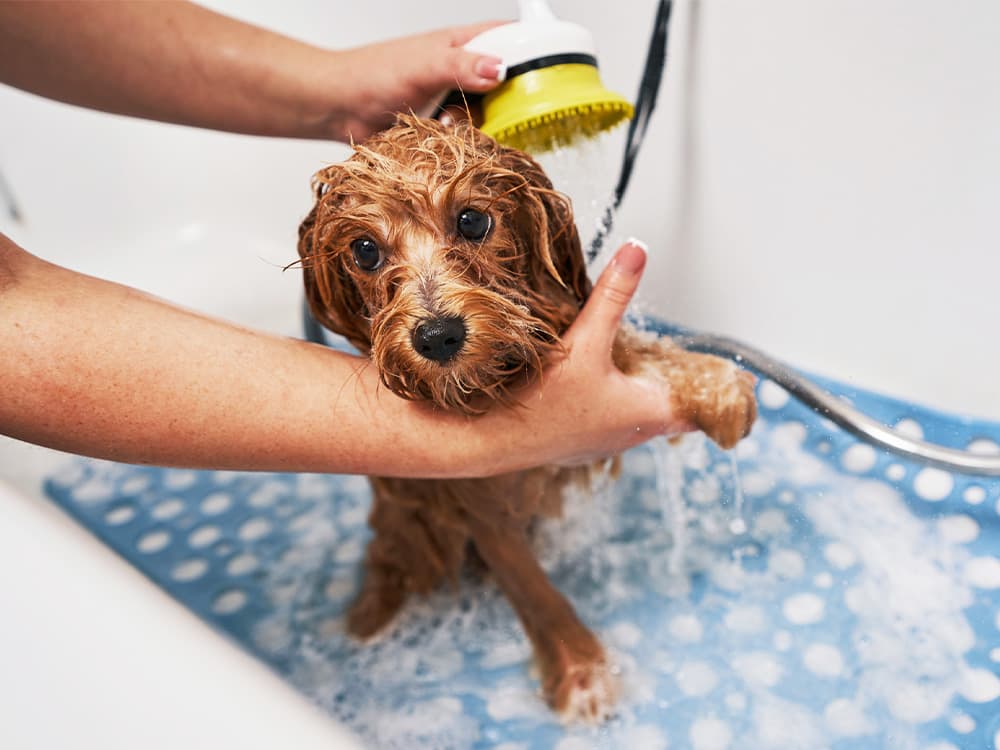
Make sure that you fill up the tub with lukewarm water, and use low pressure if you’re rinsing them off with the showerhead. You want the bath to be as calming an experience as possible. Start by wetting your puppy, while keeping their face dry. Nothing will kill the joy of a bath faster for your puppy than a blast of water in their face. The water should be warm, not hot. And instead of spraying them with water, let them soak in it.
When in doubt, the water should be cooler rather than warmer. You don’t want to cause your puppy pain or irritate their skin barrier.
Next, lather the shampoo and gently rub it around their body and legs, avoiding the face.
Dog shampoo, even puppy shampoo, is super concentrated and should be diluted. This is true even if your shampoo bottle doesn’t say that it’s concentrated. “If you don’t dilute the shampoo, you’ll never get it completely rinsed out. The industry-average dilution rate is 16 to one, but you can just eyeball it,” professional groomer Robyn Michaels told us in 2020. “You want just enough suds to tell you when you’ve covered the whole dog. If you want to really get the dog clean, brush the shampoo through their coat. This covers every hair, gets out some of the smaller tangles you might have missed, and removes the loose stuff.”
When you’re done shampooing, make sure to thoroughly rinse all of the suds. Otherwise, they could irritate your puppy’s skin. You can now take a wet washcloth to clean their face.
Squeeze as much water as you can from their coat and then towel dry. If your pup will tolerate a blow dryer, set it on low heat and move it over their body until it’s dry. Pay special attention to hard-to-dry areas such as their armpits and groin. Make sure your puppy doesn’t get too cold after the bath.
Like with bathing, the earlier you introduce your puppy to the concept of the blow-dryer, the better. Make sure that you use a low-heat and low-power setting. Make sure to tell your pup how amazing they’re doing and give them treats during the process. If you’re choosing not to blow-dry your pup, take extra care to make sure their ears, armpits, and other areas that’ll retain water are towel-dried thoroughly.
Svitlana Hulko / iStock
For some puppies, getting completely wet just isn’t on their to-do list, and you also don’t want to bathe them too often. Regularly brushing their coat can extend the time between baths. And there are other ways you can still freshen them up.
If you have children, you know how invaluable baby wipes are for more than just diaper changes. Puppies can benefit, too, from cleaning wipes meant for dogs. These lightly wetted wipes help remove dirt and other debris.
Another groomer’s trick is dry shampoo. This is a cleaning agent that doesn’t need water to work. It can be applied to the hair where it absorbs extra oil and grime. After applying, you can wipe it clean or leave it alone completely Either way: no water is needed.
Bathing your puppy is a great way to bond, train, and keep a pup healthy. It can also be a bit of a chore and cause their skin to dry out, if done too frequently.
The frequency with which you bathe your puppy will depend on their age, coat type, and lifestyle. Talk to your veterinarian if you have questions about your puppy’s specific needs.
Most vets will tell you to aim to bathe your puppy once a month. But some puppies may need more frequent bathing than others, especially if they’re overly mischievous.
The pet shampoo market has come a long way. Shampoos that were more like dish soap have given way to mild, gentle cleaning options that are less likely to dry out a puppy’s skin. The best shampoos for puppies need to be gentle, effective, and (ideally) free of fragrances and dyes.
Two months is the youngest age you can bathe a puppy. Any younger and they may have trouble regulating their body temperature. These young, two-month-old puppies should be bathed once every four to six weeks or as needed.
Every three days is too frequent to bathe most dogs. You want to give their skin and coat time to distribute natural skin oils for a healthy shine and soft feel.
Most indoor puppies have an easier time staying clean than outdoor ones. There’s just less dirt and grime to get into. Still, most indoor puppies will benefit from a bath every one to three months.
Halliwell REW (1991) Rational use of shampoos in veterinary dermatology. J Small Anim Pract 32: 401-407.
Scott DW, Miller WH, Griffin CE (2001). Dermatologic therapy. In Muller and Kirk's Small Animal Dermatology, 6th edition, WB Saunders Company, Philadelphia

Dr. Chyrle Bonk has been a mixed-animal veterinarian since 2010, with a special interest in rehabilitation. When she's not practicing or writing about veterinary medicine, you may find her exploring the outdoors with her family or tending to her cows, horses, chickens, or cats and dogs.
Pet Wellness
Pet Wellness
Pet Wellness
Lifestyle
Even more proof they’re your baby.

Pet Wellness
Veterinarian Dr. Shea Cox separates fact from fiction when it comes to low-shedding breeds.