How to Brush Your Cat’s Teeth
It sounds like a daunting task, but here are some helpful steps to take.
It sounds like a daunting task, but here are some helpful steps to take.
by Dr. Alycia Washington, DVM, MS, | February 12, 2024
sophiecat / Shutterstock
Your cat’s pearly whites may not be your favorite thing when they’re sinking into your hand while they’re playing, but they are pretty important to their overall health. And, just like yours, they need consistent care and attention (even if they disagree with you).
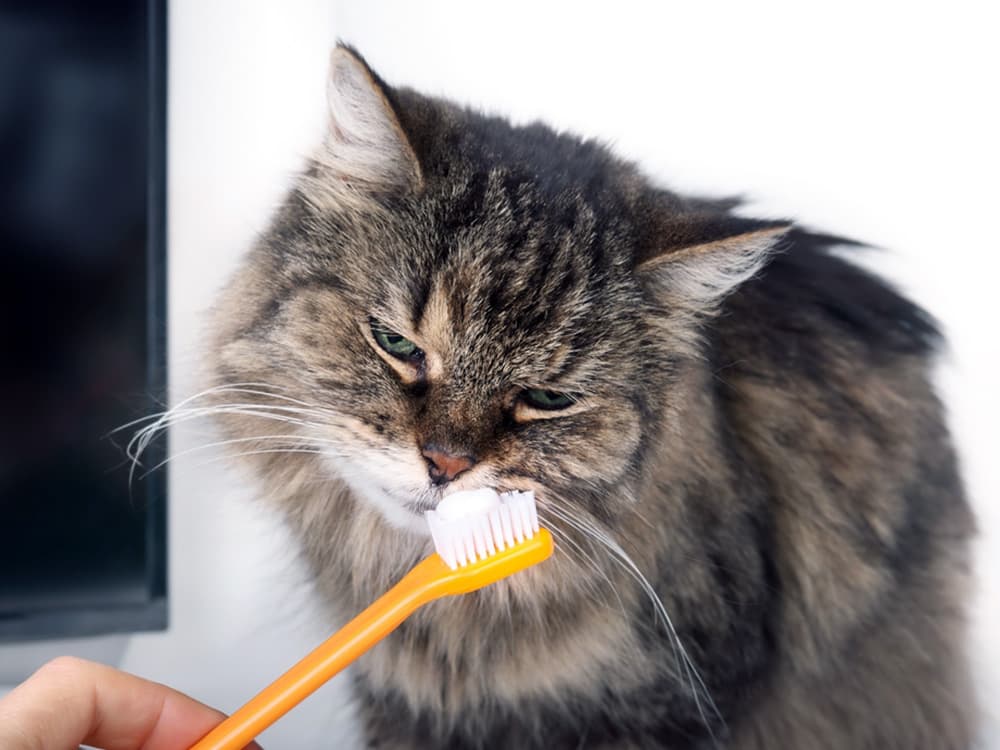
Yes, you should brush your cat’s teeth. Brushing your cat’s teeth is a proactive step toward ensuring their oral health. Start by introducing your cat to pet-safe toothpaste, letting them taste it from your finger. As they grow comfortable, transition to a cat toothbrush, using gentle circular motions to brush their teeth. This guide will walk you through the essential steps for effective and stress-free cat teeth brushing.
Dental disease is one of the most common health concerns in cats. In fact, almost all cats will have some form of dental disease by age three. Periodontal (gum) disease can have an enormous impact on a cat’s overall health and quality of life. Severe dental disease can result in:
Oral pain
Tooth loss
Weakening of the bones of the jaw and nasal cavity
Bacterial spread other organs like the heart and kidneys
Although it seems like an impossible task, as a cat parent you can and should brush your cat’s teeth. Toothbrushing significantly improves dental health in cats. It may be easier to introduce the idea to a kitten, but with patience and proper supplies, some adult cats will allow it.

Your cat’s oral hygiene is essential to their health. Take things slow and figure out what works best for your kitty’s pearly whites.
If you’re wondering how often to brush your cat’s teeth, the answer is daily. Even after a professional cleaning, plaque can start to reappear in a cat’s mouth within a day. This plaque will mineralize into visible tartar within two weeks. In addition to scheduling regular veterinary cleanings, pet parents should take a proactive approach to their cat’s dental health. This means taking preventative measures at home to minimize tartar formation.
If you’re just starting dental care with an adult cat, begin with a veterinary check-up. If your cat already has significant dental disease, brushing may be painful and counterproductive. Your vet may recommend an initial professional cleaning, allowing for a clean slate before incorporating at-home brushing into the routine. Once you get the go-ahead, here are some tips to get started:
You’ll need toothpaste and a toothbrush specifically for your cat. Do not use human toothpaste to brush your cat’s teeth. Human toothpaste is not made to be swallowed, and some products have ingredients that are toxic to cats. Skip the baking soda and coconut oil, too.
Choose a toothbrush small enough to fit in your cat’s mouth (a cat-specific toothbrush or a baby toothbrush). There are also over-the-finger toothbrushes that may allow for more control. But use caution — a cat can bite through these. When first starting, it’s fine to use a cotton swab to get them used to the motions.
Accessing your cat’s teeth is something for both you and your cat to get used to. Make sure the environment is calm and quiet. Find a position that allows you to best control your cat if they get a little squirmy, whether it's having your cat sit on your lap or on a firm surface with their back to you.
Practice gently raising your cat’s chin and lifting the lips to expose their teeth. You may need a buddy if your cat gets handsy and tries to paw your hand away. Reward your cat with treats or yummy cat toothpaste.
Many cat toothpastes come in feline-friendly flavors like chicken or fish. Let your cat lick the toothpaste off your finger or the toothbrush. If they’re hesitant to taste it on their own, place a small dab on their nose for them to lick off.
Without toothpaste, brush the side of your cat’s face. Many cats will instinctively bite the toothbrush, helping to acclimate them to the sensation of the bristles on their teeth.
Use gentle circular motions. Start with the large canine teeth; they’re the easiest to access. Then, gradually move to the larger cheek teeth.
Good news: you only need to clean the side of the teeth touching the cheeks. Salivary enzymes and professional cleanings can take care of the inner surfaces.
Start with a goal of spending five to 10 seconds on each surface of the mouth: front, left, and right. Then slowly increase time until you’re able to brush each side for 30 seconds. While brushing your cat’s teeth every day is recommended, even three times a week can make a huge difference.
Don’t rush through the steps if your cat is having a hard time. It may take several days before you work up to actually brushing a single tooth. And that’s OK.

Confused by all the cat dental care options out there? Here’s how to pick products that actually keep your cat’s teeth healthy.
Cat parents face many choices when it comes to gathering supplies for at-home dental care. If you’re overwhelmed and unsure where to start or the tools you tried aren’t working, seek guidance.
Ask your vet for recommendations.
Look for products approved by the Veterinary Oral Health Council (VOHC), a world-wide organization of veterinary dental health professionals who research the claims and efficacy of pet dental products. The VOHC seal of approval can be found on scientifically proven oral care treats for cats, making them a trusted addition to an oral care regime when fed daily in accordance with the guidelines on pack.
Be open to a little trial and error to find what works for you and your cat.
If you and your cat have reached the limits of patience with toothbrushing, know that you’re not alone. Brushing a cat’s teeth can be a challenge, and one that some cats won’t allow you to do safely. The important thing is to not ignore your cat’s dental health. While the mechanical scrubbing of toothbrushing is the optimal way to control plaque and tartar at home, there are alternative options including:
Dental diets
Dental treats
Water additives
Dental wipes
Oral sprays and gels
Anti-plaque powders
Look for products approved by the VOHC.
Explore alternatives until you find a suitable option that suits your cat's preferences and helps maintain their dental health.

Dogs rule, cats drool. Like, that’s normal, right?
Regular exams and professional cleanings are a part of routine dental care, even in the absence of obvious dental problems. The goal is to maintain oral health before a cat experiences discomfort and infection. But despite best efforts, dental disease can still develop. Signs that you should take your cat the vet for dental concerns include:
Bad breath (especially if it appears suddenly)
Dropping food
Reluctance to eat
Teeth chattering
Oral discharge
Facial swelling
Pawing at the face/mouth
Reluctant to let you touch their face or head
Behaving withdrawn and quieter than usual
Rubbing their face on furniture
Meowing to indicate they are in pain
Cats can be susceptible to various dental issues that, if left untreated, may lead to discomfort and more severe complications. Routine care and prevention are vital. Some of the most common dental diseases in cats include:
Gingivitis: Inflammation of the gums that results in redness and swelling. Gingivitis is an early stage of periodontal disease.
Periodontal (gum) disease: Inflammation and infection of the tissue supporting the teeth.
Tooth resorption: Progressive destruction of the hard layers of a tooth, resulting in erosion and tooth loss.
Stomatitis: Inflammation of the mucous membranes in the mouth, including the gums, tongue, and hard palate. Viral infections like feline herpesvirus, feline calicivirus, feline immunodeficiency virus (FIV), and feline leukemia virus FeLV) can contribute to the development of stomatitis.

Give them the day off from self-grooming.
It is possible to help keep a cat's teeth clean without brushing. Alternatives to cat brushing include dental diets, treats, wipes, water additives, anti-plaque powders, and oral sprays and gels. Look for products approved by the VOHC.
Cat parents should use only pet-safe toothpastes to brush their cat’s teeth. Never use human toothpaste because many contain ingredients that are toxic to pets and should not be ingested.
Because nearly all cats develop dental disease by age three, it's recommended to introduce toothbrushing early. If your cat is showing signs of dental infection like pain, anorexia, facial swelling, or oral discharge, seek veterinary attention.

Alycia Washington is a small-animal emergency veterinarian with over 10 years of experience based in North Carolina. She works as a relief veterinarian and provides services to numerous emergency and specialty hospitals. She also works as a veterinary writer with a focus on educating pet parents.
Pet Wellness
Pet Wellness
Pet Wellness


Pet Wellness
Get thy cat to a vet, even if it’s a struggle to get them out the door.