How to Clean Your Cat’s Ears: A Guide to Your Cat’s Ear Health
Everything you need to know.
Everything you need to know.
by Dr. Shelby Neely, DVM, | April 30, 2025
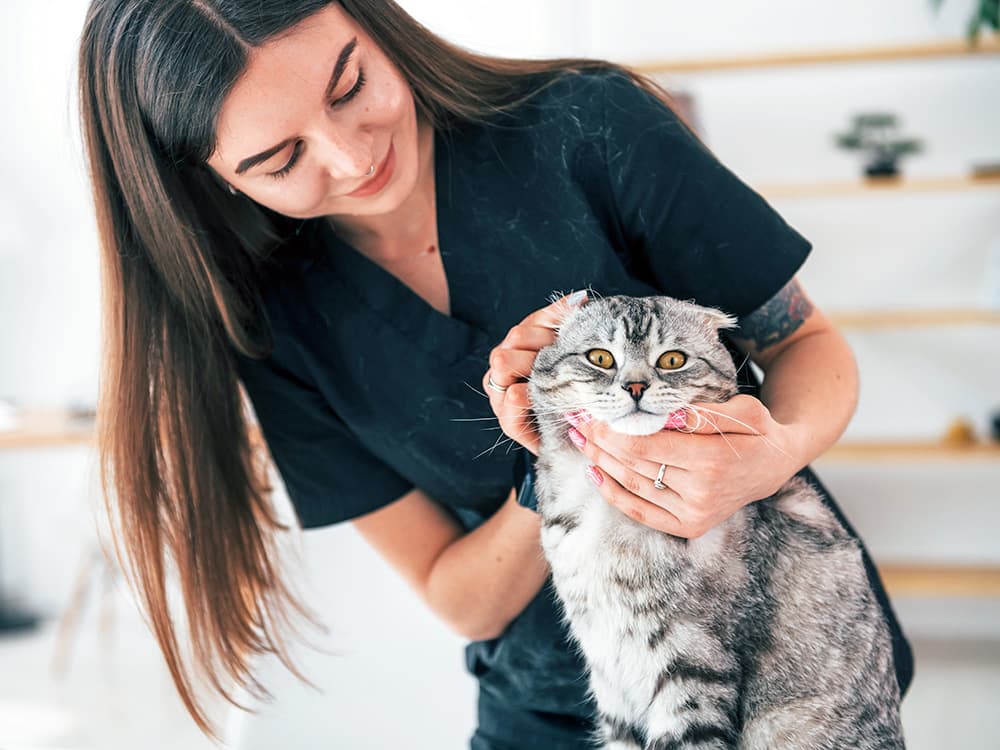
standret / Adobe Stock
Cats are known for their meticulous manner of grooming themselves. However, even the cleanest cats may need some help with their ears from time to time. Dirt and wax can build up in those tiny openings, leading to infection or other serious issues. This guide will discuss how to inspect and clean your cat’s ears, including using the best products and recognizing problems that need your vet’s assistance.
Pro tip: Take things step by step.
Some cats can go an entire lifetime without ear-cleaning, but most will need at least a little wiping out occasionally. Certain breeds, such as Sphynx or Scottish Folds, may be more prone to ear wax buildup and need more frequent cleanings. Allergies are another reason some cats need cleanings.
Cat parents should take a peek at their cats’ ears periodically to ensure there are no problems. Watch for redness, swelling, dark discharge, or frequent shaking or scratching of the ears.
There are good products and safe tools that can help you clean your cat’s ears, including:
Veterinarian-approved ear cleaner: Be sure to get an ear cleanser labeled for cats. Do not use water. Vet-approved ear cleaning products are designed to break up wax and evaporate safely without leaving moisture behind. Water can remain trapped in the ear canal, increasing the risk of infection, especially if your cat already has an underlying ear issue. Also, stay away from alcohol or hydrogen peroxide-based products
Cotton balls or gauze pads: Don’t use cotton swabs. They can leave fibers behind and push wax and dirt further into the canal and even injure it. Instead, use cotton balls or gauze pads.
A large towel or blanket: This can help gently restrain your kitty.
Treats: Having some handy is a good idea. Your cat may come to associate treats with ear cleaning.
You may worry that you can’t clean your cat’s ears, but with practice and patience, you can make it an easy part of your cat’s care routine. Here’s how.
Wrapping your cat in a towel, leaving only the head exposed, is most often helpful. Use a soft, non-slip surface. This keeps your cat calm and prevents sudden movements that could lead to injury.
Create a quiet, calm environment, and speak to your kitty softly. Pet them gently, and consider having a play session first to tire them out.
Look for:
Redness or swelling
Foul smell
Excessive wax
Scratching or sensitivity
If you see any of these signs, it’s best to stop and consult your veterinarian.
Lift the ear flap and hold it firmly back against the head. Squeeze a few drops of ear cleaner into the ear canal. Be sure to follow the instructions on the product label.
Before your cat can shake their head, massage the base of the ears. You should do this for about 30 seconds. This helps break up the wax and debris. If you hear a squishing sound, do not be concerned. This is normal.
After massaging, allow your cat to shake their head. This helps dislodge debris from deep within the ear. Wear clothes you don’t care about because things can get messy.
Use a cotton ball or gauze to gently wipe away the loosened debris from the outer part of the ear. Do not insert anything into the ear canal. Repeat this step if necessary with a fresh cotton ball until the ear appears clean.
Now for the good stuff: Give your cat a favorite treat and some extra petting. Positive reinforcement works well with cats and can help make future cleanings easier.
Every cat is different. Some may need frequent cleanings. Others may never need cleaning. As a general guideline, check ears monthly but clean only when there’s visible dirt or wax.
However, cats prone to wax buildup or infections or with certain medical conditions may need more frequent care. Weekly to bi-weekly checks and cleanings may be recommended.
If you're unsure how often to clean your cat’s ears, ask your veterinarian for guidance based on your cat’s health history.
Bathe your kitten safely and effectively.
Black or dark brown debris in your cat’s ears could be dried wax, dirt, or even a sign of ear mites. It may be a mite infestation or infection if the material resembles coffee grounds and is accompanied by itching, odor, or redness. It’s best to have a vet examine the debris to determine the cause.
Ear mites are tiny parasites that live in the ear canal and feed on wax and oils. They cause intense itching, and the debris they produce is typically dry, dark, and crumbly—similar to coffee grounds.
Signs of ear mites include:
Constant scratching of ears
Head shaking
Dark, crusty debris
Red or inflamed ears
You should take your cat to the vet if these signs are prominent. It could just be wax, but it could also be ear mites or a bacterial or fungal infection. A vet can test a sample under a microscope to confirm the presence of mites.
Absolutely do not clean cat ears with water. Instead, use a veterinarian-approved ear cleaner formulated especially for cats.
While both wax and ear mite debris can look similar at first glance, there are key differences:
Color and texture: Wax is typically brown, sticky, and moist. Mite debris is darker, more crumbly, and drier.
Odor: Wax might have a slight odor, while mite infestations often produce a more pungent, foul smell.
Behavior: Cats with mites show more signs of discomfort, including excessive scratching, shaking their head, or even wounds from scratching.
The only way to be sure is through a veterinary examination. Your vet can check for mites with a sample or perform an otoscopic exam.
Mukherjee Bapi, Arup, et al. “CatEarMites: An Approach of Detecting Ear Mites of Cat Using Convolutional Neural Network.” International Conference on Computing Communication and Networking Technologies, Oct. 2022, pp. 1–6, https://doi.org/10.1109/ICCCNT54827.2022.9984559.
PUGH, K.E., EVANS, J.M. and HENDY, P.G. (1974), Otitis externa in the dog and cat—an evaluation of a new treatment. Journal of Small Animal Practice, 15: 387-400. https://doi.org/10.1111/j.1748-5827.1974.tb06513.x
Yang, C. and Huang, H.-P. (2016), Evidence-based veterinary dermatology: a review of published studies of treatments for Otodectes cynotis (ear mite) infestation in cats. Vet Dermatol, 27: 221-e56. https://doi.org/10.1111/vde.12340
Dr. Shelby Neely is a freelance writer and veterinarian who graduated from the University of Pennsylvania School of Veterinary Medicine and has practiced veterinary medicine for 30 years, specializing in small animals. Her work has appeared in Allivet, AsktheCatDoctor, WhiskerDocs, Ask the Cat Doctor Radio, Ask the Cat Doctor TV, and numerous other websites, brochures, newsletters, newspapers, and ebooks. In her spare time, Dr. Neely likes to spend time with her three children, two grandchildren, three cats, two grand-cats, and five grand-dogs.
Pet Wellness
Pet Wellness
Pet Wellness
Pet Wellness
Give them the day off from self-grooming.
Pet Wellness
From taking them to the vet more often to giving them a hand with grooming, older kitties need a little extra TLC.