How to Prevent—or Treat—Cat Ear Infections
Your cat won’t tell you their ear is bothering them — but these signs will.
Your cat won’t tell you their ear is bothering them — but these signs will.
by Helin Jung, expert review by Dr. Maria Zayas, DVM | August 26, 2026
evrymmnt / Shutterstock
When you’re a new pet parent, you’re thinking about food, litter boxes, and vet visits — not ear infections. I definitely wasn’t, but I’ve since received a crash course on all things cat. I frequently wish she could just tell me what’s up. Like the time I noticed she was scratching her ears. The incessant itching was making me uncomfortable, but I didn’t realize how serious it was for her.
Could mites be crawling around in there? Something more sinister? Or was I an overly concerned new cat mom? I peered into her ear cave to find out, and once I squinted past the wispy curtain of fur, the walls of her ears appeared to be covered in a dark, dubious gunk…that didn’t look right to me. Also, gross.
Turns out, she had an ear infection. Here’s everything to know about spotting the signs early, treating it fast, and keeping it from coming back.

Laura Stolfi / Stocksy
“Ear infections in cats don’t occur quite as commonly as in dogs, but when they do, they can cause some serious damage,” says Dr. Sarah Dougherty. “The most common cause of ear infections in cats is ear mites, but they mostly affect kittens and outdoor cats.” Ear mites are microscopic, super-contagious parasites that block a cat’s ear canal with a dark, grainy matter that kind of looks like coffee grounds.
Food and environmental allergies can also be culprits, most commonly proteins from poultry and dust mites (yes, more mites). Or simply a buildup of wax or fur.

Everything you need to know about cat allergies, according to three veterinary dermatologists.
“Cats produce more ear wax than dogs,” says Dr. Dougherty, so it’s normal for cats to have a thin layer of yellow wax hanging around. If you’re seeing more than that, say, on the outer ear and on the fur outside the ear, you should see your vet. Cats with ear infections will shake their heads and paw at their ears. You may notice hair loss or crusty scabs around their face and neck from all the scratching.
And if you get close enough, you’ll see redness and swelling, and smell a funky odor. Because the ear canal controls balance — for people and pets — an ear infection could also cause your cat to act disoriented and, well, weirder than usual.
Pawing ears more than usual
Shaking or tilting their head
Redness or swelling inside the ear
A dark, waxy, or gunky discharge
A bad odor
Ear sensitivity
Disorientation
Scabs or hair loss
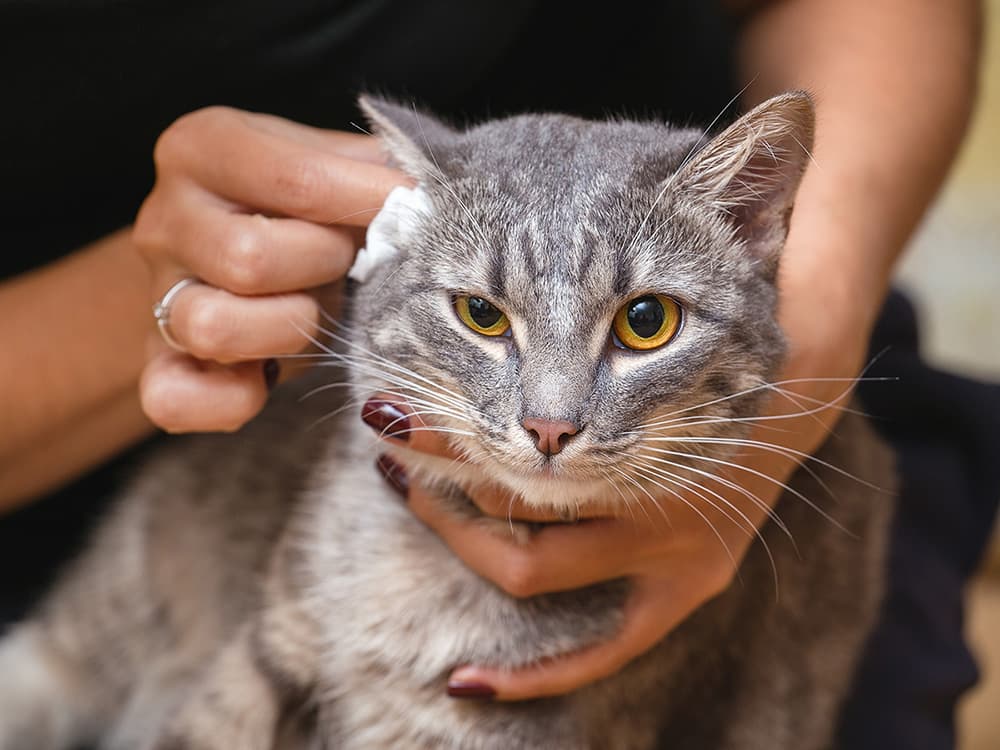
Regular ear cleaning isn’t recommended for most cats because the nerves in a cat’s ear canal are sensitive, and cleaning when you don’t need to can lead to a head tilt or even deafness, which may be temporary or even permanent. So skip the diy ear-cleaning routine unless instructed by your vet.
If cleaning is called for, your vet can show you how. Here are a few tips to ensure it’s done safely:
Use a commercial ear cleaner or flush made specifically for cats, recommended by your vet.
Steer clear of cleaners with hydrogen peroxide or alcohol, as they can irritate the sensitive ear canal
Swaddle your cat in a towel if you expect they are going to fight you tooth and nail.
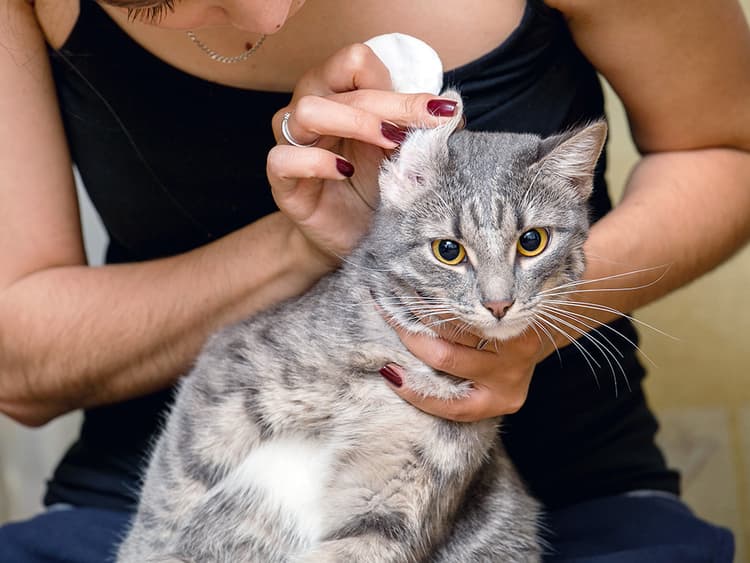
Apply the solution to gauze, then gently wipe the visible parts of the ear.
Wipe up whatever comes up (nix Q-tips as they can damage the eardrum). If you need a hand, your vet or a professional groomer should be able to get the job done without a scratch.

If you thought your cat was a self-cleaning evolutionary marvel, you’re not wrong but...
In my cat’s case, she was diagnosed with infections in both ears, likely triggered by environmental allergies. Living as an LA stray, yeast has lived rent-free in her ears long enough to form a thick layer of gunk, which was causing my newly domesticated housecat a lot of discomfort.
Our vet gave her ears a good cleaning and prescribed antibiotic drops, and in a couple of weeks her ears healed. If left untreated, though, Dr. Dougherty says, “a cat can suffer permanent damage to the structures of the ear canal, eardrum, and inner ear…or permanent loss of hearing.”
Good thing my cat’s ears are now all clear and I’m pretty sure she can hear me when I call…even when she pretends not to.

Helin Jung is a writer in Los Angeles.
Pet Wellness

Pet Wellness
Pet Wellness

Pet Wellness
Cats are fastidious about their own cleanliness, but that doesn’t mean you won’t need to give them a little help along the way. Here’s how.

Pet Wellness
Budgeting for a new cat goes beyond adoption fees, food, and litter. Don’t let grooming costs catch you off guard.

Pet Wellness
Uh, ew. But also: Here‘s what you should look out for.