The Best Way to Get Rid of Fleas on Cats, According to a Veterinarian
Fleas sound like villains of a horror movie, and that’s honestly not that far off.
Fleas sound like villains of a horror movie, and that’s honestly not that far off.
by Dr. Amy Fox, DVM, | July 8, 2025
Aleksei Toropov / Stocksy
Pet parents sometimes think that indoor cats won’t get fleas because they aren’t roaming around in the wild, but this isn’t true: Cats can and do get fleas, even if they haven’t so much as waved a paw outside of the house. And while many flea infestations may be very obvious, some can be subtle. To get rid of fleas on cats, you must work very quickly.
If you discover a flea infestation on any of your pets, you must treat the whole house. This includes treating all the pets in the home and thoroughly cleaning the environment to remove the fleas from the floors and furniture, too. Plus, fleas can also carry other pesky parasites with them, so it is important to contact your vet if your cat has fleas to ensure they are treated for any other infections, too.
The good news is, with the right treatments — which most veterinarians agree are prescription flea medications — you can get rid of fleas on your cat quickly and effectively. For best results, use products containing adulticides to kill adult fleas on your cat, as well as insect growth regulators that prevent larvae from maturing.
Determining how cats get fleas requires a basic understanding of the flea’s life cycle. Fleas are known as ectoparasites, meaning they live on the outside of their hosts and use their host to meet their basic needs. Their food is the host’s blood, and they reproduce and lay eggs on their host. Fleas can have many different hosts, including cats and dogs, though different species of fleas often infect different animals.
Flea eggs are very hardy; they fall off of pets and contaminate the environment, surviving for up to two weeks before hatching. Once their ideal conditions are met, the eggs will hatch, and the larvae start to mature. The larvae eventually form a cocoon and develop into a pupae that is extremely hardy and resistant to freezing, drying, and many forms of insecticide.

Everything you need to know about cat allergies, according to three veterinary dermatologists.
They can stay in this state for up to a year and then emerge as adults ready to start the whole cycle all over again. Cats can get fleas in a few different ways along this lifecycle. The first is that adult fleas jump directly onto them and get comfy. This most often happens outside where fleas are abundant, especially in the warm weather months. It can also happen in any environment where fleas are present, including a home that already has fleas from other pets or a shelter environment.
Even if your cat doesn’t go outside, but your dog does, your dog might bring fleas into the house. The eggs and pupae can also be a source of new infections, so people may track them into a home on their clothes or shoes, or they could enter your home on other fabrics or materials.
The most common symptoms of fleas on cats include itchy skin, as well as signs of damage to their fur and skin from inflammation and scratching. Fleas tend to congregate along the lower back near the base of the tail, on the head, and on the belly, so cats will often bite and chew at the fur around these spots when they have fleas.
They may be itchy all over, too. Some cats can have a more severe reaction to flea saliva and this can cause flea allergy dermatitis, an allergic form of itchiness, hair loss, and inflamed skin. Common symptoms of fleas on cats include:
Itchy skin, especially around the base of the tail and belly.
Patches of hair loss.
Reddish, crusty scabs or bumps on the skin.
Excessive scratching or biting at their fur.
Large areas of hair loss with signs of red, malodorous, or infected skin if flea allergy dermatitis occurs.

If your Persian is looking more like a Sphynx, underlying health conditions could be to blame for your cat’s hair loss.
While chasing your cat around to apply a topical flea treatment to the tiny patch of skin on their back that their tongue can’t access is not anyone’s favorite pastime, it’s essential for your cat’s health. Although you’ll only need to carefully weigh your options for preventatives if you have an outdoor cat, foster rescues, or have a dog, many cat parents may not be aware of the risk they’re running by not preemptively giving their cat flea and tick medication — it just might be the thing that prevents hefty exterminator and vet bills.
As Dr. Iovino puts it, “I think of a flea as a roach or an ant or anything that would infest your house. They just jump on these animals to feed and then they’re right back off again, so the way that the products work is that they can run as a treatment.” So, if you don’t want to give any members of your household who were skeptical about pet parenthood the opportunity to gripe, it’s best to get ahead of the curve.
Furthermore, starting your cat on a flea and tick preventative can help rule out other health issues and allergies. “I think it’s just really nice to know that if your pet is scratching and you’re on a flea and tick product, at least you know it might not be from fleas,” Dr. Iovino says. “That’s helpful to further investigate other issues by knocking fleas off the table.”
Not only is it frustrating to have a household infestation, but it can also be detrimental to your cat’s health. For example, heartworm can be transmitted to cats through mosquitos. Many cats and dogs are allergic to fleas, so they can develop serious skin irritation. Plus, fleas carry diseases that are harmful for both cats and dogs. Especially during the summer, it’s important to protect your pet from diseases these pests can carry.
Although lifestyle, allergies, and personal preferences may dictate which preventatives cat parents opt for, we’ve asked the experts what a good jumping off point is. While Dr. Iovino encourages a trip to the vet to rule out any allergies, rest assured that something you buy over the counter can easily do the trick.
“The over-the-counter products have stood the test of time at this point, so the likelihood of everything going fine is really really high.” The best place to start? Dr. Iovino advises, “The approach should be: ‘Are you able to get to a vet?’ And then, ‘Are you looking for a collar versus a topical?’”
Once you’ve answered these questions for yourself, you can begin to parse through the options available to you. Another thing to keep in mind: Per Dr. Iovino, though there are some “superior cat products available by prescription right now” many prescription products “convert to over the counter products later,” so there are plenty of equally excellent options on the market.
Home remedies are a good starting point to kill the live fleas on your cat, but this is not enough to completely rid your cat and your home of a flea infestation. It is very important to purchase a safe and effective medication as well to be sure to knock out all the life stages of the flea and ensure the fleas are gone for good. Keep in mind the flea life cycle: Killing only the adult fleas will not get rid of the infestation because the eggs and pupae can survive in the environment just waiting to reinfect your kitty.
Here are some things you can start with at home:
Bathe your cat: Bathe your cat with a safe and gentle shampoo to remove the live fleas. If you don’t have any cat-specific shampoo, you can even use a gentle dish soap, such as Dawn, to get that initial bath out of the way. Just be sure to use a small amount of soap and rinse it off thoroughly because cats groom themselves meticulously, and you don’t want them ingesting lots of soap.
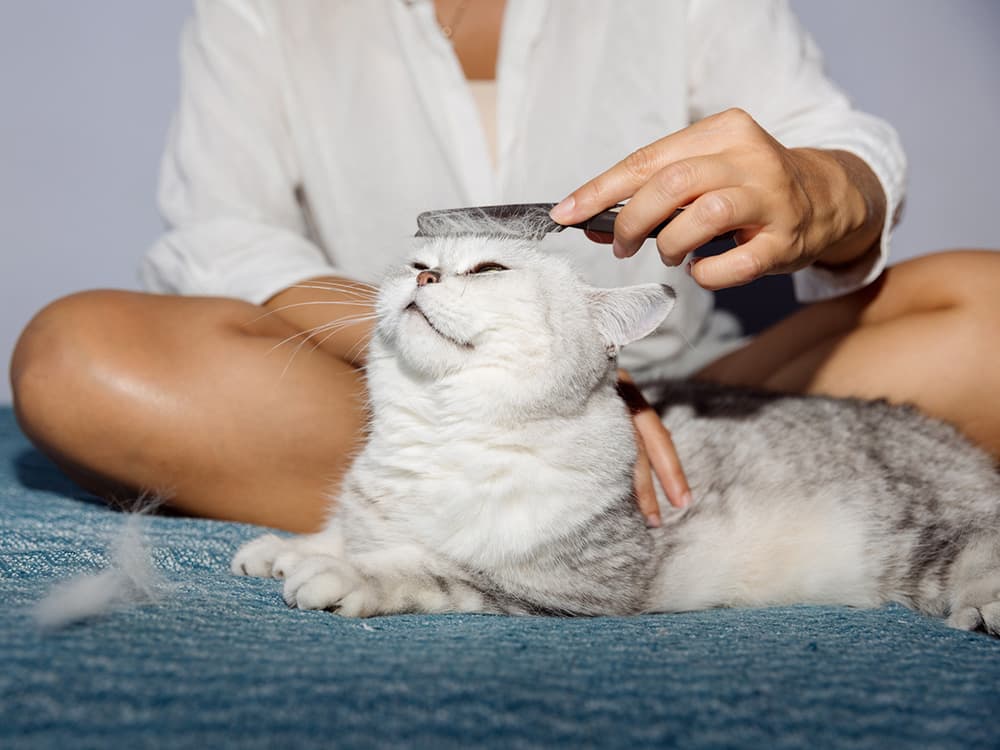
Comb your cat daily: That handy flea comb can also be helpful for removing adult fleas and flea eggs. Combing your cat’s fur out daily will reduce the number of fleas and eggs on your cat, as well as in the environment.
Thoroughly clean your home: This is a critical step in getting rid of fleas. Remember those eggs and pupae can be in the environment just waiting to start the cycle all over again so they need to be removed from carpets, furniture, and bedding.
The best flea treatments for cats combine products that kill as many life stages of the fleas as possible. This means that the product will need to have an insecticidal ingredient to kill adult fleas as well as ingredients that can destroy eggs or larvae, often called Insect Growth Regulators, or IGRs.
To date, there are no products that can kill the pupae stage because the cocoon is so tough, so the environment needs to be thoroughly and repeatedly cleaned to remove as many cocoons as possible. It also means that your cat will need to stay on a routine preventative because any pupae that remain in the environment can hatch within a year’s time and start another infestation. Maintaining your cat and any other pets on a monthly preventative will protect them from reinfection.
Veterinarian-approved remedies remain the most effective way to kill fleas on a cat. If you choose to try natural remedies such as essential oils, be forewarned: Some essential oils that are marketed as natural flea products can also be toxic to cats.
According to veterinarians, prescription flea medications are the most effective way to eliminate fleas on cats. Topical preventatives like Revolution Plus kill adult fleas, eggs, and larvae within 12 to 24 hours of application.For best results, use products containing adulticides to kill adult fleas and insect growth regulators that prevent larvae from maturing.
Roll up your sleeves and get ready to go to battle against the fleas in your living space. Here’s another gentle reminder about that flea life cycle: Those eggs and cocoons have evolved to withstand everything you can throw at them, so it is going to take a lot of elbow grease to clear them out.
Anything with fabric on it needs to be washed or discarded including furniture, pet beds, and your own bedding. Spaces with carpet should be vacuumed frequently to remove as many fleas, eggs, and cocoons from the area as possible. Ideally, have the carpets washed and cleaned, too. Hardwood floors should also be vacuumed and mopped to remove fleas that may be in the cracks of the floor boards.
If you’ve seen live fleas on your cat, you have a confirmed diagnosis of fleas. If your cat seems very itchy or has some areas of hair loss, you may need to investigate further to determine whether or not fleas are the problem. You can part your cat’s fur all the way down to the skin to look for live fleas and/or “flea dirt.” Flea dirt is actually flea poop, and it looks like black dandruff. If you find some black flaky material on your cat, you can place it on a paper towel and wet it to see if it is flea dirt. Flea dirt will turn red when it is wet because their poop contains remnants of blood.
If you do not see any live fleas or obvious flea dirt, the next step is to comb your cat’s fur out with a flea comb. Flea combs are usually made of metal and have very fine teeth. When you comb out your cat with a flea comb, closely examine the fur that gets trapped in the comb for signs of live fleas and/or flea dirt. Sometimes only a small amount is present on your cat, and combing them out allows you to get a more thorough sample.
If you are still unsure if fleas are the problem, set up an appointment with your veterinarian because your cat’s skin issues may be caused by something else entirely. If you have confirmed that your cat has fleas, now it is time to come up with a treatment plan. Treatment should combine treating your cat, as well as all other pets in the home, even if you haven’t seen fleas on them.
The best flea treatments will combine multiple cat-safe ingredients to kill adult fleas, larvae, and flea eggs. You will also need to clean the house thoroughly to remove fleas, cocoons, and flea eggs from the environment to prevent reinfection.
Fleas can carry other infectious bugs that can make your cat sick. This includes a form of tapeworm, an intestinal parasite, as well as species of Bartonella, Mycoplasma, and/or Rickettsia. These infections can make your cat feel much sicker than a simple flea infestation, so it’s important to contact your vet if you notice other signs including decreased appetite, vomiting, diarrhea, lethargy, pale gums and/or difficulty breathing. Any cat with fleas should be treated for tapeworms because this is such a common secondary infection from the fleas.
This is because when cats are itchy, they are constantly biting and chewing at their fur and are very likely to accidentally eat some fleas, allowing the tapeworms to set up shop inside their digestive tract. Cats with severe flea infestations can also develop anemia as a result of blood loss from the fleas feeding on their blood. This is especially common in kittens, as well as cats who are frail from other medical problems. If your cat seems to have a lot of fleas and/or is lethargic or has pale gums, it’s very important to see a vet right away.
When it comes to flea and tick preventatives, one size does not fit all. In fact, all those products with cute labels of dogs and cats living together in harmony are not indicators that the product can be used on both cats and dogs.
Dr. Iovino clarifies, “It’s really important with cats to use what’s for cats, because there are some dog products that will definitely mess a cat up. You want to check your over-the-counter labels, check the directions, and check the age at which they can be used before applying the products.” Some common ingredients that are included in flea and tick prophylactics for dogs, like permethrin and organophosphates, are highly toxic to cats, as they cannot metabolize these ingredients, and should be avoided at all costs.
Abdullah, Swaid, et al. “Pathogens in Fleas Collected from Cats and Dogs: Distribution and Prevalence in the UK.” Parasites & Vectors, vol. 12, no. 1, 6 Feb. 2019, https://doi.org/10.1186/s13071-019-3326-x.
“Control Fleas on Your Pet, in Your House, and in Your Yard | Mississippi State University Extension Service.” Msstate.edu, 2020, extension.msstate.edu/publications/publications/control-fleas-your-pet-your-house-and-your-yard.
Gardiner, John. “Fleas.” Animal Health Topics / School of Veterinary Medicine, 11 Apr. 2019, healthtopics.vetmed.ucdavis.edu/health-topics/canine/fleas.
“Kansas State University Veterinarian Advises Pet Owners on Flea and Tick Prevention | Kansas State University | News and Communications Services.” K-State.edu, 2018, www.k-state.edu/news/newsreleases/jun16/fleatickprevention62116.html. Accessed 16 June 2025.
Paul Pion, D. V. M., and Gina Spadafori. “Veterinary Partner.” VIN.com, 8 Aug. 2017, veterinarypartner.vin.com/default.aspx?pid=19239&id=4951999.
“Seresto Pet Collar Review | US EPA.” US EPA, 13 July 2023, www.epa.gov/pets/seresto-pet-collar-review.
Stanneck, Dorothee, et al. “Evaluation of the Long-Term Efficacy and Safety of an Imidacloprid 10%/Flumethrin 4.5% Polymer Matrix Collar (Seresto®) in Dogs and Cats Naturally Infested with Fleas And/or Ticks in Multicentre Clinical Field Studies in Europe.” Parasites & Vectors, vol. 5, no. 1, 31 Mar. 2012, https://doi.org/10.1186/1756-3305-5-66. Accessed 25 Oct. 2019.

Amy Fox, DVM is a small animal veterinarian in New York City with over thirteen years of experience in a mixture of general practice, emergency medicine, and shelter medicine. A lifelong animal lover, Dr. Fox studied biology in college and then worked as a veterinary nurse before pursuing veterinary school at Cornell University. Her expertise includes surgery, dentistry, and management of chronic conditions, and she is interested in toxicology, pain management, nutrition, care of senior pets, and educational outreach. Dr. Fox also enjoys writing about veterinary medicine and teaching, and her work has previously appeared in Spruce Pets. In her free time, she loves to cook, garden, go for long runs, and hang out with her goofy mixed-breed dog May, who provides never ending comic relief!