It’s Hot Out There—Here’s How to Protect Your Pup’s Paws
Those perfect little toe beans need all the help they can get.
Those perfect little toe beans need all the help they can get.
by T. Kent Jones, expert review by Dr. Bartley Harrison, DVM | June 4, 2025
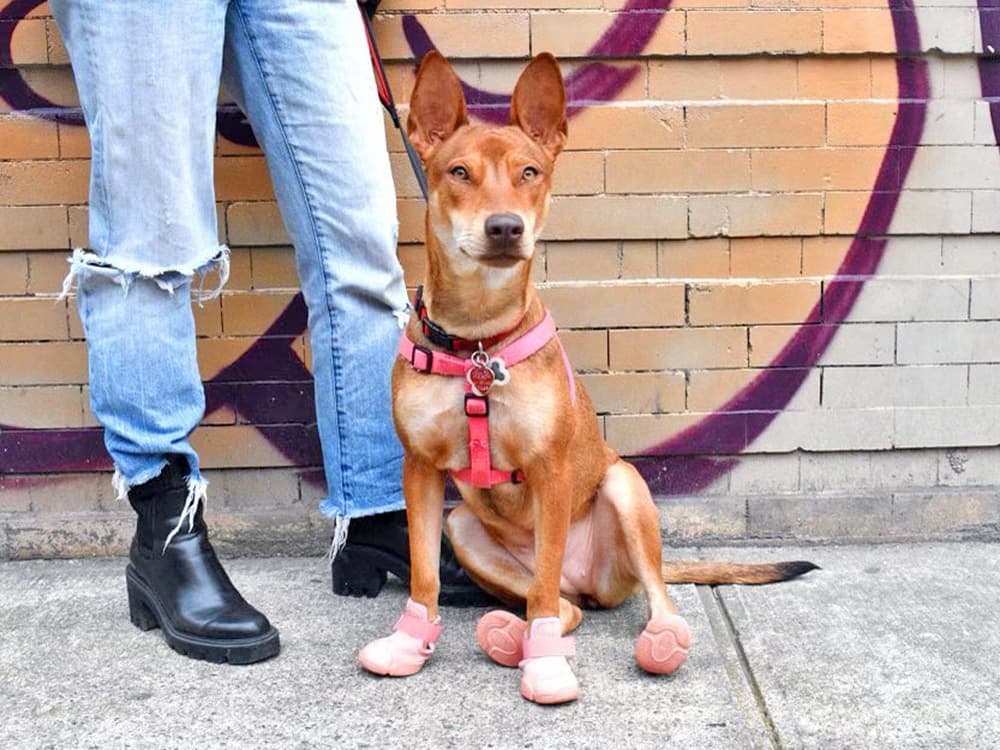
Photo Courtesy of @rifrufqueens
If you’ve ever taken your flip flops off at the beach just to yelp the moment your soles touched the hot sand, you know the importance of foot protection when the sun is beaming down on the ground. Now imagine how your shoeless pup feels on their summertime walks. Pavement gets significantly hotter than air temperatures — when it’s 95 degrees outside, cement can heat to 125 degrees, red brick can heat to 135 degrees, and blacktop can heat to 140 degrees. That’s way too hot for direct contact with ourselves or our pups.
It’s very possible to enjoy the great outdoors with our pups during these toasty months, but there are some important safety precautions to keep in mind. To get some paw-specific ways to protect your pup this summer, we spoke to Dr. Bartley Harrison, a small animal veterinarian based in North Carolina, and Dr. Jennifer Sperry, a veterinary advisor at Pets Plus Us based in Canada.
Dr. Harrison: Dog pads are generally pretty tough, but it’s still possible for dogs to get blisters or burns on their pads from standing on hot pavement or rocks. This is especially true for dogs that haven’t had time to acclimate to the heat and activity after lazing around in the winter.
Dr. Sperry: Even relatively brief contact with hot pavement can result in pain and thermal injury (burns) to a dog’s paw pads. This can be recognized as lameness/limping, licking/chewing at the feet, redness, blisters, and peeling. Time spent on hot pavement can also contribute to an overall increase in a dog’s body temperature and increase their risk of heat stroke.
Dr. Sperry: Some people believe that domestic dogs are naturally equipped to withstand a variety of outdoor weather and temperature conditions, because of their wild ancestry. However, most of our pet dogs are very different from wild canids in terms of their anatomy, physiology, lifestyle, and behavior. As a result, planning and precautions are required to keep our canine companions safe during warm or hot weather.
Dr. Sperry: When on the go, it’s critical to understand that not all dogs will display obvious signs of discomfort when walking on hot pavement. However, if your dog is limping, reluctant to walk, crying, or not behaving as usual on the leash, they could be experiencing pain or burning.
After a burn has occurred, a dog may be limping or lame, lethargic, reluctant to stand or walk, or licking/chewing at the feet. You may see visible redness, blistering, or peeling of the paw pads, revealing a raw and red surface.
Dr. Harrison: The best thing to do is to avoid walking outside during the hottest part of the day. If you can’t hold the back of your hand on the surface for five seconds without any discomfort, it's too hot for your dog. The other big thing is to avoid playing fetch or roughhousing on hot sidewalks, streets, patios, or pool decks. Stopping and starting on these hot surfaces is especially tough on paw pads.
Dr. Jennifer Sperry: Avoid cement, pavement, or tile surfaces, especially darker-colored surfaces, on hot and/or sunny days. Be aware that beach sand is just as hot for your pet as it is for your bare feet. Choose to walk in the morning or evening, when temperatures are lower and the sun is closer to the horizon. Exercise in shady, grass-covered areas.
When urban walking is unavoidable, consider using properly fitted booties. Keep in mind, your dog’s feet are one of their cooling mechanisms, so prolonged coverage during warm temperatures impairs their ability to regulate their body temperature. Take breaks and provide water frequently.
Dr. Harrison: Early morning tends to be the safest time to walk dogs during the summer. Surfaces have had some time to cool off overnight and the temperature hasn’t started to rise yet. Evenings or nighttime are also good for walks. It’s best to avoid outdoor activities during the hottest part of the day. Maybe a quick trip to pee is OK, but save the long walks for the cooler hours.

Temperatures are rising dangerously. Keep your pet safe with these tips.
Dr. Sperry: Shaded dirt paths, wet sand, or grass are ideal surfaces for warm-weather walks.
Dr. Harrison: Be sure to check your dog’s paws for any problems after a long walk outside, especially if you know they were walking on hot surfaces. It never hurts to take a quick look at your dog’s paws while they’re getting belly rubs. Getting them used to having their feet handled reduces stress for nail trims and vet visits. You should definitely take a look at your dog’s paws if they're ever showing signs of lameness or discomfort.
Dr. Sperry: Paws should be checked during regular bathing or grooming activities, or any time you notice your dog limping, protesting exercise, licking, or chewing at their feet.
Dr. Sperry: Regular grooming helps to keep nails short and reduce debris accumulation in the hair between toes. This can reduce the risk of injury during walks, play, and navigating uneven terrain.
Dr. Harrison: Check their paw pads for any signs of tenderness when pressed on. For larger dogs, you may need to press on each toe pad separately. Also look for visual signs of burns or blistering like thin areas of skin, redness around the edges of the pads, abrasions, or oozing wounds.
Dr. Sperry: Secure booties in the proper size, with good ventilation and a thicker bottom are best for hot weather. Balloon-type rubber booties are best avoided, due to their thin sole and poor ventilation. Firm boots that don’t come in a variety of sizes run the risk of offering a poor fit, which can damage nails, and lead to blisters and chafing.
Dr. Sperry: Regular exercise on grass or dirt during moderate temperatures helps to maintain the naturally thick layer of protective tissue on the paw pads. Feet should be dried thoroughly after swimming or bathing, and before/after using any footwear.
Time spent wearing booties should be minimized. A natural beeswax or coconut oil moisturizer can be used on dry paw pads, especially for seniors, but is not usually necessary for healthy adult dogs.
Dr. Sperry: Discontinue any outdoor activities or exercise. Get to a cool place where your pet can rest. Use a cone collar to prevent licking/chewing at the feet. Contact your veterinarian for advice on how to relieve pain and manage wounds.
Dr. Sperry: If you see visible signs of thermal injury, such as redness, raw pads, blistering or peeling; if your pet exhibits signs of pain such as crying or licking/chewing at the feet; or if you notice any lameness or lethargy lasting longer than a day, you should seek veterinary care.
Dr. Sperry: Geriatric or ill pets may be more prone to dry or cracking pads. For these pets, it is best to apply moisturizers or balms in the evening, when your pet is able to rest in a temperature-controlled environment.
Dr. Sperry: Products containing dyes, scents, or alcohols can be irritating to your pet’s skin. Because dogs often lick their feet, paw care products should only contain ingredients that can safely be ingested in small amounts, such as beeswax or food-grade oils.
Dr. Sperry: Humidity reduces a dog’s ability to naturally cool off during the heat, just like it does for people. Timing exercise carefully is especially important during humid weather. In low-humidity environments, it is important to remember that bright sun can heat up ground temperatures, even on relatively cool days.
Dr. Sperry: Smaller dogs, and those with a low percentage of body fat (like sighthounds), have less fat cushioning in their paw pads. These dogs may be more vulnerable to thermal injuries to their feet.

T. Kent Jones is a writer and broadcaster whose work has been featured on The Daily Show on Comedy Central, The Rachel Maddow Show on MSNBC, Morning Sedition with Marc Maron on Air America Radio and in many publications and comedy websites. He lives in New York City with his wife, Kelly, and their rescue Schnoodle, Pops, who suffers much foolishness with stoic forebearance.
Pet Wellness

Pet Wellness
Lifestyle
Lifestyle
In the pool, a lake, a river, or the ocean.
Pet Wellness
A vet explains when you can treat the injury at home—and when it’s best to seek professional help.