Dry Food vs. Wet Food: Choosing the Right Diet for Your New Dog
Learn what most vets typically recommend and why.
Learn what most vets typically recommend and why.
by Katie Koschalk, | October 14, 2025

rodimovpavel / Adobe Stock
In anticipation of bringing home your newly adopted dog, you’ve picked out the perfect collar, stocked up on toys, and cleared your camera roll of approximately 1,000 photos. But there’s still one big decision to make: What should you feed your dog: dry food, wet food, or both? With so many dog food options, opinions, and marketing buzzwords, it’s enough to make any new dog parent panic-scroll at the pet store.
But here’s the truth: There is no one-size-fits-all choice. Both wet and dry foods can offer complete nutrition. The key is to choose the option that fits your dog’s unique needs. In this guide, we’ll walk you through the pros and cons of each option, and help you choose the best fit for your pup’s health and lifestyle.
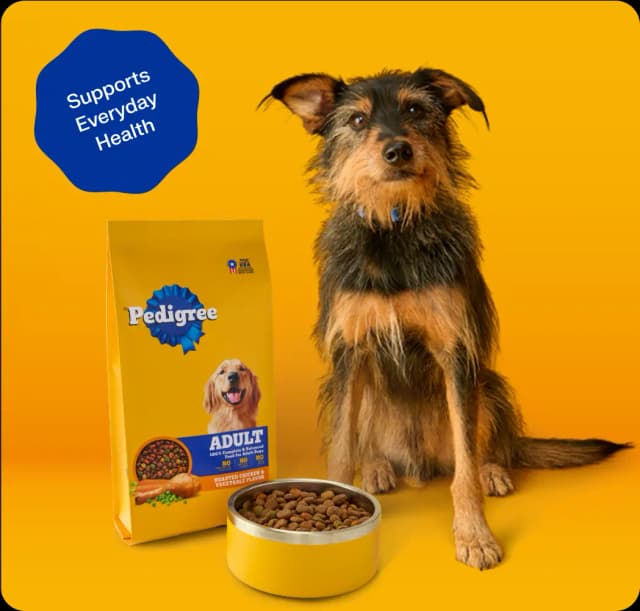
The PEDIGREE® brand has a range of products to keep your dog’s tail wagging. Plus, they believe that every dog deserves a loving home, supporting dog adoption for over 15 years.
“Wet and dry dog food can provide complete and balanced nutrition if labeled as such by AAFCO (Association of American Feed Control Officials),” says Dr. Brittany King, emergency veterinarian at Thrive Pet Healthcare Specialists.
That said, Dr. King adds that there are important differences between wet and dry food, such as formulation, concentration of nutrients, and feeding practices.
Here’s how they compare in several key areas.
Dry food (kibble) is produced by blending ingredients into a dough-like mixture that’s cooked under high heat and pressure (extrusion), shaped into small pieces, then baked or dried. Once cooled, fats and flavorings are sprayed onto the kibble to boost taste and aroma.
Wet food is made by grinding ingredients into a stew-like mixture, which is then cooked at high temperatures and sealed in cans or pouches.
The most obvious difference between wet and dry food is moisture content.
Dry food contains about 10 percent moisture.
Wet food contains about 70 to 80 percent moisture.
Dr. King says that both wet and dry dog foods can provide complete nutrition, which is labeled as “complete and balanced” for your dog’s life stage. However, she notes that their nutrient concentrations will vary due to the moisture content.
According to Dr. King:
Dry food typically contains more calories, protein, and fiber by percentage (on a dry-matter basis). Dry food also contains more carbohydrates (to maintain structure).
Wet food typically has higher fat levels and fewer carbs and calories by percentage (on a dry matter basis).
Dr. King explains that because wet food contains significantly more moisture, its nutrients are less concentrated. As a result, dogs generally need to eat a larger portion of wet food to get the same nutritional value as a smaller amount of dry food.
Although ingredients can vary depending on the brand and recipe, there are some common trends.
Dry food typically contains more grains or starches, such as rice, barley, or legumes, which help bind the kibble and give it structure during manufacturing.
Wet food is primarily made from meat or fish, with smaller amounts of grains or legumes (if any).
When it comes to how long your dog’s food lasts once opened, wet and dry foods differ quite a bit.
Dry food has a longer shelf life after opening and doesn’t require refrigeration.
Wet food must be refrigerated after opening and used within a few days.

Yes, you can feed your dog well without spending a fortune.
Dry food, or kibble, offers several pros and a few potential drawbacks.
According to Dr. King, potential benefits of dry food include the following conveniences.
Convenience: Dry food is easy to measure, store, and serve, making it ideal for busy households.
Cost-effective: It is typically less expensive per serving than wet food.
Long shelf life: Dry food stays fresh for weeks (or months) after opening, when stored properly.
Versatility: It works well in food puzzles, slow feeders, and as training treats.
Dental health: Some specially formulated dry foods are designed to help reduce plaque and tartar buildup. However, dental kibble is not a replacement for toothbrushing.
Lower moisture content: With only about 10 percent water, it doesn’t provide hydration support. This is something to consider if your dog isn’t a big drinker.
Less palatable: Some dogs may find kibble less tasty or aromatic than wet food.
Carb-heavy: Typically higher in carbohydrates, dry food may not be suitable for all dogs, especially those with weight issues or certain health conditions, such as diabetes.
Wet food has a different composition and presentation than kibble, which comes with its own set of benefits and drawbacks.
These are some benefits of wet dog food, according to Dr. King.
High moisture content: Contains 70 to 80 percent water, keeping dogs more hydrated. This is particularly helpful for dogs who don’t drink much water or need added moisture to support digestion or a chronic condition.
Palatability: The texture, smell, and flavor are often more appealing to picky eaters or older dogs with a reduced appetite.
Easier to chew: It’s a great option for puppies, small breeds, and senior dogs with dental issues.
Lower carbohydrate content: Many wet foods are less carb-heavy than kibble, which may be beneficial for dogs with certain health conditions.
Shorter shelf life: It must be refrigerated after opening and used within a few days.
Higher cost: Wet food is typically more expensive per serving compared to dry food.
Messier feeding: It can be less convenient, stickier, and smellier to serve and store.
Dental health: Wet food isn’t offered in dental-health varieties, so it won’t provide the same oral benefits as certain specialized kibbles.
Puppies grow rapidly, and their nutritional needs differ significantly from those of adult dogs. Look for foods labeled “complete and balanced for growth” or ones specifically designed for puppies.
Higher protein and fat: To fuel growth and energy needs
Essential nutrients like DHA: To support brain and vision development
Controlled calcium and phosphorus: Important for proper bone formation
Puppies need nutrient-rich food formulated for growth and development. Both wet and dry options provide this (just make sure the food is labeled “complete and balanced for growth”). The choice of wet, dry, or both often comes down to your puppy’s age, needs, and your preferences as their caretaker.
Once puppies are fully weaned from their mother’s milk (typically by six to eight weeks of age), most veterinarians recommend mixing wet and dry food, which can give your puppy the best of both worlds — hydration, taste, and convenience.
No matter what you choose, puppies need multiple small meals each day (usually three to four) and should transition gradually when switching foods. For breed-specific needs or growth concerns, check with your veterinarian.
There’s no one-size-fits-all answer. Dr. King says the “best” option depends on several factors, including your dog’s age, lifestyle, and disease status, as well as your own lifestyle and preferences.
In some cases, one option might be better than the other. For example, dogs with kidney disease, urinary tract issues, or who don’t drink much water may benefit from moisture-rich wet food.
But generally speaking, most veterinarians recommend a combination approach, allowing dogs to benefit from the strengths of each.
Yes, most puppies can begin eating softened dry food at around four to six weeks of age, as they transition off their mother’s milk or formula. At six weeks, many can handle puppy kibble, although you may want to moisten it with warm water to make chewing easier.
Puppies can start eating wet food as early as three to four weeks old, when they begin the weaning process. Initially, they can only handle very soft meals — often a mix of canned puppy food and milk replacer blended into a thin “puppy gruel.”
By six to eight weeks of age, most puppies have fully erupted teeth, allowing them to eat dry puppy kibble. Transition gradually, starting with moistened kibble before moving to fully dry food.
Both are healthy options as long as the food is labeled “complete and balanced for growth.” Most veterinarians recommend feeding a combination of the two.
Young puppies need multiple small meals throughout the day (typically three to four), because their stomachs are small and they burn energy quickly. As they grow, the number of meals can be reduced.
Mixing can be a great way to get the benefits of both: hydration and palatability from wet food, plus the convenience and calorie density of dry food. Just make sure the total portion matches your puppy’s needs.
“Complete and Balanced” Pet Food.” FDA, www.fda.gov/animal-veterinary/animal-health-literacy/complete-and-balanced-pet-food.
“Dry, Canned, or Semi-Moist: Food Choices for Dogs.” VCA Hospitals, vcahospitals.com/know-your-pet/dry-canned-or-semimoist-food-choices-for-dogs.
Tolbert, Katie. “What Kind of Food Should You Feed Your Dog?” Texas A&M University, 21 Nov. 2024, stories.tamu.edu/news/2024/11/21/what-kind-of-food-should-you-feed-your-dog.

Katie Koschalk is a freelance writer based in Northern California. Fusing her love and knowledge of animals with her journalism degree and years of professional writing, Katie is dedicated to improving the lives of pets and their caretakers by sharing helpful and accurate information. When she’s not at her desk, you can find her exploring trails with her Aussie, Hunter, cooking plant-based meals, and talking to her two cats, Jax and Sadie, in really ridiculous voices.

Shelters & Rescue

Behavior & Training
Pet Wellness

Behavior & Training

Adoption Advice
You’d be hard-pressed to find a dog who doesn’t like a meal or a treat. So why not give them a name to celebrate their favorite pastime?

Behavior & Training
Is this actually possible, or an urban myth? We get the lowdown.

Adoption Advice
Thinking of adopting a dog? Learn more about the average monthly costs of dog parenthood.

Adoption Advice
These studies prove that dogs’ awesomeness is more than just a vibe.

Adoption Advice
Help your underweight puppy achieve a healthy weight with these expert tips and feeding strategies.