Is Your Cat’s Separation Anxiety Ruining Their Life and Yours?
Why your cat freaks out when you’re away (and how to help).
Why your cat freaks out when you’re away (and how to help).
by Janelle Leeson , | May 22, 2023
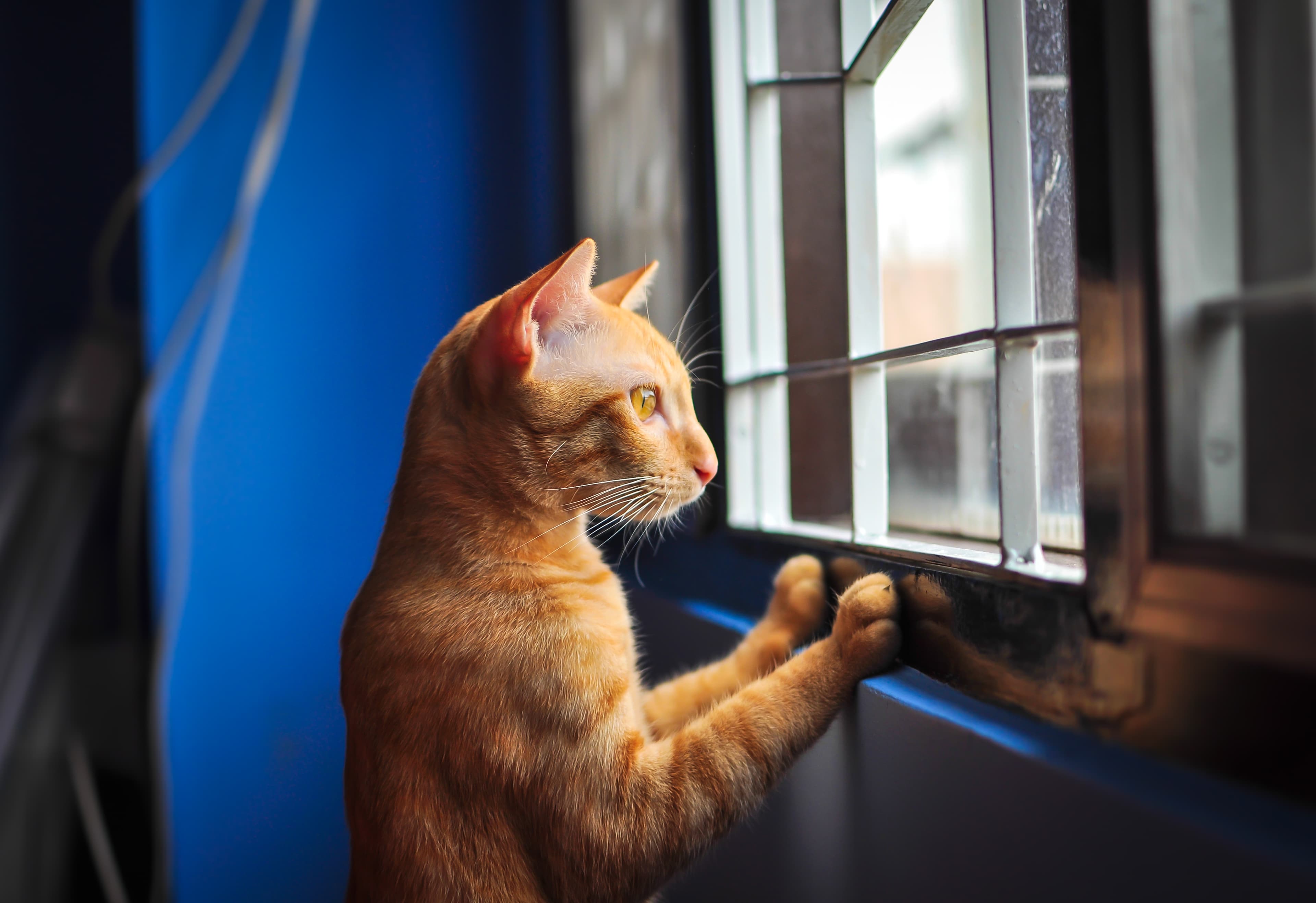
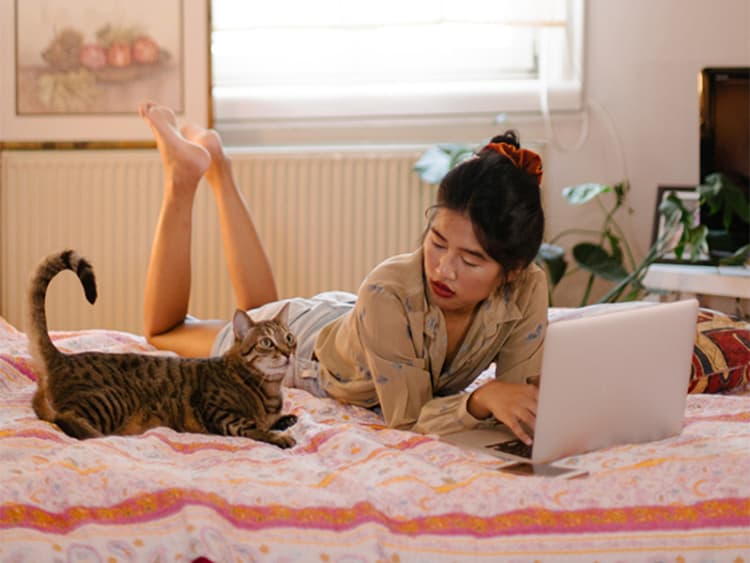
This Is Me / Shutterstock
It’s tough to leave your cat home alone. It’s even harder if your cat ruins the furniture and makes a mess outside the litter box while you’re gone. If those behaviors stop when you’re back, your cat might have separation anxiety, says Stephen Quandt, a certified cat behavior specialist and owner of Cat Behavior Help. As with separation anxiety in dogs, losing a family member or experiencing changes in routine or surroundings are a few things that can worsen anxiety symptoms. Here’s how to spot and treat your cat’s separation anxiety, per Quandt.
Separation anxiety is when pets — cats or dogs — become distressed and anxious when separated from their pet parents. Quandt says separation anxiety isn’t exactly loneliness, but rather an over-dependence on caretakers.
“It’s hard to know exactly what cats feel when they have anxiety because they can’t talk to us with words. However, they do talk to us with behavior and body language. This helps us infer that our cats are feeling poorly and are in some degree of distress,” Quandt says.
A veterinarian and a behaviorist’s tips for preparing your cat for your new WFO schedule.
Separation anxiety can look a lot like other medical conditions. That’s why Quandt says to visit your veterinarian if your cat exhibits any of these signs:
Pacing
Over-grooming
Destructive behavior (for example, aggression and furniture scratching)
Pooping or peeing outside the litter box
Low energy or depressed
A cat who is showing one or more of these behaviors all the time (even when you’re home) may have a medical condition rather than an emotional one, Quandt adds.
You may also see a similar behavior in bored cats. “If the cat’s negative behaviors occur in the pet parent’s presence, behaviors like meowing, scratching objects, and attention begging are examples that the cat is likely bored,” Quandt says. In comparison, negative behaviors associated with separation anxiety happen when you’re away and are due to distress.

Pssst… Your cat’s cool loner persona is all an act.
Quandt says separation anxiety might be somewhat of a natural trait in cats who have various personalities. But cats who form strong attachments to their humans are more likely to experience separation anxiety, such as a single bottle-fed kitten. Therefore, separation anxiety could stem from genetics, life experiences, or a combination of the two.
Any of these below factors could trigger separation anxiety.
Cats vary in how long they can cope alone or with a sitter. Some cats get stressed after an hour, a day, or days. In one rare case, Quandt recalls a cat who marked doorways any time their parent left the room.
We can’t be sure that cats understand the concept of death, but they recognize and respond to the absence of another person or pet. Because cats can pick up on our moods, separation anxiety in cats can worsen when their caretaker grieves the same person or pet.
Moving can be a stressful time for people, but it’s especially difficult for cats who rely on familiar places and smells to feel secure. As a result, a cat in a new home might become more reliant on human family members’ company.
If cats had their own TikTok trends, this would be one.
Cats love their daily routines just as much as familiar places and faces. This means sticking to a typical routine as much as you can.
Siamese and Burmese cats are more prone to separation anxiety than other cats. “This could be the result of their tendencies to be more codependent on their humans than other breeds,” Quandt says.
As pets get older, they may experience hearing or vision loss, or develop senior cat health issues such as kidney disease or cognitive dysfunction, which is like Alzheimer’s in humans. Any of these conditions can make it harder for a cat to cope with changes in routine or time away from their humans.
People, let me tell you ’bout (your cat’s) best friend.
To help your cat keep their cool while you’re away, you can try desensitization training. To do this, gradually increase the time your cat spends alone, starting with short sessions that don’t upset your cat. Consider using the following tips to make solo time more enjoyable for cats:
“The number-one mistake people make with all the best of intentions is smothering their cat with attention just before they leave the home. As a result, your absence is felt much more intensely,” Quandt says. Avoid rattling keys, making a big fuss saying goodbye, or rushing around to collect your things. Leave gently. Kiss and cuddle your cat once you’re back home, he suggests.
Quandt says adding enriching elements to a cat’s life can reduce stress. This includes food puzzles, bird videos, scratching posts, and perches. and cozy “igloo” beds, preferably with some used clothing of the pet parent, can also be beneficial because cats express status with height and feel secure in enclosed spaces.
Did you know there’s music just for soothing cats? It’s called species-appropriate music, and it’s composed of purrs, suckling, and other friendly sounds used in cat-to-cat communication. That, paired with pheromones mimicking a cat’s natural communication scents, can help your kitty chill, Quandt says. “Before administering anything orally to your cat like calming treats, liquids, or CBD products, check with your vet first,” he adds.
You can find good pet sitters on apps, such as Nextdoor, Rover, or Meowtel. They’ll accommodate your and your cat’s needs by stopping in for short visits or staying at your home while you’re away.
Not necessarily, Quandt says. Your cat doesn’t really miss you because they’re lonely. They’re missing you because they’re too attached to you or someone else who takes care of them. Another pet could make your cat more stressed and act out even more. This could work for some cats, but it’s not the solution for every household.

Janelle Leeson is a Portland, Oregon-based freelance writer. Her work has been featured in magazines such as Inside Your Dog’s Mind, Inside Your Cat’s Mind, Paw Print, and Real Simple, and on Adopt-A-Pet, Insider Reviews, Forbes Vetted, Forbes Advisor, Readers Digest, NBC Select, Shop Today, PetMD, Chewy Education, Spruce Pets, Daily Paws, and The Bump.
She is a three-time certificate of excellence winner (via the Cat Writers’ Association) and is a two-time panelist at the American Society of Journalists and Authors annual conference. Her work focuses on pet behavior, general care, and nutrition, pet product testing and buying guides, exotic pet behavior, general care, and nutrition, parenting product testing and buying guides.
Lifestyle
Behavior & Training
Behavior & Training
Lifestyle
We asked both animal behaviorists and human psychologists how you can deal with leaving your dog home alone.
Behavior & Training
It was a trick question. A study shows that the pandemic has made us all codependent.