Let’s Talk Interactive Dog Toys
Let the games begin.
Let the games begin.
by Marisa Meltzer, | January 10, 2024
Lenti Hill / Adobe Stock
On days when pet parents have less time to engage with their four-legged friends, interactive dog toys can feel like a godsend. Unfamiliar with the concept? Interactive dog toys come in two primary categories: battery-operated and manual. Battery-operated interactive dog toys include rechargeable balls, bones, and plush toys, while manual interactive dog toys refer to feeder puzzles, snuffle mats, and bungees.
Regardless of the type of interactive dog toy, the goal is the same: mental stimulation. By engaging with these toys, dogs use their brains and problem-solving skills, which in turn helps to soothe anxiety, reduce barking, and mitigate unwanted behaviors. Need we say more? To see how game-changing these gadgets can be for yourself (and your pup), consider adding one, two, or a few of the best interactive dog toys from our top 10 picks of the litter.
“Many dogs are under-stimulated and under-exercised...or pretty bored. They don’t have phones or watch TV,” says Stacy Alldredge, certified dog trainer, behaviorist, and founder of Who’s Walking Who. Dog puzzles and “interactive toys are a great way to give your dog something to do. They’re also a way for kids to do something with a dog that doesn’t make them mouthy and jumpy.”
In addition to the mental stimulation that a dog gets from interacting with a puzzle toy, playing and chewing releases feel-good chemicals in the brain, which keeps dogs happy, busy, and using up energy. Dog puzzles and interactive toys come in a variety of styles and skill levels that any dog can benefit from.
Durable treat dispensing balls are popular for solitary play. The dog rolls around the ball to release food.
Slow-feeder food cubes and pyramids, such as Kong and Fable Pets, require dogs to knock over the treat dispenser to get food.
With chew-puzzle toys, dogs need to chew and manipulate the toy to extract their reward.
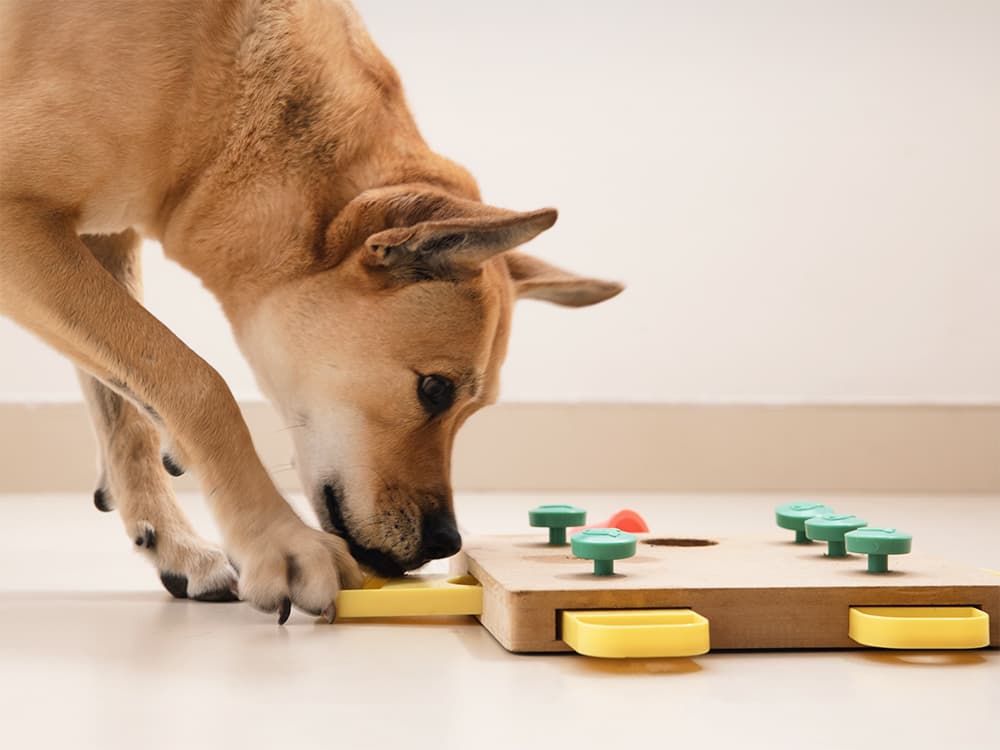
Treat-puzzle games are interactive dog toys that require pups to flip open doors and lift compartments, using their paws and nose to find the hidden treats.
If your dog needs encouragement, make the toys more appealing by rubbing something tasty on them, such as peanut butter. When you first introduce your dog to puzzle toys, make it easy for them to get the treats, then gradually increase the difficulty so that they learn how to extract the food. Otherwise, your dog may get frustrated, leading to the opposite of what is intended through enrichment and mental stimulation.
Not all toys are the same, and not all dogs will respond to the same toys. If your dog needs activity, try a treat game that slowly dispenses treats or kibble while they chase it around the house (preferably away from where you’re working). “Some dogs will eat out of a puzzle toy but not out of a bowl,” Alldredge says. If your dog does not have that problem, but rather is such a fast eater that they make themselves sick, try a snuffle mat that replicates foraging behavior and slows mealtime down. If your dog needs confidence building, try a simple puzzle game and gradually work them up to more difficult ones.
“A few years ago, I bought one of every dog puzzle game on the market,” Alldredge says. “And wow — some of them, like the Nina Ottosson ones, were so hard to figure out!” Puzzle toys aren’t just for puppies, either. “The biggest mistake people make is forgetting that adult dogs need entertainment, too.” Here are a few things to consider.
Size: Interactive dog toys don’t typically come in different sizes. With that in mind, use your own judgment to determine if a ball is too small for your large dog’s mouth or too big for your puppy’s.
Safety: Interactive dog toys are designed to keep your pup occupied for hours on end. That doesn’t mean you should leave them home alone with these toys, though. Even the safest toys run the risk of becoming a choking hazard. Proper use aside, when it comes to the safety of interactive dog toys, consider your pup’s normal habits. If they’re a big chewer, veer away from toys that can easily be shredded. If they’re not super coordinated, perhaps skip bungee toys that could knock them on their bum. Again, use your best judgment.
Type: Remember, interactive dog toys come in battery-operated and manual options. The right interactive dog toy for you depends on your their reward system. If they’re food-driven, a manual snuffle mat or feeding puzzle is ideal. If they’re play-driven, a battery-operated ball or bone will capture their attention and hold it.
Price: As with all things in life, interactive dog toys are sold at a variety of price points. That means no matter your budget, you’re bound to find a toy worth treating your dog to. In other words, don’t feel like you have to splurge to get in on the interactive dog toy trend.
Below are a few popular picks.
Btw, our editors (and their pets) picked out these products. They’re always in stock at the time we publish, but there’s a chance they’ll sell out. If you do buy through our links, we may earn a commission. (We’ve got a lot of toys to buy over here, you know?)
Best interactive ball: PetDroid Interactive Dog Ball
Most durable ball: Cheerble Smart Interactive Dog Toy
Best tug-and-chase dog toy: QGI Random Path Electric Rolling Dog Toy
Best hybrid interactive feeder toy: Woof Pupsicle Starter Pack
Best slow feeder: Potaroma Dog Puzzle Slow Feeder
Best snuffle mat: Vivifying Snuffle Mat
Best treat puzzle: Outward Hound Dog Hide N Slide Dog Toy
Best plush interactive dog toy: Hyper Pet Doggie Tail
Best interactive dog bone: Wickedbone Dog
Best interactive tree rope: Jolly Pets Tree Tugger Rope Tug Dog Toy
The safest interactive dog toy is one that will occupy your pup without potentially causing them harm. Look for designs free of small, easily separable parts to prevent choking hazards.
Many different interactive dog toys exist, but they all fall into one of two categories: manual or battery-operated. If you don’t want to have to fuss over charging or swapping batteries, opt for a manual design, like a puzzle feeder, snuffle mat, or tree bungee.
Many interactive dog toys cost as little as $15 to $20. That said, the battery-operated ones tend to cost a bit more. Many shoppers report that they’re well worth the investment, though.

Marisa Meltzer has contributed to The New York Times, Vogue, Vanity Fair, and is the author of This Is Big: How the Women Who Founded Weight Watchers Changed the World (and Me). She lives in New York City with her dog Joan.