6 Expert Tips to Make Flying With Your Dog as Smooth as Possible
From picking the right carrier to surviving airport chaos, here’s everything you need to know before your dog’s first flight.
From picking the right carrier to surviving airport chaos, here’s everything you need to know before your dog’s first flight.
by Rachel Davies, expert review by Dr. John Iovino, DVM | July 29, 2026
Eva / Adobe Stock
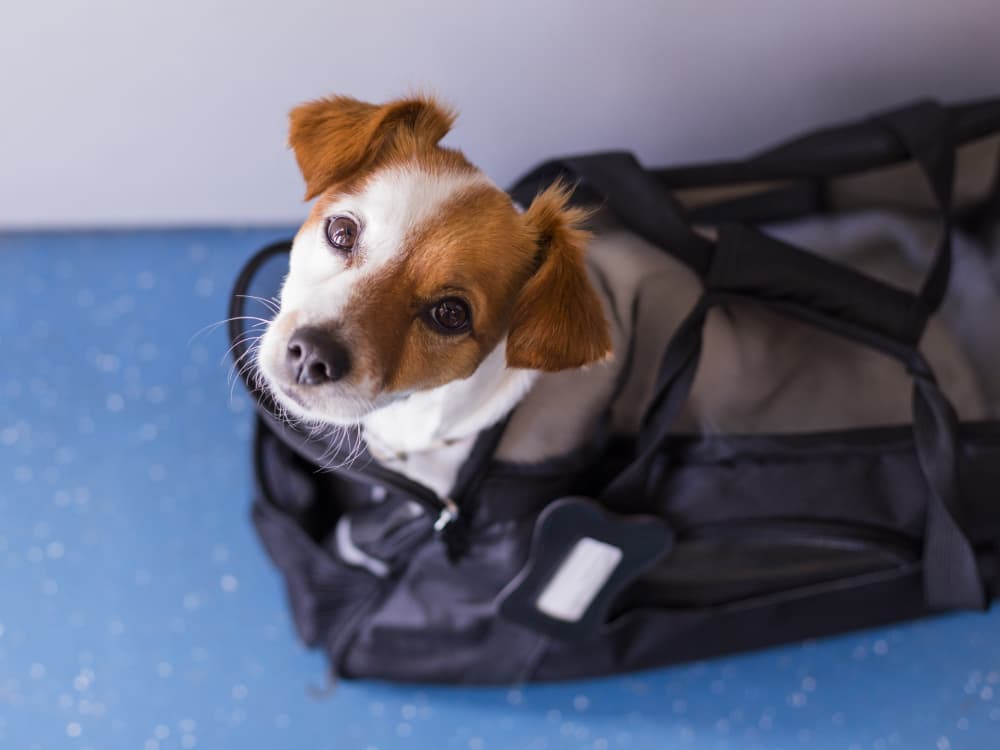
The worst part about traveling isn’t maneuvering the airport (though that does suck) — it’s leaving your pup behind and the guilt that comes along with that. Thankfully, you do have an option: You can bring your dog with you on your flight. While it sounds daunting, there are some hacks for making the flight with your favorite companion as smooth as possible, while keeping an eye on them the whole time. We spoke with veterinarian Dr. John Iovino to get some tips for traveling with pups who can fit in an under-seat carrier (under or around 20 pounds).
Olga Petrova / Pexels
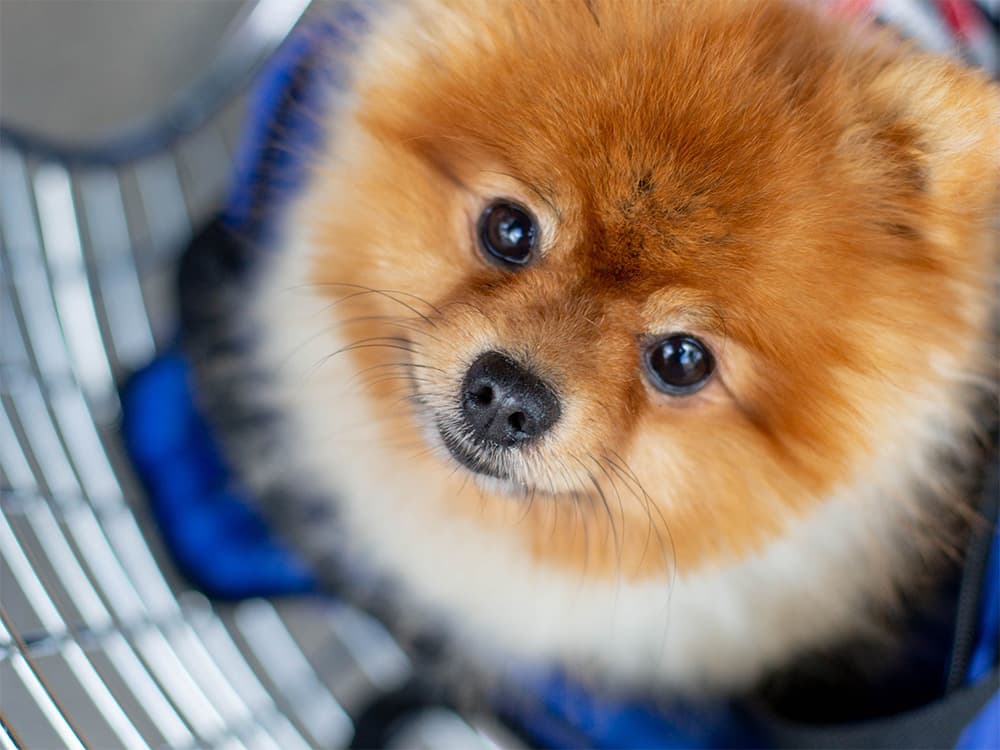
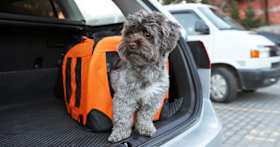
Carrier choice can make or break your inflight experience, and Dr. Iovino warns that the options can be overwhelming. “With so many types of carriers on the market, I can see how choosing one can be challenging,” he says. Thankfully, Dr. Iovino recommends a few tricks to selecting the right one.
Check your specific airline’s carrier guidance to make sure that you’re getting the exact right size. “Each airline should include the dimensions they require on their website, and a good rule of thumb for the weight requirement is that the carrier plus the pet’s weight cannot exceed 20 pounds,” Dr. Iovino explains. “Knowing your pet’s weight and paying attention to how much the carrier weighs on the product is key.”
Look for something that your dog can move around in comfortably, so they aren’t cramped in one position during the entirety of your travels. Ideally, you can fit a small folded-up blanket or little pillow in the carrier for their comfort.
Soft carriers designed specifically for flying. “They have mesh walls on most sides to provide ventilation and a chance for you to see your pet to make sure everything is okay. I find them easier to position under the seat in front of you rather than using a plastic or ‘non-collapsible’ carrier,” he says. But possibly their biggest boon: “Soft carriers are easily cleanable, and they collapse down for easy storage when not being used.”
If you haven’t yet discovered, all dog carriers are not created equally. Our guide will help you find the right one for your pup.
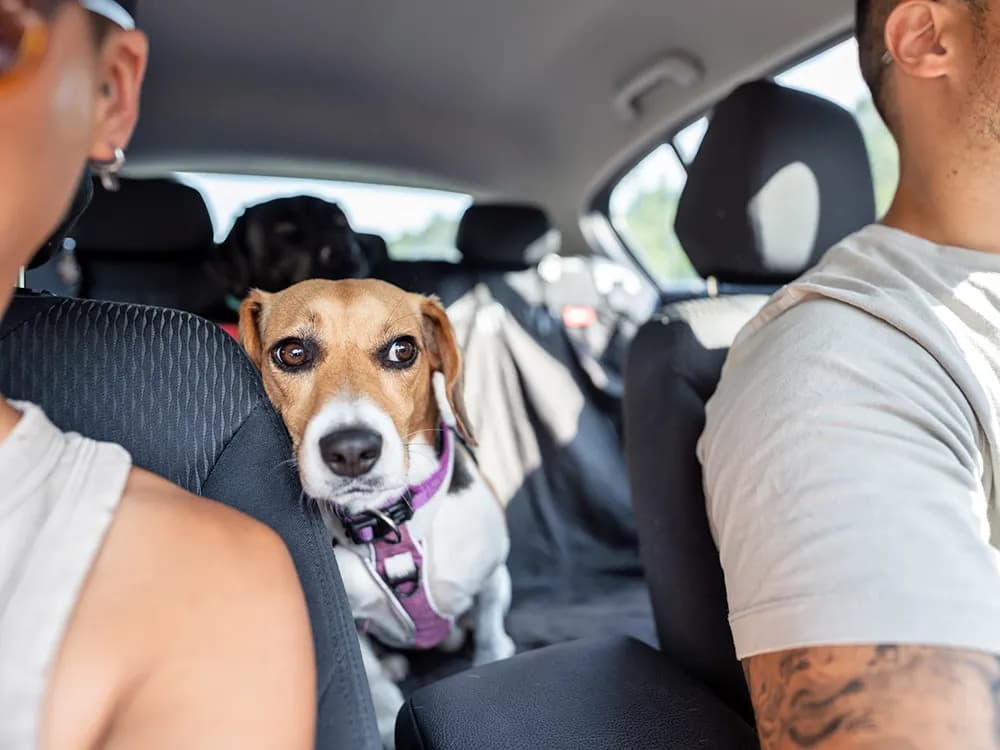
If your pup is uneasy during car rides or can’t handle staying in a crate for very long, you should practice in the days leading up to your travel date. This practice can involve many different activities, from practicing with seat belts to getting your dog comfortable with their crate or carrier — the latter being the most important.
Start training slowly. Get your dog comfortable with staying in the specific carrier they’ll be inside on the date of travel — by easing up to the amount of time they’ll spend in the carrier day by day. For example, if your travel time will be five hours, start at a low duration (say, half an hour, depending on existing comfort levels) and work up to the amount they’ll experience on their day of travel. If you live in a city, take your pup on the subway in a carrier to simulate the experience; if you’re car-bound, do the same in the car.
Find a calming treat. Your dog will certainly deserve a treat on your day of travel, and why not pick something that you think will aid them on their travel journey? Something with CBD or melatonin will help lower their anxiety levels.
Try out your plan before travel day. Whatever you choose, be sure to have your dog sample it ahead of the day of travel — you never know how a new food could affect your dog’s stomach, and it’s a lot easier to deal with a queasy stomach when you’re not 36,000 feet in the air.
Pack enough food for the trip. And if your trip is longer than six hours or so, pack a baggie of extra kibble for a quick meal when you land.
Your dog doesn’t need to be their obedience school’s valedictorian in order to handle flying, but basic training will make your day of travel a lot more manageable. When planning your trip, don’t forget to consider the entire day’s worth of travel — not just the flight, but the trip to the airport, and the amount of time you’ll spend in the terminal itself.
Alvaro Lavin / Stocksy
In most cases, your pet’s carrier counts as one of the two carry-ons allotted with your booking. Because of this, you have to be strategic with the other carrier you bring on the flight. This largely depends on your own personal needs for in-flight comfort.
If you’re someone who likes tons of options (iPad, book, neck pillow... what have you), you’re probably best checking a bag with all of the other belongings you’re bringing on your trip, rather than trying to get away with a rolling case plus the carrier. If you require less to stay entertained during a flight, it’s possible to fit your essentials in your own pockets and everything your dog will need inside the carrier pockets.
You will be asked to show proof of vaccines when you check in, so remember to have your dog’s vaccination history handy, plus any other important paperwork, such as a rabies certificate and your vet’s contact info, Dr. Iovino says. “When flying domestic, a general health certificate is required and is done within ten days of your departure date. The requirement to obtain the general health certificate would be an exam done by a USDA-accredited veterinarian in your state,” he adds. “It’s also essential to research the particular state’s entry requirements before traveling since all states have different rules.”

It will be super helpful if you ever need a pet-sitter, too.
And while you may be focused on stocking up on calming chews and tinctures, remember to pack any medication your pet may need — it’s especially easy to forget if you need to administer it the morning of your trip when you’re rushing around.
Airport pet-relief areas are the traveling canine’s best friend. While the quality of pet relief areas varies from airport to airport, you’re sure to find someplace where your dog can stretch their legs and take a bathroom break, pre-boarding. Don’t forget to pack poop bags and a leash so your pup doesn’t make a run for it as soon as they’re out of the carrier.
Generally speaking, you’re not allowed to remove your pup from their carrier once you’ve boarded the flight, so make sure your dog is set up for comfort with their favorite toy (if it fits in the carrier) to keep them company. Though they can’t come out, you can reach into the carrier to give them a treat or a pet throughout the flight.

Rachel Davies is a writer who has written for numerous publications including Vox, Wall Street Journal, and Architectural Digest and the parent of a beautiful Cocker Spaniel mix named Thea.
Adoption Advice
Lifestyle
Lifestyle

Breed Info
If you’re looking to adopt a dog who’ll share your wanderlust, you’ve come to the right place.
Lifestyle
With the help of flight, this nonprofit is saving animals and relocating them to loving homes across the country.

Adoption Advice
Finding the right crate size is important. But so is considering your dog’s age, circumstances, and training goals. Our guide is here to help.

Pet Wellness
Lay the groundwork for quick, low-stress treatment.
Lifestyle
A behaviorist shares everything she did to make traveling with her two dogs a success.