How Long Can You Leave Your Cat With an Automatic Feeder?
The experts have opinions.
The experts have opinions.
by Charles Manning, | August 6, 2026
AY MOMENTS / iStock
The holiday season has long come and gone. But I still can’t help but think how much easier things would have been then if I could have just left my cat at home on her own for a few days. While I was away in December, I left her with a sitter like I usually do. But could she have just chilled solo if she had an automatic feeder?
I know a lot of people do it, but it has always seemed wrong to me. For years I didn’t even have a cat because work kept me out of the house so much, and I didn’t want to get a pet just to leave them alone. People think cats are aloof and distant, happy to spend their days in isolation and staring at a sunbeam, but they’re wrong. Cats are social creatures. They are bonded to us. And even the ones who don’t like to be touched still like having us around.
I do wonder, though, would it really be so bad to let the automatic feeder do the work? Just for a day or two. Like I said, people do it all the time. But should they? Should I? I asked the experts.
okrasiuk / Adobe Stock
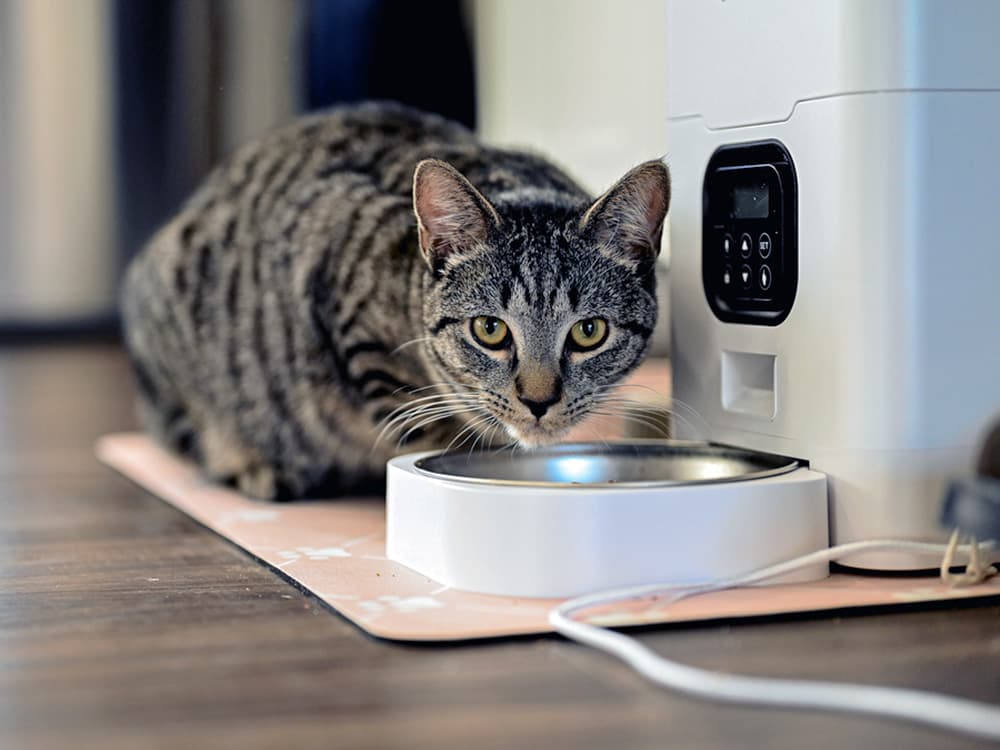
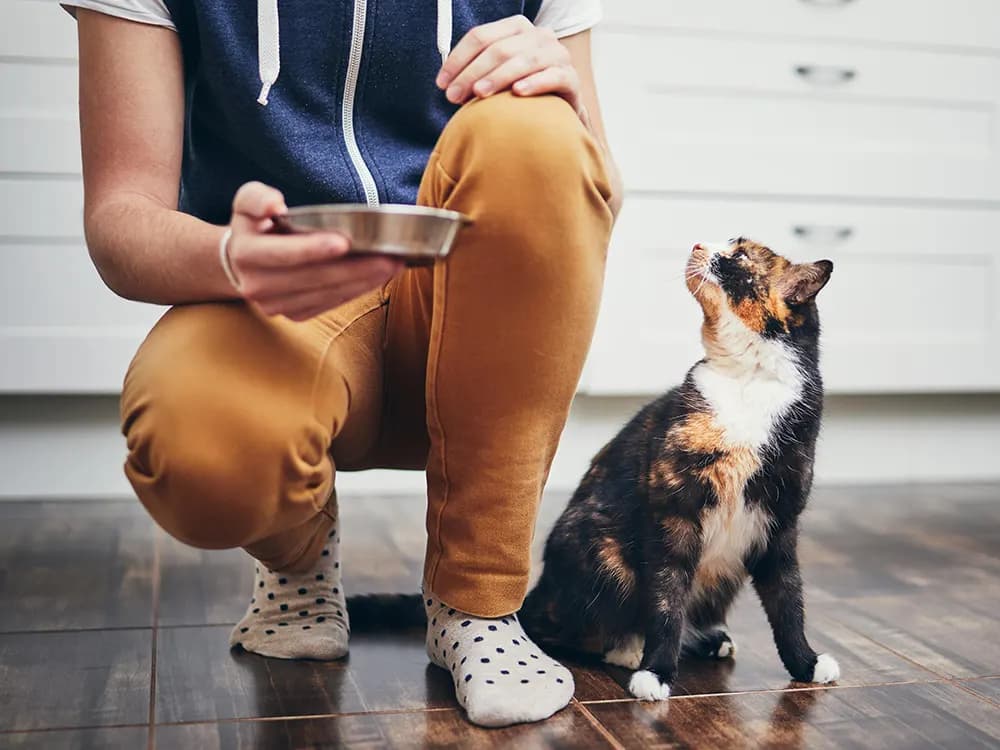
“I absolutely love automatic feeders,” says Cristin Tamburo, certified feline behavior consultant at The Cat Counselor. “Cats do well with a routine — it’s very important to them — and in the wild they eat multiple small meals per day, so automatic feeders are great for that.”
“It’s a tool I use quite frequently,” says Marci Koski of Feline Behavior Solutions. “Food can be a big stressor for some cats, which can lead to all sorts of behavioral issues: from inter-cat aggression to house soiling. Like humans, they can get hangry, which can cause irritability and increased aggression, especially before meals.”
Koski recommends following the “Five-a-Day Felix” plan developed by Dr. Sarah Ellis and Dr. Lizzie Rowe, which encourages cat parents to feed their feline companions five (or more) small portions of food at regular intervals throughout the day. This approach replicates the size and frequency of the meals they would eat if they were in the wild hunting birds and small rodents.
What your cat can handle, what they can’t, and how to keep them happy while you’re gone.
The Cat Coach’s Marilyn Krieger agrees, pointing out that “in the wild, cats will hunt 10 to 12 times per day with a 40 to 60 percent success rate, which equals around five meals per day.”
For this reason, Krieger is also a big fan of automatic feeders. “They’re great,” she says. “If you have to go to work [outside the home], you can still feed your cat every four hours.”
The Five-a-Day Felix plan is about more than just size and frequency of meals, though. Drs. Ellis and Rowe also suggest using puzzle feeders and changing the location of their food regularly to make meal times more mentally stimulating. They also say you should monitor your cat’s behavior and weight and make sure they have plenty of water. Automatic feeders can’t do all that, but they’re still better than just filling your cat’s bowl with food once a day and letting them free-feed.
“Eating can become an activity for cats — a way to pass the time — so an automatic feeder is good because it stops them from just eating because they are bored,” says Tamburo, who also suggests hiding treats around the house to give your cats some extra enrichment.
While all three of the experts I talked to agree that automatic feeders are wonderful tools, they disagree on exactly how long you should actually leave your cat alone with one.
“Ten or 12 hours a day at most,” Krieger says. “And never overnight.”
“A day,” Koski says.
“I’d say it depends on the cat,” Tamburo says. “If it’s an older cat who sleeps all day and is used to you being gone a lot [because you work outside the home], a day or two is probably fine. But no longer.”
Kittens, on the other hand, tend to be more fragile and require more frequent monitoring to keep them safe and out of trouble. That said, leaving them alone for even one day is a bad idea. But even though the experts disagree on how long you could leave your cat with an automatic feeder, their reasoning was more or less the same: Taking care of a cat is about more than just feeding them.
Take their litter, for example. Forcing them to use a dirty litter box for days on end is not cool. That would be like someone forcing you to use the same toilet over and over again, but only allowing you to flush it on Mondays. Some cats will tolerate this kind of neglect, but others will act out by going outside the litter box or engaging in other destructive behaviors, especially if they are bored or stressed out from being left alone for too long. Even automatic litter boxes require monitoring and emptying.
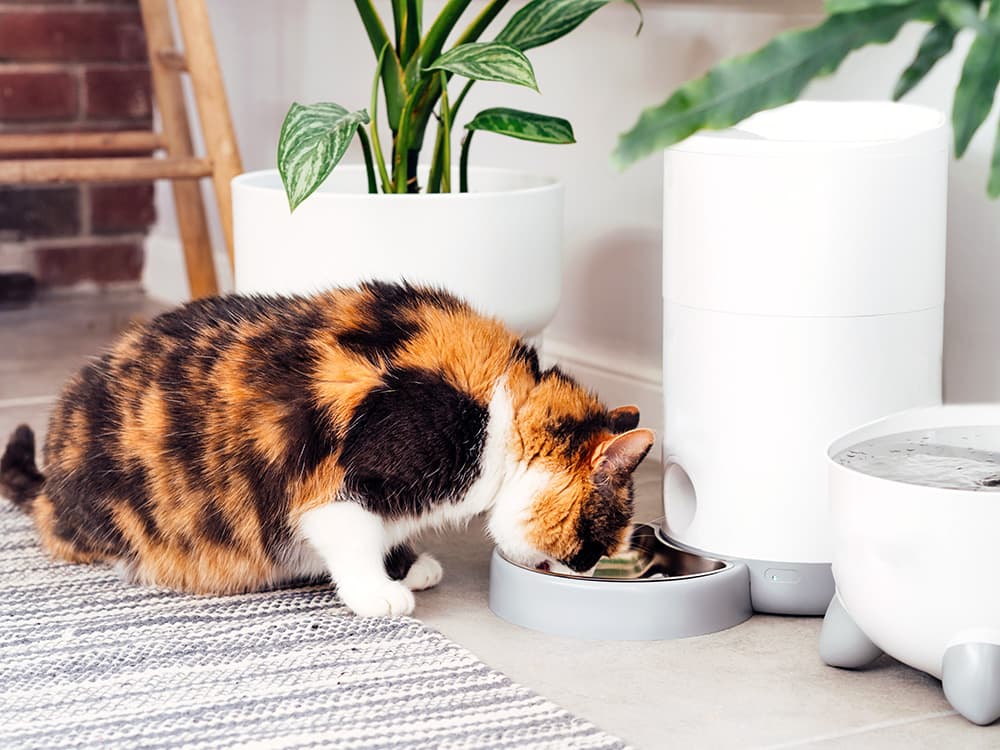
There’s also the issue of hydration. What if your cat turns over their water bowl? Even water fountains can clog or run dry or lose power. Cats are notoriously bad drinkers already, and dehydration can have serious health implications, especially in older cats with kidney issues. Dehydration mixed with the stress of being left alone for too long can even lead to issues like UTIs or bladder stones, which can sometimes require surgery to fix (two surgeries in the case of my former cat Yoshi).
canart7 / iStock
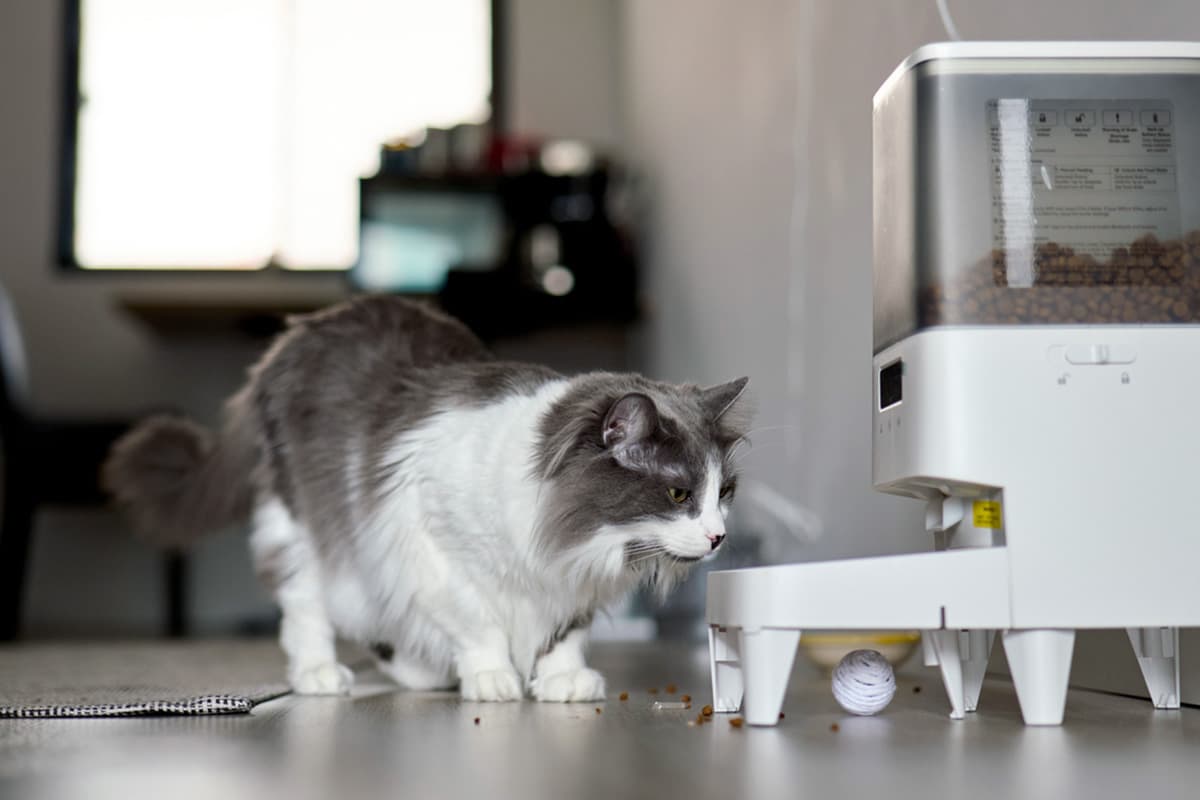
Like all machines, automatic feeders can also break down. And then what is your cat supposed to do then? Starve until you get home?
And what if you have multiple cats? Food is a resource, and resource guarding can turn your cats against each other, especially if one cat is hogging the feeder from the others. Even if you have multiple feeders running at the same time, fights could still break out over who gets access to which feeder when, especially if it’s been a few days and one of the cats is starting to feel a little desperate.
Automatic feeders also do nothing to ensure your cat’s overall safety. What if they get sick or injured or stuck somewhere tricky?
Technology for pets — like automatic feeders and litter boxes, electric water fountains, pet cams, and interactive toys — is simply a tool. It can often come in handy, but it shouldn’t be a full-time replacement for human interaction. Even if you could automate all the responsibilities of pet parenthood, why would you want to?
The type of food is the biggest indicator for which feeder you should invest in. Most automatic feeders are built for dry food portions, but there are some wet food feeders available, as well. It’s possible you may even want to invest in both dry food and wet food options depending on your cat’s diet.
Food capacity can vary between feeders, so finding one that has a generous capacity so you aren’t constantly refilling it (for dry food) might be a priority for you.
Portion control is usually a huge benefit when it comes to automatic feeders, so finding a feeder that caters to your cat’s specific diet will be important.
The ease of cleaning may also be something you want to prioritize; some feeders are more complex than others and may require you to clean more parts compared to others.
Extra features such as cameras, WiFi apps, and the ability to record your voice aren’t a given when it comes to feeders, but these options might be something you’d prefer to have, especially if you’re planning to use the feeder for when you’re out of town.

It’s not always an emergency — but it could be.
Of course, if you need to leave your cat home alone for a couple of days with the automatic feeder, make sure you are taking additional steps to ensure they are as safe and comfortable as possible.
Have someone stop by to check on your cat daily. Pet sitters’ daily rates can certainly add up, but maybe you can have a friend or neighbor stop by once a day just to make sure your cat isn't getting into trouble. And ask them to video call you so you can see for yourself that your cat is OK and they can hear your voice.
Add an extra litter box. Or two! And put them in different locations around the house so your cat has options.
Add extra water bowls too, while you’re at it. Ideally, you should put water bowls in different rooms so that if something happens in one room, they still have access to water in another.
Test your automatic feeder for a few weeks first. Don’t set it up right before you leave for a long weekend and expect it to work perfectly. There may be a learning curve that you need time to adapt to. And even if it works perfectly right out of the box, your cat may need time before they feel comfortable using it.
Don’t make your first trip a long trip. Start small, and make sure everything works and your cat isn’t distressed by your absence, then work your way up to longer trips over time.
Jaromír Chalabala / Alamy
Personally, I’ll probably stick with manual feeding. At least for now. My cat is a toothless 18-year-old who only eats wet food. Although there are wet-food automatic feeders on the market, I’m afraid I’d find them too fussy and hard to clean. That said, I like the idea of feeding her five small meals per day as opposed to two large ones. But I work from home, so that’s a change I can implement without the feeder.
Then again, it could be nice to have one as a backup. You know, in case I have to be away from the apartment suddenly. Or if the friend who said they would watch my cat changes their mind at the last minute — as happened to me recently.
I don’t think I could leave my cat without human contact for more than a day, though. She would probably survive, but she wouldn’t be happy. We play together and cuddle and take a nap together every day after lunch. The last time I went out of town, my cat sitter didn’t spend nights at the apartment as promised. When I returned home, my poor cat was desperate for attention. I’d hate to do that to her again. For me, the convenience just isn’t worth it — but to each cat parent their own!
This depends on your cat’s diet and food preferences. There are feeders for both dry and wet food, for example. There are also a lot of feeders with bonus features, such as cameras, WiFi apps, voice recording options, and more that may appeal to your specific needs.
Yes, there are some feeders on the market that are tailored specifically for multi-cat homes. One of the best options for ensuring your cats will still get their correct portions when using an automatic feeder is one with RFID, which is a technology that can recognize each cat individually so it only unlocks the right portion for the right cat as they approach the feeder.
Automatic feeders offer convenience through consistently timed and portioned meals for your cats without you having to lift a finger. They can also be used to feed your cats while you’re out of the house (even when you’re out of town for a short period of time!), so you don’t have to worry about them missing meals or eating off schedule.

Charles Manning is an actor and writer based in New York City. In his free time he likes to cook, go swimming at the public pool, volunteer at the LGBTQ senior center, and foster senior and special-needs cats. His work has previously appeared in Cosmopolitan, Elle, Marie Claire, Harper’s Bazaar, Seventeen, and Nylon.
Lifestyle
Lifestyle
Behavior & Training
Nutrition
Usually, a hungry, hungry kitten is perfectly normal. But here’s when a kitten eating a lot is cause for concern.

Lifestyle
With great cuteness comes great responsibility. A vet breaks down everything you need to know when you bring home a new kitten.
Behavior & Training
They can see the food is coming, so why keep meowing so much?

Adoption Advice
Although they have a reputation for being independent, cats do still some care and attention.
Behavior & Training
Cats are independent but still need attention and care.

Behavior & Training
Cat behaviorist Kristiina Wilson on how to tell if your cat is grumpy—or just kind of like that.