10 Dogs Similar to Bernese Mountain Dogs
Here are other breeds who are similar to this gentle giant.
by Jackie Brown, | May 7, 2026
Cavan / Adobe Stock
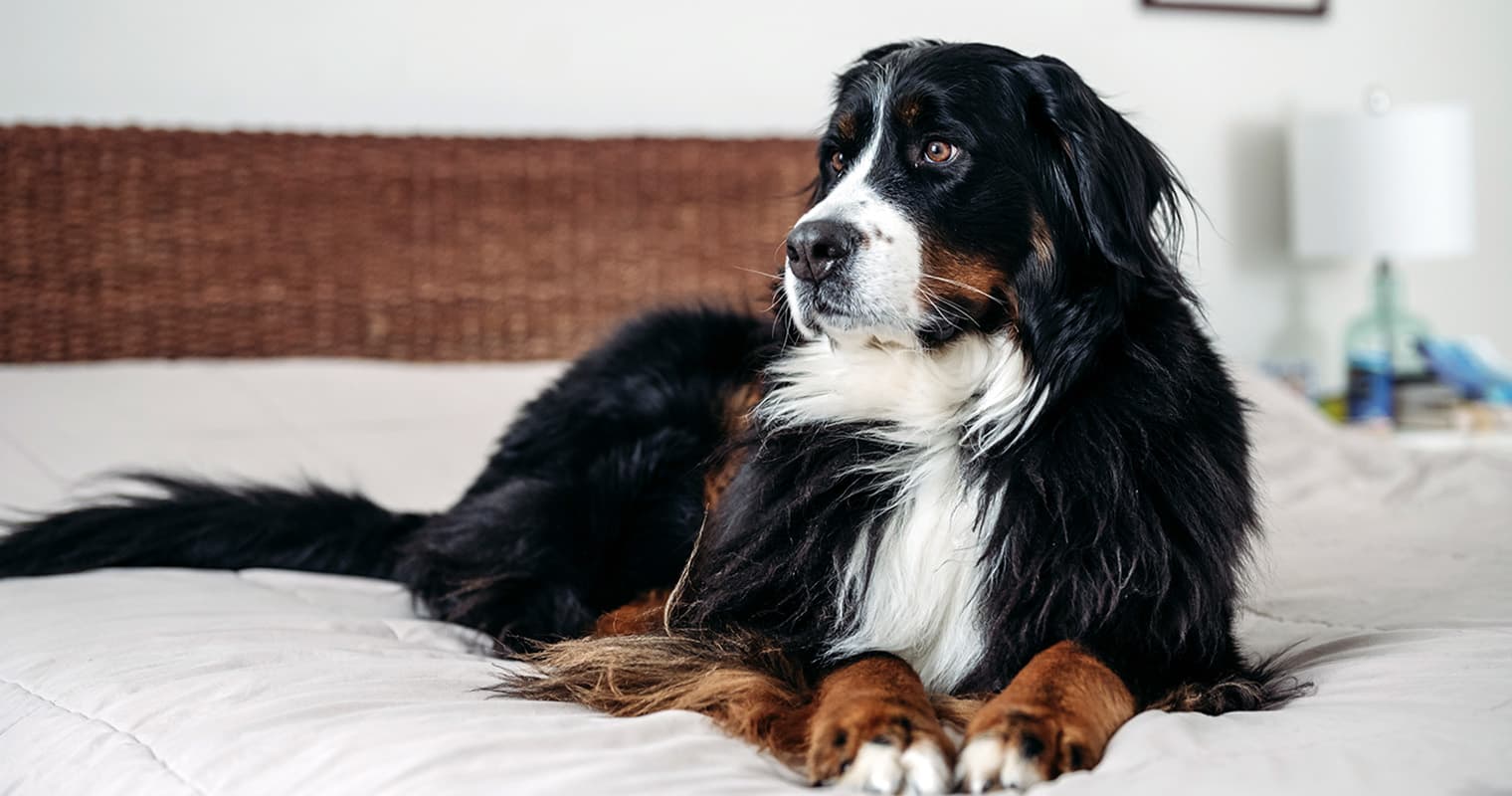
The combination of the Bernese Mountain Dog’s majestic size and bold, tri-colored coat certainly turns heads. But these gentle giants have more going for them than good looks. Berners, as they are affectionately called, are calm, affectionate, intelligent, and great with families. Whether you’re drawn to Berners’ long, tri-colored coat or their endearing, laid-back personality, you’ll want to check out these other breeds similar to Bernese Mountain Dogs.
The Bernese Mountain Dog is one of four Swiss mountain-dog breeds collectively known as Sennenhunds. The other three breeds, which we’ll meet below, are the Greater Swiss Mountain Dog, the Entlebucher Mountain Dog, and the Appenzeller Sennenhund.
Originally bred as all-purpose dairy farm dogs in the Canton of Bern in west-central Switzerland, Berners pulled heavy milk carts to market, drove cattle, and kept watch over farmers’ property, livestock, and family.
In the right home, a well-socialized Berner is a gentle, affectionate pet. Sometimes described as Velcro dogs (opens in a new tab), Berners crave attention and physical closeness with their human family and do not do well when left alone for many hours a day. With early and consistent training, these oversized dogs tend to be well-behaved, laid-back family pets.
Berners need extensive socialization early in life to overcome potential shyness and fear. Training is a must for any dog, but it’s especially important for large, powerful breeds like Bernese Mountain Dogs.
The Bernese Mountain Dog is considered a large-to-giant breed, ranging from 70 pounds to 123 pounds. Meanwhile, they stand 23 to 28 inches. In both cases, males tend to be larger than females.
One tough reality with large and giant breeds is that they have shorter life spans (opens in a new tab). Bernese Mountain Dogs only live to be about seven to 10 years old.
Their gorgeous tricolor coat sheds heavily year-round, so pet parents must be on board with frequent brushing (opens in a new tab) and be able to live with dog hair in the house.
Certain dog breeds similar to Bernese Mountain Dogs share the Berner’s black, white, and tan coloration (tricolor), but they tend to be smaller or have shorter hair. Other breeds, however, come in different colors but share the Bernese Mountain Dog’s great size and working, farm-dog heritage.
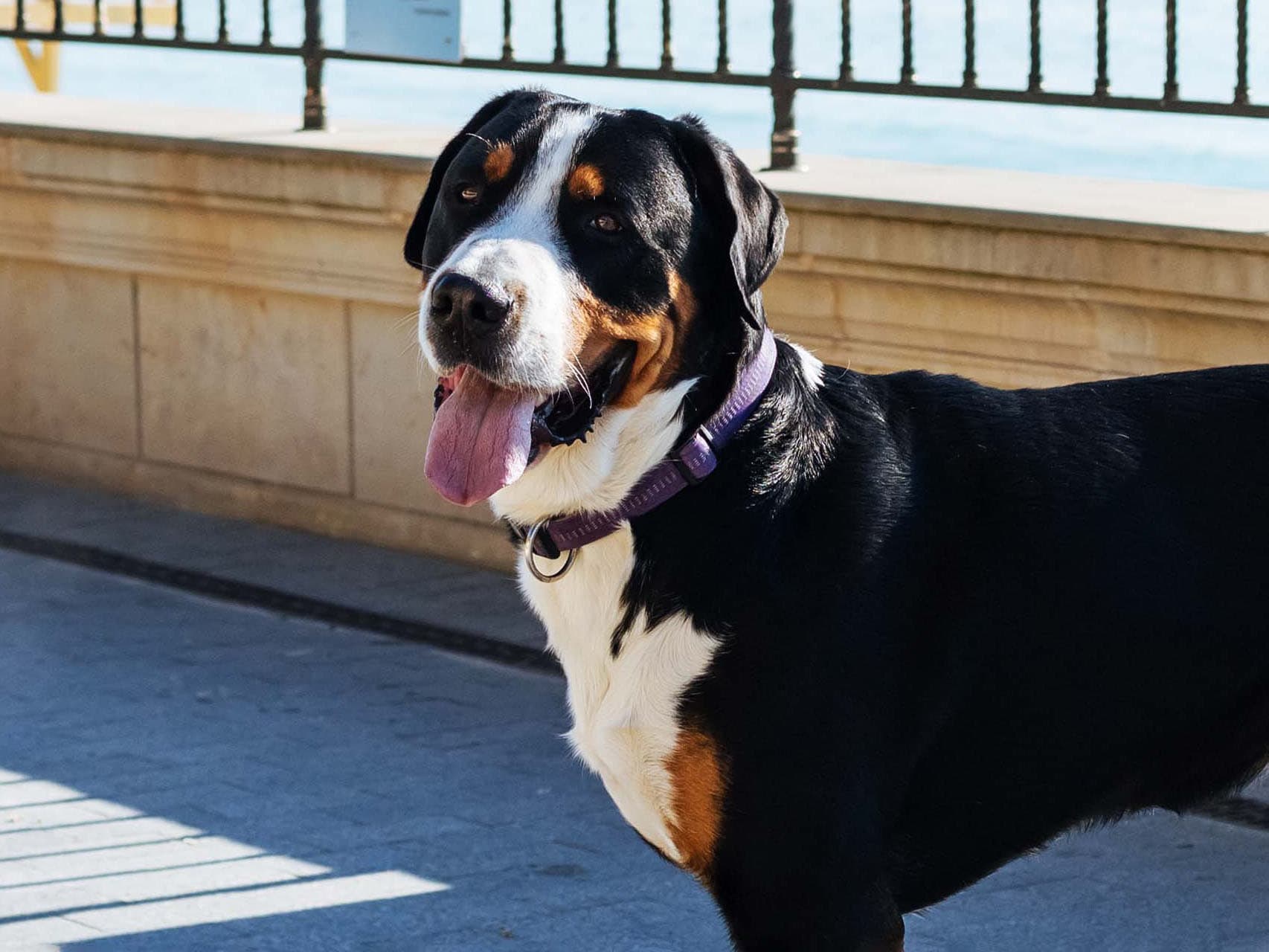
If you love the Bernese Mountain Dog’s dashing tricolored coat but don’t enjoy a lot of brushing, the Greater Swiss Mountain Dog (opens in a new tab) is worth a look. The Greater Swiss Mountain Dog is not a shorthaired version of the Berner — they are two distinct breeds. They both originated in the same place and served similar original purposes, so they have a lot in common. The GSMD is a bit larger, somewhat more independent, and not quite as laid-back as the Berner. GSMDs need more exercise and work to do, and fit better with experienced pet parents. They have a similar, shorter lifespan to the Bernese Mountain Dog (typically eight to 11 years).
Size: 85 to 140 pounds
Coat length: Short
Standout traits: Watchful, dependable, and loyal
Good with kids? Yes
VeronArt16 / Shutterstock
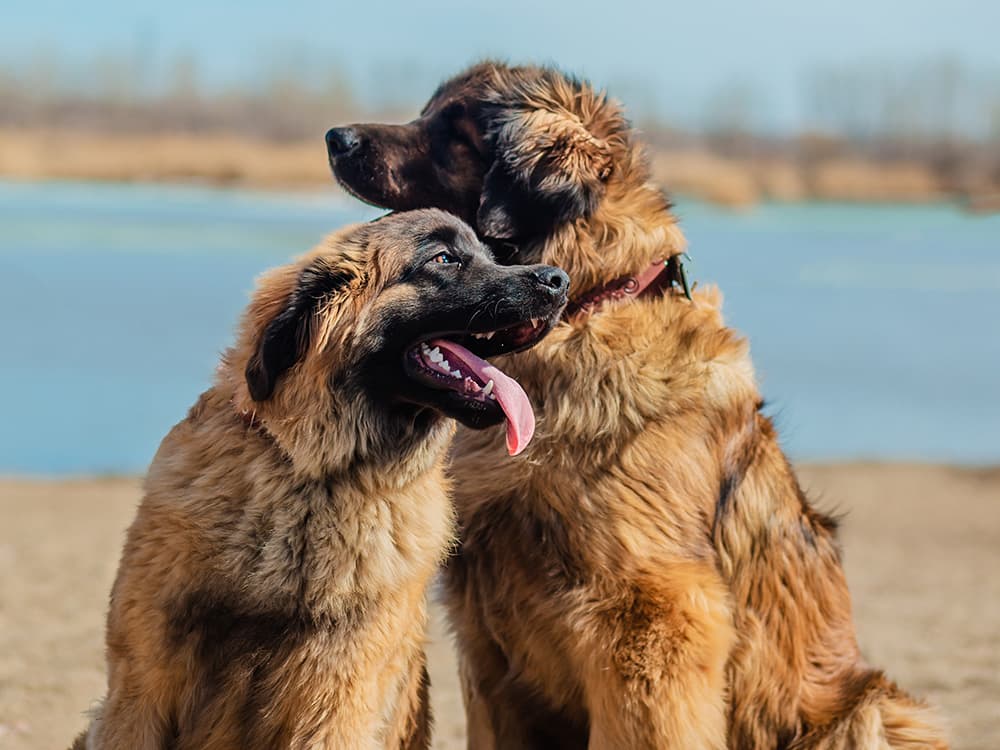
Although the Leonberger (opens in a new tab) doesn’t share the Berner’s tricoloration, these breeds are more similar than different. Both have thick, double coats that need regular brushing, and both are talented at pulling carts and performing farm work duties. They are great with kids when properly trained and socialized from a young age. Leos are larger and a touch more playful and energetic than Berners, so plan on a little more daily exercise.
Size: 86 to 151 pounds
Coat length: Medium to long
Standout traits: Friendly, patient, and composed
Good with kids? Yes
Becky Swora / Alamy Stock Photo
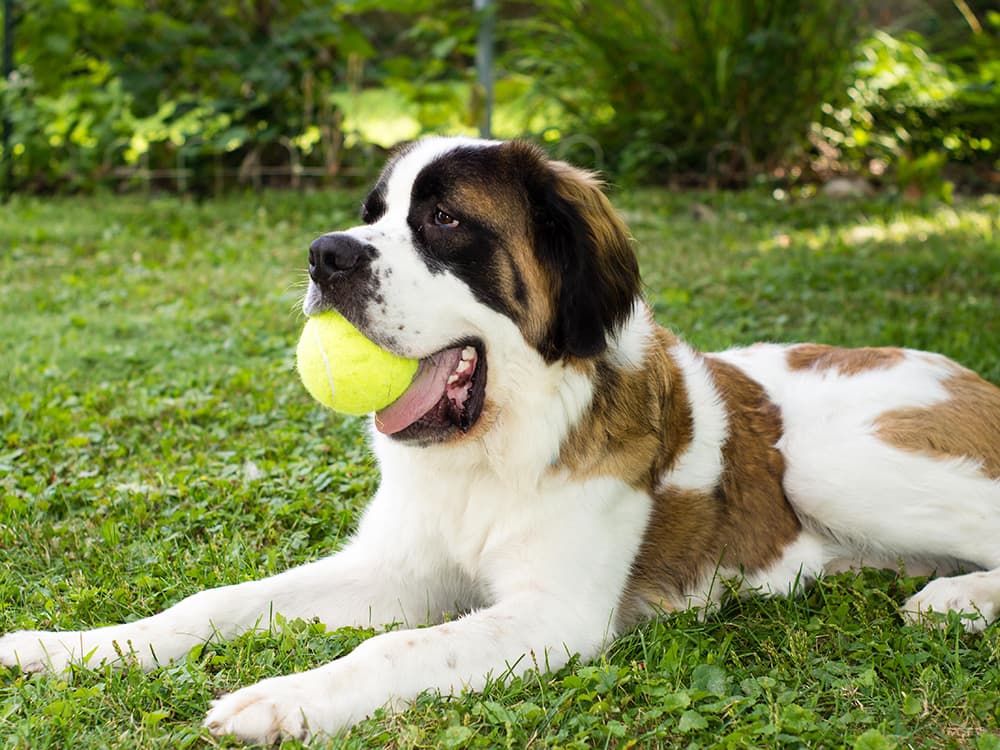
If you really love a big dog, look no further than the Saint Bernard (opens in a new tab), one of the largest breeds on our list. Though bigger than a Berner, the Saint Bernard is even calmer and has lower energy, so it’s easy to provide the exercise they need. The Saint Bernard’s high-contrast red and white color might appeal to Berner lovers. The coat can be long (similar to a Berner) or short (slightly less upkeep). These dogs are renowned for their love of children, which makes them great family pets. A word of warning: Saint Bernards drool, sometimes quite a bit. This is not a breed for the fastidious housekeeper.
Size: 106 to 186 pounds
Coat length: Short or long
Standout traits: Friendly, calm, and affectionate
Good with kids? Yes
rzoze19 / Shutterstock
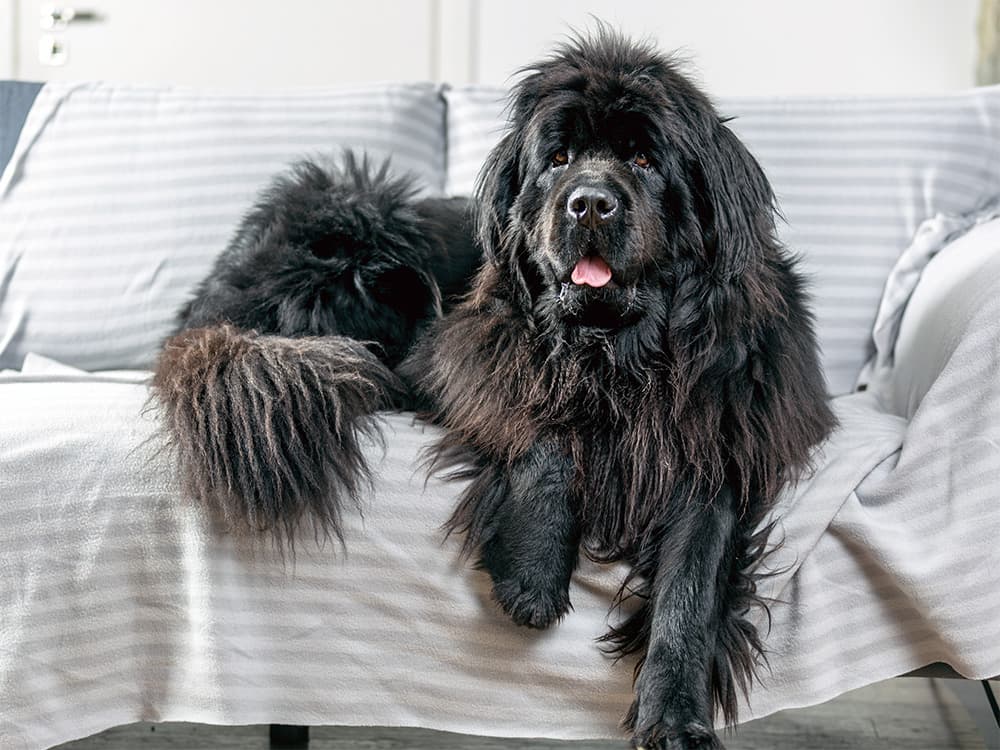
At first glance, the Newfoundland (opens in a new tab) has a similar look to the Bernese Mountain Dog, especially ones with the black-and-white Landseer pattern. However, Newfies are larger and heavier boned — and they have a different background. The Newfoundland was a fisherman’s assistant in the icy waters of the North Atlantic, where they hauled nets from the water to the shore, pulled heavy carts loaded with fish, and acted as canine lifeguards, rescuing people who fell overboard. Calm and affectionate, Newfies are excellent family dogs. As with Saint Bernards, be prepared for drool.
Size: 86 to 163 pounds
Coat length: Moderately long
Standout traits: Friendly, gentle, and mellow
Good with kids? Yes
Beatrice / AdobeStock
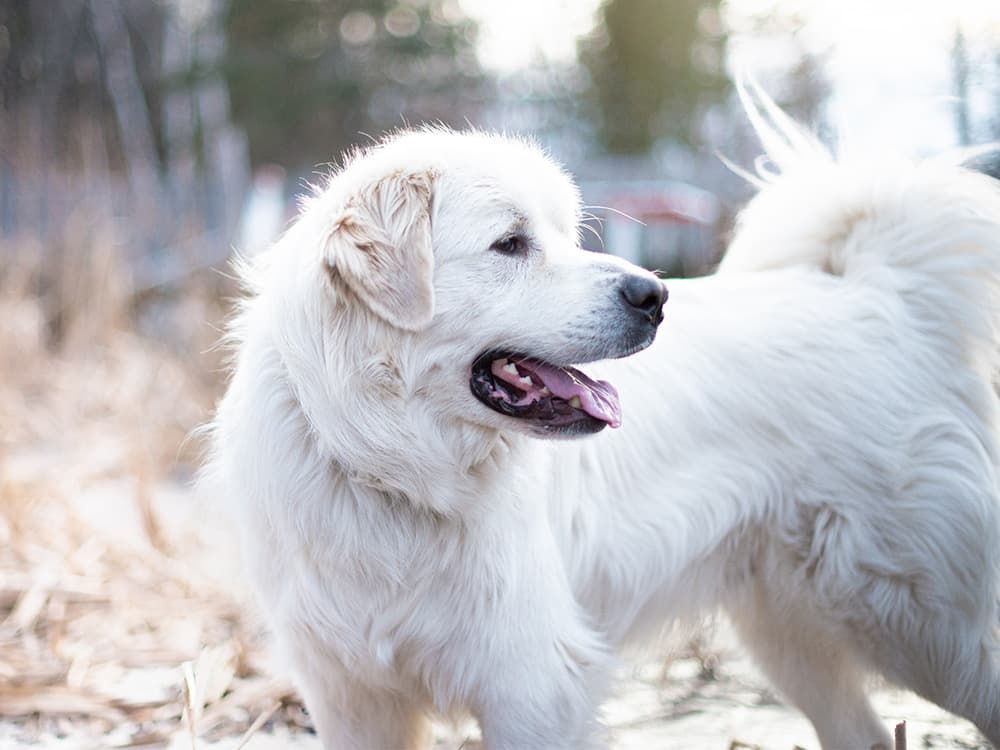
Like the Berner, the Great Pyrenees (opens in a new tab) is a mountain dog (from the Pyrenees Mountains rather than the Swiss Alps), but these two breeds had very different original purposes. The Great Pyrenees is a livestock guardian, meant to live with flocks of sheep and protect them from predators. Compared to Bernese Mountain Dogs, Great Pyrenees are more independent, watchful, and protective. Great Pyrenees bark more than Berners and can be harder to train. Great Pyrenees are calm, gentle family dogs when properly socialized and trained, but they can be very wary of visitors coming to the home.
Size: 66 to 138 (or more) pounds
Coat length: Long
Standout traits: Protective, watchful, and gentle
Good with kids? Yes
Vince Scherer / Adobe Stock
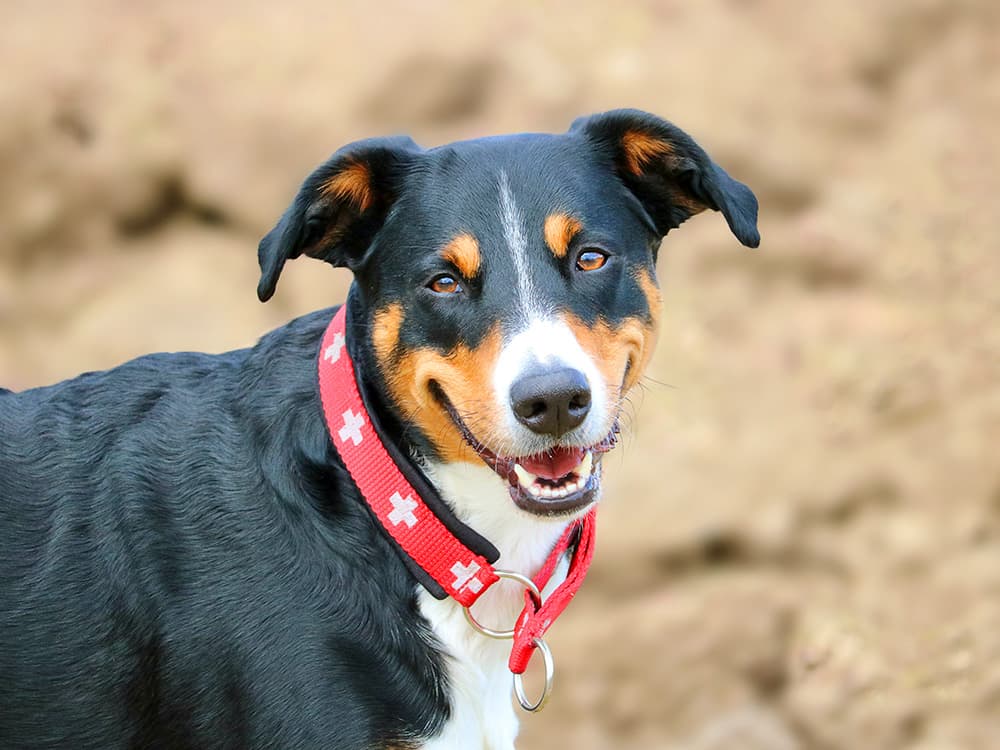
One of the four Sennenhunde dog breeds from the Swiss Alps, the Appenzeller Sennenhund looks a lot like a smaller version of the Greater Swiss Mountain Dog. Both breeds have short, tricolored coats and worked on Swiss farms, but the smaller Appenzeller was primarily used to herd cattle. Like most herding breeds, the Appenzeller has loads of energy and needs lots of daily exercise and activity to burn it off. They do best with experienced, active pet parents who can provide a lot of physical work for their body and the mental work for their brain. This breed benefits from plenty of early socialization and training. They have the longest lifespan of all the Sennenhunds (typically 13 to 15 years).
Size: 48 to 70 pounds
Coat length: Short
Standout traits: Lively, athletic, and watchful
Good with kids? Possibly with older kids
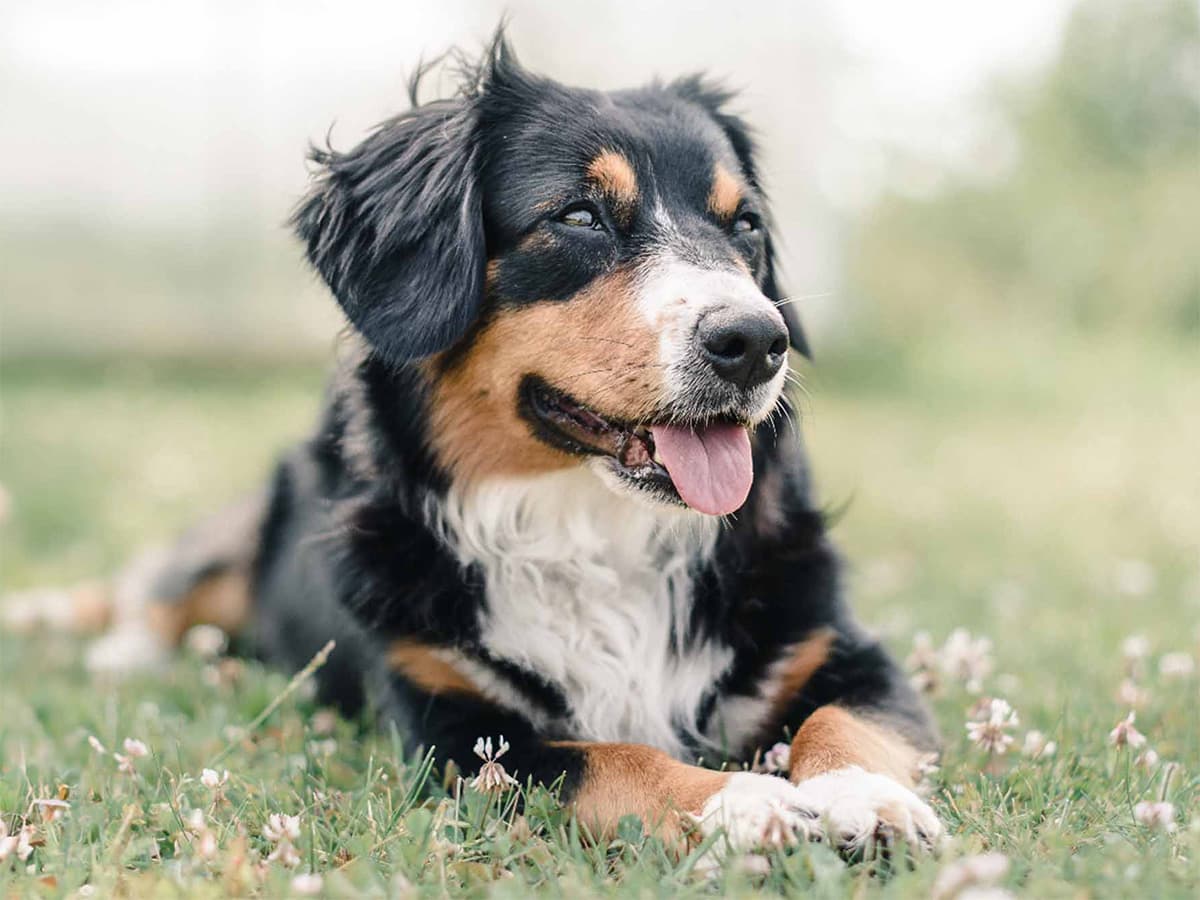
The fourth Sennenhunde breed has the same color and pattern as the Bernese Mountain Dog, but with a short coat. The Entlebucher Mountain Dog (opens in a new tab) is a cattle herder like their cousin, the Appenzeller Sennenhund. Although the smallest of the four breeds, the Entlebucher has the most energy. This breed demands daily intensive exercise and preferably a job to do, to thrive. The Entlebucher Mountain Dog needs a lot of early socialization and training, and does best with an experienced pet parent. They have a slightly longer lifespans than the Bernese Mountain Dog (typically 11 to 13 years).
Size: 40 to 65 pounds
Coat length: Short
Standout traits: Spirited, agile, and loyal
Good with kids? Possibly with older kids
Cobra Nicole / Shutterstock
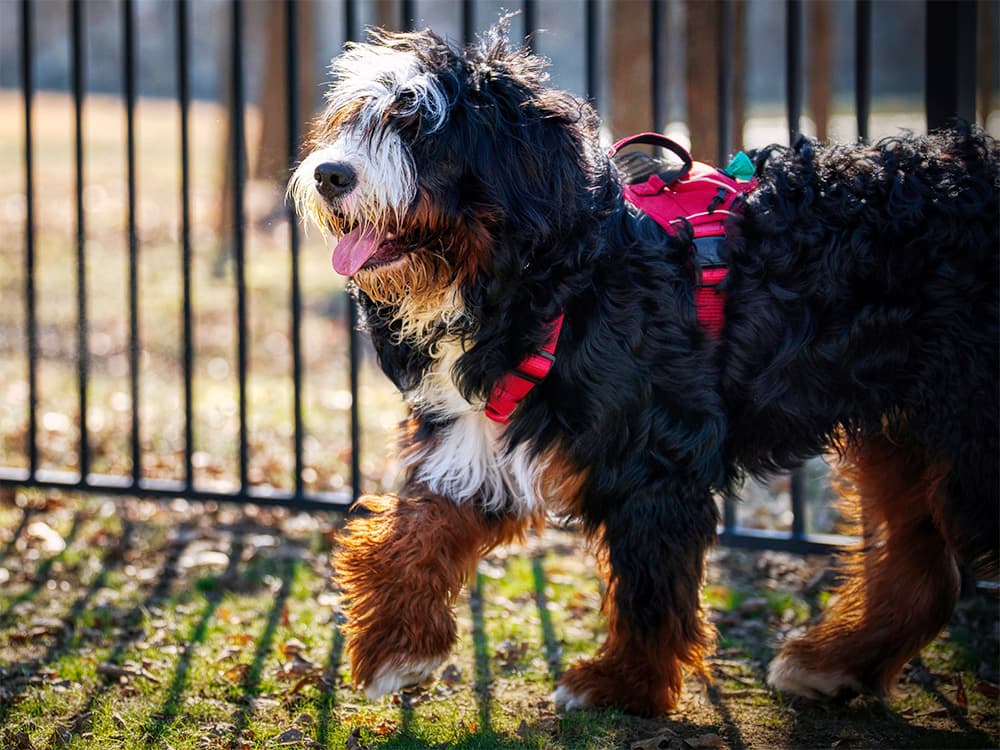
The Bernedoodle (opens in a new tab) is a common mix sometimes found in animal shelters and through rescue groups. Although Bernedoodles (minis) can be as small as 25 pounds, most are larger, falling in the standard range of 50+ pounds. There is a lot of variability in mixed-breed dogs, but many Bernedoodles are good with kids and make wonderful family dogs. The coat might be curly and non-shedding like a Poodle’s, or it might be wavy and shed — but plan on professional grooming either way. In general, Bernedoodles are more energetic and playful than purebred Bernese Mountain Dogs, so they need plenty of exercise and training to engage their brains.
Size: 25 to 90 (or more) pounds
Coat length: Curly or wavy
Standout traits: Intelligent, active, and affectionate
Good with kids? Likely
Jordan / Adobe Stock
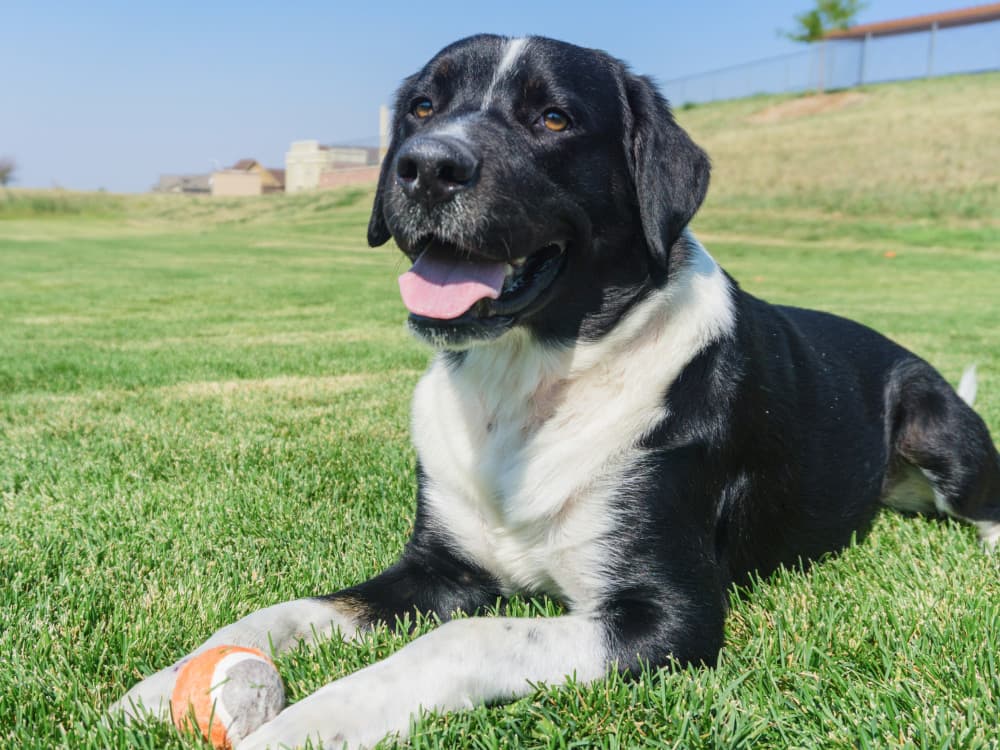
Bernese Mountain Dogs mixed with Labrador Retrievers (opens in a new tab) or Golden Retrievers are another common combination found in rescue. All mixed-breed dogs are individuals, but you’d expect a family-friendly pet when Retrievers are part of the mix. These mixes are likely to be smaller than a Berner, but bigger than a Retriever. They might inherit the Berners’ black, white, and tan coloration, though coat length will vary (could be on the shorter side if a Lab is in the mix). Like the Bernedoodle, Bernese Labs, or Bernese Goldens will probably be more energetic than a Bernese Mountain Dog, so plan for daily romps and excursions for exercise.
Size: 65 to 100 pounds
Coat length: Short, medium, or long
Standout traits: Friendly, trainable, and loyal
Good with kids? Likely
Dallas Pets Alive
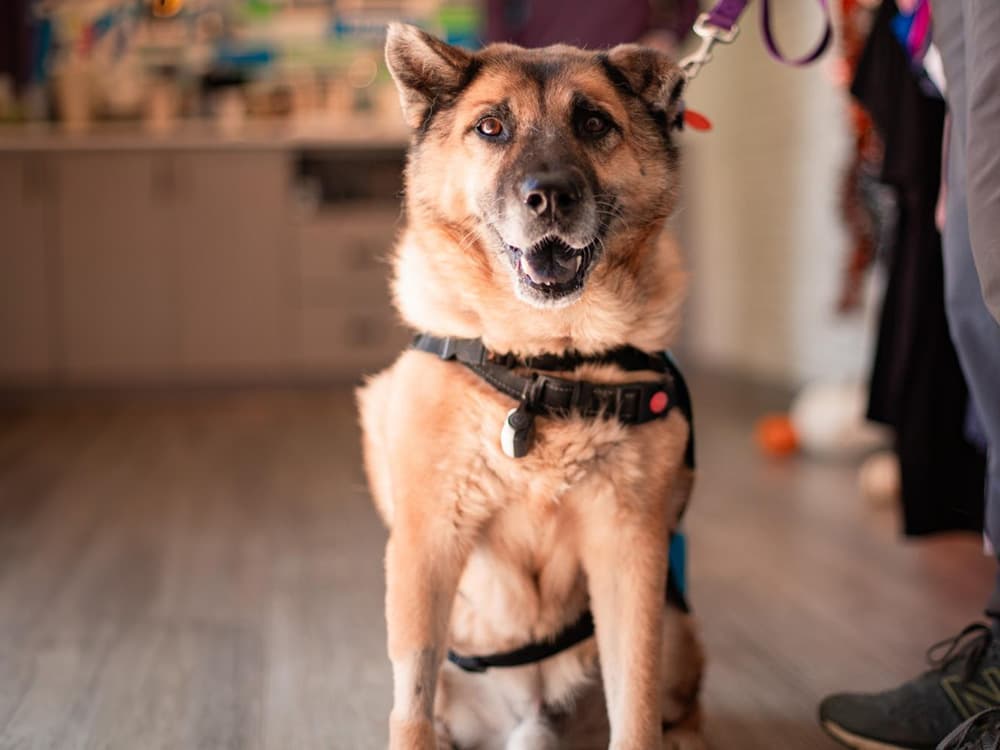
If you like the Bernese Mountain Dog, consider other larger mixes frequently found in animal shelters, including Pyrenees mixes or Lab and Shepherd mixes (opens in a new tab). Although the exact heritage of these dogs might not be known, each dog is unique and might fit in perfectly with your family.
Size: 50 to 100 (or more) pounds
Coat length: Short, medium, or long
Standout traits: Varies
Good with kids? Varies
You might notice that many large and giant dog breeds are often recommended for “experienced pet parents” rather than first-time pet parents. Here’s why.
Giant breed (opens in a new tab) puppies are adorable, but their sheer size makes consistent early training and socialization not only helpful, but mandatory — or they might soon overpower you. Very large dogs shed more, may drool more, and simply take up more space in a home (and in a car).
It costs more to have and care for large and giant breeds (opens in a new tab). Big dogs eat more food, and oversized pet supplies like beds and crates also cost more. Many other pet costs are weight-dependent, including grooming, flea and tick preventives, medications, and veterinary care.
Some giant breeds also have extra health concerns to consider. Specifically, giant breeds are more prone to degenerative joint diseases, such as hip and elbow dysplasia. Deep-chested giant breeds are also susceptible to gastric dilatation-volvulus (GVD), commonly called “bloat” — a life-threatening condition where the stomach fills with air and twists on itself.
It’s normal to be drawn to a certain look in a dog, but other traits matter much more when adopting a dog. To make a lasting match, consider your lifestyle and preferences with a dog’s temperament, activity level, and grooming needs.
Larger dogs often spend a longer time (opens in a new tab) waiting for adoption due to their size, but there’s plenty to love about these gentle giants. You might be surprised to learn that many giant breeds are calm and need less exercise than smaller dogs. Adopting an adult dog allows you to skip the high-maintenance puppy stage — but keep in mind that large and giant breeds don’t live as long as smaller breeds.
If you’re considering adopting a very large or giant breed, be sure to research them to ensure the care they require. These dogs are often surrendered to shelters and rescues, not because they are flawed, but because their original pet parents failed to sufficiently prepare for their care.
The Greater Swiss Mountain Dog looks like a Bernese Mountain Dog but has short hair (in contrast to the Berner’s medium-long coat. The Greater Swiss Mountain Dog and Bernese Mountain Dog were both developed in the Swiss Alps, where these all-purpose farm dogs were used for drafting (pulling carts), driving cattle, and guarding property.
The Entlebucher Mountain Dog and Appenzeller Sennenhund are both smaller than a Bernese Mountain Dog. These two breeds have tricolored coats, but unlike the Berner, their hair is short. These breeds, called Sennenhundes, were developed in the same region and share similar heritages.
Most mountain dogs shed a lot, but some shed less than others. The Greater Swiss Mountain Dog, Entlebucher Mountain Dog, and Appenzeller Sennenhund shed, but the shedding level can seem less than that of the longer-haired Bernese Mountain Dog.
“About the Breed – Saint Bernard Club of America.” Saintbernardclubofamerica.club, 2024, saintbernardclubofamerica.club/about-the-breed. (opens in a new tab)
admin@greatpyrenees.club. “History of the Great Pyrenees.” Great Pyrenees Club of America, 26 Jan. 2022, greatpyrenees.club/history-of-the-great-pyrenees (opens in a new tab).
Appenzell Cattle Dog. FEDERATION CYNOLOGIQUE INTERNATIONALE, 25 Mar. 2003, www.fci.be/Nomenclature/Standards/046g02-en.pdf. (opens in a new tab)
“Breed Information – GSMDCA.” Gsmdca.org, 2026, gsmdca.org/breed-info (opens in a new tab).
“Info Series | Bernese Mountain Dog Club of America (BMDCA).” BMDCA, 2026, www.bmdca.org/info-series (opens in a new tab).
LCA_Admin. “Is a Leonberger Right for You? - Leonberger Club of America.” Leonberger Club of America, 28 Mar. 2023, leonbergerclubofamerica.com/leo4u (opens in a new tab).
“National Entlebucher Mountain Dog Association (NEMDA) - Entlebucher Questions.” Nemda.org, 2025, nemda.org/Entlebucher-Questions (opens in a new tab).
“Newfoundland.” American Kennel Club, 15 Nov. 2023, www.akc.org/dog-breeds/newfoundland (opens in a new tab).
Jackie Brown lives in sunny Orange County, CA, where she works as a freelance writer and editor. When she’s not on deadline, you can find her paddling her outrigger canoe in the Pacific Ocean or hiking in the foothills with her miniature poodle and two young boys.
Breed Info
Adoption Advice
Adoption Advice
Breed Info
Is this your first foray into dog parenthood? Read all about the friendliest, most adaptive types of pups who can easily fit into your lifestyle.
Breed Info
Breed Info
Pedigreed pups are tied with mixed breeds for some disorders — but mutts reign supreme.

Breed Info
What makes a dog’s coat so unique? We explain the genetics behind everything from coat color to coat patterns, in a way that’s easy to understand.
Breed Info
Considering a Corgi? Here’s everything you ever wanted to know about the many, many types of Corgis mix breeds.